
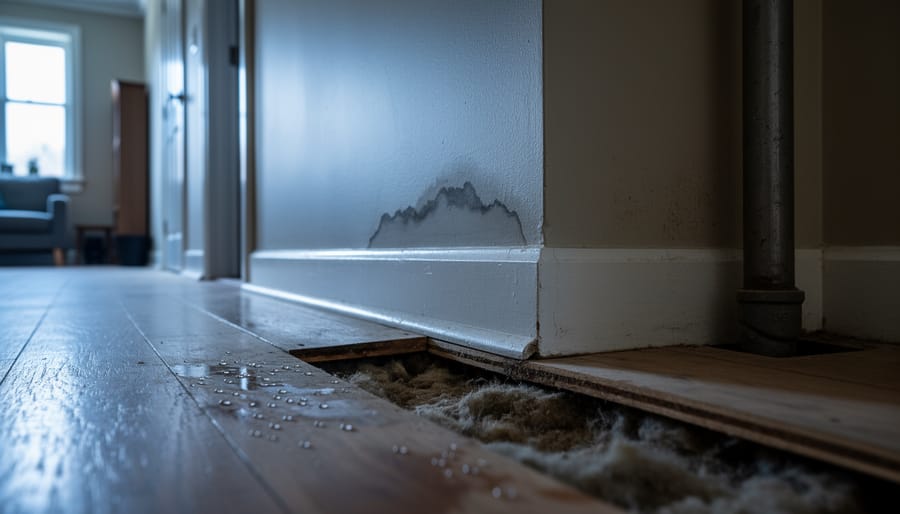
When looking around your house you may notice areas where you’re seeing clear indications of the presence of mold. But don’t be so quick to jump to the conclusion that those are the spots where mold is developing. What you are seeing is often only the tip of the iceberg of a problem with moisture happening in your home.
One of the critical issues about a mold removal is the moisture molding. If the mold is not properly addressed, then even if the homeowner has identified the problem and tackles the problem, then removing the surface mold will perhaps not have much of a benefit.
Moisture Can Hide in Unexpected Places
However, the main obstacle is that moisture isn’t always obvious or can’t be seen in the form of standing surface water. It may be hidden behind cabinetry, in between or underneath flooring, or, in a wall near to plumbing.
Small plumbing leaks can be especially easy to miss. Small leaks may not always present themselves as a large flow of water, but the damp buildup on the same materials can stay damp for quite a while. Other areas that can be at risk are wet around cold pipes and areas where the pipes are not insulated, and will create the same effect as a damp pipe.
If you want a specialist for details and also assistance then you can visit website as one more potential of resource of details about the solutions and details that are appropriate in the case of mold.
Musty Odors Can Be an Important Clue
If you can still smell damp after you’ve searched for mould and found none, do something about it. Smells often come from wet materials where you can’t reach, especially when there isn’t much airflow.
However, not all odors in the air come from mold. If the smell persists despite the obvious condition of the property, scrubbing and allowing some fresh air can make a big difference. You’ll want to verify that there isn’t any excessive moisture even if the walls are clean.
Paint Can Conceal More Than It Fixes
Paint can’t cover up dingy (or anything else). Having paint applied will not remove the moisture accumulated inside the wall. If you discover that the paint color isn’t uniform, you could be covering up the water in the roof and/or mold growth.
It is all the more important after water damage. The wall may be dry on the outside but still wet within porous material. Ensure the porous damaged materials within the house are adequately dried and that the water source is repaired before repainting any of the areas of the wall that were damaged.
Condensation Is Often Underestimated
Moisture One more source of moisture that isn’t as widely recognised inside the home is condensation. This happens when warm air hits a cold surface and results in the moist, damp patch of condensation which can often be seen on windows, external walls, pipes and uninsulated areas.
Rooms with slow air circulation may experience more harm. Humidity can be increased for routine chores in rooms like bathrooms, kitchens, laundry and cellar. Since the flow of the air is so weak, water often remains in the room for a long period of time as a result of which the growth of fungi can take place.
Hidden Moisture Requires More Than Surface Cleaning
When mold keeps appearing in the same spot again, it could mean that whatever cleaning you did didn’t fix the underlying issue. It may also be a warning sign of moisture still being present in the area.
An all-around solution will be treating the mold and the conditions that are helping the mold grow to begin with. It is always useful to know if you do, in fact, have a source of water such as leak or humidifier, or damp roofed building components.
Look Beyond What You Can See
Mold is generally the consequence, not the cause. A slick coating on an area will not mean this spots dry behind it, particularly when the slick coating is caused by drinking water showing up in a place or maybe a leak.
Property owners ought to be delicate to smell, stains and a lot more stains, damp stuff, and condensation to offer by themselves a push forward. Get to the root of the problem. Treating the moisture issue at its early stages can help preserve building materials and make it easier to prevent mold from recurring.