
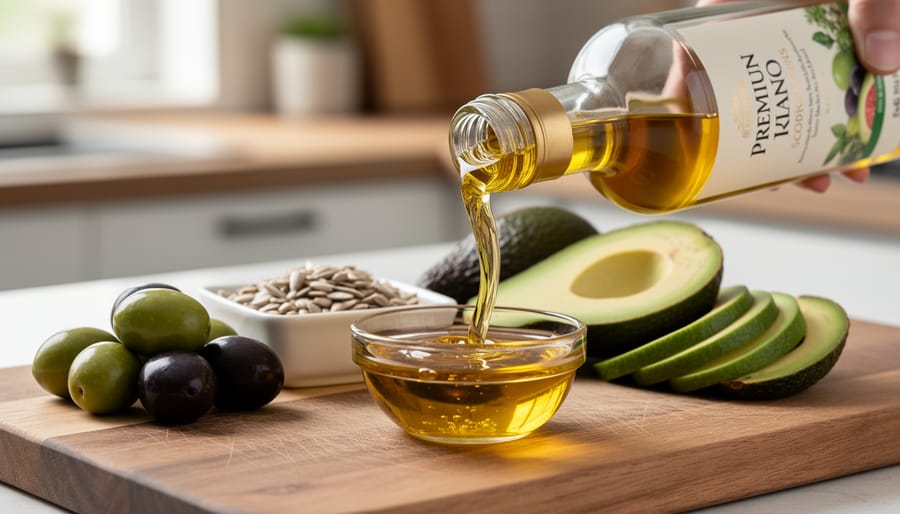
A fatty acid profile is a breakdown of the specific types of fats found in a cooking oil or food, showing how much of it is saturated, monounsaturated, or polyunsaturated fat. Understanding these profiles helps you choose oils that support heart health, manage inflammation, and perform well at the temperatures you cook with most often.
Not all fats behave the same way in your body or your frying pan. Some oils contain predominantly saturated fats that remain stable under heat but may affect cholesterol levels when consumed in excess. Others are rich in polyunsaturated fats that support brain and cardiovascular function but break down more quickly when heated. Monounsaturated fats often strike a balance, offering both health benefits and reasonable cooking stability.
When you scan a bottle of oil at the grocery store, the fatty acid profile tells you what you’re actually bringing into your kitchen. This simple piece of information empowers you to match the right oil to your cooking method, whether you’re sautéing vegetables, dressing a salad, or searing protein. By learning to read these profiles, you can make confident, evidence-based choices that align with your health goals without sacrificing flavour or cooking performance.
Understanding Fatty Acid Profiles
A fatty acid profile is simply a breakdown of the types of fats found in any given cooking oil or fat. Think of it as a nutritional fingerprint that shows the proportions of three main categories: saturated fats, monounsaturated fats, and polyunsaturated fats. Every oil contains a mix of all three types, but in different amounts. This mix determines how the oil behaves when you cook with it and how it affects your health.
Saturated fats have a chemical structure where carbon atoms are fully “saturated” with hydrogen atoms, forming straight chains that pack tightly together. This tight packing makes saturated fats solid or semi-solid at room temperature. You’ll find them in higher amounts in coconut oil, butter, and animal fats like lard. They’re generally stable when heated, which is why they’ve been used in cooking for centuries.
Monounsaturated fats have one point in their carbon chain where hydrogen atoms are missing, creating a slight bend in the structure. This kink prevents the molecules from packing as tightly, so these fats tend to be liquid at room temperature but may solidify when refrigerated. Olive oil and avocado oil contain substantial amounts of monounsaturated fats. These fats strike a balance between stability and fluidity, making them versatile in the kitchen.
Polyunsaturated fats have multiple points where hydrogen atoms are missing, creating several bends in their structure. This makes them remain liquid even when cold. Common sources include sunflower, safflower, and corn oils, as well as fatty fish. The multiple bends also make these fats more chemically reactive, which means they’re more vulnerable to oxidation and breakdown when exposed to heat, light, or air.
Understanding these three categories helps you see beyond simple labels. When you know an oil’s fatty acid profile, you can make informed choices about which oils suit your cooking methods and health goals.
How Fatty Acid Composition Affects Your Health
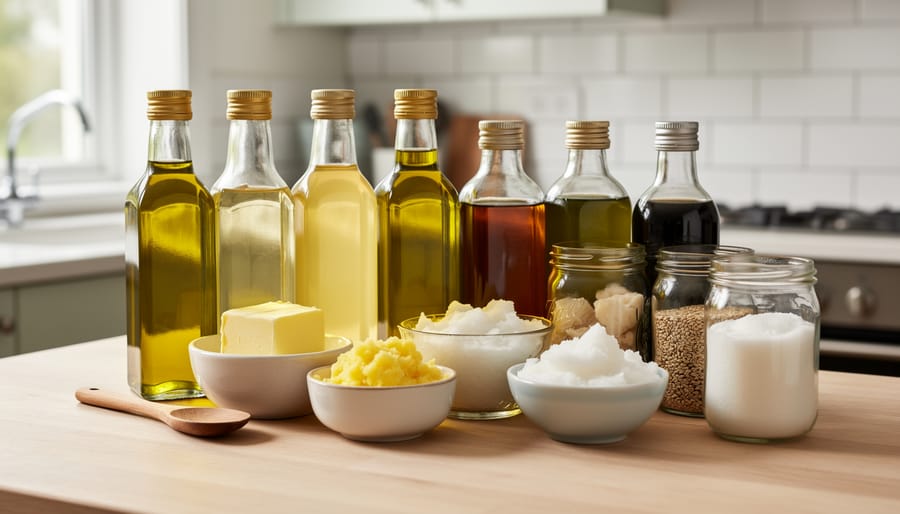
The types of fatty acids in your cooking oils affect your body at a cellular level, influencing everything from your heart health to how your body manages inflammation. Each category of fatty acids interacts differently with your cardiovascular system, your cell membranes, and your inflammatory pathways.
Saturated fats, found in higher amounts in coconut oil and animal fats, have historically been linked to elevated LDL cholesterol in some individuals. However, research now shows the picture is more complex than once thought. The source of saturated fat, your overall diet, and your individual response all matter. Replacing saturated fats with unsaturated versions generally supports cardiovascular health better than simply cutting total fat intake.
Monounsaturated fats support heart health by helping maintain healthy cholesterol levels. These fats, predominant in olive and avocado oils, have been studied extensively in Mediterranean populations where cardiovascular disease rates tend to be lower. They’re stable enough for most cooking methods while offering protective benefits for your blood vessels.
Polyunsaturated fats include two essential fatty acids your body can’t make: omega-3 and omega-6. Your body needs both, but the balance between them matters considerably. Modern diets often provide far more omega-6 (abundant in many seed oils) than omega-3 (found in fatty fish, flaxseed, and walnuts). This imbalance may promote inflammation when omega-6 intake is excessive relative to omega-3. Many plant-based oils are rich in omega-6, which supports certain body functions but should be balanced with omega-3 sources for optimal wellness.
Trans fats, created when oils are partially hydrogenated, disrupt normal cellular function and strongly increase cardiovascular disease risk. Fortunately, these are now largely banned in Canada and should be avoided entirely.
The health impact of your cooking oils depends not just on one fatty acid type but on your overall dietary pattern. Oils rich in beneficial plant compounds like polyphenols offer additional protective effects beyond their fatty acid profiles. Rather than seeking a single perfect oil, combining different types throughout your week provides a broader range of beneficial fats and compounds.
Common Cooking Oils and Their Fatty Acid Characteristics
Walking into any Canadian grocery store, you’ll find dozens of cooking oils on the shelf. Each has a distinct fatty acid makeup that influences how it behaves in your kitchen and what it offers your body. Knowing these characteristics helps you stock your pantry with oils suited to your cooking style and health priorities.
Olive oil is predominantly monounsaturated, which contributes to its reputation as a heart-healthy choice. Extra virgin olive oil works well for lower-heat cooking and dressings, while refined versions can handle moderate heat. The dominant monounsaturated fats remain relatively stable during everyday cooking.
Canola oil also features primarily monounsaturated fats, with a notable amount of polyunsaturated fats including some omega-3s. Its neutral flavor and versatility make it popular for everything from baking to sautéing. Canola offers a balanced fatty acid profile at an accessible price point for most Canadian households.
Coconut oil stands out as high in saturated fat, giving it a solid texture at room temperature and excellent heat stability. While saturated fats were once universally discouraged, current understanding recognizes that not all saturated fats behave identically in the body. Coconut oil’s unique composition makes it stable for high-heat cooking, though you might want to balance its use with oils richer in unsaturated fats.
Avocado oil is rich in monounsaturated fats and handles high temperatures exceptionally well. Its mild taste doesn’t overpower dishes, and its stability makes it suitable for grilling or roasting. The cost tends to be higher than other options, but the fatty acid profile supports both cooking performance and nutritional goals.
Sunflower and safflower oils are predominantly polyunsaturated, though high-oleic versions bred to be higher in monounsaturated fats are increasingly common. Traditional versions are better suited for dressings or gentle cooking since polyunsaturated fats are more vulnerable to heat damage. Check labels to know which type you’re purchasing.
| Oil Type | Dominant Fatty Acid | Best Uses |
|---|---|---|
| Olive oil | Monounsaturated | Dressings, sautéing, moderate-heat cooking |
| Canola oil | Monounsaturated with polyunsaturated | All-purpose, baking, frying |
| Coconut oil | Saturated | High-heat cooking, baking |
| Avocado oil | Monounsaturated | High-heat cooking, grilling, roasting |
| Sunflower/Safflower oil | Polyunsaturated (or monounsaturated if high-oleic) | Dressings, gentle cooking (standard), versatile (high-oleic) |
| Butter and animal fats | Saturated with some monounsaturated | Baking, flavoring, moderate-heat cooking |
Butter and animal fats like lard or tallow contain substantial saturated fat alongside some monounsaturated and small amounts of polyunsaturated fats. They bring flavor and work well in baking or for adding richness to dishes. Their saturated fat content provides stability, though moderation fits well within most balanced eating patterns.
No single oil is perfect for every purpose. Having two or three types on hand lets you match the oil to the task, a delicate vinaigrette, a quick stir-fry, or a batch of roasted vegetables, while naturally varying your fatty acid intake throughout the week.
Matching Oils to Cooking Methods

The stability of cooking oils under heat depends directly on their fatty acid makeup. Saturated fats remain most stable at high temperatures because their chemical structure lacks the double bonds that break down when heated. Oils rich in saturated fat handle frying and high-heat roasting without degrading quickly. Monounsaturated fats offer good heat stability as well, making them versatile for most cooking methods. Polyunsaturated fats are the most fragile, they oxidize readily when exposed to heat, light, or air, which can create off-flavors and reduce nutritional value.
For high-heat cooking like deep frying or searing, choose oils with predominantly saturated or monounsaturated fatty acids. These maintain their structure and don’t produce unwanted compounds as readily. Coconut oil and avocado oil work well here, as does refined olive oil. When you’re sautéing or stir-frying at moderate heat, oils with mostly monounsaturated fat provide excellent performance without the saturated fat content some Canadians prefer to limit. Regular olive oil and canola oil fit this category.
Baking presents less stress on oils than stovetop cooking, so you have more flexibility. Most oils perform adequately in baked goods, though the fatty acid profile will affect texture and shelf life. Polyunsaturated oils can work in baking but may shorten how long your treats stay fresh.
For salad dressings, dips, and other no-heat uses, you can take full advantage of polyunsaturated-rich oils like flaxseed or walnut oil without worrying about heat damage. These delicate oils also complement food pairs that enhance nutrient absorption. Store them in the refrigerator to minimize nutrient loss from oxidation.
The key is matching the oil’s fatty acid stability to your cooking temperature. Higher heat demands more stable fats; gentler preparations let you use the more delicate options that bring varied nutrients to your diet.
Practical Tips for Canadian Kitchens
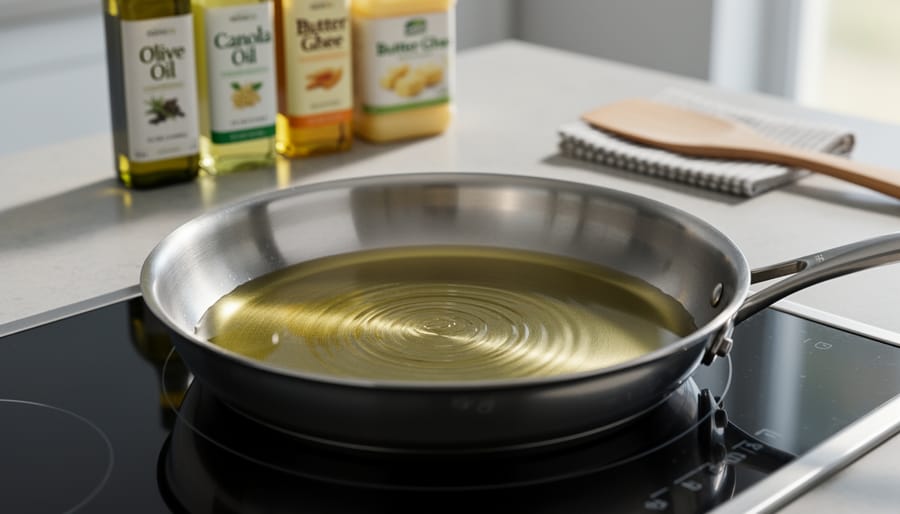
Incorporating healthy cooking oils into your kitchen routine doesn’t need to feel complicated or expensive. Start by keeping two or three oils on hand that serve different purposes: a neutral option rich in monounsaturated fats for everyday cooking, a stable saturated fat for high-heat applications, and a polyunsaturated oil for finishing dishes or dressings. This approach lets you balance fatty acid intake naturally without relying on a single oil for everything.
When shopping, check labels for processing details. Cold-pressed or expeller-pressed oils typically retain more of their natural fatty acid structure compared to heavily refined versions. Look for dark glass bottles or metal containers, which protect delicate polyunsaturated fats from light damage. Store oils in a cool, dark cupboard rather than beside the stove, and buy smaller bottles of oils high in polyunsaturated fats since they’re more prone to oxidation once opened.
Budget-conscious choices can still align with good fatty acid balance. Canola oil offers a favorable mix of fatty acids at an accessible price point for most Canadian households. Buying larger containers of frequently used oils reduces cost per serving, but only if you’ll use them before they degrade. Consider saving pricier specialty oils for raw applications where their fatty acid benefits and flavors shine, while using more economical options for cooking.
Rotate your oil selection based on what you’re preparing. Reserve oils with higher levels of saturated fats for roasting and frying, while choosing those richer in monounsaturated fats for moderate-heat sautéing. Save polyunsaturated-rich oils for drizzling over finished vegetables or whisking into vinaigrettes. This variety ensures you’re getting a range of fatty acids rather than overloading on any single type, supporting both nutrition goals and culinary flexibility.
Common Questions About Fatty Acids in Cooking Oils
Are saturated fats always unhealthy?
Not necessarily. While health organizations recommend limiting saturated fat intake for cardiovascular health, the relationship is more nuanced than “always bad.” The overall dietary pattern matters more than a single nutrient, and some foods high in saturated fats also provide beneficial nutrients.
Can unsaturated fats go bad?
Yes, oils high in polyunsaturated fats are more prone to oxidation and rancidity when exposed to heat, light, and air. Store these oils in cool, dark places and use them within a few months of opening for best quality.
Does processing change an oil’s fatty acid profile?
Processing methods like refining, bleaching, and deodorizing don’t typically alter the basic fatty acid composition, but they can remove beneficial compounds like antioxidants and vitamins. Cold-pressed or virgin oils retain more of these protective substances while maintaining the same fundamental fatty acid structure.
Are expensive oils worth it from a fatty acid perspective?
Price doesn’t necessarily reflect a better fatty acid profile. An affordable canola oil can have a favorable composition for everyday cooking, while premium oils may offer advantages in flavor, minimal processing, or specific culinary applications rather than dramatically different fatty acid makeup.
Beyond these common concerns, many Canadians wonder whether they need to memorize specific fatty acid percentages for each oil. The short answer is no. Understanding the general categories, whether an oil is predominantly saturated, monounsaturated, or polyunsaturated, gives you enough information to make smart cooking choices. You don’t need to become a chemist to cook healthily.
Another frequent question involves whether “light” or “refined” versions of oils are healthier. From a fatty acid standpoint, they’re essentially the same as their unrefined counterparts. The difference lies in flavor intensity and smoke point rather than the fundamental fat composition. Choose based on your cooking needs and taste preferences rather than assuming one is nutritionally superior.
If you’re concerned about balancing omega-6 and omega-3 fatty acids in your diet, remember that your overall eating pattern matters more than any single oil. Incorporating fatty fish, walnuts, flaxseeds, and a variety of cooking oils naturally supports a better balance without requiring mathematical calculations at every meal.
Understanding fatty acid profiles gives you a solid foundation for making cooking oil choices that support your health and suit your kitchen needs. Rather than feeling overwhelmed by competing advice, you can now look at an oil’s composition and match it to how you actually cook.
There’s no single perfect oil for every situation. A balanced approach means keeping a few different types on hand, maybe a stable monounsaturated oil for everyday cooking, something neutral for high-heat work, and a flavorful option for finishing dishes. Read labels, store oils properly, and don’t hesitate to try something new when your budget allows.
If you’re managing specific health conditions or following particular dietary guidance, talk with your healthcare provider or a registered dietitian. They can help you tailor your fat choices to your individual situation, ensuring your cooking habits align with your wellness goals.
Small, informed changes in your kitchen add up. You’re not chasing perfection, you’re building sustainable habits that nourish you and your family over the long term.