
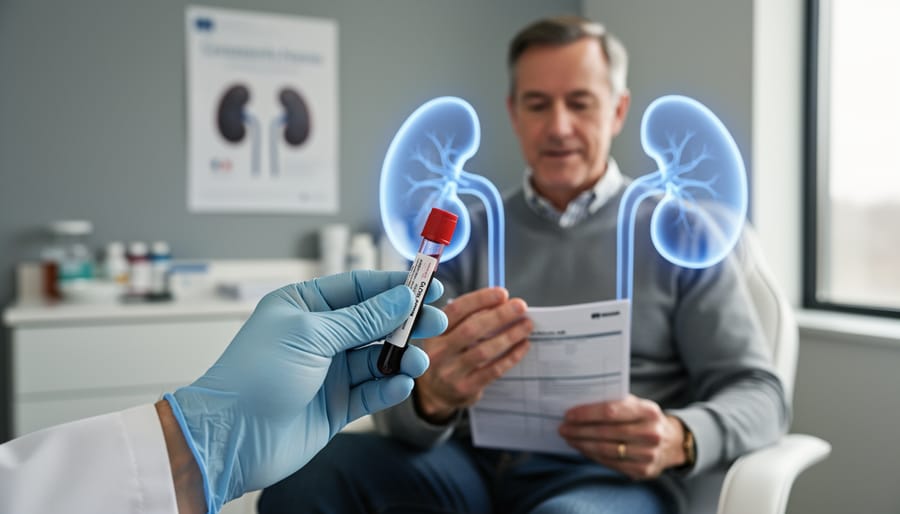
In Canada, a basic kidney function check is usually a routine blood test (creatinine, which your lab turns into an eGFR number), and when your doctor orders it for a medical reason, provincial health plans typically cover it. You’d generally pay out of pocket only if you request it on your own through a private lab or a direct-to-consumer panel, where prices vary by provider, province, and what else is bundled in. Rather than quote a figure that may not match your lab, it’s smarter to know what moves the price.
Four things matter most. The testing route comes first: a physician-ordered test through your provincial plan versus a private or self-requested panel. Add-ons come next, since eGFR often travels with a urine albumin test, and adding cystatin C or a full metabolic panel changes the total. Then there’s the clinic or lab you choose, and finally how often you need repeat testing.
Age shapes that last point more than most men expect. Kidney filtration naturally declines gradually through adulthood, so a number that’s perfectly healthy at 70 would look different at 30. That means “normal” isn’t one fixed value, and the right testing schedule depends on your age and risk factors.
Below, we break down what testing costs by route, who pays, and what your eGFR means at each stage of life, with practical steps to protect your kidneys along the way.
What Does GFR Testing Cost in Canada? Cost by Age, Province, and Testing Route
Testing Frequency by Decade: Why Age Changes How Often, Not How Much
Here’s the good news: your age rarely changes what a kidney check costs. What it changes is how often your care team suggests one.
For many men in their 30s and 40s with no health concerns, kidney function may only be looked at occasionally, often as part of a routine physical or when blood work is done for another reason. As men move into their 50s, 60s, and beyond, providers often check more regularly. This is because kidney filtering naturally slows over time, and tracking the trend helps tell normal aging apart from something that needs attention.
Certain health factors can move that schedule up at any age. Your provider may suggest more frequent checks if you have:
- High blood pressure that is ongoing or hard to control
- Diabetes or prediabetes
- A family history of kidney disease
- Heart disease or a history of stroke
- Regular use of medications that can affect the kidneys
- Previous results that were borderline or changing
If any of these apply to you, it doesn’t mean something is wrong. It simply means a closer look is a sensible, proactive step.
Because everyone’s situation is different, the right schedule should come from your doctor or nurse practitioner, not from a general rule of thumb. If you’re unsure when you’re due, bring it up at your next appointment. It’s a quick question, and it can help you plan ahead.
Where the Money Goes: Cost Breakdown of a Kidney Function Workup

A kidney check isn’t one single test. It’s a handful of small pieces, and knowing what each one does makes it easier to see where any cost might show up.
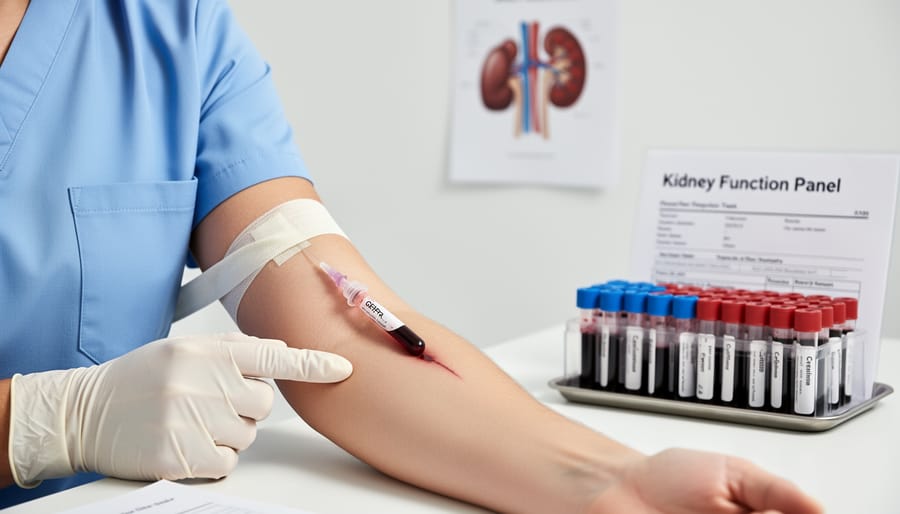
The core piece is a blood test for creatinine, a waste product your muscles produce. Because healthy kidneys clear it steadily, a higher level can hint that filtering is slowing. Labs plug your creatinine, age and sex into a formula to give your estimated GFR, or eGFR. That’s the number most people mean when they talk about kidney function.
Next comes a urine test called the albumin-to-creatinine ratio. It looks for small amounts of protein leaking into the urine, which can be an early sign of kidney stress, sometimes before eGFR changes at all. Blood pressure is checked too, since high pressure can both damage kidneys and be a sign that something’s off.
Here’s how the components usually break down:
| Component | What it tells you | Typical coverage |
|---|---|---|
| Blood creatinine (eGFR) | How well your kidneys filter blood | Usually publicly covered when ordered by a clinician |
| Urine albumin-to-creatinine ratio | Whether protein is leaking into urine | Usually publicly covered when ordered by a clinician |
| Blood pressure reading | Strain on your kidneys and blood vessels | Usually part of a covered visit |
| Clinic visit or lab collection | The appointment to order, draw and review | Covered in public settings; fees may apply at private labs |
| Cystatin C or specialist referral | A second look when results are unclear | Varies by province and reason; may carry an out-of-pocket fee |
Optional extras are where costs can creep in. Cystatin C is another blood marker some clinicians use to double-check eGFR, and a specialist referral may follow if results stay low or keep changing. Coverage for these depends on your province and why they’re ordered, so it’s worth asking your care team before booking.
How Kidneys Age in Men: Why GFR Naturally Declines
Key Takeaway: What a Normal eGFR Looks Like at Different Ages
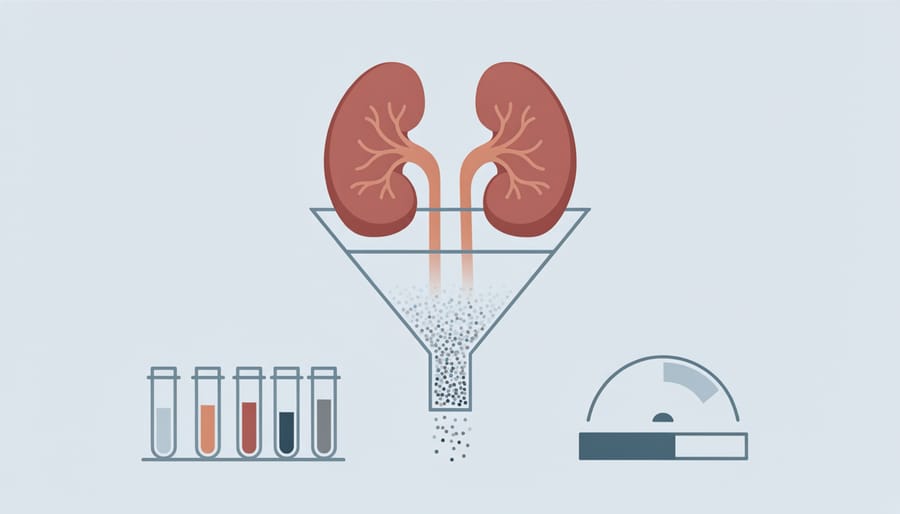
Some drop in estimated GFR (eGFR) is a normal part of getting older, so a number that looks lower than it did at 30 is not automatically a concern. What matters more is how your results move over several tests, which tells your care team far more than any single reading can.
If your result looks unexpected, a repeat test is often the next step, and a conversation with your provider will put the number in context.
What Affects the Price and the Result: Factors Worth Knowing
Two things shape what you pay for a kidney check: how you access the test and whether the result is reliable the first time. Getting both right can save you money and a second blood draw.
Coverage rules differ by province, so the same test can be free in one place and billed in another. A test ordered by your doctor or nurse practitioner and done at a public lab is usually covered. Skip the order and go straight to a private lab, and you’ll likely pay yourself. Rural and remote access adds travel costs and sometimes time off work, which people forget to count.
Here are the factors that most often raise out-of-pocket costs or lead to repeat testing, roughly from most to least common:
- Ordering a test through a private or direct-to-consumer lab instead of through your clinician.
- Repeating the test because a preparation issue, like dehydration or a recent hard workout, skewed the result.
- Adding extras such as cystatin C testing that your provider didn’t order.
- Traveling long distances to reach a collection site or clinic.
- Getting a specialist referral when ongoing monitoring with your regular provider would have been enough.
The result itself can be nudged by everyday things. Being low on fluids, eating a large high-protein meal, or doing intense exercise the day before can all shift creatinine levels. Creatine supplements, popular with many men who lift weights, can also raise creatinine without any change in how well your kidneys work. Some medications have a similar effect.
None of this is cause for worry. Just tell your provider about your supplements and medications, stay normally hydrated, and ask if you should skip a hard workout or heavy protein meal beforehand. A cleaner first result often means one test instead of two.
Private Testing vs. Your Doctor’s Order: Pros, Cons, and Where DIY Fits
Some men skip the doctor’s office entirely and order a kidney panel through a private lab or pick up an at-home kit. That’s understandable. Convenience and privacy matter, especially if booking an appointment feels like a hassle. The real question is what you get for the money, and what you miss.
Here’s how the two routes compare:
Pros
- Self-directed testing can be quick, with no referral or waiting for an appointment.
- At-home kits and private labs offer privacy and flexible scheduling.
- Seeing your own numbers can motivate healthier habits.
- A clinician-ordered test is usually publicly covered, so it often costs nothing out of pocket.
- A healthcare professional can read your result alongside your blood pressure, medications, and history.
Cons
- Private panels and kits usually mean paying out of pocket, and you may pay again to repeat them.
- A single number without context can cause needless worry or false reassurance.
- Some at-home kits and app-based estimates haven’t been well validated against standard lab testing.
- Self-directed results don’t come with follow-up, such as a urine test for protein.
- Waiting for a doctor’s appointment can take longer than ordering privately.
Wearables and apps that “estimate” kidney function deserve particular caution. A figure on your phone isn’t the same as a lab-measured creatinine result, and it shouldn’t replace one.
If you do go the self-directed route, think of it as a starting point rather than a diagnosis. A result that looks low might simply reflect a hard workout, dehydration, or a creatine supplement. A result that looks fine might still hide protein in the urine, which a basic panel won’t catch.
The most useful step is simple: bring any result you get, from any source, to your family doctor, nurse practitioner, or pharmacist. They can tell you whether it needs a repeat test, a closer look, or nothing more than a note in your file. That conversation costs very little and can save you months of guessing.
Protecting Your Kidneys at Every Age: Practical Lifestyle Tips for Men

Good news: the habits that protect your kidneys cost almost nothing, and they work no matter how old you are. Your glomerular filtration rate (GFR) will drift down with age, but how fast it drifts is partly up to you.
Blood pressure and blood sugar are the big two. High pressure strains the kidney’s tiny filters, and high blood sugar damages them over time. Many men with early insulin resistance feel perfectly fine, so regular check-ups and simple home blood pressure readings are worth the effort.
Here are everyday habits that add up:
- Food: build meals around vegetables, fruit, whole grains, beans and lean proteins.
- Food: go easy on sodium by cooking more at home and checking labels on canned and processed foods.
- Food: support your gut microbiome health with fibre-rich foods, which also help steady blood sugar.
- Movement: aim for about 150 minutes of moderate activity a week, such as brisk walking or cycling.
- Movement: add strength training twice a week, which helps counter age-related muscle loss.
- Daily choices: drink water regularly through the day, letting thirst and pale-yellow urine guide you.
- Daily choices: limit alcohol and, if you smoke, ask your provider about quit supports.
- Daily choices: keep a healthy weight, since extra weight raises blood pressure and diabetes risk.
A few cautions matter too. Regular use of over-the-counter anti-inflammatory pain relievers, like ibuprofen or naproxen, can stress the kidneys, so ask your pharmacist about alternatives if you take them often. Check with your provider or pharmacist before starting supplements, creatine, or high-dose protein powders, since some can affect kidney tests or add workload.
Finally, don’t overlook your mind. Chronic stress and poor rest push blood pressure up, and the link between sleep and mental health is strong. Some men also feel anxious about health testing and put it off. Try to see a check-up as a calm, proactive step, because catching changes early gives you the most options.
Frequently Asked Questions About GFR, Aging, and Testing Costs
Is a kidney function test free in my province?
In most provinces, a blood test to estimate GFR is covered by public health insurance when a doctor or nurse practitioner orders it for a medical reason. Private labs and direct-to-consumer panels usually charge a fee, so check your provincial rules before booking.
Is a lower GFR normal after 60?
Some gradual decline with age is expected, so a number that is lower than a younger man’s is not automatically a problem. What matters most is whether your results stay steady over time, which your provider can help you track.
Can exercise or diet change my result?
Yes, temporarily. Intense exercise, a high-protein meal, dehydration, or creatine supplements can nudge your creatinine reading, so mention these to whoever reviews your results.
Do I need to see a specialist?
Most men don’t, at least not at first. Your family doctor will usually look after routine monitoring and refer you to a kidney specialist if results drop, protein shows up in your urine, or your numbers keep changing.
Many men wonder when to start checks. There isn’t one universal age, and it often depends on your risk factors. If you have high blood pressure, diabetes, or a family history of kidney disease, ask your provider about starting earlier. Otherwise, bring it up at a regular check-up, especially as you move into your 50s and beyond.
Please don’t wait for your next appointment if something feels off. Swelling in your legs, ankles, or around your eyes, major changes in how often you urinate, foamy or bloody urine, or fatigue that won’t lift all deserve a prompt call to your doctor. If symptoms come on suddenly or feel severe, seek urgent care. Reaching out early is a smart, supportive step for your health.
Checking your kidney function is usually one of the more affordable health checks out there. In most provinces, a blood test to estimate your GFR is covered when your doctor or nurse practitioner orders it for a clinical reason, so the real costs tend to show up only with private labs or optional extras. Your age mostly shapes how often a check makes sense, not what each test costs.
It also helps to remember that a slow, gradual dip in GFR is a normal part of getting older. A lower number in your 60s or 70s isn’t automatically a sign of trouble. What matters most is the pattern over time, which is exactly why regular check-ups are so useful.
If you haven’t had your kidneys checked in a while, consider booking a conversation with your healthcare provider. It’s a small, supportive step you’re taking for yourself. Pair it with the everyday habits that protect your kidneys: staying active, keeping blood pressure and blood sugar in a healthy range, drinking enough water, and eating a balanced diet.
Looking after your kidneys at any age is very doable, and you don’t have to figure it out alone. This article offers general information only and isn’t a substitute for personal medical advice, so lean on your care team for guidance that fits you.