
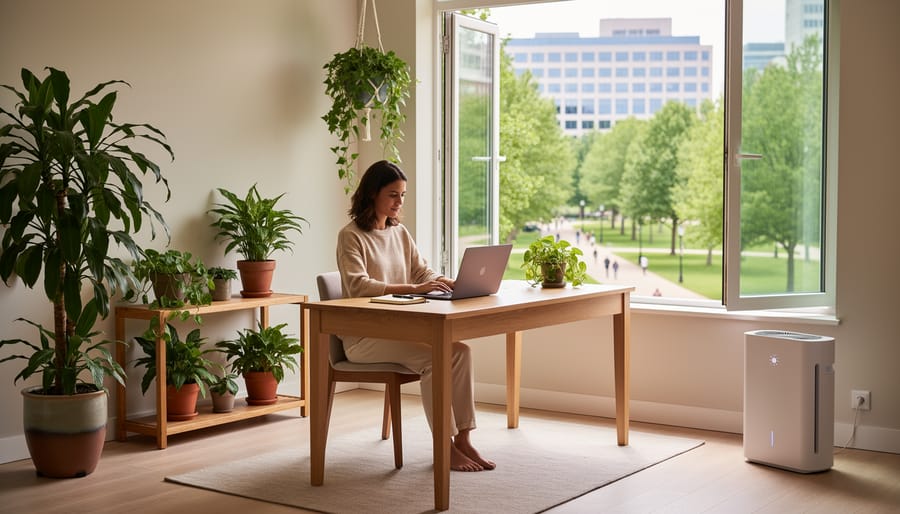
Environmental wellness means living in harmony with your surroundings while creating spaces that support your physical and mental health. It’s about the relationship between you and your environment—from the air you breathe in your home to the natural spaces where you spend time outdoors. This dimension of wellness recognizes that your surroundings directly impact your stress levels, sleep quality, immune function, and overall wellbeing.
Consider environmental wellness as your personal ecosystem. When you reduce clutter in your living space, you’re not just organizing—you’re lowering cortisol levels and improving focus. When you spend time in nature, you’re actively reducing blood pressure and anxiety. When you minimize exposure to toxins in your home, you’re supporting your body’s natural defenses against illness.
Research shows that Canadians who prioritize environmental wellness experience measurable health benefits: better sleep, reduced respiratory issues, improved mood, and stronger immune systems. The connection is clear—your environment shapes your health, and you have more control over it than you might think.
This article provides concrete examples of environmental wellness across three key areas where you spend most of your time: your home, outdoor spaces, and workplace. You’ll discover practical actions you can take today to create healthier environments, from improving indoor air quality to connecting with nature in meaningful ways. Each example is evidence-based and designed to fit seamlessly into your daily routine, helping you build a foundation for lasting health and vitality.
What Is Environmental Wellness?
Environmental wellness refers to the dynamic relationship between your personal health and the physical spaces where you live, work, and spend time. This dimension of wellness recognizes that your surroundings significantly influence your physical health, mental well-being, and overall quality of life, while also acknowledging your responsibility to care for these environments.
Taking a holistic environmental approach means considering both micro and macro levels of your surroundings. At the micro level, environmental wellness involves your immediate personal spaces like your home and workspace. This includes factors such as air quality, lighting, organization, cleanliness, and the presence of natural elements. These everyday environments affect your mood, productivity, sleep quality, and stress levels in measurable ways.
At the macro level, environmental wellness extends to your broader community and the natural world around you. This encompasses your neighbourhood, access to green spaces, local air and water quality, and your connection to nature. For Canadians, this might mean appreciating our forests, lakes, and parks while being mindful of seasonal changes and their impact on well-being.
Importantly, environmental wellness is a two-way relationship. Your surroundings affect you through exposure to pollutants, noise, natural light, and access to outdoor spaces. Research consistently shows that these factors influence everything from cardiovascular health to mental clarity. Conversely, your daily choices affect your environment through energy consumption, waste production, chemical use, and transportation decisions.
Understanding this reciprocal relationship empowers you to make intentional changes that benefit both your health and the spaces you inhabit, creating a positive cycle of wellness.
Why Environmental Wellness Matters for Your Health
Your environment directly influences your health in ways you might not realize. The air you breathe, the spaces you inhabit, and your connection to nature all play significant roles in preventing illness and supporting wellbeing.
Indoor air quality is a major concern for Canadian households. According to Health Canada, indoor air can be up to five times more polluted than outdoor air, contributing to respiratory issues, allergies, and headaches. Poor ventilation, chemical cleaners, and inadequate humidity control create conditions that strain your immune system and reduce your body’s ability to fight off infections. Simple changes to your home environment can reduce these risks and improve your daily health.
Access to nature offers measurable health benefits that go beyond feeling good. Research shows that spending time in green spaces lowers cortisol levels, the hormone associated with stress. For Canadians dealing with long winters and limited daylight, this connection becomes even more important for mental health. Regular exposure to natural environments has been linked to reduced anxiety, improved mood, and better sleep quality.
Your physical environment also impacts chronic disease risk. Cluttered, chaotic spaces increase stress hormones and can lead to poor lifestyle choices like decreased physical activity and unhealthy eating patterns. Conversely, organized, well-lit environments encourage movement and support the disease prevention strategies that protect against conditions like heart disease and diabetes.
The evidence is clear: environmental wellness is not just about comfort. It directly affects your immune function, stress levels, and long-term health outcomes. When you create healthy spaces and maintain regular contact with nature, you are actively investing in your physical and mental wellbeing. Understanding this connection empowers you to make informed choices about your surroundings and take practical steps toward better health.

Environmental Wellness Examples in Your Home
Indoor Air Quality and Ventilation
The air you breathe indoors significantly impacts your health, especially during Canadian winters when homes are sealed tight. Poor indoor air quality can trigger allergies, worsen respiratory conditions, and affect your sleep and concentration.
Start by opening windows for 5-10 minutes daily, even in winter. This simple practice removes indoor pollutants and reduces moisture buildup. During extreme cold, crack a window in rooms you’re not using to maintain fresh air circulation without losing too much heat.
Consider investing in a quality air purifier with HEPA filters, particularly beneficial during wildfire season or if you live in urban areas with higher pollution levels. Position purifiers in bedrooms and common areas for maximum benefit.
Houseplants like spider plants, snake plants, and pothos naturally filter air while adding humidity to dry winter environments. Aim for one or two plants per room for optimal air quality improvement.
Reduce harsh chemical exposure by switching to natural cleaning products, vinegar-based solutions, or those with eco-certifications. Avoid air fresheners and heavily scented products that release volatile organic compounds.
Monitor humidity levels with an inexpensive hygrometer, maintaining between 30-50 percent. Use dehumidifiers in damp basements and humidifiers during dry heating months to prevent mold growth and respiratory irritation.
Natural Light and Sleep Environment
Your sleep environment’s lighting plays a crucial role in regulating your circadian rhythm and overall health. Natural light exposure, especially in the morning, helps set your body’s internal clock and improves mood and energy levels throughout the day. Aim for at least 30 minutes of natural light exposure within the first hour of waking by opening curtains or taking a brief outdoor walk.
During Canadian winters, reduced daylight can disrupt sleep patterns and contribute to seasonal affective disorder. Combat this by positioning your workspace near windows, using a light therapy lamp in the morning (10,000 lux for 20-30 minutes), and maximizing outdoor time during lunch breaks.
In the evening, minimize exposure to blue light from screens at least two hours before bedtime, as it suppresses melatonin production. Install dimmer switches or use warm-toned bulbs to signal your body that it’s time to wind down.
Create a dark sleeping environment using blackout curtains or an eye mask. Even small amounts of light can interfere with sleep quality. Keep your bedroom temperature cool (16-19°C) and reserve the space exclusively for sleep to strengthen the mental association between your bedroom and rest.
Reducing Clutter and Organizing Spaces
Physical clutter directly impacts mental health by increasing cortisol levels and creating visual stress that makes it harder to focus and relax. Research shows that disorganized environments can contribute to anxiety, reduced productivity, and difficulty maintaining healthy routines.
Start with a simple decluttering approach: tackle one small area at a time, like a single drawer or countertop. Sort items into three categories—keep, donate, or discard—and be honest about what you actually use. This manageable strategy prevents overwhelm and builds momentum.
Create functional spaces that support your wellness goals. Designate a specific spot for exercise equipment, keep healthy snacks visible and accessible, and establish a calm bedtime environment by removing electronics from the bedroom. Store frequently used items at eye level and group similar things together.
Maintain your organized spaces by adopting a “one in, one out” rule and spending five minutes each evening tidying high-traffic areas. These small daily habits prevent clutter from accumulating and protect the mental clarity your organized environment provides, supporting better sleep, stress management, and overall wellness.
Minimizing Toxic Exposures
Reducing toxic exposures in your home doesn’t require a complete overhaul. Start with simple swaps that make a real difference. Choose plant-based cleaning products or make your own using vinegar and baking soda. Replace plastic food containers with glass or stainless steel options to minimize chemical leaching. Installing a quality water filter removes chlorine and potential contaminants from your drinking water. When selecting personal care products, look for shorter ingredient lists and avoid items containing parabens and phthalates. Check product labels and choose fragrance-free options when possible. These gradual changes help create a cleaner indoor environment while protecting your family’s health.
Environmental Wellness in Your Community and Outdoors
Spending Time in Nature
Spending time in nature offers powerful benefits for both physical and mental health. Research shows that green spaces reduce stress, lower blood pressure, and improve mood while supporting immune function. The Japanese practice of forest bathing, or shinrin-yoku, demonstrates how simply being present in natural settings can decrease cortisol levels and boost overall wellbeing.
Canada’s extensive network of parks, trails, and natural areas provides excellent opportunities for nature connection. Start with nearby urban green spaces like neighbourhood parks or riverside paths. Many cities offer accessible trails suitable for walking, cycling, or snowshoeing. Provincial and national parks showcase diverse landscapes, from coastal forests to prairie grasslands.
Year-round nature engagement is possible with proper preparation. In warmer months, plan morning or evening visits to avoid peak heat. During winter, dress in layers and explore snow-covered trails or frozen waterways. Rainy weather offers unique sensory experiences—consider waterproof gear for peaceful walks through misty forests.
Even brief nature exposure matters. Aim for 20 minutes outdoors several times weekly. Try eating lunch in a park, gardening, or watching birds from your window. These small actions create meaningful environmental wellness benefits while building a sustainable habit that supports your long-term health.

Creating Green Spaces at Home
Bringing nature into your living space offers proven mental health and nutritional benefits, regardless of your home size. Start small with indoor herbs like basil, mint, or parsley on a sunny windowsill. These provide fresh ingredients while improving indoor air quality. For apartment dwellers, container gardening on balconies creates peaceful outdoor retreats and growing opportunities even in limited spaces.
Canadian gardeners should consider seasonal limitations when planning green spaces. Hardy vegetables like kale and tomatoes thrive during our shorter growing season, typically May through September in most regions. Indoor gardening extends your growing year, with options like microgreens and lettuce flourishing under simple grow lights during winter months.
Community gardens provide excellent opportunities to connect with neighbours while accessing larger growing areas. Many Canadian municipalities offer affordable plots, creating both physical activity and social engagement. Research shows that regular gardening reduces stress, increases physical movement, and provides access to fresh, nutritious produce. Even dedicating 15 minutes daily to plant care can enhance your environmental wellness and create meaningful connections with natural cycles.
Reducing Environmental Footprint
Making sustainable choices creates a meaningful win-win for your health and the planet’s wellbeing. Simple shifts like walking or biking for short trips boost your physical activity while reducing carbon emissions. Choosing locally grown foods supports Canadian farmers, delivers fresher nutrients, and cuts transportation-related pollution. Reducing food waste through meal planning and composting saves money while decreasing methane from landfills. Conserving energy by adjusting your thermostat or unplugging devices lowers utility bills and reduces strain on power grids. These actions foster environmental stewardship, connecting you to something larger than yourself. Research shows this sense of purpose contributes to improved mental health and life satisfaction, proving that caring for the environment genuinely supports your personal wellness journey.
Building Community Connections
Joining local environmental initiatives offers powerful dual benefits for your well-being. Participating in neighborhood clean-ups, tree-planting events, or community garden projects connects you with like-minded people while improving your surroundings. Research shows that combining social interaction with environmental action significantly boosts mental health by reducing feelings of isolation and creating a sense of purpose. Many Canadian communities host regular environmental volunteer opportunities through conservation groups, municipal programs, or resident associations. These activities provide structured ways to spend time outdoors, engage in light physical activity, and build meaningful relationships with neighbors. Community wellness spaces like shared gardens or naturalized parks create gathering spots that support both environmental and social health, fostering a stronger sense of belonging while contributing to cleaner, greener neighborhoods.

Environmental Wellness at Work
Optimizing Your Workspace
Your physical workspace significantly impacts both productivity and wellbeing. Start with an ergonomic setup that positions your computer screen at eye level and supports proper posture, reducing physical strain and headaches. Position your desk near windows to maximize natural light exposure, which helps regulate your sleep-wake cycle and improves mood.
Adding indoor plants like pothos or spider plants enhances air quality by filtering common pollutants while creating a calming atmosphere. Monitor your workspace temperature and ventilation, aiming for 20-22°C with fresh air circulation to maintain alertness and comfort.
Manage noise levels based on your needs. Some people focus best with white noise or soft background music, while others prefer quiet. Use noise-cancelling headphones or a fan to create your ideal sound environment.
Personalize your space with meaningful items like family photos or artwork that inspire positivity without creating clutter. Keep surfaces organized and clean to reduce visual stress. These small adjustments create an environment that supports sustained focus, reduces daily stress, and promotes better physical health throughout your workday.
Taking Environmental Breaks
Your workday doesn’t have to mean hours of disconnection from nature. Even brief environmental breaks can significantly reduce stress and improve focus. Step outside during your lunch break, even for just 10 to 15 minutes. Research shows that short nature exposures can lower cortisol levels and enhance mood throughout the afternoon.
Consider transforming routine meetings into walking meetings outdoors when weather permits. This approach combines physical activity with fresh air, often leading to more creative problem-solving and productive discussions. Many Canadian workplaces now recognize the value of accessible outdoor spaces, from rooftop gardens to nearby parks.
If getting outside isn’t possible, position yourself near windows with natural light or take a few minutes to visit any indoor plants in your building. The key is creating intentional moments to reconnect with natural elements during your day. These small practices accumulate into meaningful benefits for both your mental clarity and overall wellness, making environmental breaks a practical strategy for workplace health.
Simple Steps to Start Improving Your Environmental Wellness Today
You don’t need to overhaul your entire life to improve your environmental wellness. Starting small and building gradually makes lasting change more achievable. Here’s how to begin your journey today:
Choose one focus area that resonates with you most. Maybe it’s decluttering your bedroom, adding plants to your living space, or spending more time outdoors. Concentrating on a single change helps you build confidence and create sustainable habits.
Start with these beginner-friendly steps:
Begin by opening your windows for 10 minutes each morning to improve indoor air quality. Fresh air circulation reduces indoor pollutants and energizes your space.
Designate one drawer or shelf for organization this week. A clutter-free environment reduces stress and creates a sense of calm.
Schedule a 15-minute daily outdoor walk, even in your neighborhood. Regular nature exposure, regardless of the setting, supports mental health and provides gentle physical activity.
Replace one harsh cleaning product with a natural alternative. This simple swap reduces chemical exposure in your home environment.
Add one low-maintenance plant to your workspace or bedroom. Plants naturally filter air and create a more pleasant atmosphere.
Remember, environmental wellness is about progress, not perfection. What works for your neighbor might not suit your lifestyle, and that’s completely fine. The goal is finding simple environmental wellness habits that feel manageable and meaningful to you.
Give yourself permission to start small and adjust as you go. Even one positive change creates momentum for future improvements in your environmental wellness journey.
Environmental wellness doesn’t require drastic lifestyle overhauls or significant financial investment. The examples throughout this article demonstrate that meaningful improvements come through small, consistent changes to your surroundings. Whether you’re decluttering a single room, adding plants to your workspace, or simply opening windows for fresh air, each action contributes to your overall wellbeing.
Your physical environment profoundly influences your mental clarity, stress levels, and physical health. When you take control of your surroundings, you create supportive spaces that naturally encourage healthier choices and reduce daily stressors. This environmental wellness dimension works hand-in-hand with other aspects of wellness, from mental and physical health to social connections and emotional balance.
Start with one area that feels manageable today. Perhaps it’s improving air quality in your bedroom, organizing your workspace, or spending fifteen minutes outdoors. These practical steps, backed by evidence and validated by wellness experts, put you in the driver’s seat of your health journey. Your environment shapes your daily experience—make it work for you, not against you.