

Recognize that university workplaces present unique occupational health challenges that differ significantly from traditional office environments. Academics and staff face prolonged sitting during research and administrative work, exposure to laboratory chemicals and biological agents, repetitive strain from computer use, irregular schedules that disrupt sleep patterns, and significant mental health pressures from heavy workloads and job insecurity. These factors combine to create distinct health risks that require specialized attention and proactive management.
Understand that comprehensive occupational health programs at universities provide preventive care, health assessments, workplace injury management, ergonomic consultations, mental health support, and vaccination services tailored to academic settings. These programs serve as your first line of defense against work-related illness and injury, offering confidential support whether you’re a professor, researcher, administrative staff member, or facilities worker.
Prioritize your wellbeing by familiarizing yourself with your institution’s specific occupational health services and establishing clear occupational wellness goals that address both physical and mental health needs. Canadian universities increasingly recognize that healthy employees perform better academically and professionally, leading many institutions to expand their occupational health offerings beyond basic compliance.
Take advantage of available resources by scheduling regular health screenings, requesting ergonomic assessments for your workspace, accessing confidential counseling services, and participating in wellness programs designed specifically for university employees. Your health directly impacts your ability to contribute meaningfully to your academic community, making occupational health an investment in both personal wellbeing and professional success.
The Hidden Health Challenges in University Workplaces
Physical Health Risks Across Campus Roles
University workplaces present diverse physical health risks that vary significantly depending on your role on campus. Understanding these hazards is the first step toward protecting yourself and maintaining long-term wellness.
Laboratory workers face some of the most significant chemical exposure risks. Research labs often contain hazardous substances including solvents, acids, and biological materials that can affect respiratory health, skin integrity, and overall safety. Following proper safety protocols, using personal protective equipment, and ensuring adequate ventilation are essential protective measures validated by occupational health experts.
Administrative staff and faculty who spend extended hours at computers commonly experience repetitive strain injuries. Conditions like carpal tunnel syndrome, neck pain, and lower back discomfort develop gradually from poor ergonomics and prolonged sitting. Taking regular movement breaks every 30 minutes, adjusting your workstation to proper height, and incorporating simple stretches can significantly reduce these risks.
Custodial and maintenance staff encounter their own unique challenges. Heavy lifting, awkward postures during cleaning tasks, and exposure to cleaning chemicals can lead to musculoskeletal injuries and respiratory irritation. Using proper lifting techniques, wearing appropriate protective equipment, and ensuring good task rotation helps minimize these hazards.
Groundskeeping teams face outdoor elements year-round, including extreme Canadian weather conditions, sun exposure during summer months, and risks from operating heavy machinery. Seasonal considerations like heat stress prevention and cold weather protection are crucial.
Each campus role requires tailored prevention strategies. Regular communication with your occupational health services ensures you receive specific guidance for your position and access to necessary protective resources.

Mental Health and Burnout in Academic Settings
University faculty and staff face unique mental health challenges that significantly impact their wellbeing and job performance. Research shows that academic workers experience higher rates of stress, anxiety, and burnout compared to many other professional sectors, making workplace mental health a critical concern for Canadian universities.
Heavy workload pressures contribute substantially to this crisis. Professors juggle teaching responsibilities, research demands, administrative duties, and student support, often extending far beyond standard work hours. Many report working evenings and weekends regularly just to keep pace with expectations. This constant pressure leaves little time for rest, recovery, or personal pursuits that support mental wellness.
Job insecurity compounds these stressors, particularly for contract faculty and sessional instructors who represent a growing portion of the academic workforce. These workers often lack benefits, face uncertain employment from semester to semester, and struggle with inadequate compensation despite holding advanced degrees and performing essential teaching duties. This precarious employment status creates ongoing financial stress and prevents long-term planning.
Emotional labor represents another significant but often overlooked burden. Faculty and staff regularly support students experiencing mental health crises, personal challenges, and academic difficulties while managing their own emotional wellbeing. Administrative staff similarly navigate complex interpersonal dynamics, handle complaints, and maintain professional composure during stressful situations.
The cumulative effect of these factors manifests as chronic stress, exhaustion, cynicism, and reduced professional efficacy. Left unaddressed, burnout can lead to physical health problems, relationship difficulties, and career dissatisfaction. Recognizing these challenges is the first step toward creating healthier academic workplaces where employees can thrive professionally and personally.
What University Occupational Health Programs Actually Do
Preventive Health Services and Assessments
University occupational health programs prioritize prevention through comprehensive health services designed to keep campus employees safe and well. Understanding what’s available helps you take full advantage of these valuable resources.
Pre-employment health screenings establish a baseline for your health status and identify any accommodations you might need to perform your role safely. These assessments typically include reviewing your medical history, checking vital signs, and conducting job-specific evaluations. For laboratory staff, this might mean respiratory assessments, while maintenance workers may undergo musculoskeletal evaluations. These screenings aren’t about excluding anyone from employment—they’re about ensuring you have the right support from day one.
Immunization programs protect both employees and the campus community. Universities often provide or require certain vaccines depending on your role. Healthcare workers at university clinics need hepatitis B and flu shots, while those working internationally through research programs may require additional travel vaccines. Many institutions offer convenient on-campus vaccination clinics, making it easy to stay current with recommended immunizations.
Ergonomic assessments address how your workspace affects your physical health. Whether you’re at a desk, in a lab, or performing maintenance work, proper ergonomics prevent repetitive strain injuries and musculoskeletal problems. Occupational health specialists can evaluate your workstation setup, recommend equipment adjustments, and suggest exercises to counteract prolonged sitting or repetitive tasks.
Workplace safety evaluations identify and minimize hazards specific to university settings. These include chemical exposure assessments in laboratories, air quality monitoring, noise level testing, and reviews of manual handling procedures. Regular safety evaluations ensure evolving risks are addressed promptly, creating healthier environments where you can focus on your important work.

Injury Management and Return-to-Work Support
When workplace injuries occur at universities, occupational health services provide comprehensive support to help employees recover safely and efficiently. These services act as a bridge between healthcare providers, human resources, and affected employees to ensure the best possible outcomes.
University health teams conduct thorough injury assessments and coordinate treatment plans with medical professionals. They work closely with supervisors to arrange modified duties that accommodate healing while keeping employees engaged in meaningful work. This might include reduced hours, alternate tasks, or ergonomic adjustments to workstations.
Return-to-work programs follow a gradual, evidence-based approach. Health professionals develop personalized plans that consider both physical capabilities and psychological readiness. Regular check-ins monitor progress and adjust accommodations as recovery advances. This supportive framework reduces re-injury risks and helps employees regain confidence.
Many Canadian universities have established clear protocols for reporting workplace injuries and accessing rehabilitation services. These processes typically include immediate first aid, incident documentation, and connection to appropriate medical care. Early intervention is key—research shows that prompt, coordinated support significantly improves recovery outcomes and reduces lost work time.
University occupational health staff also provide education on injury prevention, helping create safer workplaces for everyone. By addressing both treatment and prevention, these services protect employee wellbeing while maintaining productivity across campus.
Mental Health and Wellness Initiatives
Canadian universities are increasingly recognizing mental health as a cornerstone of their workplace health programs. Most institutions now offer comprehensive Employee Assistance Programs (EAPs) that provide confidential counseling services, typically including 6-8 free sessions per year for employees and their immediate family members. These programs address various concerns from work-related stress to personal challenges affecting well-being.
Many campuses have expanded beyond traditional EAPs to include on-site mental health professionals, peer support networks, and digital wellness platforms accessible 24/7. Stress management resources commonly feature mindfulness workshops, resilience training, and guided meditation sessions designed to help employees cope with academic pressures and workplace demands.
Mental health awareness campaigns throughout the year help reduce stigma and encourage help-seeking behaviors. Universities often coordinate initiatives during Mental Health Week and World Mental Health Day, featuring lunch-and-learn sessions, mental health first aid training, and wellness fairs. Some institutions have introduced mental health champions programs, training staff members to recognize signs of distress in colleagues and connect them with appropriate resources. These proactive approaches create supportive campus environments where mental wellness is prioritized alongside physical health.
How Canadian Universities Are Leading Workplace Well-being
Fitness and Nutrition Programs for Campus Staff
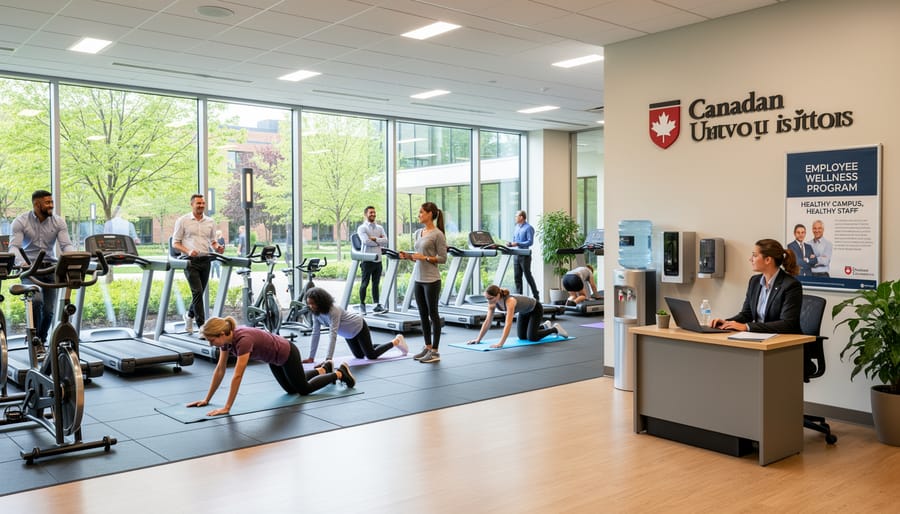
Many Canadian universities recognize that employee wellness directly impacts job satisfaction and productivity, which is why they’ve developed comprehensive fitness and nutrition programs tailored for campus staff. These initiatives make healthy living more accessible and affordable for those working in academic environments.
On-campus fitness facilities represent one of the most valuable benefits available to university employees. Most institutions provide staff access to recreation centers equipped with cardio equipment, weight rooms, swimming pools, and group fitness classes at significantly reduced rates compared to commercial gyms. Some universities offer completely free access as part of employment benefits, while others provide subsidized memberships at a fraction of typical costs.
Beyond basic gym access, many universities have expanded their wellness offerings to include nutrition counseling and healthy eating workshops. These sessions, often led by registered dietitians or nutrition experts, provide evidence-based guidance on meal planning, managing dietary restrictions, and fueling your body for optimal energy throughout the workday. Staff members can learn practical strategies for preparing nutritious meals despite busy schedules.
Campus dining services have also evolved to support employee health, with many institutions now featuring healthier menu options in cafeterias and food courts. Look for clearly labeled nutritious choices, vegetarian and vegan options, and grab-and-go meals designed with balanced nutrition in mind.
Taking advantage of these programs requires minimal effort but delivers substantial benefits. Check with your human resources department to learn about enrollment procedures, costs, and available schedules that fit your work routine.
Work-Life Balance Initiatives
University occupational health programs increasingly recognize that sustainable academic careers require comprehensive work-life balance initiatives. Many Canadian institutions now offer flexible work arrangements that accommodate the diverse needs of faculty and staff, including hybrid work models, compressed workweeks, and adjustable teaching schedules.
Family support programs have become essential components of university wellness strategies. These include enhanced parental leave policies that go beyond minimum legal requirements, on-campus childcare facilities with priority access for employees, and lactation rooms for new parents. Some universities provide caregiver support resources for staff managing both work responsibilities and care for aging parents or family members with disabilities.
Leading institutions are implementing policies that promote sustainable work practices to prevent burnout in high-pressure academic environments. This includes establishing clear expectations around after-hours email communication, protecting research time through structured teaching loads, and creating formal mentorship programs that help newer faculty navigate career demands effectively.
Evidence shows that these initiatives benefit both employees and institutions. Universities with robust work-life programs report higher staff retention rates, improved job satisfaction, and reduced stress-related health claims. Practical supports like access to employee assistance programs, mental health days, and sabbatical opportunities help academic professionals maintain their wellbeing throughout their careers.
For university employees, taking advantage of these available programs is an important step in maintaining long-term health and career sustainability in demanding academic environments.
Practical Steps to Protect Your Health as a University Employee
Know Your Rights and Resources
As a university employee in Canada, you have fundamental rights to a safe and healthy workplace under provincial and federal occupational health and safety legislation. This means your employer must identify workplace hazards, provide necessary training, and ensure access to appropriate health services. You have the right to know about potential health risks in your work environment, participate in health and safety decisions, and refuse unsafe work without penalty.
Accessing occupational health services at your university is typically straightforward. Most institutions have dedicated occupational health departments or partner with external providers. Start by contacting your human resources department or checking your university’s employee portal for service locations and appointment booking information. These services are confidential and designed to support your wellbeing, not to monitor or penalize you.
You can request workplace accommodations when health conditions affect your ability to perform job duties. Common accommodations include ergonomic equipment, modified work schedules, remote work options, or adjusted responsibilities. To begin this process, speak with your supervisor or HR representative and provide medical documentation supporting your needs. Universities are legally required to accommodate employees to the point of undue hardship. Remember, requesting support demonstrates self-advocacy and helps create a healthier workplace for everyone.
Daily Habits That Make a Difference
Small changes to your daily routine can significantly reduce workplace health risks and boost your overall wellbeing. Whether you work in an office, laboratory, or classroom setting, these evidence-based strategies can help you stay healthy throughout your workday.
Start with your workspace ergonomics. Position your computer monitor at arm’s length, with the top of the screen at or slightly below eye level. Keep your feet flat on the floor and your knees at a 90-degree angle. Your keyboard and mouse should allow your elbows to rest comfortably at your sides. These simple adjustments can prevent neck strain, back pain, and repetitive stress injuries that commonly affect university employees.
Movement breaks are essential for counteracting prolonged sitting. Set a timer to remind yourself to stand and stretch every 30 to 60 minutes. Take short walks during phone calls, use stairs instead of elevators, or try desk exercises like shoulder rolls and neck stretches. Research shows that regular movement throughout the day improves circulation, reduces muscle tension, and enhances mental clarity.
Managing stress requires intentional practices. Try the 4-7-8 breathing technique: inhale for four counts, hold for seven, and exhale for eight. This activates your body’s relaxation response within minutes. Consider using your lunch break for genuine rest rather than working through it. Many effective workplace wellness solutions emphasize the importance of true breaks for mental recovery.
Finally, establish clear work boundaries. Define specific start and end times for your workday, and communicate these limits to colleagues. Turn off email notifications outside work hours when possible. Protecting your personal time supports better sleep quality, stronger relationships, and sustained job performance over the long term.
Occupational health programs in university settings play a vital role in creating safer, healthier work environments for faculty, staff, and researchers. These services address the unique challenges of academic workplaces, from laboratory safety to mental health support, helping prevent workplace injuries and chronic health conditions before they develop. By taking advantage of available resources such as ergonomic assessments, fitness programs, mental health counseling, and preventive health screenings, university employees can protect their well-being while enhancing their job performance and satisfaction.
Prioritizing your health at work benefits not only you as an individual but also strengthens the entire campus community. Healthier employees contribute to a more positive work culture, reduced absenteeism, and improved productivity. Whether you’re dealing with workplace stress, seeking guidance on injury prevention, or simply wanting to maintain your wellness, your university’s occupational health services are designed to support you. Take the first step today by familiarizing yourself with the programs your institution offers. Reach out to your occupational health department, attend wellness workshops, and make your health a priority. Remember, investing in your well-being is an investment in your future and the collective success of your academic community.