

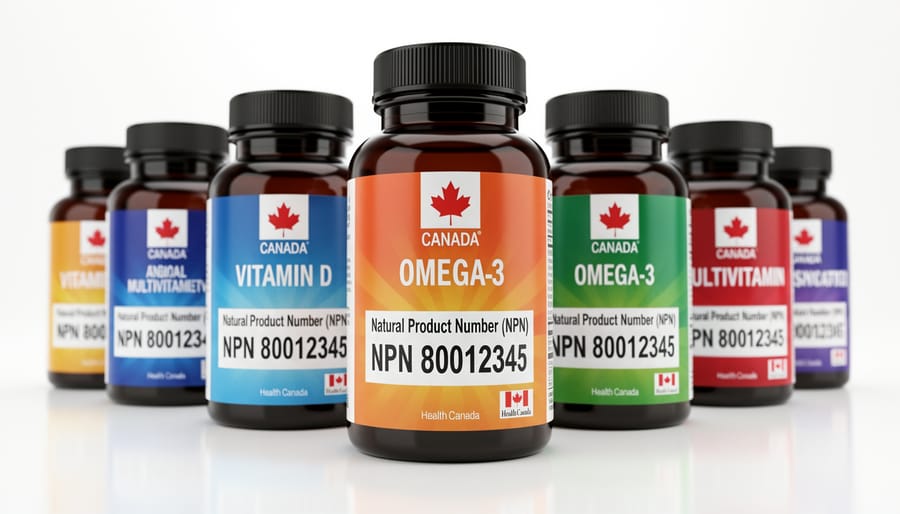
Check for Health Canada’s Natural Product Number (NPN) or Drug Identification Number (DIN) on every supplement bottle before purchasing. This eight-digit code confirms the product has been reviewed for safety, efficacy, and quality, meeting strict Canadian regulatory standards. Products from trusted manufacturers like Xtend-Life typically display these certifications prominently, signaling their commitment to evidence-based nutrition.
Demand clinical evidence for specific health claims. A supplement should have peer-reviewed research supporting its benefits, not just testimonials or marketing hype. Look for products that cite actual studies with measurable outcomes, particularly those conducted on human subjects rather than test tubes or mice.
Compare active ingredient dosages to research-backed therapeutic ranges. Many supplements contain quantities too low to produce any real effect. For instance, if clinical trials show benefits at 1000mg of vitamin D3 daily, a product offering 400IU won’t deliver the same results.
Canadians spend over $2.5 billion annually on supplements, yet research shows most multivitamins don’t prevent chronic disease in well-nourished populations. The disconnect between marketing promises and scientific reality leaves many confused about which products actually work. Understanding how to evaluate supplement evidence helps you avoid wasting money on ineffective products while identifying the specific nutrients that might genuinely benefit your health. This guide cuts through the noise with a practical framework for assessing supplement quality, examines what current research actually says about popular products, and provides clear direction for making purchases that align with both science and Canadian regulations.
What Makes a Supplement ‘Evidence-Based’?
When you’re standing in the supplement aisle or scrolling through online options, you’ll see products making all kinds of promises. But what separates genuine science from clever marketing? An evidence-based supplement is one that has been studied through rigorous research methods, showing measurable benefits in human studies rather than just test tubes or animal experiments.
The gold standard for supplement research is the randomized controlled trial, where participants are randomly assigned to receive either the supplement or a placebo, and neither the researchers nor participants know who’s getting what until the study ends. This design helps eliminate bias and shows whether the supplement actually works. But one study isn’t enough. Look for supplements supported by multiple independent studies that have been published in peer-reviewed journals, where other scientists have examined the research methods and findings before publication.
Understanding a few key concepts will help you evaluate supplement claims more effectively:
- Randomized Controlled Trial (RCT)
- A study where participants are randomly divided into groups, with some receiving the supplement and others receiving a placebo, to determine if the supplement causes specific effects. This design is considered the most reliable way to test whether a supplement actually works.
- Placebo Effect
- When people experience benefits simply because they believe a treatment will help them, even if the pill contains no active ingredient. Quality studies account for this by comparing the supplement group to a placebo group.
- Systematic Review
- A comprehensive analysis that combines results from multiple studies on the same topic to identify overall patterns and determine if the evidence is strong or weak.
- Clinical Significance
- Whether the benefits shown in research are large enough to actually matter in real life, not just on paper. A supplement might show “statistically significant” results that are too small to make a meaningful difference to your health.
Here’s something many Canadians miss: correlation doesn’t equal causation. Just because people who take a supplement have better health outcomes doesn’t mean the supplement caused those outcomes. Maybe healthier people are simply more likely to take supplements in the first place.
When evaluating supplement research, ask yourself these questions. Was the study done in humans or just cells in a lab? How many people participated? (Larger studies are generally more reliable.) Who funded the research? Studies funded by supplement manufacturers require extra scrutiny. And finally, have the results been replicated by independent researchers?
Canadian consumers should be skeptical of products claiming “clinically proven” results based on a single small study or research conducted only by the company selling the product.
Understanding Supplement Regulation in Canada
When you pick up a supplement bottle in Canada, you’re looking at a product regulated differently than conventional foods or prescription drugs. Health Canada oversees natural health products through a licensing system designed to ensure basic safety and quality standards. But what does this regulation actually mean for you?
The most important thing to look for is an eight-digit Natural Product Number (NPN) or Homeopathic Medicine Number (DIN-HM) on the label. This number tells you that Health Canada has reviewed the product and approved its ingredients, dosage, and health claims. The Natural Product Number system requires manufacturers to provide evidence that their product is safe and properly manufactured according to Good Manufacturing Practices (GMPs).
However, having an NPN doesn’t guarantee effectiveness. Health Canada evaluates safety and manufacturing quality more rigorously than it assesses whether a supplement actually delivers on its promised benefits. Some products receive approval based on traditional use rather than clinical trials, which means the bar for evidence can vary significantly.
Products without an NPN or DIN-HM aren’t legally approved for sale in Canada as supplements. While some retailers still stock unlicensed products, choosing licensed options gives you better assurance of quality control, accurate labeling, and ingredient verification.
Beyond the NPN, look for third-party testing seals from organizations like NSF International or USP. These independent certifications verify that what’s on the label matches what’s in the bottle, and that the product is free from harmful contaminants. This extra layer of verification helps you avoid products that may be mislabeled or contaminated, giving you confidence that you’re getting exactly what you pay for.
Evidence-Based Multivitamins: What Science Actually Shows
Who Should Consider a Multivitamin
While multivitamins aren’t necessary for everyone eating a balanced diet, certain groups have well-documented nutritional needs that make supplementation beneficial.
Research supports multivitamin use for these specific populations:
- Pregnant women and those planning pregnancy need folic acid to prevent neural tube defects, along with iron and other nutrients that support fetal development
- Adults over 50 often require vitamin B12 supplementation due to reduced stomach acid production, which decreases absorption from food
- People following vegan or vegetarian diets may need B12, vitamin D, iron, and omega-3s that are primarily found in animal products
- Individuals with celiac disease, Crohn’s disease, or other conditions affecting nutrient absorption benefit from supplementation to prevent deficiencies
- Those with medically diagnosed deficiencies confirmed through blood tests require targeted supplementation
If you fall into one of these categories, talk with your healthcare provider about which nutrients you actually need. They can order blood work to identify any deficiencies and recommend appropriate dosages. A generic multivitamin might not address your specific requirements, and in some cases, individual supplements at therapeutic doses work better than a one-size-fits-all approach.
Most healthy adults eating varied diets don’t need a daily multivitamin, but having a healthcare professional evaluate your individual situation provides the clearest guidance.

What to Look for in a Quality Multivitamin
Not all multivitamins are created equal. Understanding what separates a quality product from a mediocre one helps you make smarter choices and get better value for your money.
Start by checking the dosages. Quality multivitamins provide nutrients at levels that align with Health Canada’s recommended daily intakes, not massive mega-doses that exceed what your body can use. Extremely high amounts (often marketed as “extra strength”) don’t necessarily mean better results and can sometimes cause imbalances or side effects.
The form of nutrients matters just as much as the amount. Look for bioavailable forms that your body can actually absorb and use. For example, methylcobalamin or methylfolate are more readily used than cyanocobalamin or folic acid. Chelated minerals like magnesium bisglycinate typically absorb better than oxide forms.
Third-party testing provides an extra layer of quality assurance. Products tested by independent organizations like NSF International or USP verify that what’s on the label matches what’s in the bottle. This testing also screens for contaminants like heavy metals and ensures proper manufacturing practices.
Check the ingredient list for unnecessary additives. While some fillers and binders are needed to create tablets, avoid products loaded with artificial colours, flavours, or excessive sweeteners. Shorter ingredient lists typically indicate a cleaner product.
Compare the price per serving rather than just the bottle price. A month’s supply should give you a realistic picture of ongoing costs. Remember that the cheapest option isn’t always the best value if it contains poorly absorbed nutrients or inadequate doses.
Single Supplements with Strong Evidence
Vitamin D: Canada’s Most Common Deficiency
Canada’s northern latitude creates a real problem for vitamin D production. Between October and March, the sun’s angle is too low across most of the country for your skin to synthesize this crucial nutrient effectively. Studies show vitamin D insufficiency rates in Canada are alarmingly high, particularly during winter months.
Vitamin D3 (cholecalciferol) is the clear winner over D2 (ergocalciferol). Research consistently demonstrates that D3 raises blood levels more efficiently and maintains them longer. Your body recognizes D3 as the same form produced by sun exposure, making it more bioavailable.
Most Canadian adults benefit from 1,000 to 2,000 IU daily during fall and winter. Health Canada’s recommended dosages provide baseline guidance, though individual needs vary considerably. People with darker skin, those who are overweight, or individuals over 65 often require higher amounts.
Testing makes sense if you’re unsure about your status. A simple blood test measuring 25-hydroxyvitamin D can guide your supplementation strategy. Optimal levels fall between 75 and 125 nmol/L, though debate continues about the ideal range.
Don’t assume fortified foods provide enough. A glass of milk contains only 100 IU, and unless you’re eating fatty fish several times weekly, you’re probably falling short. Supplementation isn’t just beneficial for Canadians; it’s nearly essential for maintaining adequate levels year-round.

Omega-3 Fatty Acids for Heart and Brain Health
Omega-3 fatty acids stand out as one of the most thoroughly researched supplements, with consistent evidence supporting their benefits for heart and brain health. These essential fats, which our bodies can’t produce on their own, play crucial roles in reducing inflammation, supporting cognitive function, and protecting cardiovascular health.
The two main types of omega-3s are EPA (eicosapentaenoidal acid) and DHA (docosahexaenoic acid). EPA shows particularly strong effects on reducing triglycerides and inflammation, while DHA appears more important for brain structure and function. Research suggests that combined EPA and DHA supplementation at doses of 1,000 to 2,000 mg daily can lower heart disease risk and support mental clarity.
Fatty fish like salmon, mackerel, and sardines remain the best food sources, providing both types of omega-3s along with other beneficial nutrients. Health Canada recommends eating at least two servings of fish weekly. However, many Canadians fall short of this target, making supplementation a practical option.
Fish oil supplements are widely available in Canada and must meet quality standards to limit contaminants like mercury. Look for products that list specific amounts of EPA and DHA rather than just total omega-3 content. For those following plant-based diets, algae-based supplements provide a direct source of DHA, though they typically contain less EPA.
People taking blood thinners should consult their healthcare provider before starting omega-3 supplements, as high doses can affect blood clotting. Start with lower doses and choose reputable brands that test for purity and freshness.
Magnesium for Sleep and Muscle Function
Magnesium supports over 300 enzymatic reactions in your body, including those that regulate sleep and muscle function. Research shows that magnesium helps activate your parasympathetic nervous system, which promotes relaxation and better sleep quality. Studies also demonstrate its role in muscle recovery by reducing cramping and supporting protein synthesis after exercise.
Not all magnesium supplements are created equal. Magnesium glycinate has the strongest evidence for absorption and tolerability, making it ideal for sleep and relaxation. Magnesium citrate absorbs well too but may cause loose stools at higher doses. Magnesium oxide, commonly found in cheaper supplements, has poor bioavailability and often passes through your system without being absorbed.
For sleep support, studies typically use 200-400 mg of elemental magnesium taken in the evening. Athletes recovering from intense training may benefit from similar doses.
Many Canadians don’t get enough magnesium from diet alone. Good food sources include pumpkin seeds, almonds, spinach, and black beans. If you’re considering supplementation, look for products that clearly state the form of magnesium and the amount of elemental magnesium per serving, not just the total compound weight.
Probiotics: When They Help and When They Don’t
Probiotics have generated significant research interest, but the evidence is highly strain-specific. You can’t assume benefits from one probiotic apply to another.
For digestive health, Lactobacillus rhamnosus GG and Saccharomyces boulardii show strong evidence for preventing antibiotic-associated diarrhea. Bifidobacterium infantis 35624 has demonstrated benefits for irritable bowel syndrome symptoms in clinical trials. These specific strains matter because gut bacteria work through different mechanisms.
Immune function research is more mixed. Some strains like Lactobacillus casei DN-114 001 may reduce the duration of respiratory infections, particularly in children and older adults. However, the effects are typically modest.
The connection between gut health and mental health has sparked interest in psychobiotics. Early studies suggest certain Lactobacillus and Bifidobacterium strains might influence mood and anxiety, though this research remains in early stages. Similar emerging evidence exists for mushroom supplements and immune support.
When choosing probiotics, look for products listing specific strains with research backing that exact strain. Generic “probiotic blend” labels rarely provide enough information to assess effectiveness. Check that products guarantee live cultures at expiry, not just manufacture date.
Popular Supplements with Limited or Mixed Evidence
Not every supplement lining pharmacy shelves has the research backing to justify its popularity. Some products have become bestsellers based more on clever marketing than solid science. Understanding which supplements have limited or mixed evidence helps you make smarter choices with your health dollars.
Several commonly marketed supplements fall into this grey zone where research hasn’t confirmed the benefits that manufacturers claim. Green tea extract, for example, is often promoted for weight loss and metabolism support. While green tea itself has health benefits, concentrated extracts haven’t consistently shown significant weight loss effects in clinical trials. Some studies show modest results, while others find no meaningful difference compared to placebo.
| Supplement | Popular Claims | Evidence Quality | Verdict |
|---|---|---|---|
| Green Tea Extract | Weight loss, metabolism boost | Mixed results, inconsistent | Insufficient |
| Garcinia Cambogia | Fat burning, appetite control | Poor quality studies, no effect | Not recommended |
| Collagen Peptides | Skin elasticity, joint health | Limited trials, small effects | Promising but early |
| Apple Cider Vinegar Pills | Blood sugar control, weight loss | Very weak evidence | Insufficient |
Garcinia cambogia became a weight loss sensation years ago, but multiple systematic reviews have found it produces no significant fat loss compared to placebo. The hype far exceeded the science.
Collagen supplements present a more nuanced picture. Some research suggests potential benefits for skin hydration and joint discomfort, but many studies are industry-funded with small sample sizes. The evidence is promising enough to warrant cautious interest but not strong enough for confident recommendations.
This doesn’t mean these supplements are dangerous or that future research won’t prove them valuable. Science evolves. But right now, spending money on products with weak evidence means you might not get the results you’re hoping for. Focus your budget on supplements with stronger research backing, and talk with your healthcare provider about whether any of these experimental options make sense for your specific situation.
How to Safely Add Supplements to Your Routine
Before adding any supplement to your routine, speak with your healthcare provider. This step is particularly important if you’re pregnant, breastfeeding, managing a chronic condition, or taking prescription medications. Your doctor or pharmacist can identify potential interactions between supplements and medications. For example, vitamin K can reduce the effectiveness of blood thinners, while high-dose vitamin E may increase bleeding risk. St. John’s wort interacts with numerous medications, from antidepressants to birth control pills.
Start with the lowest effective dose rather than jumping to maximum amounts. Your body needs time to adjust, and you’ll be better able to notice any adverse reactions if you introduce supplements gradually. Keep a simple log noting when you started each supplement, the dose, and any changes you notice in how you feel. This helps you track whether a supplement is actually benefiting you or causing unwanted effects.
Pay attention to timing. Some supplements are best absorbed with food, while others work better on an empty stomach. Fat-soluble vitamins like A, D, E, and K need dietary fat for proper absorption. Calcium and iron can interfere with each other, so take them at different times of day if you need both.
Remember that supplements are meant to fill specific gaps, not replace healthy eating and lifestyle habits. No pill can compensate for poor sleep, chronic stress, or a diet heavy in processed foods. Think of supplements as supporting players, not the main act.
Know when to reassess. If you don’t notice benefits after a few months, or if you experience side effects like digestive upset, headaches, or skin changes, stop taking the supplement and consult your healthcare provider. Regular blood work can confirm whether you actually need certain supplements and help prevent toxicity from excessive intake.

Where to Find Reliable Information on Supplements
Finding trustworthy information about supplements can feel overwhelming, especially with so much conflicting advice online. The good news is that several reliable resources can help you make informed decisions based on science, not marketing hype.
Start with Health Canada’s Licensed Natural Health Products Database, which lets you verify whether a supplement has been reviewed for safety, quality, and label claims. Look for products with an eight-digit Natural Product Number (NPN) or Homeopathic Medicine Number (DIN-HM) on the label. This tells you the product has met regulatory standards.
For scientific evidence, these trusted resources offer clear, unbiased information:
- The Office of Dietary Supplements (NIH) provides fact sheets on individual vitamins and minerals with current research summaries
- PubMed offers access to peer-reviewed medical studies, though you may need help interpreting technical content
- The Cochrane Library publishes systematic reviews that analyze multiple studies on supplement effectiveness
- Dietitians of Canada shares practical, evidence-based guidance tailored to Canadian nutrition needs
Watch for red flags that signal pseudoscience: claims that a product cures multiple unrelated conditions, testimonials instead of scientific studies, pressure to buy immediately, or promises that sound too good to be true.
When discussing supplements with your healthcare provider, come prepared. Ask which specific health concern you’re trying to address, whether there’s evidence this supplement helps, what dosage is appropriate, and how it might interact with your medications. Request their recommendation for reputable brands.
Building your knowledge takes time, but these resources give you a solid foundation for ongoing research. You’re not expected to become an expert overnight. The goal is developing skills to evaluate claims critically and make choices that truly support your health.
Making informed decisions about supplements starts with understanding your personal health needs rather than chasing the latest wellness trend. Before adding any supplement to your routine, talk with your healthcare provider about your specific nutritional gaps, medical history, and current medications. This conversation matters because what works for your neighbour may not be right for you.
Remember that supplements work best as part of a broader health strategy. No pill can replace the benefits of eating whole foods, staying active, managing stress, and getting adequate sleep. The connection between nutrition and mental wellness demonstrates how foundational lifestyle factors support overall wellbeing in ways that supplements simply enhance rather than replace.
When you do choose supplements, prioritize products with third-party testing, look for evidence from clinical trials rather than testimonials, and be skeptical of extraordinary claims. Quality matters more than quantity. A targeted approach based on actual deficiencies or specific health goals will always outperform taking handfuls of products you don’t actually need.
Your health deserves choices rooted in science, not marketing hype.