
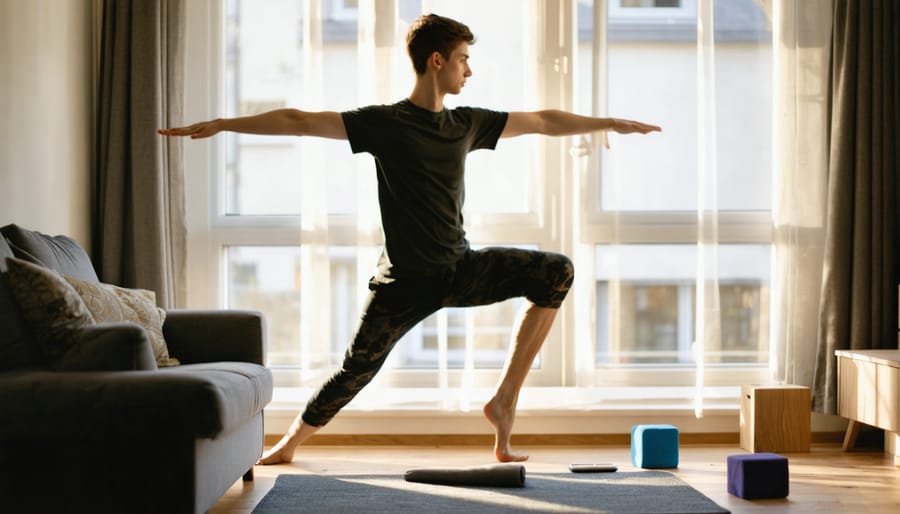
You’re not failing at mindfulness—you’re drowning in it. When your calendar overflows with yoga classes, meditation apps ping constantly, and every wellness expert prescribes a different “essential” practice, the path to peace becomes another source of stress.
This paradox affects thousands of Canadians who’ve embraced mindful movement only to feel more anxious than before. Research shows that when wellness routines exceed 30 minutes daily, adherence drops by 60%, and the guilt of “not doing enough” actually increases cortisol levels—the opposite of what these practices should achieve.
The solution isn’t abandoning mindful movement. It’s recognizing that simplicity drives sustainability. Your body doesn’t need a perfect 60-minute flow; it needs consistent, manageable moments of intentional connection. A five-minute morning stretch creates more lasting benefit than an elaborate routine you’ll quit by February.
This article cuts through the noise to help you build a realistic mindful movement practice—one that reduces stress rather than adding to it. You’ll discover why less truly is more, identify the warning signs of wellness overload, and learn evidence-based strategies to create a sustainable routine that fits your actual life, not an Instagram-perfect version of it.
What Is Mindful Movement Overwhelm?
Mindful movement overwhelm occurs when the practice meant to reduce stress becomes a source of anxiety itself. Instead of finding calm through yoga, tai chi, or walking meditation, you might feel pressure to “do it right,” follow countless techniques perfectly, or keep up with an overwhelming number of classes and apps. What should be a gentle, restorative practice transforms into another demanding item on your to-do list.
This phenomenon is surprisingly common among Canadians exploring mindful movement practices. You might experience it when comparing yourself to instructors on social media, feeling guilty about missing sessions, or juggling multiple approaches without seeing results. For example, perhaps you’re trying to maintain a daily yoga routine while also attending tai chi classes and following three different meditation apps—each with conflicting guidance about proper technique.
According to wellness experts, this overwhelm stems from our culture’s tendency to approach even relaxation with intensity and perfectionism. Dr. Sarah Chen, a mindfulness researcher at the University of Toronto, explains that “we’ve taken practices designed for presence and acceptance, then applied achievement-oriented thinking to them. People feel they must master every pose, track every session, and constantly improve—which contradicts the core principles of mindfulness.”
The irony is clear: striving for perfect mindfulness creates the opposite effect. When you’re worried about whether your breathing technique is correct or if you’re being “mindful enough,” you’re no longer present in the moment. This self-imposed pressure defeats the purpose entirely, leaving you stressed rather than restored.
The Hidden Causes Behind Your Movement Overwhelm
Too Many Options, Too Little Time
The wellness landscape offers an overwhelming variety of mindful movement options—from different yoga styles (Hatha, Vinyasa, Yin) to tai chi, qigong, walking meditation, mindful swimming, and dance therapy. While this variety is meant to help you find the perfect fit, it often creates the opposite effect: decision paralysis.
Research shows that having too many choices can actually reduce our motivation to choose at all. When faced with dozens of movement practices, each promising unique benefits, many Canadians spend more time researching and comparing than actually moving. You might find yourself watching countless tutorial videos, reading reviews, or signing up for trial classes without committing to any single practice.
The time pressure compounds this challenge. Between work, family responsibilities, and daily commitments, finding even 15 minutes feels difficult—let alone the time to explore multiple practices. This creates a frustrating cycle: you know mindful movement could help reduce stress, but the process of choosing how to start becomes another source of stress itself.
The key isn’t finding the “perfect” practice—it’s simply beginning with one that feels accessible to you right now.
The Perfectionism Trap
Ironically, trying to practice mindful movement “perfectly” creates the exact stress you’re hoping to relieve. When you focus intensely on whether you’re breathing correctly, holding the right posture, or achieving the proper mental state, you’ve shifted from mindful awareness to anxious performance. This perfectionist approach activates your stress response rather than calming it.
Research shows that rigid adherence to specific techniques can actually increase cortisol levels and diminish the mental health benefits of mindfulness practices. The essence of mindful movement isn’t about flawless execution—it’s about showing up and being present with whatever happens, including wobbling during a balance pose or having wandering thoughts.
Many Canadians abandon their mindful movement practice altogether because they believe they’re “doing it wrong.” The truth is, there’s no single correct way to move mindfully. Whether you’re taking a gentle walk, stretching for five minutes, or simply noticing your breath while standing in line, you’re practicing successfully. The moment you notice you’ve been distracted and gently return your attention, that’s mindfulness in action. Progress comes from consistency and self-compassion, not perfection.
Social Media’s Impossible Standards
Social media feeds overflow with perfectly curated yoga poses at sunrise, serene meditation sessions in minimalist spaces, and flawlessly executed tai chi routines. These polished snapshots create an unrealistic picture of what mindful movement actually looks like for most Canadians. You don’t see the wobbling, the interrupted sessions, or the days when five minutes feels like an accomplishment.
Research shows that comparing ourselves to these idealized images can increase anxiety and feelings of inadequacy—the opposite of what mindful movement aims to achieve. The truth is, mindful movement doesn’t require special clothing, exotic locations, or Instagram-worthy flexibility. It happens in living rooms, during work breaks, and even while waiting for the kettle to boil.
Real mindful movement is often messy and imperfect. Your practice might mean stretching in pajamas, taking three deep breaths between meetings, or simply noticing how your body feels while walking to the mailbox. These unglamorous moments are just as valuable as any picture-perfect pose. Remember, the goal isn’t to perform for an audience—it’s to connect with yourself and support your mental and physical wellbeing in whatever way works for you.
Signs You’re Experiencing Mindful Movement Overwhelm
Recognizing mindful movement overwhelm is the first step toward finding balance. Here are common signs that your wellness routine may be causing more stress than relief:
**Physical Indicators:**
– Persistent fatigue despite regular movement practice
– Muscle tension or soreness that doesn’t improve with rest
– Difficulty sleeping or changes in sleep patterns
– Feeling physically exhausted before, during, or after your practice
– Increased frequency of minor injuries or recurring aches
**Emotional and Mental Indicators:**
– Anxiety or guilt when you miss a session
– Feeling pressured to maintain a “perfect” practice
– Comparing your progress to others on social media
– Loss of enjoyment in activities that once brought you peace
– Irritability or frustration with your routine
– Mental fatigue from tracking too many wellness metrics
– Decision paralysis when choosing between different practices
**Behavioral Signs:**
– Overcommitting to multiple classes, apps, or programs simultaneously
– Spending more time researching techniques than actually practicing
– Feeling obligated to follow every new wellness trend
– Neglecting other important life activities to maintain your routine
If you identify with three or more of these signs, you may be experiencing mindful movement overwhelm. Remember, mindful movement should enhance your wellbeing, not diminish it. Recognizing these symptoms empowers you to make adjustments that better serve your health goals.
Simple Strategies to Reclaim Your Practice
Start With Just One Movement
The best way to overcome mindful movement overwhelm is remarkably simple: choose just one practice and commit to it for at least two weeks. This focused approach allows your body and mind to adapt without the stress of juggling multiple new habits.
For beginners, gentle options work best. A simple body scan technique takes just five minutes and requires no special equipment or physical ability. Alternatively, try a daily five-minute mindful walk around your neighbourhood, focusing on the sensation of your feet connecting with the ground and the rhythm of your breath.
Chair-based stretching is another accessible choice, particularly for those with mobility concerns or desk jobs. Simply set a timer for five minutes each morning and move through gentle shoulder rolls, neck stretches, and seated twists while paying attention to how your body feels.
Research shows that consistency with one practice builds confidence and creates lasting change more effectively than sporadically trying many different approaches. Once your chosen movement becomes routine, you can explore adding variety if desired.

Set Realistic Time Commitments
You don’t need hour-long sessions to experience real benefits from mindful movement. Research published in the *British Journal of Sports Medicine* shows that just 10 minutes of daily movement can improve mood, reduce anxiety, and enhance cognitive function. Even five-minute practices trigger positive physiological changes, including reduced cortisol levels and improved heart rate variability.
Start by setting a commitment you can realistically maintain. Choose a specific time that fits naturally into your routine—perhaps five minutes after waking up or during your lunch break. This consistency matters more than duration. A 2022 study from the University of Toronto found that people who practiced brief, daily mindful movement showed greater long-term adherence and mental health improvements compared to those attempting longer, less frequent sessions.
Think of short practices as building blocks rather than insufficient efforts. Each session counts as a meaningful investment in your wellbeing, creating momentum without the pressure that leads to overwhelm.
Drop the Performance Mindset
One of the biggest sources of overwhelm is treating mindful movement like a fitness test. When you’re constantly checking your form, tracking your stats, or comparing yourself to others, you’re missing the entire point—connecting with your body’s internal signals.
Research shows that focusing on how movement feels, rather than how it looks or what it achieves, reduces exercise-related anxiety and increases long-term adherence. Instead of asking “Am I doing this right?” or “How many calories am I burning?”, shift to questions like “What sensations do I notice?” or “How does my breathing feel?”
This internal focus doesn’t mean abandoning your goals. It means recognizing that sustainable wellness comes from listening to your body, not pushing through discomfort to meet arbitrary standards. Notice tension, energy levels, and breath patterns without judgment. Some days you’ll feel strong; other days, gentle stretching is enough. Both are valuable. By dropping the performance mindset, you transform movement from another stressor into a genuine tool for mental and physical wellbeing.
Create a No-Pressure Routine
Building a sustainable mindful movement practice starts with releasing rigid expectations. Rather than committing to daily hour-long sessions, begin with just 5-10 minutes three times per week. This approach, supported by exercise psychology research, helps establish consistency without triggering avoidance.
Create a flexible menu of movement options that match your energy levels. On high-energy days, try flowing yoga sequences or walking meditation. When you’re tired, gentle stretching or breathing exercises while seated can be equally valuable. Remember, shorter practices done consistently outperform ambitious plans you’ll abandon.
Replace “should” thinking with curiosity. Instead of judging yourself for missing a session, ask “What would feel supportive right now?” This shift from self-criticism to self-compassion reduces stress hormones and actually increases your likelihood of returning to practice.
Consider scheduling movement during naturally occurring breaks—before breakfast, during lunch, or after work—rather than adding another obligation to your day. The key is finding what genuinely fits your life, not forcing your life around an idealized routine. Progress happens through small, repeated actions, not perfection.
How Mindful Movement Actually Builds Mental Resilience
When you strip away the pressure and complexity, mindful movement becomes a powerful tool for building stress resilience. The science is clear: gentle, consistent movement paired with present-moment awareness creates measurable changes in your brain and body.
Research from the University of British Columbia shows that regular mindful movement practices increase grey matter in brain regions associated with emotional regulation and stress management. Even simple activities like mindful walking or gentle stretching for just 10-15 minutes daily can reduce cortisol levels—your body’s primary stress hormone.
Here’s what makes simplified mindful movement so effective: it activates your parasympathetic nervous system, which counteracts your stress response. When you move slowly and deliberately while focusing on your breath and body sensations, you’re essentially training your nervous system to return to calm more easily. This isn’t about perfect form or hitting specific targets; it’s about creating a safe space where your mind and body can reconnect.
Canadian mental health data indicates that nearly 25% of adults experience high levels of stress daily. Yet studies show that even brief mindful movement sessions—without rigid schedules or complex routines—can significantly improve mood and reduce anxiety symptoms within just a few weeks.
The key difference? Removing performance pressure transforms movement from another stressor into an actual refuge. When you give yourself permission to move simply and without judgment, you’re not just exercising—you’re actively rewiring your stress response patterns and strengthening your capacity to handle life’s challenges with greater ease.
Mindful movement was meant to bring calm into your life, not add another source of stress. If you’re feeling overwhelmed, remember that you’re not failing—you’re simply caught in the trap of overcomplicated wellness advice. The good news? You already have everything you need to start benefiting from mindful movement today.
Choose just one simple practice right now. It could be three deep breaths before your morning coffee, a mindful walk around your block, or gentle stretches while watching TV. There’s no perfect routine, no ideal duration, and no “right” way to move mindfully. What matters is that you begin where you are, with what you have.
Research consistently shows that even brief moments of mindful movement—just five to ten minutes—can reduce stress hormones and improve your mood. You don’t need special equipment, expensive classes, or hours of free time. Start small, be patient with yourself, and trust that these tiny steps will naturally grow into a sustainable practice that truly supports your wellbeing. You’ve got this.