
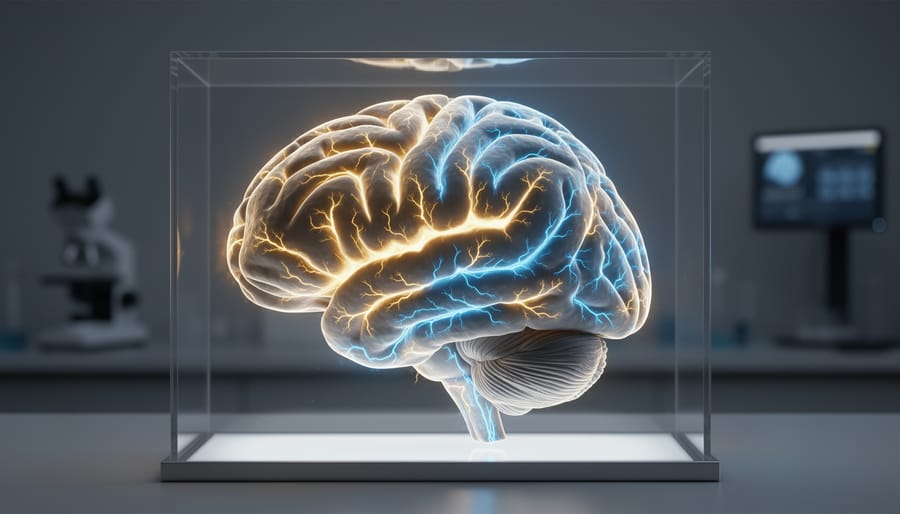
Excitatory and inhibitory neurons are the two main types of nerve cells that control how your brain processes information, with excitatory neurons activating other neurons to send signals forward and inhibitory neurons calming or stopping those signals. Think of them as the gas pedal and brake of your brain, working together to maintain the balanced communication needed for stable mood, clear thinking, and emotional regulation.
This balance matters profoundly for mental health. When excitatory neurons dominate, you might experience anxiety, racing thoughts, or difficulty sleeping. When inhibitory activity is too strong, depression and low motivation can follow. Most mental health conditions, from generalized anxiety disorder to bipolar disorder, involve some disruption in this excitatory-inhibitory balance, which is why many psychiatric medications target these specific neural pathways.
Understanding how these neurons work gives you insight into why certain lifestyle choices affect your mental wellness. The foods you eat, how much you sleep, your exercise routine, and even your stress management practices all influence the chemical messengers that control excitatory and inhibitory signaling. GABA, the brain’s primary inhibitory neurotransmitter, can be supported through specific dietary choices and relaxation techniques. Glutamate, the main excitatory messenger, responds to sleep quality and physical activity.
This article breaks down the science behind excitatory and inhibitory neurons in plain language, explains how imbalances contribute to common mental health challenges, and offers evidence-based strategies to support healthier brain communication. You’ll walk away with practical knowledge that connects what’s happening at the cellular level to choices you can make today.
What Excitatory and Inhibitory Neurons Mean
Think of your brain’s communication system like a busy city intersection. At any moment, some signals are telling traffic to go (green lights), while others are saying stop (red lights). Excitatory and inhibitory neurons work exactly this way, controlling whether brain cells fire their electrical signals or stay quiet.
Excitatory neurons are the “go” signals of your brain. When they activate, they increase the likelihood that the next neuron in line will fire its own electrical signal. This creates a chain reaction, passing messages through your brain’s networks. These neurons help you think, move, learn, and respond to your environment. Without them, your brain couldn’t process information or take action.
Inhibitory neurons do the opposite. They decrease the chance that nearby neurons will fire, acting as brakes on brain activity. This might sound negative, but it’s just as important as excitation. Inhibitory neurons prevent your brain from becoming overactive, filter out unnecessary signals, and help create the precise timing needed for complex thoughts and coordinated movements.
Both types rely on chemical messengers called neurotransmitters to do their work. When a neuron fires, it releases these molecules into the tiny gap between itself and the next cell, passing the message along.
- Excitatory Neuron
- A brain cell that increases the likelihood of the next neuron firing an electrical signal, acting as a “go” command in brain communication.
- Inhibitory Neuron
- A brain cell that decreases the likelihood of nearby neurons firing, functioning as a “stop” or “slow down” signal to prevent overactivity.
- Neurotransmitter
- A chemical messenger that neurons release to communicate with each other across the tiny gaps between cells.
- Glutamate
- The brain’s main excitatory neurotransmitter, responsible for most “go” signals that activate neurons and drive learning and memory.
- GABA
- The primary inhibitory neurotransmitter in the brain, producing calming effects by reducing neuronal activity and preventing overstimulation.
Glutamate is the primary excitatory neurotransmitter, handling the majority of your brain’s “go” signals. GABA (gamma-aminobutyric acid) is the main inhibitory messenger, responsible for most of the calming, quieting effects. Together, these two chemicals orchestrate nearly all brain activity, constantly adjusting the balance between activation and calm.
How These Neurons Work Together in Your Brain
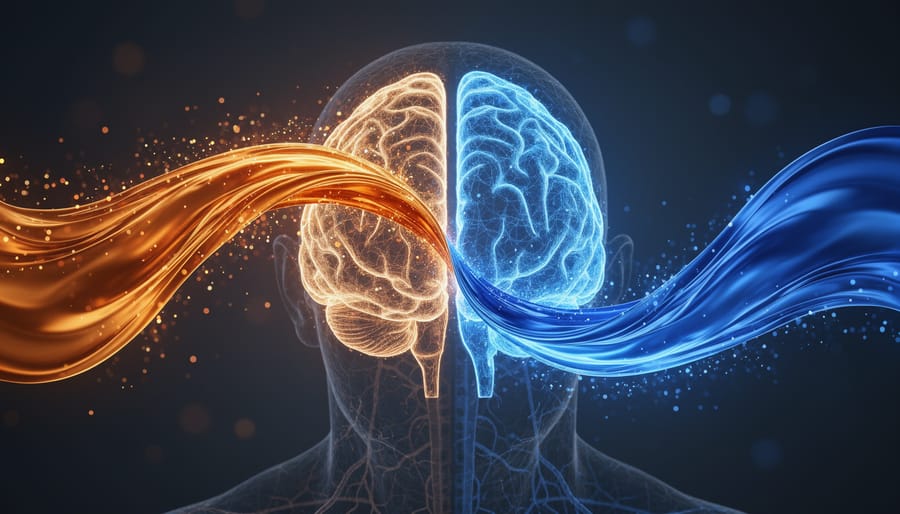
The Role of Neurotransmitters
Two neurotransmitters dominate the excitatory-inhibitory conversation in your brain: glutamate and GABA (gamma-aminobutyric acid). Think of them as the brain’s primary on-off switches.
Glutamate is your brain’s main excitatory messenger. When neurons release glutamate, it crosses the tiny gap between brain cells and binds to receptors on the receiving neuron, making that cell more likely to fire its own signal. Glutamate drives learning, memory formation, and quick thinking. Most of the rapid information processing in your brain relies on glutamate transmission.
GABA works the opposite way. As the chief inhibitory neurotransmitter, GABA calms neural activity. When GABA binds to its receptors, it makes neurons less likely to fire, effectively putting the brakes on brain activity. This quieting function is essential for preventing overstimulation, managing anxiety, and allowing you to sleep.
Your brain constantly releases both chemicals across billions of synapses. The ratio between glutamate’s acceleration and GABA’s braking determines whether your neural circuits run smoothly or spin out of control. Too much glutamate relative to GABA creates overstimulation. Too much GABA relative to glutamate can slow processing and dampen mood.
The Balancing Act
Think of your brain as a finely tuned orchestra. When excitatory and inhibitory neurons work in harmony, information flows smoothly, you can focus when needed, relax when appropriate, and respond to your environment with flexibility. This balanced state allows you to think clearly, regulate emotions, and sleep soundly.
A properly balanced system means excitatory signals provide enough activation for learning, attention, and movement, while inhibitory signals prevent overexcitation and allow for rest. Your brain constantly adjusts this balance based on what you’re doing. When you’re concentrating on a task, certain circuits become more excitatory to sharpen focus. When you’re winding down for sleep, inhibitory signals increase to quiet mental activity.
When this balance tips too far in either direction, problems emerge. Excessive excitation without enough inhibition can manifest as racing thoughts, anxiety, insomnia, or even seizures in extreme cases. You might feel mentally “wired,” unable to calm down or filter out distractions. Conversely, too much inhibition relative to excitation can lead to sluggish thinking, low motivation, difficulty concentrating, or depressed mood.
The brain doesn’t maintain one fixed balance everywhere. Different regions require different ratios depending on their function. What matters is that each area maintains the right balance for its specific job, and that these balances can shift appropriately as your needs change throughout the day.
Different Types of Inhibitory Neurons
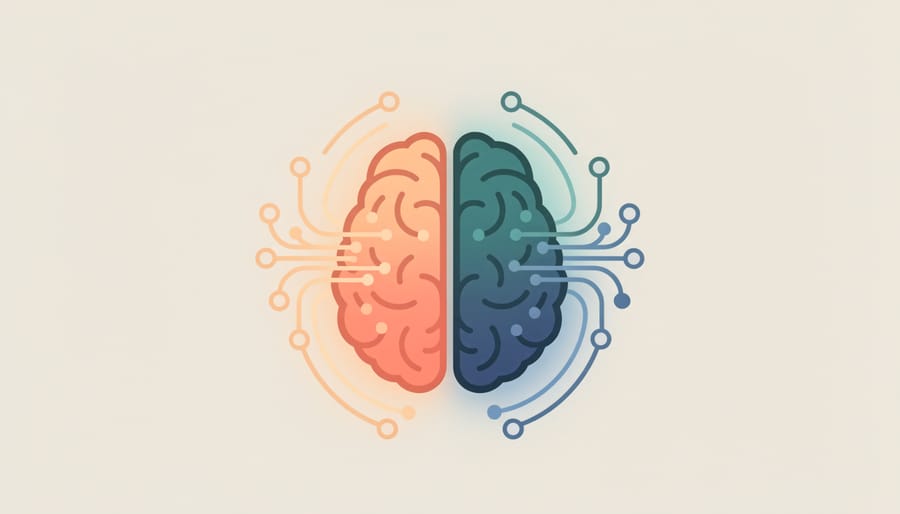
Just as a sports team needs players in different positions, your brain relies on different types of inhibitory neurons to perform specialized tasks. While all inhibitory neurons work to calm brain activity, each type has distinct characteristics that make it better suited for particular jobs in your neural circuits.
The three main categories of inhibitory neurons found throughout the brain are:
- Parvalbumin (PV) neurons, Fast-acting inhibitory cells concentrated around cell bodies that control the timing and rhythm of brain activity
- Somatostatin (SST) neurons, Specialized cells that target dendrites (the receiving branches of neurons) to filter incoming information
- VIP neurons, Regulatory cells that primarily inhibit other inhibitory neurons, effectively releasing the brakes on brain activity
Parvalbumin neurons act as the brain’s timekeepers. They fire rapidly and precisely, helping to create brain rhythms that are essential for attention, memory, and sensory processing. Think of them as the conductors of an orchestra, ensuring different sections of neurons fire in coordinated patterns. When these neurons aren’t working properly, it can lead to difficulties with focus and information processing.
Somatostatin neurons serve as quality control filters. They’re positioned to control what information gets through to excitatory neurons, helping your brain distinguish important signals from background noise. This filtering function is particularly important in sensory areas, where your brain needs to process relevant stimuli while ignoring distractions.
VIP neurons have a unique role: they inhibit other inhibitory neurons. This might sound contradictory, but it’s actually a sophisticated control mechanism. By reducing inhibition in specific circuits, VIP neurons can selectively enhance brain activity when needed, allowing for flexible responses to changing situations.
Having these different types of inhibitory neurons gives your brain remarkable flexibility. Rather than simply turning activity on or off, your brain can fine-tune neural circuits with precision, adjusting timing, filtering input, and modulating activity levels independently. This diversity is what allows your brain to handle everything from processing sensory information to regulating emotions with such nuance.
The Link Between Neuron Balance and Mental Health
Anxiety and Depression
When anxiety or depression develops, the brain’s excitatory-inhibitory balance often shifts in measurable ways. Research consistently shows that many people with these conditions have lower levels of GABA, the calming neurotransmitter, or fewer GABA receptors available to receive inhibitory signals. This means the brain’s “brake system” isn’t working as effectively, leaving the excitatory signals relatively unopposed.
In anxiety disorders, this imbalance can manifest as racing thoughts, physical tension, and an inability to calm down even when there’s no immediate threat. The brain stays in a heightened state of alertness because inhibitory neurons can’t dampen the excitatory activity enough. Depression shows a more complex pattern: some brain regions may have too much inhibition (contributing to slowed thinking and low motivation), while others have excessive excitation (linked to rumination and negative thought loops).
The brain chemistry behind depression involves multiple neurotransmitter systems, but the excitatory-inhibitory balance plays a foundational role. Interestingly, factors like chronic stress and inflammation and mental health can further disrupt this balance, creating a cycle where biological changes reinforce mood symptoms.
This understanding explains why treatments targeting GABA systems or glutamate activity can provide relief for some individuals with these conditions.
Schizophrenia and Psychosis
Schizophrenia and psychosis involve complex changes in how the brain processes information, and disrupted neuron balance plays a significant role. Research suggests that excessive excitatory activity, particularly too much glutamate signaling, combined with weakened inhibitory control can create the conditions for hallucinations, delusions, and disorganized thinking. When excitatory neurons fire too readily without adequate inhibitory regulation, the brain may generate perceptions and beliefs disconnected from reality.
Specific types of inhibitory neurons, especially parvalbumin interneurons, appear particularly affected in schizophrenia. These neurons normally regulate the timing and coordination of brain activity. When they malfunction, the brain’s filtering systems struggle to distinguish relevant information from background noise, contributing to the sensory and cognitive symptoms people experience.
Newer treatment approaches focus on restoring excitation-inhibition balance rather than simply blocking dopamine receptors. While traditional antipsychotic medications remain important, understanding the underlying neuron imbalance opens pathways for more targeted therapies that address the biological roots of psychotic symptoms.
Autism Spectrum Disorder
Research over the past decade has suggested that differences in excitatory-inhibitory balance may help explain some characteristics of autism spectrum disorder, particularly sensory processing differences. Many autistic individuals experience heightened sensitivity to sounds, lights, textures, or other stimuli, what researchers believe could reflect increased excitation relative to inhibition in sensory brain regions.
When excitatory signals aren’t adequately dampened by inhibitory neurons, sensory information may be processed more intensely than typical. This could explain why certain sounds feel overwhelming or why specific textures cause discomfort. Some studies have found reduced numbers of certain inhibitory neurons in brain tissue samples from autistic individuals, though findings vary considerably.
Autism is highly variable, and the excitatory-inhibitory model doesn’t explain all aspects of the condition. Current research (as of 2026) views these neuronal differences as one factor among many contributing to the autism spectrum. This knowledge is helping researchers develop more targeted support approaches, including sensory accommodations and therapies designed around individual sensory profiles rather than one-size-fits-all interventions.
How This Knowledge Is Used to Support Mental Wellness

Medication Approaches
Many medications prescribed for mental health conditions work, at least in part, by adjusting the balance between excitatory and inhibitory signals in your brain.
Benzodiazepines (like lorazepam or clonazepam) boost GABA’s calming effects. They make inhibitory neurons more effective at slowing down brain activity, which is why they reduce anxiety quickly. However, they’re typically prescribed for short-term use because your brain can adapt to them over time.
SSRIs, commonly prescribed for depression and anxiety, primarily increase serotonin, but they also influence the excitatory-inhibitory balance indirectly. Serotonin helps regulate both glutamate and GABA systems, which may explain why these medications take several weeks to show full effects as your brain’s overall balance gradually shifts.
Mood stabilizers like lithium and certain anticonvulsants appear to dampen excessive excitatory activity. They’re used for conditions like bipolar disorder, where brain circuits may become overly activated during manic episodes.
Your healthcare provider considers your specific symptoms and biology when prescribing these medications. The goal isn’t to eliminate all excitation or create constant inhibition, it’s to restore a healthier, more flexible balance that supports stable mood and clearer thinking.
Lifestyle and Nutritional Support
Several lifestyle factors influence the balance between excitatory and inhibitory neurotransmitters in your brain, offering practical ways to support mental wellness.
Regular physical activity increases GABA levels naturally while helping regulate glutamate. Aerobic exercise in particular, like brisk walking, cycling, or swimming, shows consistent benefits for neurotransmitter balance. Even moderate activity, around 30 minutes most days, can make a difference.
Sleep quality directly affects how your brain maintains its excitatory-inhibitory balance. During deep sleep, your brain clears excess glutamate and resets inhibitory circuits. Aim for 7-9 hours nightly, and maintain consistent sleep and wake times to support this natural regulation.
Chronic stress disrupts the balance by flooding your system with excitatory signals. Mind-body practices like meditation, deep breathing, or progressive muscle relaxation help restore inhibitory control. Regular stress management isn’t optional, it’s fundamental to neurotransmitter health.
Nutrition and mental health connect through specific nutrients that support GABA production and function. Magnesium helps GABA bind to receptors, while B vitamins (particularly B6) are needed to produce GABA from glutamate. Omega-3 fatty acids support overall neurotransmitter communication. Foods rich in these nutrients, leafy greens, nuts, fatty fish, whole grains, and fermented foods, may support healthy balance. For targeted approaches, research continues on vitamins for mental health and specific neurotransmitter support.
These lifestyle factors work together rather than in isolation, creating a foundation for balanced brain chemistry.
Emerging Therapeutic Approaches
Scientists are exploring innovative ways to restore neuron balance in people who haven’t responded well to traditional treatments. Targeted neurostimulation techniques like transcranial magnetic stimulation (TMS) and transcranial direct current stimulation (tDCS) can selectively increase or decrease activity in specific brain regions, helping to rewire mental health patterns by adjusting excitatory-inhibitory ratios. Researchers are also working toward precision psychiatry approaches that measure an individual’s unique neurotransmitter profile through advanced brain imaging and genetic testing. This personalized data could eventually guide treatment selection, matching people with therapies specifically designed to address their particular imbalance pattern rather than using a one-size-fits-all approach. While these methods are still largely in research stages as of 2026, early results suggest they may offer new options for people with treatment-resistant conditions.
Common Questions About Brain Neuron Balance
Understanding brain neuron balance can feel complex, so here are clear answers to the questions Canadian readers often ask about excitatory and inhibitory neurons and mental health.
Can I get tested to see if my brain has an excitatory-inhibitory imbalance?
Currently, there’s no simple test available in standard clinical settings. Researchers use specialized brain imaging and electrical recording techniques in studies, but these aren’t routine diagnostic tools yet.
Will taking GABA supplements balance my brain neurons?
Most GABA supplements don’t cross the blood-brain barrier effectively, so they likely won’t directly increase brain GABA levels. Foods and lifestyle habits that support natural GABA production are generally more effective approaches.
What are natural ways to support healthy neuron balance?
Regular exercise, quality sleep, stress management techniques like meditation, and a balanced diet rich in whole foods all support healthy neurotransmitter function. Limiting alcohol and managing chronic stress are particularly important.
Should everyone worry about their excitatory-inhibitory balance?
Not necessarily. Your brain naturally maintains this balance most of the time. Focus on it becomes relevant if you’re experiencing mental health symptoms or have been diagnosed with conditions linked to neurotransmitter imbalances.
Can excitatory-inhibitory imbalances be permanently fixed?
Many people see significant improvement with proper treatment and lifestyle changes. The brain has remarkable plasticity and can rebalance over time, though some individuals may need ongoing support through medication or therapy.
Is this balance the same thing as a chemical imbalance?
It’s a more specific part of the broader “chemical imbalance” concept. Excitatory-inhibitory balance focuses specifically on the relationship between activating and calming signals in your brain circuits.
These questions reflect common concerns, but remember that brain biology varies between individuals. If you’re worried about symptoms that might relate to neurotransmitter imbalances, a healthcare provider can help assess your specific situation and recommend appropriate support. The growing research on excitatory and inhibitory neurons is opening new doors for personalized mental health care, making it an exciting time for understanding and addressing mental wellness from a biological perspective.
Understanding how excitatory and inhibitory neurons work together gives you valuable insight into your mental health. This isn’t just abstract biology, it’s the foundation of how your brain processes emotions, manages stress, and maintains stability. When these systems function in balance, your brain can respond flexibly to life’s challenges. When that balance shifts, it can contribute to symptoms you might experience with anxiety, depression, or other conditions.
The good news? Research into excitatory-inhibitory balance is advancing rapidly, opening doors to more targeted treatments and personalized approaches to mental wellness. Scientists are uncovering new ways to support healthy brain function, from refined medications to lifestyle interventions that genuinely make a difference.
Your mental health involves complex biology, but you’re not powerless. Simple choices, prioritizing quality sleep, managing stress, staying physically active, and nourishing your body properly, all support the delicate chemical balance your neurons need. These aren’t cure-alls, but they’re meaningful tools in your wellness toolkit.
If you’re struggling with mental health symptoms, this knowledge can guide productive conversations with your healthcare provider. Understanding the science helps you ask informed questions about treatment options and make decisions that align with your needs.
Mental health challenges aren’t character flaws or personal failures. They’re often rooted in biological processes we’re only beginning to fully understand. That growing understanding brings hope, for better treatments, earlier interventions, and a future where supporting mental wellness is as routine as caring for any other aspect of your health.