
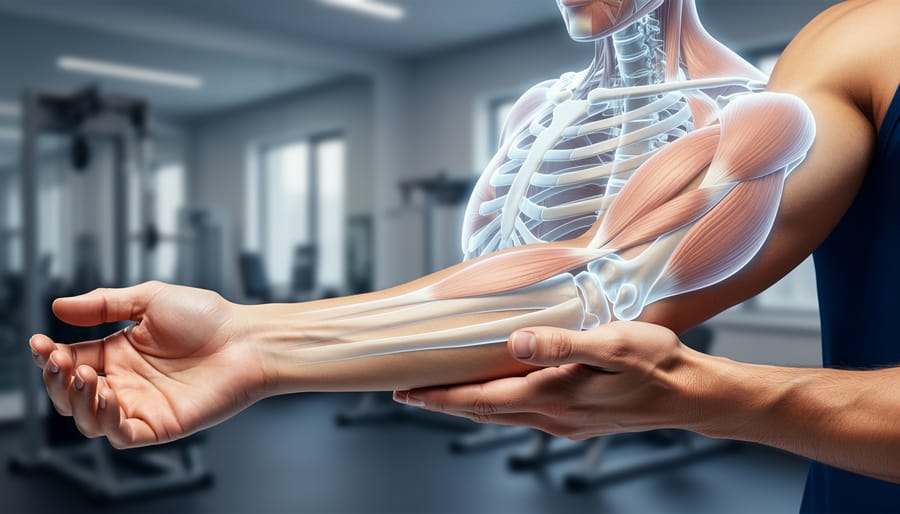
The musculoskeletal system is the framework of bones, muscles, tendons, ligaments, and connective tissues that gives your body structure, enables movement, and protects vital organs. For men, this system plays a central role in everything from daily activities to long-term health outcomes, including your risk for osteoporosis, arthritis, and chronic pain as you age.
Understanding how this complex network functions can help you make informed decisions about exercise, injury prevention, and lifestyle choices that protect your mobility and strength over time. Men experience unique challenges with musculoskeletal health, particularly after age 50, when bone density begins to decline and wear-and-tear conditions become more common. Yet many of these issues are preventable or manageable with the right knowledge and consistent action.
This article answers the most common questions about the musculoskeletal system, breaking down its components, how they work together, and what you can do to maintain them. You’ll learn about the different types of tissue that make up the system, how aging affects bones and joints, and practical strategies backed by current evidence to reduce your risk of injury and chronic conditions.
Whether you’re dealing with persistent joint pain, wondering how to build stronger bones, or simply looking to understand what keeps your body moving efficiently, you’ll find clear, expert-validated answers here. The goal is simple: give you the foundational knowledge to take better care of your musculoskeletal health today and for decades to come.
What the Musculoskeletal System Is and What It Does
The musculoskeletal system is your body’s framework for movement, support, and protection. It combines bones, muscles, and connective tissues into an integrated network that lets you walk, lift, breathe, and perform every physical action while maintaining your shape and safeguarding vital organs.
At its core, the system has six primary components working in concert:
- Bones
- The rigid structures that form your skeleton, providing structural support, protecting internal organs, storing minerals, and producing blood cells in bone marrow.
- Muscles
- Tissues that contract and relax to generate force, enabling movement and maintaining posture through coordinated tension and release.
- Joints
- Connection points where two or more bones meet, allowing varying degrees of movement depending on their type and structure.
- Ligaments
- Tough bands of fibrous tissue that connect bone to bone, stabilizing joints and limiting excessive motion that could cause injury.
- Tendons
- Strong cords of connective tissue that attach muscles to bones, transmitting the force generated by muscle contractions to create movement.
- Cartilage
- Smooth, flexible tissue that cushions joints, reduces friction during movement, and absorbs shock to protect bones from wear.
These components function as an interdependent unit rather than isolated parts. When you reach for a coffee cup, your nervous system signals specific muscles to contract. Those muscles pull on tendons, which move bones at joints cushioned by cartilage and held stable by ligaments. The entire sequence happens in milliseconds, coordinated without conscious thought.
Beyond enabling movement, your musculoskeletal system performs essential protective functions. Your skull shields your brain, ribs guard your heart and lungs, and your spine encases the spinal cord. Bones also serve as mineral reservoirs, storing calcium and phosphorus that your body can access when needed for various metabolic processes.
The system’s health directly affects your quality of life. Strong bones resist fractures and osteoporosis, well-conditioned muscles support balance and independence, and flexible joints maintain range of motion. Problems in one component often cascade through others, weak muscles can stress joints, damaged cartilage can lead to bone changes, and poor bone density increases fracture risk during falls.
For men specifically, understanding this system matters because aging brings predictable changes: gradual bone density loss after age 30, progressive muscle mass decline starting around 40, and decreasing cartilage resilience. Recognizing how these components work together helps you make informed decisions about exercise, nutrition, and injury prevention that preserve function and independence throughout your life.
How Your Musculoskeletal System Works
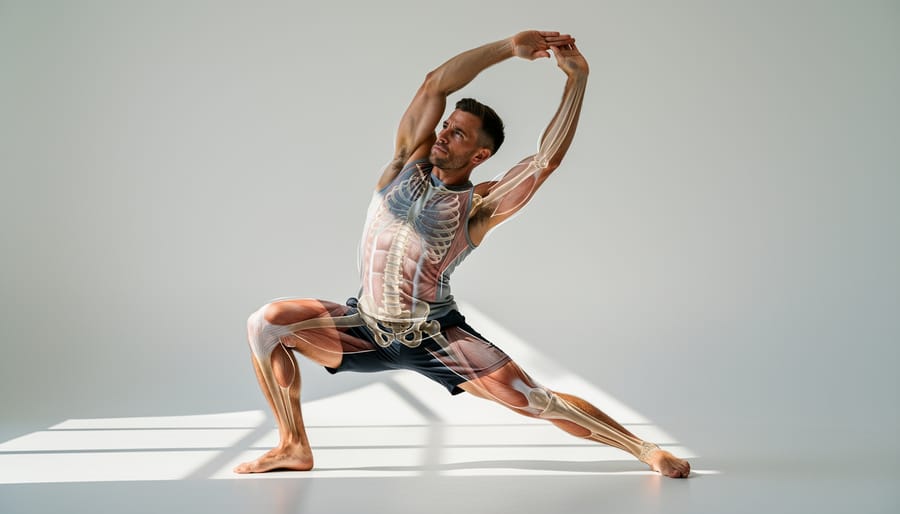
Your musculoskeletal system works through a coordinated interplay of bones, muscles, connective tissues, and nerves that transforms intention into action. When your brain decides to move, it sends electrical signals through motor neurons to specific muscle groups. These signals trigger a cascade of events inside muscle fibers: calcium ions flood into muscle cells, enabling protein filaments called actin and myosin to slide past each other. This sliding action shortens the muscle fiber, generating tension.
Muscles pull on bones through tendons, which attach muscle to bone and transmit the force generated by contraction. The bones act as levers, rotating around joints to produce movement. Your joint type determines the motion available: ball-and-socket joints like your hip allow rotation in multiple directions, while hinge joints like your elbow permit movement in one plane. Cartilage cushions the bone ends where they meet, distributing load and reducing friction. Ligaments stabilize joints by connecting bone to bone, limiting excessive motion that could cause injury.
The nervous system doesn’t just initiate movement, it constantly monitors and adjusts it. Proprioceptors embedded in muscles, tendons, and joints send feedback about position, tension, and load back to your spinal cord and brain. This loop allows you to make real-time corrections: catching your balance on uneven ground happens because these sensors detect the shift and trigger compensatory muscle contractions before you consciously register the problem.
Your system adapts to the demands you place on it through a principle called Wolff’s law and loading which describes how bones remodel in response to stress. When you lift weights or run, the mechanical load triggers bone-building cells to deposit new mineral, increasing density where stress is greatest. Muscles respond similarly: repeated contraction damages muscle fibers at a microscopic level, and during recovery, your body repairs them stronger and sometimes larger. Ligaments and tendons strengthen with consistent, progressive loading but adapt more slowly than muscle because they have less blood supply.
This adaptive quality means your musculoskeletal system is constantly changing based on how you use it. Disuse leads to atrophy and bone loss, while appropriate stress builds capacity. Understanding this relationship between load and adaptation gives you leverage to maintain function and prevent decline.
Main Components of the Musculoskeletal System
Bones and the Skeletal Framework
Your skeleton is far more than a static frame. Made up of 206 bones in adulthood, it provides structure, protects vital organs like your brain and heart, and serves as an anchor point for muscles to generate movement. Each bone is living tissue, constantly breaking down and rebuilding through a process called remodeling.
Bone density refers to the mineral content packed into your skeleton, primarily calcium and phosphorus. Peak bone mass typically occurs in your late twenties, then gradually declines. Men generally have higher bone density than women, but that advantage diminishes with age as testosterone levels drop and bone formation slows.
The skeletal framework also functions as a mineral reservoir. When blood calcium runs low, your body draws from bone stores to maintain critical functions like nerve signaling and muscle contraction. This makes adequate calcium intake and weight-bearing activity essential throughout life, not just in youth.
Maintaining bone strength requires mechanical stress. Activities that load your skeleton, walking, running, lifting weights, signal your bones to stay dense and strong. Without that stimulus, bones weaken regardless of how much calcium you consume.
Muscles and Movement
Your muscles are specialized tissues designed to contract and produce force, making every movement possible, from lifting weights to typing on a keyboard. Skeletal muscles attach to bones via tendons and work in pairs: when one contracts (the agonist), the opposing muscle (the antagonist) relaxes, creating controlled movement around a joint.
Muscles contain two primary fiber types that determine their performance characteristics. Type I fibers (slow-twitch) resist fatigue and excel at endurance activities like walking or maintaining posture. Type II fibers (fast-twitch) generate quick, powerful contractions needed for sprinting, jumping, or lifting heavy loads but tire more quickly. Most muscles contain a mix of both types, with ratios varying based on genetics and training.
Force generation happens at the cellular level through the sliding filament theory. When your nervous system signals a muscle to contract, protein filaments called actin and myosin interlock and slide past each other, shortening the muscle fiber. The strength of contraction depends on how many muscle fibers activate simultaneously and how frequently they fire. Building strength requires adequate protein for muscle repair combined with progressive overload that challenges fibers to adapt and grow thicker over time.
Joints and Connective Tissues
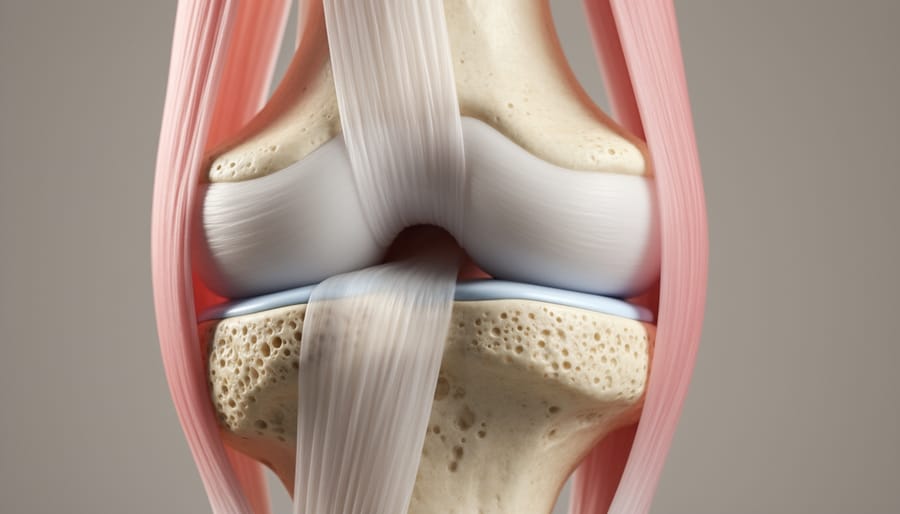
Joints are where two or more bones meet, and they come in three main types based on how much movement they allow. Fibrous joints, like those in your skull, permit almost no motion. Cartilaginous joints, such as those between your vertebrae, allow limited movement. Synovial joints, including your knees, shoulders, and hips, provide the widest range of motion and rely on synovial fluid for lubrication.
Cartilage acts as a shock absorber and reduces friction between bones during movement. This smooth, elastic tissue covers the ends of bones at synovial joints and prevents bone-on-bone contact that would cause pain and damage. Unlike other tissues, cartilage has no blood supply, so it heals slowly when injured.
Ligaments connect bone to bone and stabilize joints by limiting excessive movement. The ACL in your knee, for example, prevents forward sliding of the shinbone. Tendons attach muscle to bone and transmit the force your muscles generate. Your Achilles tendon transfers power from your calf muscles to your heel, enabling walking and jumping. Both structures are made of dense collagen fibres that provide strength while allowing controlled flexibility.
Common Questions Men Ask About Musculoskeletal Health
Men frequently ask about the musculoskeletal system with a mix of concern about aging and hope for maintaining strength. These questions typically cluster around how the body changes, what can be done to protect bones and muscles, and when decline becomes a medical issue rather than normal aging.
Most men want to know when their bones reach maximum density and whether they’re vulnerable to conditions they’ve traditionally associated with women. Bone strength peaks in your late twenties to early thirties, establishing a foundation that influences your peak bone mass and osteoporosis risk decades later. After thirty-five, men typically lose bone density at about one percent per year, though this accelerates if testosterone levels drop significantly or if you’re inactive for extended periods. You can’t raise your bone density above what genetics and your twenties established, but you can slow the decline through resistance training and adequate calcium and vitamin D intake.
Muscle loss generates even more questions. Sarcopenia, the clinical definition of sarcopenia describes progressive loss of skeletal muscle mass and function, begins around age thirty-five and accelerates after fifty. Without intervention, men lose roughly three to five percent of muscle mass per decade through their forties and fifties, then about ten percent per decade after sixty. This isn’t inevitable decline. Resistance training, adequate protein consumption (around 1.2 to 1.6 grams per kilogram of body weight daily for older men), and staying active counteract much of this loss.
When does bone density peak in men?
Bone density typically peaks between ages twenty-five and thirty-five. After that, maintaining what you’ve built becomes the focus through weight-bearing exercise and nutrition.
Can you rebuild bone strength after losing it?
You can slow bone loss and maintain current density through strength training, proper nutrition, and lifestyle factors, but significantly increasing bone mass beyond your genetic peak is extremely difficult. Prevention matters more than reversal.
What’s the best exercise to protect joints as you age?
Low-impact resistance training combined with mobility work protects joints by strengthening surrounding muscles and maintaining range of motion. Swimming, cycling, and controlled weight training are all excellent options.
How much muscle can men expect to lose with age?
Without resistance training, men typically lose three to five percent of muscle mass per decade from age thirty-five to fifty, then ten percent or more per decade after sixty. Strength training dramatically slows this process.
Joint health questions often focus on preventing injury while staying active. The cartilage cushioning your joints doesn’t regenerate well after damage, making prevention critical. Strengthening the muscles around joints, particularly the core, hips, and rotator cuff, provides stability that reduces wear and tear. Maintaining flexibility through regular stretching or mobility work keeps joints moving through their full range, which distributes stress more evenly and reduces injury risk.
Men also ask whether certain activities accelerate joint deterioration. High-impact activities like running don’t inherently damage healthy joints if you progress gradually, maintain proper form, and recover adequately between sessions. Problems arise when you stack risk factors: poor movement patterns, inadequate rest, previous injuries, or sudden increases in training volume. Your joints adapt to stress when you give them time.
The lifestyle factor questions usually circle back to nutrition, sleep, and inflammation. Chronic inflammation from poor diet, excess body fat, or inadequate sleep accelerates both bone loss and muscle breakdown. Processed foods, excessive alcohol, and smoking all interfere with bone remodeling and muscle repair. The inverse is also true, whole foods, seven to nine hours of quality sleep, and managing stress all support musculoskeletal health alongside your training efforts.
Why Understanding Your Musculoskeletal System Matters
Understanding how your musculoskeletal system functions isn’t just academic knowledge, it’s a practical foundation for making decisions that protect your mobility and independence as you age. When you grasp how bones respond to load, how muscles adapt to resistance, and how connective tissues handle stress, you stop guessing about what your body needs and start making purposeful choices that address real risks.
This knowledge translates into tangible health advantages:
- Selecting exercises that build bone density where you’re most vulnerable to fractures
- Recognizing early warning signs of overuse injuries before they sideline you for months
- Structuring training programs that develop joint-friendly strength without accelerating wear on vulnerable cartilage
- Understanding which lifestyle factors genuinely reduce fall risk and preserve balance
- Making informed nutrition choices that supply essential nutrients for bone maintenance and muscle repair
The connection between musculoskeletal literacy and chronic disease prevention runs deeper than most men realize. Osteoporosis doesn’t announce itself with symptoms until a fracture occurs, but understanding bone remodeling helps you take preventive action in your 30s and 40s when it matters most. Similarly, knowing that sarcopenia, age-related muscle loss, accelerates after 50 lets you adjust protein intake and resistance training well before strength declines noticeably.
Exercise planning becomes far more effective when you understand what you’re actually training. Loading bones through impact and resistance triggers cellular responses that increase density. Working muscles through full ranges of motion maintains the elasticity of tendons and ligaments. Varying movement patterns reduces repetitive stress on specific joints. These aren’t vague wellness concepts; they’re mechanical principles you can apply immediately.
Perhaps most importantly, musculoskeletal knowledge helps you interpret your body’s signals accurately. That persistent knee discomfort after running might indicate poor hip stability rather than a knee problem. Lower back stiffness could stem from tight hip flexors compromising spinal alignment. When you understand the interconnected nature of your musculoskeletal system, you address root causes instead of chasing symptoms, saving time, money, and unnecessary frustration while maintaining the physical capacity that supports everything else you want to do in life.
When to Seek Professional Advice
Most musculoskeletal issues resolve with rest, ice, and over-the-counter pain relief within a few days. However, certain symptoms demand professional evaluation rather than a wait-and-see approach.
Seek immediate medical attention if you experience sudden, severe pain following trauma, visible deformity of a limb or joint, inability to bear weight or move a body part, numbness or tingling that spreads, or loss of bowel or bladder control. These signs suggest fractures, dislocations, nerve damage, or spinal cord involvement that require urgent care.
Schedule an appointment within a few days if pain persists beyond two weeks despite self-care, swelling doesn’t improve after 72 hours, you notice significant weakness that interferes with daily activities, or joint stiffness limits your range of motion. Morning stiffness lasting more than 30 minutes, unexplained weight loss with joint pain, or fever accompanying musculoskeletal symptoms also warrant assessment, as these can indicate inflammatory conditions or infections.
For men over 50, routine bone health screening helps catch osteoporosis before fractures occur. If you have a family history of bone disease, previous fractures from minor falls, or risk factors like long-term steroid use, discuss screening earlier.
Several types of healthcare professionals specialize in musculoskeletal health. Your men’s wellness doctor provides initial assessment and coordinates care. Orthopedic surgeons handle surgical interventions for bones and joints. Rheumatologists manage inflammatory and autoimmune conditions affecting the musculoskeletal system. Physiotherapists design rehabilitation programs to restore function and prevent recurrence. Sports medicine physicians specialize in activity-related injuries and performance optimization.
Trust your instincts. If something feels seriously wrong or symptoms progressively worsen, professional evaluation provides clarity and prevents minor problems from becoming chronic conditions.
Your musculoskeletal system isn’t just the framework that holds you upright, it’s the foundation for everything you do, from daily activities to long-term health. Understanding how your bones, muscles, and connective tissues work together gives you the knowledge to make choices that protect your mobility, strength, and independence as you age.
The good news? Most musculoskeletal health is within your control. Regular resistance training, adequate protein intake, weight-bearing activity, and sufficient vitamin D aren’t complicated prescriptions, they’re straightforward, evidence-based strategies that deliver real results. Small, consistent actions compound over time into stronger bones, healthier joints, and muscles that support you through decades of active living.
Men who understand their musculoskeletal system are better equipped to recognize early warning signs, prevent injuries before they happen, and make informed decisions about exercise, nutrition, and recovery. You don’t need to become an anatomy expert, but knowing the basics transforms abstract health advice into practical action you can apply today.
Your musculoskeletal health shapes your quality of life tomorrow. The choices you make now, whether you’re 25 or 65, determine how well your body serves you in the years ahead. Start where you are, build on what you’ve learned, and prioritize the system that quite literally carries you through life.