
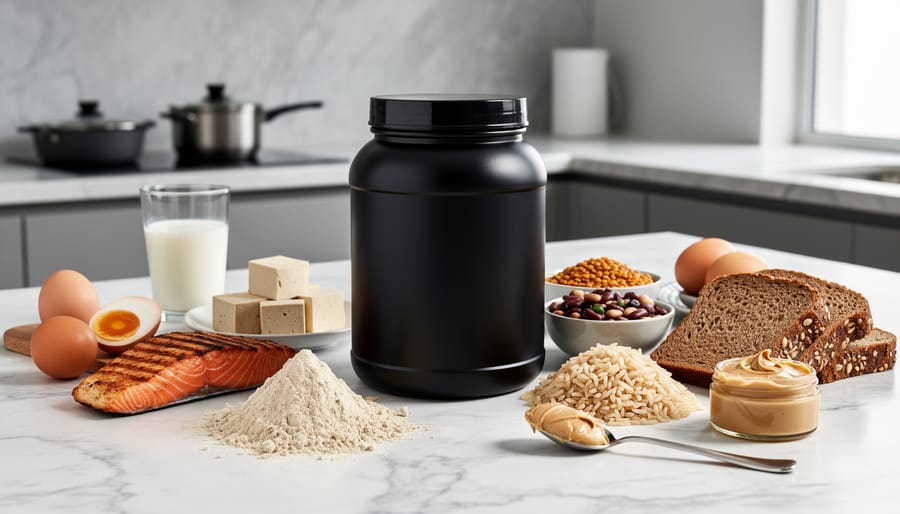
Compare protein sources using the Protein Digestibility-Corrected Amino Acid Score (PDCAAS) or the newer Digestible Indispensable Amino Acid Score (DIAAS) to identify which foods deliver complete amino acid profiles your body can actually absorb and use. Check whether your current protein choices score above 0.9 on the PDCAAS scale, indicating they contain all essential amino acids in optimal ratios—animal sources like eggs, milk, and fish typically achieve perfect scores, while plant proteins often fall short without strategic combining.
Calculate your daily protein needs by multiplying your body weight in kilograms by 0.8 to 1.2 grams for general health, or up to 2.0 grams if you’re actively building muscle or recovering from illness. Track whether you’re meeting these targets with high-quality sources rather than relying solely on total protein numbers, since a 100-gram serving of chicken breast delivers far more usable protein than the same amount of beans due to superior digestibility and amino acid completeness.
Combine complementary plant proteins within the same day—pairing rice with lentils, hummus with whole grain bread, or peanut butter with oats—to create complete amino acid profiles that match animal protein quality. This strategy proves especially valuable for vegetarians and vegans who need multiple plant sources to achieve the same nutritional benefits as single animal-based foods, ensuring your muscles, immune system, and cellular repair processes receive all the building blocks they require.
What Actually Makes Protein ‘High Quality’?
The Nine Amino Acids Your Body Can’t Make
Your body needs 20 different amino acids to build and repair tissues, but it can only produce 11 of them on its own. The remaining nine are called essential amino acids because you must get them from your diet. These nine are histidine, isoleucine, leucine, lysine, methionine, phenylalanine, threonine, tryptophan, and valine.
Think of amino acids as building blocks. When you eat protein, your digestive system breaks it down into these individual amino acids, which your body then reassembles into new proteins needed for muscle tissue, enzymes, hormones, and immune function.
Getting all nine essential amino acids is particularly important for muscle building and recovery after exercise. Leucine, for example, signals your muscles to start the repair and growth process. Without adequate amounts of all essential amino acids, your body can’t efficiently build new muscle tissue, even if you’re consuming enough total protein.
These amino acids also support everyday health functions beyond fitness. Tryptophan helps produce serotonin, which affects your mood and sleep quality. Methionine supports metabolism and detoxification. Lysine aids calcium absorption and collagen formation.
Complete protein sources contain all nine essential amino acids in sufficient amounts. Animal proteins like meat, fish, eggs, and dairy are complete proteins. Most plant proteins are incomplete, meaning they’re low in one or more essential amino acids, though combining different plant foods throughout the day can provide everything your body needs.
How Your Body Actually Uses Protein
When you eat protein, your body doesn’t simply absorb it as-is. Think of protein like a pearl necklace that needs to be taken apart before your body can use the individual pearls. Your digestive system breaks down protein into smaller building blocks called amino acids, which then enter your bloodstream and travel to where they’re needed most—whether that’s repairing muscles after exercise, supporting your immune system, or maintaining healthy hair and skin.
Here’s where protein quality becomes important: not all proteins break down and absorb equally well. Some protein sources are easier for your body to digest and contain all the essential amino acids you need in the right proportions. This is similar to how you can maximize nutrient absorption from vegetables through proper preparation methods.
Higher quality proteins mean your body can actually use more of what you’re eating. For example, if you eat 20 grams of a high-quality protein like eggs, your body might absorb and utilize around 18 grams. With a lower-quality protein source, you might only utilize 12-14 grams from that same 20-gram serving. This matters because meeting your protein needs isn’t just about hitting a number—it’s about ensuring your body gets enough usable amino acids to support your health goals, whether that’s building strength, maintaining energy levels, or supporting healthy aging.
Understanding Protein Quality Scoring Systems
PDCAAS: The Score You’ll See Most Often
PDCAAS (Protein Digestibility Corrected Amino Acid Score) is the measurement you’ll most commonly encounter on food labels and nutrition databases. This system rates proteins on a scale from 0 to 1.0, with 1.0 representing the highest quality protein that contains all essential amino acids in ideal proportions and is easily digested by your body.
Here’s what the numbers mean: a score of 1.0 indicates a complete protein that meets all your amino acid needs, while lower scores suggest the protein is either missing certain amino acids or isn’t absorbed as efficiently. For example, egg whites, whey protein, and soy protein all score 1.0, making them excellent choices for meeting your protein requirements.
Many Canadian food manufacturers use PDCAAS because it’s been the official method recommended by health organizations since 1993. It’s particularly helpful when you’re comparing protein powders or plant-based alternatives at the grocery store. The system considers both the amino acid profile and how well your body actually digests and uses the protein, giving you a practical measure of what you’re really getting from your food. While newer methods exist, PDCAAS remains the standard you’ll see most frequently on packaging and nutritional information.
DIAAS: The Newer, More Accurate Measure
While PDCAAS has been widely used since 1993, nutritional science has evolved. The Digestible Indispensable Amino Acid Score (DIAAS) is now recognized as the more accurate measure by the Food and Agriculture Organization of the United Nations.
What makes DIAAS better? It measures protein digestibility at the end of the small intestine rather than just looking at overall digestibility. This gives us a more precise picture of how much usable protein your body actually absorbs from different foods. DIAAS also accounts for individual amino acid digestibility, not just total protein, which matters because your body needs all nine essential amino acids in the right amounts to build and repair tissues effectively.
DIAAS scores above 100 indicate excellent quality protein that meets all your amino acid needs. Scores between 75-100 represent good quality sources, while anything below 75 suggests the protein may need to be combined with other foods to provide complete nutrition. This updated scoring system helps you make smarter choices about which protein sources will truly support your health goals, whether you’re building muscle, managing weight, or simply maintaining good overall wellness.
What These Numbers Actually Tell You
Understanding protein quality scores helps you make smarter food choices without overthinking every meal. A score above 1.0 means the protein contains all essential amino acids your body needs in optimal amounts. Foods scoring 0.9 or higher are considered excellent choices for meeting your daily protein requirements.
Here’s what this means practically: if you’re eating animal products like eggs, chicken, or Greek yogurt, you’re already getting top-quality protein. Plant-based eaters can achieve the same results by combining different sources throughout the day. For example, pairing rice with beans or hummus with whole grain pita creates a complete amino acid profile.
Don’t stress about perfect scores at every meal. Your body pools amino acids throughout the day, so variety matters more than perfection. Focus on including diverse protein sources across breakfast, lunch, and dinner. If you’re active or managing a health condition, aim for higher-scoring proteins to meet your needs efficiently with smaller portions. The key is consistency and balance, not chasing the highest number on every plate.
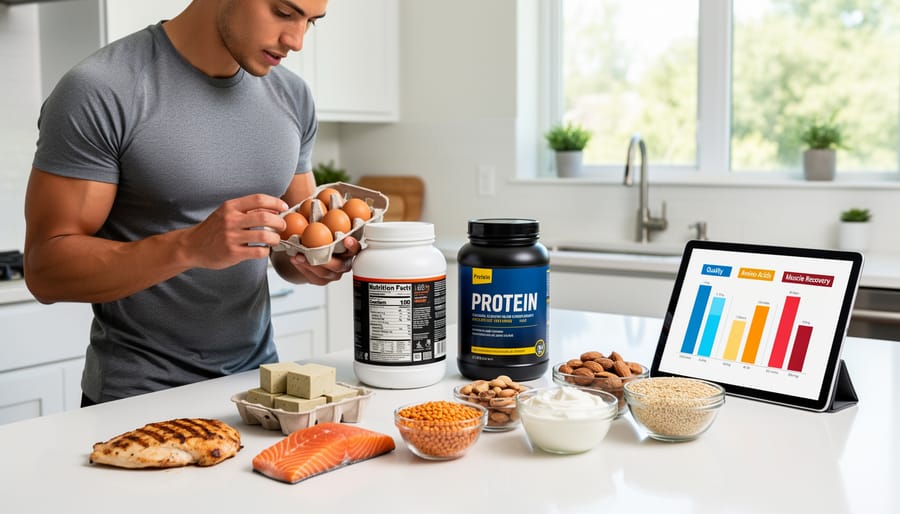
The Protein Quality Chart: Comparing Common Foods
Animal-Based Proteins: The Complete Package
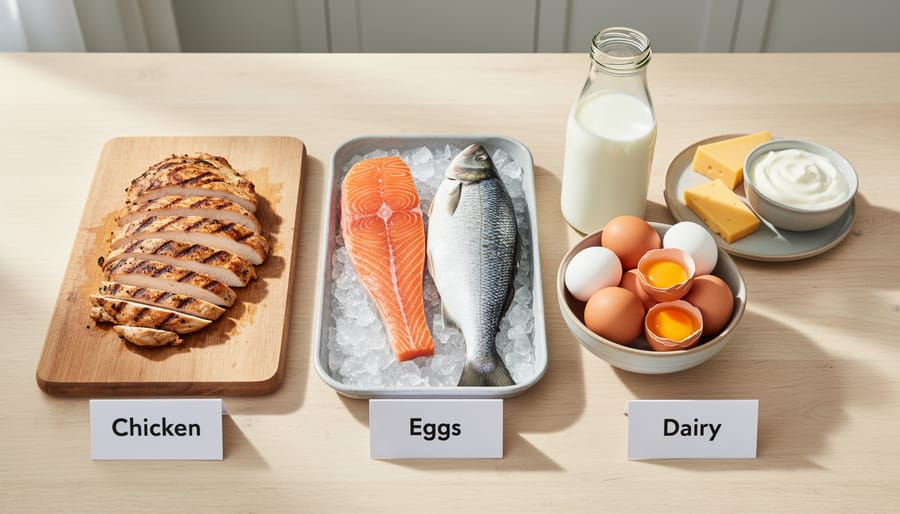
Animal-based proteins consistently rank at the top of protein quality charts because they contain all nine essential amino acids your body needs in optimal proportions. Understanding their specific benefits helps you make smart choices at the grocery store.
Eggs earn their reputation as the gold standard, scoring 100 on the Protein Digestibility Corrected Amino Acid Score (PDCAAS). One large egg delivers about 6 grams of complete protein along with leucine, which is particularly important for muscle building and maintenance. The protein is found in both the white and yolk, so eating whole eggs gives you the full nutritional package.
Dairy products like Greek yogurt, cottage cheese, and milk also score exceptionally well. Greek yogurt provides roughly 15-20 grams of protein per serving and is rich in branched-chain amino acids that support muscle recovery. Cottage cheese offers a sustained protein release, making it an excellent evening snack for overnight muscle repair.
Chicken breast stands out as a lean option, delivering approximately 31 grams of protein per 100-gram serving with minimal fat. It’s particularly high in tryptophan and vitamin B6, supporting both mood and immune function.
Beef provides not just complete protein but also vital nutrients like iron, zinc, and vitamin B12. A 100-gram serving offers about 26 grams of protein and creatine, which enhances athletic performance.
Fish, especially salmon and tuna, combines high-quality protein (20-25 grams per 100 grams) with omega-3 fatty acids, supporting heart health alongside muscle maintenance. These options give you flexibility while ensuring your protein needs are fully met.
Plant-Based Proteins: What You Need to Know
Plant-based proteins offer valuable nutrition, though they typically have lower digestibility scores than animal sources. Understanding their strengths and how to optimize them helps you make the most of these foods.
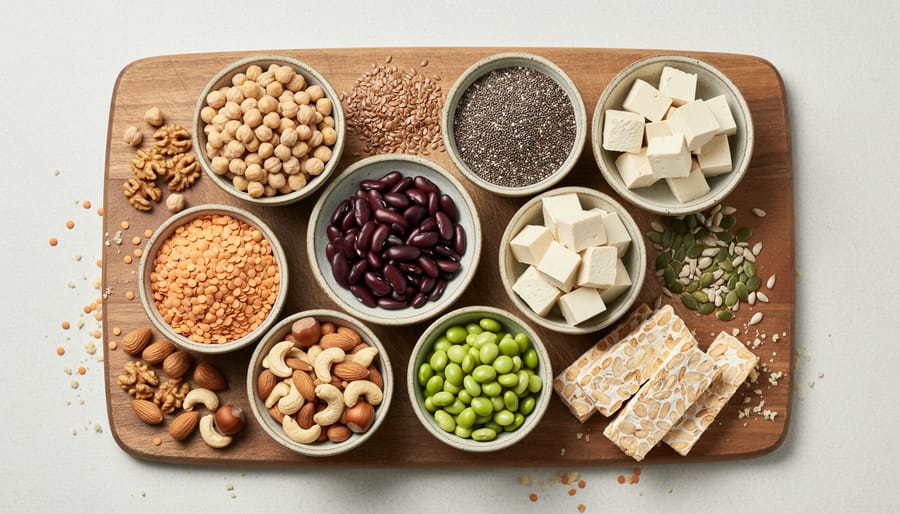
Soy products like tofu, tempeh, and edamame stand out among plant proteins, containing all nine essential amino acids with a digestibility score similar to eggs. They’re versatile and absorb flavours well, making them excellent protein staples.
Quinoa is another complete protein, providing about 8 grams per cooked cup along with fiber and minerals. While its protein quality is good, you’ll need larger portions compared to animal sources to meet your daily needs.
Legumes including lentils, chickpeas, and black beans are affordable protein sources rich in fiber. They’re lower in the amino acid methionine, but this isn’t a concern when you eat varied foods throughout the day.
Nuts and seeds contribute protein plus healthy fats, though they’re calorie-dense. Hemp seeds and chia seeds offer better amino acid profiles than most nuts.
The key to optimizing plant protein quality is variety. Traditional combinations like beans with rice, hummus with whole grain pita, or peanut butter on whole wheat bread naturally balance amino acids through strategic food combining. You don’t need to combine proteins at every meal—eating diverse protein sources daily ensures you get all essential amino acids.
Consider exploring options like oyster mushrooms as protein sources or checking the jackfruit protein content to expand your plant-based repertoire.
Protein Supplements: Where They Really Rank
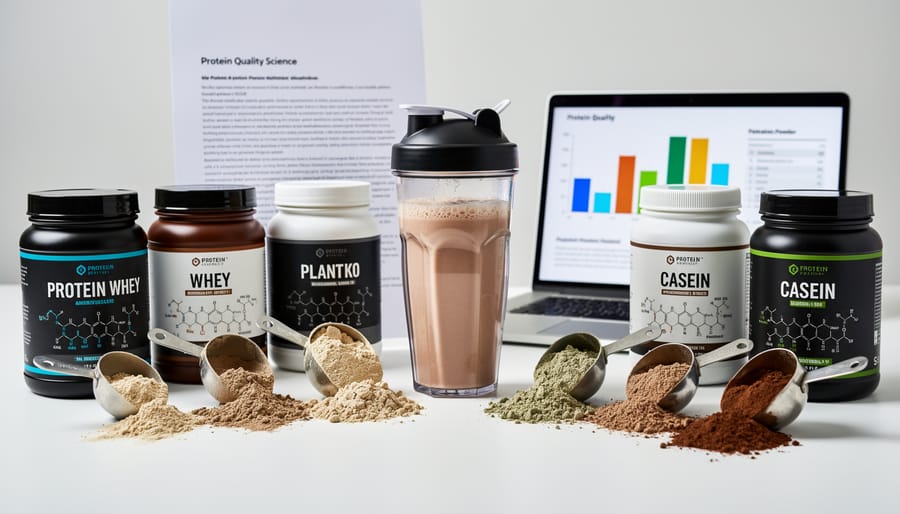
Protein powders can be a convenient way to boost your intake, but quality varies significantly. Here’s what the research tells us about popular options.
Whey protein consistently ranks highest with a DIAAS score around 1.09 to 1.18, meaning it provides all essential amino acids your body needs in optimal amounts. It’s quickly absorbed, making it ideal post-workout. Whey isolate contains less lactose than concentrate, which matters if you’re sensitive to dairy.
Casein scores similarly high (DIAAS 1.18) but digests slowly, releasing amino acids over several hours. This makes it useful before bed or during long periods without food, though it’s less popular than whey.
Pea protein has improved dramatically in recent years, with DIAAS scores around 0.82 to 0.89. While lower than dairy proteins, it’s surprisingly complete and works well for plant-based eaters. It’s particularly rich in branched-chain amino acids that support muscle recovery.
Rice protein alone scores lower (around 0.37 to 0.47) because it’s limited in lysine. However, many brands now combine rice with pea protein, creating blends that score much higher and provide balanced amino acids.
Mixed plant protein powders combining multiple sources often achieve DIAAS scores of 0.90 or higher, rivaling animal proteins when formulated properly.
The bottom line? Whey and casein offer the highest quality, but well-formulated plant blends can effectively meet your protein needs, especially when consumed as part of a varied diet throughout the day.
How to Use Protein Quality Information in Your Daily Life
Making Smart Choices on Different Diets
Meeting your protein quality needs is achievable regardless of your dietary approach, and each eating pattern offers unique advantages.
For omnivores, you have the broadest range of options. Focus on incorporating variety by rotating between high-quality animal proteins like Canadian-raised chicken, salmon from British Columbia, and Greek yogurt, while adding plant sources like lentils and quinoa. This combination provides complete amino acid profiles while supporting overall nutritional diversity.
Vegetarians can easily meet protein quality standards through eggs, dairy products, and strategic plant combinations. A breakfast of eggs with whole grain toast, lunch featuring cottage cheese with hemp hearts, and dinner combining beans with brown rice ensures you’re getting complete proteins throughout the day. Canadian dairy products, particularly Greek yogurt and cheese, offer excellent PDCAAS scores while providing calcium and vitamin D.
Vegans should embrace the power of plant-based nutrition through complementary proteins. Combine foods like peanut butter on whole wheat bread, tofu stir-fry with quinoa, or hummus with pita to create complete amino acid profiles. Canadian-grown soybeans, peas, and hemp seeds are excellent high-quality options. Consider fortified plant-based products available in Canadian grocery stores, and if needed, discuss supplementation with your healthcare provider.
Regardless of your diet, focus on whole food sources first, spread protein intake throughout the day, and choose minimally processed options whenever possible to maximize both protein quality and overall nutritional value.
Optimizing Protein Quality for Fitness Goals
To maximize your fitness results, focus on consuming high-quality proteins that support your specific goals. Research shows that combining complete proteins with strategic timing can significantly enhance your outcomes.
For muscle building, aim for 1.6 to 2.2 grams of protein per kilogram of body weight daily, prioritizing complete proteins like eggs, Greek yogurt, lean meats, and fish. Distribute your intake across 3-4 meals, ensuring each contains 20-40 grams of protein to optimize muscle protein synthesis throughout the day. Post-workout nutrition is particularly important—consume a high-quality protein source within two hours of resistance training for best results.
If weight loss is your goal, higher protein intake (25-30% of total calories) helps preserve muscle mass while promoting satiety. Choose nutrient-dense options like chicken breast, salmon, and legumes that keep you fuller longer without excess calories. Eating protein-rich breakfast foods has been shown to reduce cravings and support better food choices throughout the day.
For athletic performance, timing matters. Consume easily digestible proteins like whey or egg whites before training, and pair complete proteins with complex carbohydrates after intense workouts to support recovery and glycogen replenishment.
Vegetarian and vegan athletes should combine complementary proteins—such as rice with beans or hummus with whole grain pita—to ensure adequate amino acid profiles. Planning mixed protein sources throughout the day naturally provides the complete amino acid spectrum your body needs for optimal performance and recovery.
Budget-Friendly High-Quality Protein Sources
Quality protein doesn’t have to break your grocery budget. Eggs consistently rank as one of the most affordable complete protein sources available in Canadian stores, offering excellent amino acid profiles at around $4-6 per dozen. Canned tuna and salmon provide convenient, shelf-stable options with high protein quality scores at reasonable prices. Greek yogurt, particularly store brands, delivers impressive protein content per serving while remaining budget-friendly. Dried legumes like lentils and chickpeas offer exceptional value when combined with whole grains to create complete proteins. Chicken thighs cost significantly less than breasts while providing similar protein quality. Cottage cheese and frozen fish fillets are other cost-effective choices. Consider buying larger formats when possible and watch for sales on quality protein items to maximize your nutrition budget without compromising the amino acid completeness your body needs.
Common Myths About Protein Quality
Many people hold outdated beliefs about protein that can lead to unnecessary dietary restrictions or confusion. Let’s clear up some common misconceptions with evidence-based facts.
One widespread myth is that plant proteins are automatically inferior to animal proteins. While it’s true that most plant proteins don’t contain all nine essential amino acids in optimal ratios, this doesn’t make them inadequate. Eating a variety of plant-based foods throughout the day naturally provides all the amino acids your body needs. You don’t need to combine specific proteins at every meal, as nutrition experts once believed.
Another common misconception is that you must consume protein immediately after exercise for it to be effective. Research shows that your body has a much longer window for protein synthesis than the mythical 30-minute post-workout period. Spreading your protein intake evenly throughout the day is actually more beneficial for muscle maintenance and growth.
Many Canadians also believe they need excessive amounts of protein to build muscle or lose weight. While protein is important for both goals, most people already consume adequate amounts. The average Canadian doesn’t need protein supplements unless they have specific athletic goals or dietary restrictions.
There’s also confusion about protein quality scores being the only factor that matters. While these scores provide helpful guidance, the overall nutritional profile of a food is equally important. A food might score high on protein quality but lack other essential nutrients like fiber, vitamins, or healthy fats.
Finally, some people worry that high-protein diets harm kidney function in healthy individuals. Current research shows that people with normal kidney function can safely consume higher protein amounts without adverse effects. However, those with existing kidney conditions should consult healthcare providers about appropriate protein intake.
Understanding protein quality charts gives you the knowledge to make informed choices that support your health goals. These tools help you identify which protein sources deliver the most complete nutrition, whether you’re building muscle, managing weight, or simply maintaining overall wellness. Remember that while protein quality matters, it’s just one piece of your nutritional puzzle. The best approach combines high-quality protein sources with a varied, balanced diet rich in vegetables, whole grains, and healthy fats.
You don’t need to obsess over scores or rankings. Instead, use these charts as a helpful guide when planning meals and grocery shopping. Focus on including diverse protein sources throughout your week, mixing both animal and plant-based options based on your preferences and dietary needs. By understanding the science behind protein quality, you’re empowered to build eating patterns that truly nourish your body and support long-term health.