
Opioid use disorder is a treatable medical condition, not a moral failing, and recovery is possible with the right support and evidence-based care. If you or someone you care about is struggling with opioid dependency, understanding your treatment options is the first step toward healing.
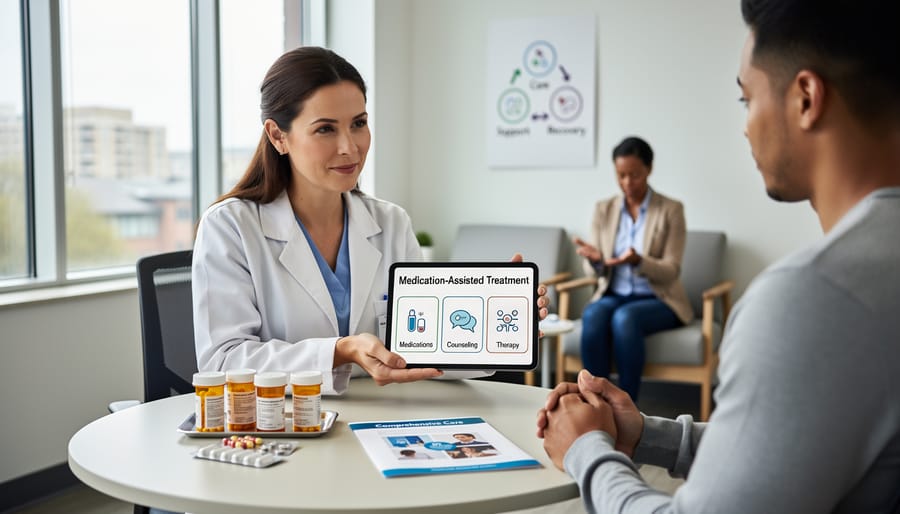
Medication-assisted treatment combines FDA-approved medications like methadone, buprenorphine, or naltrexone with counseling and behavioral therapies. These medications work by reducing cravings, preventing withdrawal symptoms, and blocking the euphoric effects of opioids, allowing your brain to heal while you rebuild your life. Research consistently shows this approach significantly improves recovery outcomes and reduces overdose risk compared to abstinence-only methods.
Counseling and behavioral therapies address the psychological aspects of addiction through individual therapy, group support, and cognitive-behavioral techniques. These evidence-based approaches help you identify triggers, develop healthy coping strategies, and address underlying mental health conditions that may contribute to substance use.
Withdrawal management programs provide medical supervision during the initial detoxification phase, ensuring your safety and comfort as your body adjusts to functioning without opioids. While detox alone is not sufficient treatment, it can be an important first step when combined with ongoing therapy and medication support.
Treatment works best when personalized to your unique circumstances, whether through outpatient programs that allow you to maintain daily responsibilities, intensive day treatment, or residential care for more complex situations. Recovery is not a straight path, and seeking help demonstrates courage and strength.
Understanding Opioid Use Disorder
Opioid use disorder is a medical condition that affects how your brain functions, making it extremely difficult to stop using opioids even when they’re causing harm. This condition can develop whether someone is using prescription pain medications like oxycodone or morphine, or illegal opioids like fentanyl and heroin.
When you take opioids, they attach to specific receptors in your brain and body, blocking pain signals and releasing large amounts of dopamine—a chemical that makes you feel good. Over time, your brain adapts to these drugs. It starts producing less dopamine naturally and becomes less responsive to the opioid, meaning you need more of the drug to feel the same effect. This is called tolerance. Your brain also begins to rely on opioids to function normally, which is physical dependence. When the drug isn’t present, you experience uncomfortable withdrawal symptoms like muscle aches, anxiety, and nausea.
It’s important to understand that opioid use disorder isn’t about willpower or moral character. Brain imaging studies show actual physical changes in areas responsible for judgment, decision-making, learning, and memory. These changes make it incredibly challenging to quit without proper treatment, even when someone desperately wants to stop.
Some people are more vulnerable to developing opioid use disorder due to factors like genetics, mental health conditions, trauma history, or environmental influences. Additionally, some individuals may also struggle with polysubstance use disorders, which can complicate treatment needs.
The stigma surrounding opioid use disorder prevents many Canadians from seeking help. Viewing it through a medical lens rather than a moral one is essential for recovery. Just as you wouldn’t judge someone for having diabetes or heart disease, opioid use disorder deserves the same compassionate, evidence-based approach to treatment. With proper care and support, recovery is absolutely possible.
Medication-Assisted Treatment (MAT) Options
Methadone Treatment
Methadone is a long-acting medication that has been used safely and effectively to treat opioid use disorder for over 50 years. It works by activating the same receptors in your brain as other opioids, but in a controlled, steady way that prevents withdrawal symptoms and reduces cravings without causing a “high.” This allows you to focus on rebuilding your life while your brain chemistry stabilizes.
In Canada, methadone treatment is available through specialized clinics and some healthcare providers who have received specific training. The medication is taken daily as a liquid, typically under supervision at a pharmacy or clinic, especially during the first few months of treatment. This witnessed ingestion ensures safety and helps healthcare providers monitor your progress.
When starting methadone therapy, your doctor will begin with a low dose and gradually adjust it based on how you respond. Finding the right dose is essential for controlling cravings and withdrawal symptoms effectively. Most people remain stable on their prescribed dose for months or years, though your needs may change over time.
Treatment includes regular check-ins with your healthcare team, which may involve counselors, nurses, and doctors. Many programs also offer additional support services like counseling and peer support groups. As you progress and demonstrate stability, you may qualify for take-home doses, giving you more flexibility and independence.
Methadone treatment is covered by most provincial health plans, making it an accessible option for many Canadians seeking recovery from opioid use disorder.
Buprenorphine/Naloxone (Suboxone)
Buprenorphine/naloxone, commonly known by the brand name Suboxone, is a highly effective medication for treating opioid use disorder. This combination medication works in two ways: buprenorphine is a partial opioid agonist that reduces cravings and withdrawal symptoms, while naloxone helps prevent misuse by blocking opioid effects if the medication is injected rather than taken as directed.
One significant advantage of buprenorphine over methadone is greater flexibility. While methadone typically requires daily visits to specialized clinics, buprenorphine can be prescribed by authorized healthcare providers and picked up at regular pharmacies, allowing people to maintain their treatment more privately and conveniently. This makes it easier to continue working, caring for family, and managing daily responsibilities during recovery.
Buprenorphine has a lower risk of overdose compared to full opioid agonists because of its ceiling effect, meaning higher doses do not produce increased opioid effects beyond a certain point. This safety profile makes it suitable for take-home dosing once treatment is stabilized.
Availability varies across Canadian provinces. Most provinces now allow family doctors and nurse practitioners who complete specific training to prescribe buprenorphine, expanding access beyond addiction specialists. Some provinces offer rapid access addiction medicine clinics where you can start treatment the same day.
It’s important to note that buprenorphine should be carefully managed if you’re taking other sedating medications. If you’re also using benzodiazepines, discuss safely stopping benzodiazepines with your healthcare provider, as combining these medications increases risks. Your treatment team will work with you to create the safest plan for your recovery journey.
Slow-Release Oral Morphine
Slow-release oral morphine offers another option for treating opioid use disorder in Canada, though it’s less commonly prescribed than methadone or buprenorphine. This medication works similarly to other opioid agonist therapies by satisfying the body’s physical dependence on opioids while preventing withdrawal symptoms and reducing cravings.
Healthcare providers typically consider slow-release morphine when other treatments haven’t been successful or aren’t well-tolerated. The controlled-release formula provides steady medication levels throughout the day, helping stabilize individuals in recovery. Patients usually take it once or twice daily under medical supervision.
Research shows that slow-release morphine can be effective for managing opioid use disorder, particularly for people who haven’t responded well to standard treatments. However, availability varies across Canadian provinces and territories. Some treatment programs offer it as part of their services, while others focus primarily on methadone and buprenorphine options.
Like all opioid agonist therapies, slow-release morphine works best when combined with counseling and psychosocial support. Your healthcare provider can help determine whether this treatment option is appropriate for your specific situation and available in your area. They’ll consider your medical history, previous treatment responses, and individual needs when recommending the most suitable approach.
Injectable Treatments
Injectable treatments offer convenient, long-lasting options for people managing opioid use disorder. Extended-release buprenorphine, administered monthly or weekly by a healthcare provider, eliminates the need for daily medication. This format can improve treatment adherence and provides steady medication levels in your system, reducing cravings and withdrawal symptoms effectively.
In Canada, extended-release buprenorphine is available through specialized clinics and addiction treatment centres. Your doctor will determine if this option suits your individual needs and recovery goals.
Some Canadian provinces also offer supervised injectable opioid agonist therapy programs for individuals who haven’t responded well to other treatments. These programs, available in select locations including British Columbia, Ontario, and Alberta, provide medical-grade injectable options under clinical supervision. This evidence-based approach has shown significant success in helping people stabilize their lives, reduce illicit drug use, and improve overall health outcomes.
Talk to your healthcare provider or local addiction services to learn which injectable options are available in your area and whether they might be appropriate for your treatment plan.
Counseling and Behavioral Therapies
Cognitive Behavioral Therapy (CBT)
Cognitive Behavioral Therapy is a structured, evidence-based counseling approach that helps people with opioid use disorder identify and change unhelpful thinking patterns and behaviors that contribute to substance use. During CBT sessions, you work with a trained therapist to recognize triggers that lead to opioid use, develop healthier coping strategies, and build skills to manage cravings and stress.
The therapy focuses on the connection between your thoughts, feelings, and actions. For example, you might learn to challenge thoughts like “I can’t handle this stress without opioids” and replace them with more constructive alternatives. Your therapist will help you develop practical strategies for dealing with high-risk situations, such as avoiding certain places or people, or using relaxation techniques when cravings arise.
CBT is typically delivered in individual or group sessions over several weeks or months. Research shows it’s particularly effective when combined with medication-assisted treatment. Many people find that the skills learned in CBT continue to support their recovery long after formal treatment ends. The approach is widely available across Canada through addiction treatment centers, community health services, and private practitioners, making it an accessible option for those seeking support in their recovery journey.
Group Therapy and Peer Support
Group therapy and peer support programs offer powerful pathways to recovery from opioid use disorder, creating connections with others who understand the challenges firsthand. These settings provide a safe space to share experiences, learn coping strategies, and build accountability within a supportive community.
In Canada, numerous community-based recovery groups are available at no cost. Narcotics Anonymous (NA) meetings operate in communities across all provinces and territories, following a 12-step approach that has helped many people maintain long-term recovery. SMART Recovery Canada offers an alternative, science-based program that teaches practical skills for managing cravings and building motivation.
Group therapy led by trained counselors combines professional guidance with peer connection. These sessions typically focus on developing healthy coping mechanisms, addressing underlying issues like trauma or mental health conditions, and building relapse prevention skills. Many addiction treatment centers and community health organizations offer group therapy as part of their services.
Peer support programs connect individuals with trained peers who have lived experience with addiction recovery. These peer mentors provide non-judgmental support, practical advice, and hope during difficult moments. Research shows that peer support significantly improves treatment retention and recovery outcomes.
To find local group therapy or peer support programs, contact your provincial health services directory, community health centers, or visit the Canadian Centre on Substance Use and Addiction website for resources.

Family Therapy
Family involvement plays a valuable role in supporting recovery from opioid use disorder. When family members understand the nature of addiction and participate in treatment, they can provide emotional support, help identify triggers, and create a healthier home environment that promotes long-term recovery.
Family therapy sessions offer a safe space to improve communication, rebuild trust, and address relationship challenges that may have developed during active substance use. Therapists help families develop coping strategies and establish healthy boundaries while learning to support their loved one without enabling harmful behaviours.
Many treatment programs across Canada include family counseling as part of their services. Community health centres, addiction treatment facilities, and mental health organizations offer family support groups and educational programs. These resources help family members manage their own stress and emotional well-being while supporting recovery.
Organizations like the Canadian Centre on Substance Use and Addiction provide educational materials and guidance for families. Provincial health websites also list local family support services and addiction counseling resources available in your area. Engaging with these supports strengthens the entire family unit and improves treatment outcomes.
Harm Reduction Approaches
Supervised Consumption Sites
Supervised consumption sites offer a safe, clean environment where people can use pre-obtained drugs under medical supervision. These facilities are designed to prevent overdose deaths and reduce disease transmission while connecting individuals to health and social services without judgment.
Across Canada, supervised consumption sites operate in British Columbia, Alberta, Ontario, and Quebec, with locations primarily in larger urban centres like Vancouver, Toronto, Montreal, and Edmonton. Trained staff monitor for overdose symptoms and can immediately respond with naloxone and emergency care if needed. These sites also provide sterile equipment, which significantly reduces the risk of infections like HIV and hepatitis C.
Beyond harm reduction, supervised consumption sites serve as crucial entry points to treatment. Staff members offer information about medication-assisted treatment, counseling services, and withdrawal management programs. They can help connect individuals to housing support, mental health services, and other resources that address the underlying factors contributing to substance use.
Research shows that communities with supervised consumption sites experience fewer overdose deaths and reduced public drug use, while users are more likely to enter treatment programs. These facilities operate on the principle that keeping people alive and healthy creates opportunities for recovery and positive change.
Naloxone Access and Training
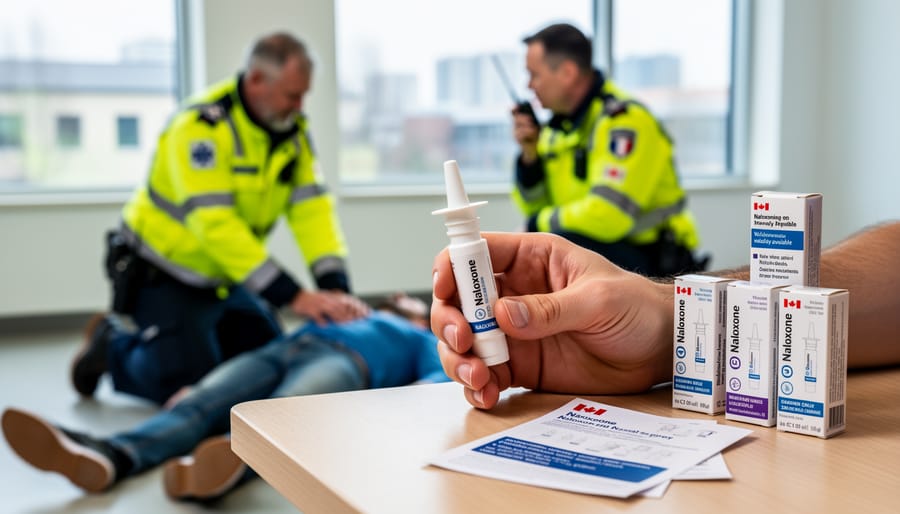
Naloxone is a life-saving medication that temporarily reverses opioid overdoses by blocking opioid receptors in the brain and restoring normal breathing. In Canada, naloxone kits are available free or at low cost without a prescription at most pharmacies, community health centres, and harm reduction programs across all provinces and territories.
The kits typically contain either an injectable form or a nasal spray, along with simple instructions for use. You don’t need medical training to administer naloxone, and Good Samaritan laws protect those who respond to overdoses in good faith. Many pharmacies and community organizations offer brief training sessions on recognizing overdose signs and using naloxone properly.
Anyone at risk of opioid overdose, their family members, and friends should consider carrying a naloxone kit. This includes people taking prescription opioids at high doses, those in recovery, and anyone who might witness an overdose. After administering naloxone, always call 911, as its effects are temporary and medical attention remains essential. Having naloxone readily available provides crucial time for emergency services to arrive and can prevent tragic outcomes.
Drug Checking Services
Drug checking services provide a vital harm reduction tool by testing substances for dangerous contaminants, particularly fentanyl and its analogues. These free, confidential programs are available at supervised consumption sites, community health centres, and some pharmacies across Canada. You can bring a small sample of your drug supply to be analyzed using specialized equipment that detects specific substances within minutes.
The results help you make informed decisions about drug use and reduce overdose risk. Many services also offer strips you can take home to test substances yourself. Staff members provide non-judgmental support and can connect you with treatment services when you’re ready.
While drug checking increases safety, no drug use is completely risk-free. These services work best as part of a broader harm reduction approach that includes carrying naloxone, avoiding using alone, and starting with smaller amounts when trying a new supply.
Accessing Treatment in Canada
Finding Treatment Programs
Finding effective treatment for opioid use disorder is easier than you might think, and taking that first step is something to feel proud of. Start by contacting your provincial or territorial health services, which offer dedicated addiction support lines and can connect you with local programs. In most provinces, you can call 811 to speak with a nurse who can guide you to appropriate services.
Community health centers and family doctors are excellent starting points, as many now offer medication-assisted treatment directly or can provide referrals to specialized clinics. These professionals understand that opioid use disorder is a medical condition requiring comprehensive care, not a moral failing.
Several national resources provide immediate support and information. Health Canada’s online portal offers a treatment service locator, while the Canadian Centre on Substance Use and Addiction provides evidence-based resources. The Hope for Wellness Helpline (1-855-242-3310) serves Indigenous peoples across Canada with culturally sensitive support.
Many treatment programs operate on a sliding fee scale or accept provincial health coverage, making care financially accessible. Don’t hesitate to ask about payment options when you call. Remember, seeking help is a sign of strength, and recovery is absolutely possible with the right support.
Coverage and Costs
Access to opioid use disorder treatment in Canada varies by province and territory. Most provincial health insurance plans cover medication-assisted treatments like methadone and buprenorphine when prescribed by a physician. Coverage typically includes doctor visits, counselling services, and some rehabilitation programs, though the extent differs across regions.
Private insurance plans often provide additional coverage for residential treatment programs, extended counselling sessions, and alternative therapies. Check your specific policy details, as coverage limits and requirements for pre-authorization vary considerably between insurers.
If you lack insurance coverage, several support options exist. Many community health centres offer sliding-scale fees based on income. Non-profit organizations provide free or low-cost treatment programs, and some pharmaceutical companies offer patient assistance programs for medications. Federal programs like the Non-Insured Health Benefits program support eligible First Nations and Inuit individuals.
Provincial drug programs may cover prescription costs for those meeting specific criteria, such as low income or high medication expenses. Contact your provincial health ministry or local public health unit to learn about available programs in your area. Remember, financial barriers should never prevent you from seeking help—compassionate healthcare providers can help you navigate funding options and find accessible treatment solutions.
Building Your Personal Recovery Plan
Recovery from opioid use disorder is a deeply personal journey, and there’s no single path that works for everyone. Your recovery plan should reflect your unique circumstances, preferences, and needs.
Start by working with healthcare providers to identify which treatment approaches suit you best. This might include medication-assisted treatment, counselling, or a combination of approaches. Be honest about what you’re comfortable with and what fits your lifestyle. Some people thrive in group settings, while others prefer one-on-one support.
Consider the practical aspects of your daily life. Your plan should address housing stability, employment or education goals, and rebuilding relationships with supportive family and friends. If you’re managing complex substance use patterns, your treatment team can help coordinate care that addresses all your needs.
Build a support network that works for you. This might include peer support groups, community programs, cultural or spiritual communities, or online resources. Many Canadians find strength in connecting with others who understand their experiences.
Develop strategies for managing triggers and cravings. Identify your warning signs and create a plan for challenging moments. This could include calling a support person, using coping techniques learned in therapy, or having your healthcare provider’s contact information readily available.
Remember to celebrate small victories along the way. Recovery isn’t always linear, and setbacks don’t mean failure. They’re opportunities to learn and adjust your plan. Regular check-ins with your healthcare team allow you to assess what’s working and make changes when needed. Your recovery plan should evolve as you do, supporting your journey toward long-term wellness.

Recovery from opioid use disorder is possible, and treatment works. Thousands of Canadians successfully manage this condition every year through evidence-based treatments like medication-assisted therapy, counselling, and peer support. Whether you’re concerned about yourself or someone you care about, reaching out for help is a sign of strength, not weakness.
Taking the first step can feel overwhelming, but you don’t have to do it alone. Start by speaking with your family doctor, calling a local addiction service, or reaching out to a support line. Many treatment options are available across Canada, and healthcare providers are ready to work with you to find the approach that fits your needs and circumstances.
If you need immediate support, contact the Canada-wide crisis line at 1-833-456-4566 (24/7) or text 45645. In Quebec, call 1-800-265-2626. The Canadian Mental Health Association (www.cmha.ca) can also connect you with local resources and services.
Remember that recovery looks different for everyone, and setbacks are a normal part of the journey. With the right support and treatment, you can build a healthier, more fulfilling life. Hope and healing are within reach—take that first step today.