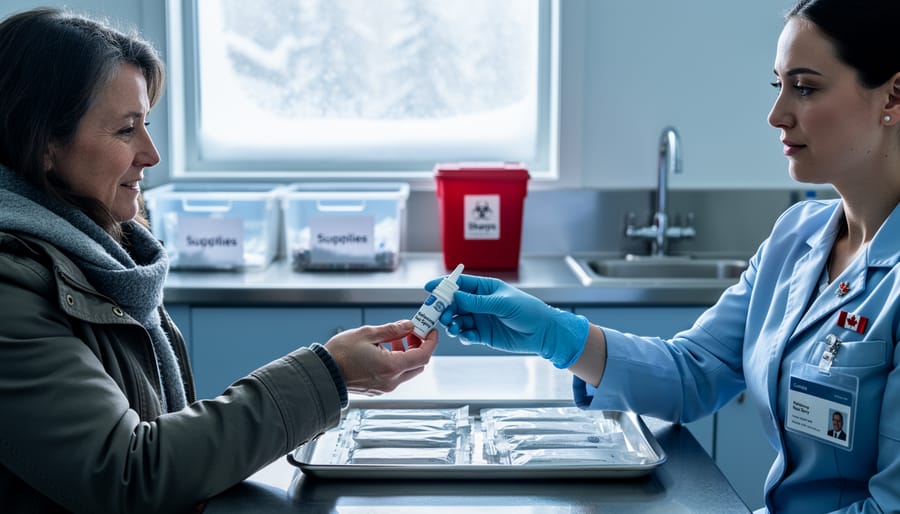
Harm reduction services save lives by meeting people who use substances exactly where they are, without requiring abstinence or judgment. These evidence-based programs provide sterile equipment, overdose prevention medication, health monitoring, and connections to healthcare—reducing infections, preventing deaths, and creating pathways to treatment when people are ready.
Across Canada, supervised consumption sites allow trained staff to reverse overdoses within seconds, preventing over 35,000 deaths since their introduction. Needle exchange programs have cut HIV transmission rates by up to 70% in participating communities. Drug checking services help people avoid contaminated supplies, while naloxone distribution programs have equipped thousands of Canadians to respond to emergencies in their own neighborhoods.
These services work because they acknowledge a fundamental truth: people facing substance use challenges deserve healthcare, dignity, and support. Rather than waiting for someone to reach crisis, harm reduction creates immediate safety while leaving every door open for future change.
The approach contradicts common misconceptions. Research consistently shows that harm reduction doesn’t encourage drug use—it reduces it by building trust between vulnerable populations and healthcare providers. People who access these services are five times more likely to enter treatment programs and three times more likely to reduce their substance use compared to those without access.
Understanding harm reduction means recognizing that small, practical steps—a clean needle, a supervised space, a conversation without shame—create the foundation for health, recovery, and community safety.
What Harm Reduction Services Actually Mean
Harm reduction is a compassionate, evidence-based approach to health that recognizes people have the right to make their own choices about substance use while receiving support to stay as safe and healthy as possible. At its core, harm reduction means meeting people where they are in their lives, without judgment or requirements to stop using substances immediately.
The fundamental principle is simple: reducing negative health consequences is valuable, even when someone isn’t ready or able to quit entirely. This approach respects each person’s dignity and autonomy, acknowledging that everyone’s path to wellness looks different. Rather than demanding abstinence as a condition for receiving care, harm reduction services provide practical tools and support that can prevent serious health complications and save lives.
Common harm reduction services in Canada include supervised consumption sites where trained staff can respond to overdoses, needle exchange programs that prevent disease transmission, drug checking services that identify dangerous substances, and access to medications like naloxone that reverse opioid overdoses. These services also connect people with healthcare, housing support, and mental health resources when they’re ready.
A widespread misconception is that harm reduction enables or encourages drug use. Research consistently shows the opposite is true. These services reduce overdose deaths, decrease infectious disease rates, and increase the likelihood that people will eventually seek treatment. They also reduce healthcare costs and improve community safety.
Another misunderstanding is that harm reduction opposes recovery or abstinence. In reality, it supports whatever positive changes a person is ready to make, whether that’s using substances more safely today or working toward recovery tomorrow. The approach recognizes that small steps toward better health matter and that everyone deserves care and respect regardless of their choices.
Types of Harm Reduction Services Available in Canada
Supervised Consumption Sites and Overdose Prevention Services
Supervised consumption sites and overdose prevention services provide safe, hygienic spaces where people can use pre-obtained substances under the watchful eye of trained healthcare staff. These facilities do not provide drugs but offer sterile equipment, oxygen, and immediate medical intervention if an overdose occurs. Staff members are equipped with naloxone and can reverse opioid overdoses within seconds, preventing deaths that might otherwise occur in isolated settings.
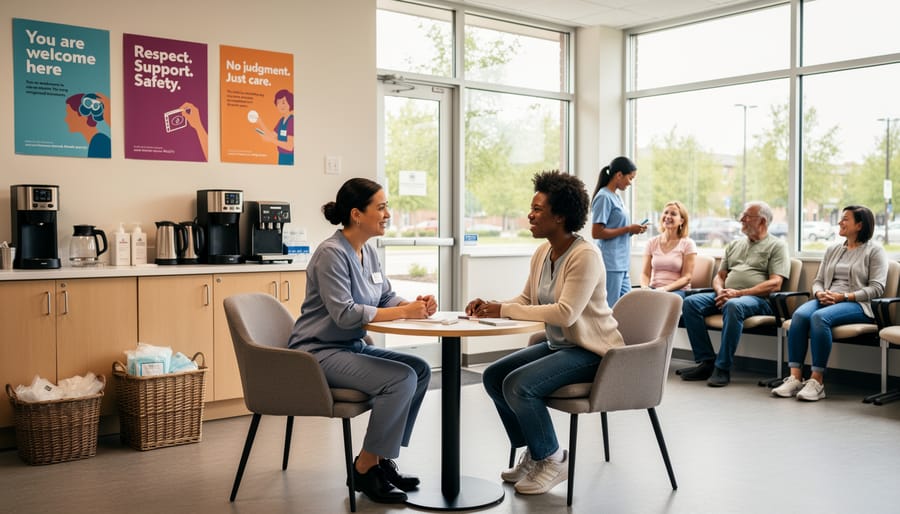
Beyond emergency response, these sites connect people to a range of healthcare services. Visitors can access wound care, testing for infections like HIV and hepatitis C, mental health support, and addiction treatment referrals when they’re ready. The welcoming, non-judgmental environment helps build trust between healthcare providers and people who might otherwise avoid medical care.
Research consistently shows these sites save lives without increasing drug use or crime in surrounding neighborhoods. Since opening in 2003, Vancouver’s supervised consumption site has reversed thousands of overdoses with zero deaths on-site. Studies demonstrate they reduce ambulance calls for overdoses, decrease public drug use, and increase treatment uptake. By meeting people where they are in their health journey, these services provide a crucial bridge to recovery and improved wellbeing.
Needle and Syringe Programs
Needle and syringe programs provide free, sterile injecting equipment to people who use drugs, creating a vital barrier against infectious disease transmission. These programs distribute clean needles, syringes, and other supplies while safely disposing of used equipment, directly reducing the sharing of contaminated materials that spread HIV, hepatitis C, and other blood-borne infections.
Research consistently shows these services significantly decrease disease rates without increasing drug use in communities. In fact, they often serve as a first point of contact with healthcare services, connecting participants to addiction treatment, counseling, and primary medical care when they’re ready.
Staff at these programs build trusting relationships with participants, offering non-judgmental support and health education. Many locations also provide wound care supplies, overdose prevention training, and naloxone kits. By removing barriers to sterile equipment, these programs protect not only individuals who use drugs but also their families and the broader community from preventable infections, ultimately reducing healthcare costs and improving public health outcomes across Canada.
Naloxone Distribution and Training
Naloxone is a life-saving medication that temporarily reverses opioid overdoses, giving someone crucial time to receive emergency medical care. In Canada, naloxone is widely available at no cost through pharmacies, community health centres, and harm reduction programs across all provinces and territories. No prescription is required in most regions, making it accessible to anyone who might witness an overdose.
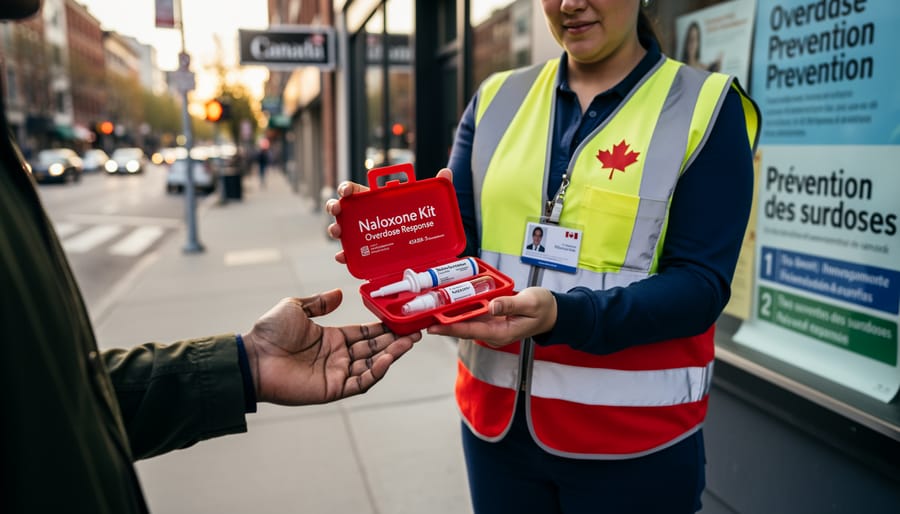
Training programs teach people how to recognize overdose signs, including slow or stopped breathing, blue lips or fingernails, and unresponsiveness. Participants learn to administer naloxone through nasal spray or injection, call 911, provide rescue breathing, and stay with the person until help arrives. These straightforward skills can be learned in just 15-20 minutes.
Widespread naloxone distribution has proven remarkably effective. Communities with robust distribution programs have documented significant reductions in overdose deaths. By equipping friends, family members, and people who use substances with naloxone kits, we create safety networks that save lives. Good Samaritan laws in Canada also protect those who call for help during an overdose, encouraging people to act without fear of legal consequences.
Drug Checking Services
Drug checking services allow people to test their substances for dangerous contaminants before use, providing critical information that can prevent overdoses and deaths. These confidential services use specialized equipment to detect unexpected adulterants like fentanyl, benzodiazepines, or other potent substances that have increasingly contaminated the drug supply across Canada.
When someone brings a sample to a drug checking site, trained staff analyze it and share the results without judgment. This knowledge empowers individuals to make informed decisions about their substance use, such as using a smaller amount, avoiding the substance entirely, or ensuring naloxone is nearby. Drug checking is especially important given the prevalence of polysubstance use and the unpredictable nature of street drugs.
These services also provide valuable data that helps public health officials track emerging threats in the drug supply and issue community alerts. Many programs combine drug checking with education about safer use practices and connections to additional support services when desired.
Peer Support and Outreach Programs
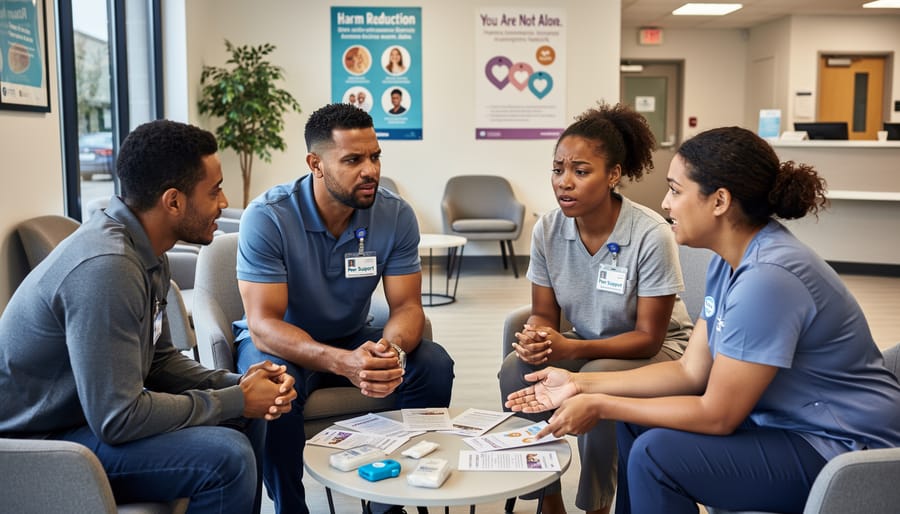
Peer support programs recognize that people with lived experience of substance use offer unique insights and understanding that traditional healthcare providers cannot replicate. Peer workers—individuals who have navigated similar challenges—provide non-judgmental support, share practical strategies, and help connect people to resources. Their presence reduces feelings of isolation and shame, creating bridges between communities and healthcare services. Research shows that peer-led outreach increases engagement with harm reduction programs and improves health outcomes. These workers distribute supplies like naloxone kits, provide education on safer use practices, and offer emotional support during difficult times. By fostering genuine connections rooted in shared experience and mutual respect, peer programs demonstrate that recovery journeys look different for everyone and that every step toward safer practices deserves recognition and support.
Understanding Safer Supply Programs
What Safer Supply Is (and Isn’t)
Safer supply is a harm reduction approach that provides prescribed pharmaceutical-grade medications as an alternative to the unpredictable and increasingly toxic illegal drug supply. Unlike supervised consumption services where people use their own substances under medical supervision, safer supply programs involve healthcare providers prescribing medications such as hydromorphone or diacetylmorphine to individuals at high risk of overdose from contaminated street drugs.
This approach recognizes that when people cannot or are not ready to stop using substances, reducing their exposure to fentanyl, carfentanil, and other dangerous adulterants can prevent overdose deaths and improve health outcomes. Safer supply is not the same as treatment programs aimed at abstinence, though participants can access addiction treatment and other support services whenever they’re ready.
Research from British Columbia shows that safer supply programs have helped reduce overdose rates among participants while connecting them with primary healthcare, mental health support, and social services. These programs operate within Canada’s healthcare system, with medical professionals assessing eligibility and monitoring participants to ensure safety. By addressing the immediate risk of toxic drug poisoning, safer supply creates opportunities for people to stabilize their lives and health.
The Evidence Behind Safer Supply
Research from multiple Canadian pilot programs shows promising results for safer supply initiatives. A 2022 British Columbia study found that participants receiving pharmaceutical-grade alternatives experienced significant reductions in overdose risk and emergency department visits. These programs reported that 85% of participants reduced their use of street drugs, while maintaining stability in their housing and employment.
Evidence from Toronto’s safer supply sites indicates improved health outcomes among participants, including better management of chronic conditions and increased engagement with opioid use disorder treatment services. Healthcare experts note that when people have access to predictable, regulated substances, they’re more likely to connect with other support services.
Challenges remain, including limited program availability and concerns about diversion. However, public health researchers emphasize that safer supply represents one component within a comprehensive approach to substance use. Early data suggests these programs reduce the harms associated with contaminated street drugs while creating pathways to additional care. Ongoing evaluation continues to refine best practices and expand our understanding of how safer supply fits within Canada’s harm reduction framework.
Where Safer Supply Programs Operate in Canada
Safer supply programs currently operate in several Canadian provinces, though access varies significantly across the country. British Columbia has the most extensive network, with programs in Vancouver, Victoria, and other communities. Ontario has established safer supply initiatives in Toronto, Ottawa, London, and Thunder Bay, among other cities. Programs also exist in Alberta, Quebec, and the Yukon, though availability remains limited compared to larger provinces.
Access depends largely on where you live, with urban centres typically offering more options than rural or remote areas. Many programs operate through specialized clinics, community health centres, or hospital-based services. Some provinces have integrated safer supply into existing addiction medicine programs, while others run dedicated pilot projects. Unfortunately, several provinces and territories currently have no safer supply programs available, creating gaps in access for people who could benefit from these services. Healthcare providers can help connect individuals to available programs in their region.
The Health Benefits of Harm Reduction Approaches
Harm reduction services deliver measurable health improvements backed by decades of research. These programs recognize that people use substances for many reasons, and that supporting their health where they are right now creates better outcomes than waiting for them to stop completely.
One of the most significant physical health benefits is the reduction in infectious disease transmission. Supervised consumption sites and needle exchange programs dramatically lower rates of HIV and hepatitis C infections. Research shows these services also reduce overdose deaths by ensuring people have access to clean supplies and immediate medical help when needed. In British Columbia alone, overdose prevention sites have reversed thousands of overdoses, saving countless lives.
Mental health outcomes improve when people feel supported rather than judged. Harm reduction approaches create safe spaces where individuals can access counseling, mental health support, and connections to other healthcare services without fear of punishment or stigma. This compassionate environment helps reduce the shame and isolation that often accompany substance use, making it easier for people to seek help for both addiction and underlying mental health concerns like depression or anxiety.
Beyond individual benefits, harm reduction strengthens community health. When people have access to safe injection supplies and supervised sites, there are fewer discarded needles in public spaces, reducing risk for everyone. Emergency room visits decrease, allowing healthcare resources to serve more people. Public health data consistently shows that communities with harm reduction programs experience lower rates of disease transmission and overdose deaths compared to those without these services.
The evidence is clear: harm reduction meets people where they are and helps them take steps toward better health. Whether someone is ready to reduce their substance use, seeking treatment, or simply trying to stay safe, these services provide practical support that improves quality of life. By focusing on immediate health needs without requiring abstinence, harm reduction creates pathways to wellness that work for diverse individuals facing complex challenges.
How Harm Reduction Connects People to Care
Harm reduction services act as welcoming entry points to comprehensive healthcare, even for people who aren’t ready to stop using substances. These programs prioritize building trusting relationships without judgment, creating a foundation that connects individuals to various supports over time.
Staff at harm reduction sites take time to get to know participants and understand their unique needs. Through these ongoing interactions, workers can introduce people to primary healthcare services, help them access mental health counseling, connect them with housing resources, or provide information about treatment options when they’re interested. There’s no pressure or timeline—people access services at their own pace.
Research shows this relationship-centered approach works. Many individuals who initially visit harm reduction sites for practical supplies eventually engage with other health services they might never have accessed otherwise. Workers can arrange medical appointments, provide withdrawal support, help with identification documents needed for housing applications, or simply offer a supportive conversation during difficult times.
This gradual connection to care recognizes that people often face multiple challenges simultaneously, including poverty, trauma, mental health conditions, or unstable housing. By meeting people where they’re at and addressing immediate needs first, harm reduction services create pathways to broader supports. Staff celebrate small steps forward and maintain connections even during setbacks, understanding that recovery isn’t linear and that maintaining health and safety matters at every stage.
Addressing Common Concerns and Questions
Many people have questions about harm reduction services, and it’s important to address these concerns with evidence and compassion.
One common question is whether harm reduction enables or encourages substance use. Research consistently shows that harm reduction services do not increase drug use rates. Instead, they provide opportunities to connect people with healthcare, reduce overdose deaths, and offer pathways to treatment when individuals are ready. These programs meet people where they are in their journey, recognizing that abstinence may not be immediately achievable or desired for everyone.
Some ask why we should provide clean supplies to people who use substances. The answer is straightforward: people will use substances regardless of whether services exist, but without access to sterile equipment, they face serious health risks including HIV, hepatitis C, and life-threatening infections. Providing clean supplies protects both individual and community health while reducing costs to our healthcare system.
Another concern involves safer supply programs, which provide pharmaceutical-grade alternatives to toxic street drugs. Critics sometimes wonder if this approach is too permissive. However, evidence from Canadian communities implementing safer supply shows reduced overdose deaths and emergency room visits. With the drug supply increasingly contaminated with fentanyl and other unpredictable substances, safer supply offers a proven strategy to prevent deaths while individuals work toward their health goals.
People also ask whether harm reduction works. Multiple studies confirm that supervised consumption sites, needle exchange programs, and other harm reduction approaches save lives, reduce disease transmission, and connect people to housing, mental health support, and treatment services. These programs represent a compassionate, practical response grounded in public health science rather than criminalization.
Understanding these facts helps communities make informed decisions about supporting harm reduction services that protect health and save lives.
Harm reduction services represent a compassionate, evidence-based public health approach that recognizes the reality of substance use in our communities. Rather than judging or excluding people who use substances, these programs provide practical support that saves lives, prevents disease transmission, and connects individuals to healthcare and recovery pathways when they’re ready.
The evidence is clear: harm reduction works. Communities with robust harm reduction programs experience fewer overdose deaths, reduced rates of infectious diseases like HIV and hepatitis C, decreased emergency room visits, and lower healthcare costs overall. These benefits extend beyond individual service users to improve public health outcomes for entire neighbourhoods.
Importantly, harm reduction doesn’t exist in isolation. These services operate as part of a comprehensive continuum of care that includes prevention, treatment, and ongoing support. They meet people where they are, without preconditions or judgment, which research consistently shows is the most effective way to improve health outcomes and build trust with vulnerable populations.
If you or someone you know could benefit from harm reduction services, reach out to local public health units or community health centres. For those interested in supporting these vital programs, consider learning more about how they work and sharing evidence-based information within your networks. Together, we can create healthier, more compassionate communities where everyone has access to the care and support they need.