
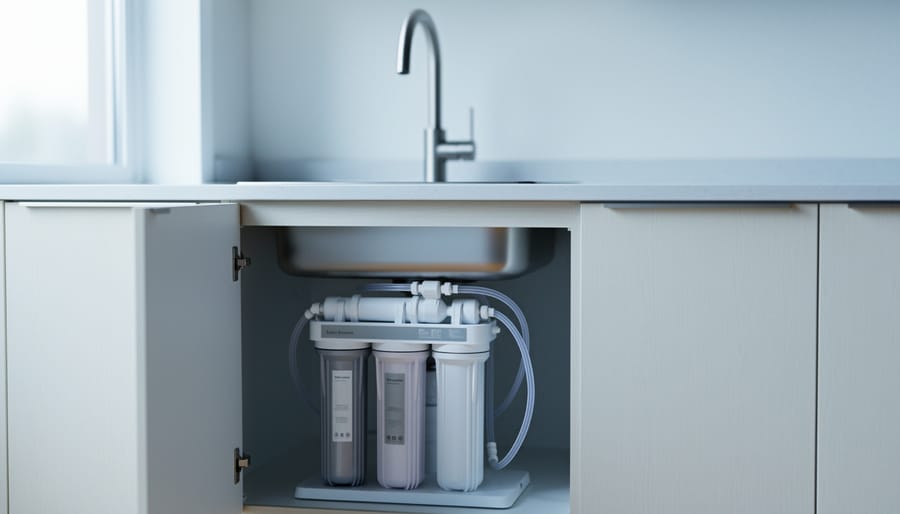
When you fill a glass of water from your kitchen tap, do you ever wonder what’s really in it? You might assume that water treated at the city plant is perfectly safe; still, the journey from the plant to your faucet is full of surprises. Aging pipes, old plumbing, and even the environment around us can add invisible contaminants to your water—especially harmful ones like PFAS and lead. For Canadian families, making sure your tap water is truly safe is more important than ever. The good news? An under-sink water filter can have a major impact—if you know how to choose the right one. Let’s explore what really matters for your health, and how to make the smartest, safest choice for your household.
PFAS & Lead: The Silent Threats Lurking in Your Tap Water
Lead and PFAS are two sneaky threats—your body can’t just flush them out. Instead, they build up over time, even at low levels, putting your health at risk year after year.
Lead usually enters tap water after it leaves the treatment plant, leaching from older service lines, brass fittings, or lead solder that was legal in Canadian plumbing until 1975. Health Canada’s drinking water guideline sets the maximum acceptable concentration at just 0.005 mg/L. The agency is explicit that there is no known threshold below which lead exposure is considered safe — the guidance is to keep levels as low as reasonably achievable, particularly for pregnant people and young children, who are most vulnerable to its neurological effects. You can read the full technical rationale on the Government of Canada’s drinking water guideline page.
PFAS (per- and polyfluoroalkyl substances) are often called “forever chemicals” for a reason—they’re designed not to break down. These compounds are everywhere: in nonstick pans, rain jackets, and even firefighting foam. Once PFAS gets into the water, soil, or your body, it’s nearly impossible to get rid of. Unlike lead, PFAS don’t come from your plumbing—they come from decades of industrial use, and unfortunately, most water treatment plants can’t remove them. That leaves the job to us as homeowners.
Your body can’t get rid of PFAS, so they pile up. Long-term exposure has been linked to higher cholesterol, diminished immune response to vaccines, developmental disorders in kids, thyroid problems, and even some cancers. Here’s the catch: studies show most Canadians already have PFAS in their bodies. Since you can’t “detox” from these chemicals, the best thing you can do is stop more from getting in—starting with your drinking water.
The Truth About Carbon Filters: Not All Are Created Equal for PFAS
Here’s where things get confusing: not all carbon filters are created equal. While activated carbon is known to help remove PFAS, some filters are far better than others. Just because a product says “carbon filtration” doesn’t mean it’s truly protecting your family. Cheap filters and high-quality ones can work very differently, even if they sound the same on the box.
What actually matters? It’s all about surface area and how long the water spends in the filter. Coconut shell carbon, for example, tends to be better at trapping PFAS. But here’s a helpful hint: just because a filter makes your water taste great doesn’t mean it’s removing PFAS. Always look for filters that have been tested for PFAS specifically—not just chlorine or sediment.
Don’t forget: filters don’t last forever! Once a carbon filter is full, it can’t trap any more PFAS or lead—even if your water still tastes okay. Always replace your filter as often as the manufacturer recommends, even if it seems fine.
Catalytic Carbon: A Step Beyond Standard Adsorption
Not all carbon is the same, either. There’s a special type called catalytic carbon that does more than trap contaminants—it can break some of them apart completely. This can be a big advantage for removing tricky chemicals from your water.
Why does catalytic carbon matter? Many Canadian cities now use chloramine (a chlorine-ammonia compound) to disinfect water, but regular carbon can’t always remove it. Catalytic carbon, on the other hand, can break chloramine down into harmless ingredients. It’s also better at handling other stubborn chemicals that slip through regular filters.
Reverse Osmosis: Is It Really the Best Choice for Canadian Homes?
You’ve probably heard about reverse osmosis (RO) systems—they’re often called the “gold standard” for filtration. Yes, they remove a lot, but they also waste water and strip out healthy minerals like calcium and magnesium. For most Canadian homes, RO is overkill: it’s expensive, high-maintenance, and doesn’t offer extra health benefits if your water isn’t especially hard or mineral-rich.
There are times when RO is helpful—like if you have well water or need ultra-pure water for a specific reason. But if you want to remove PFAS and lead from your tap, there are easier, more affordable ways to protect your family.
What a Well-Designed Multi-Stage System Actually Does
That’s why most experts recommend a multi-stage under-sink filter. Each stage targets a different type of contaminant—so you get complete protection, not just a band-aid solution.
- The first stage usually catches dirt and particles, preventing bigger stuff from clogging up the finer filters that come next.
- The next stage targets heavy metals like lead, copper, and cadmium. Don’t assume carbon alone can do this—look for filters with a special heavy-metal reduction stage or media.
- Then comes the carbon stage—this is where PFAS, chlorine, weird tastes, and odors get removed. If your city uses chloramine, make sure the carbon is catalytic for extra protection.
Layering these stages lets every filter do what it does best—so you’re not relying on just one type to do it all.
Your Action Plan: How to Choose the Best Under-Sink Filter
Ready to pick a filter? Start with two key questions: What’s actually in your water, and what does the filter you’re considering really remove? Here are some smart questions to guide your choice:
- – Does the manufacturer share independent test results showing the filter removes PFAS and lead—not just chlorine?
- – Is the carbon filter catalytic (especially if your city uses chloramine) or just regular activated carbon?
- – Does the filter have independent NSF/ANSI certifications for product safety and efficiency?
- – Will the filter last long enough for your family’s water use, so you’re not constantly guessing when to replace it?
- – Is there a dedicated heavy-metal stage, or is it relying on carbon alone (which often isn’t enough)?
If you want a deeper breakdown of system types, contaminant categories, and how to match a filter to your municipality’s water treatment approach, the Aquarenaissance Water Filters guide walks through the decision in more detail.
Takeaway: Smart Choices for Safer Drinking Water
The bottom line: You don’t need a fancy reverse osmosis system to get healthy, safe water at home. For most Canadian families, a carefully designed multi-stage filter—with the right blend of sediment, metal-reduction, and top-quality carbon—will protect you from PFAS and lead. Just remember to check the testing data and make sure each stage is actually doing its job.