

Set specific time limits for fitness app usage and track how different features affect your mood throughout the day. Notice if constant step counting increases anxiety or if progress notifications boost motivation—this awareness helps you adjust settings to support rather than sabotage your wellbeing.
Disable non-essential notifications from fitness trackers and wearables that create pressure or guilt. Research shows that excessive alerts about missed goals or inactivity can trigger stress responses, undermining the very health benefits you’re seeking from physical activity.
Schedule regular technology-free workouts where you focus solely on how your body feels rather than metrics and data. This practice strengthens your internal awareness and prevents over-reliance on external validation for your fitness achievements.
Your fitness tracker vibrates. Your app sends a reminder. Another notification congratulates you on closing your rings. While these tools promise better health, many Canadians are discovering an uncomfortable truth: the technology designed to improve physical fitness can sometimes harm mental health. You’re not imagining it if your smartwatch makes you anxious or your calorie-counting app triggers obsessive thoughts.
The relationship between fitness technology and psychological wellbeing is complex and deeply personal. For some, wearables provide helpful motivation and structure. For others, constant monitoring becomes a source of stress, guilt, or unhealthy preoccupation. Understanding this balance is essential for anyone using or considering fitness apps and devices.
This article explores how fitness technology impacts mental health, the warning signs that your tools might be causing harm, and evidence-based strategies to use these devices mindfully. You’ll learn to harness the benefits while protecting your digital wellness—because true health encompasses both body and mind.
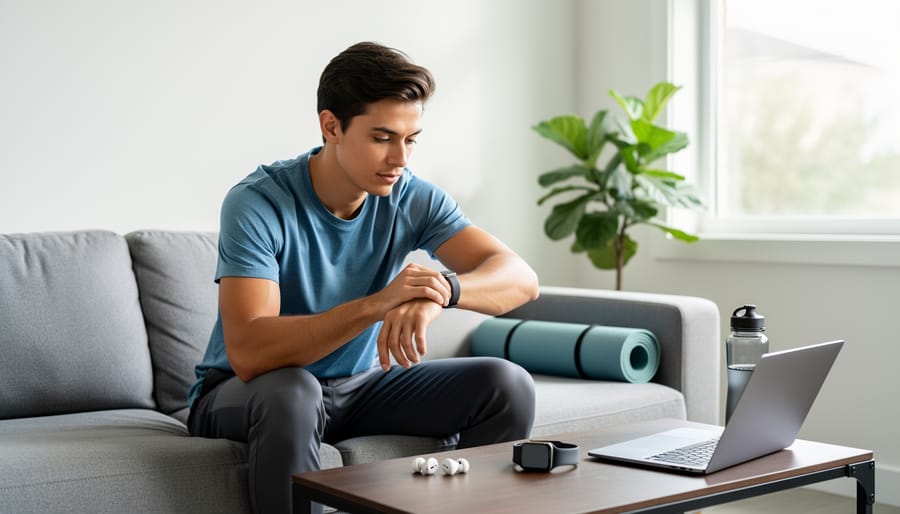
The Promise and the Problem: What Technology-Assisted Fitness Really Does
The Mental Health Benefits You’re Actually Getting
Before diving into potential concerns, it’s important to recognize that fitness technology offers genuine, research-backed mental health advantages. Understanding these benefits of wearable technology can help you make informed decisions about incorporating these tools into your wellness routine.
Studies show that fitness apps and wearables can significantly boost motivation and accountability. When you receive real-time feedback on your activity levels or gentle reminders to move, you’re more likely to stay consistent with your health goals. This external support system can be particularly valuable during Canadian winters when motivation naturally dips.
Community features within fitness apps create meaningful connections with others pursuing similar goals. Research indicates that this social support reduces feelings of isolation and can be especially beneficial for those who face barriers to in-person fitness communities, whether due to location, mobility issues, or scheduling constraints.
Gamification elements, like earning badges or completing challenges, tap into reward pathways in the brain that can help reduce symptoms of mild depression and anxiety. These small wins provide regular positive reinforcement, building momentum toward larger health achievements.
Perhaps most importantly, progress tracking enhances self-efficacy, which is your belief in your ability to succeed. When you can visually see improvements in your step count, sleep quality, or workout consistency over time, it reinforces that your efforts matter. This tangible evidence of progress strengthens your confidence in managing your overall health.
The key is recognizing these benefits while remaining mindful of how you engage with the technology, ensuring it supports rather than undermines your mental wellbeing.
When Your Fitness App Becomes a Source of Stress
While fitness technology can be incredibly motivating, it’s important to recognize when the relationship between fitness apps and mental health becomes problematic. For some Canadians, what starts as a helpful tool can gradually transform into a source of anxiety and stress.
Obsessive tracking is one of the most common concerns. Constantly checking step counts, calories burned, or heart rate data can create an unhealthy preoccupation with numbers rather than how you actually feel. This hypervigilance may lead to ignoring your body’s natural signals of fatigue or hunger in favour of meeting arbitrary targets set by an algorithm.
Comparison anxiety often develops when apps include social features. Seeing others’ achievements, workout streaks, or fitness milestones can trigger feelings of inadequacy, even when you’re making meaningful progress toward your own goals. Remember that everyone’s fitness journey is unique, and someone else’s success doesn’t diminish your own efforts.
The pressure of maintaining streaks can be particularly stressful. Missing a daily goal due to illness, work commitments, or simply needing rest can generate intense guilt. This all-or-nothing mindset contradicts the flexibility that sustainable wellness requires.
Sleep disruption from constant notifications adds another layer of concern. Evening reminders to complete activity goals or alerts about challenges can interfere with your wind-down routine, ironically compromising the rest your body needs for recovery and mental health.
Research shows that when fitness tracking becomes rigid and punitive rather than flexible and encouraging, it can contribute to anxiety, disordered eating patterns, and exercise addiction. If you find yourself feeling anxious without your device, exercising despite injury, or letting app data override your wellbeing, it may be time to reassess your relationship with fitness technology.
Warning Signs Your Fitness Technology Is Hurting Your Mental Health
Physical and Emotional Red Flags
Recognizing when fitness technology shifts from helpful to harmful is essential for protecting your mental wellbeing. If you experience anxiety or panic when you can’t track your workout—perhaps you forgot your device or the battery died—this may signal an unhealthy dependency. Similarly, feeling intense guilt over taking rest days, even when your body needs recovery, suggests your relationship with fitness tracking has become problematic.
Pay attention to how often you check your metrics throughout the day. Constantly reviewing step counts, heart rate data, or calorie burns can indicate that these numbers are controlling your thoughts and decisions. This becomes part of broader unhealthy tech habits that impact overall wellbeing.
Emotional responses matter too. If you feel irritable, frustrated, or deeply disappointed when you don’t meet daily goals—even arbitrary ones set by an app—your technology use may be causing more stress than benefit. Notice whether exercise has shifted from something you enjoy to something you feel compelled to do, driven primarily by closing rings or earning badges.
Another red flag is rigid thinking around activity. For example, refusing to engage in untracked movement or feeling that exercise “doesn’t count” without digital verification indicates the technology has taken priority over actual physical and mental health benefits.
If you recognize several of these signs, it’s time to reassess how you’re using fitness technology and consider implementing boundaries that prioritize your overall wellness.
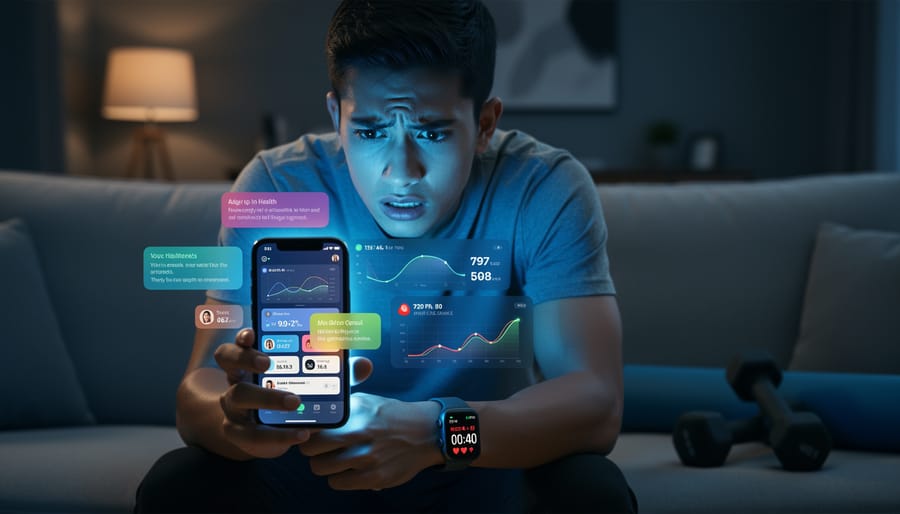
The Social Comparison Trap
Many fitness apps now include social features like leaderboards, activity sharing, and community challenges. While these can motivate some people, they may also trigger unhealthy comparisons that affect your mental wellbeing.
When you constantly see others’ workout achievements, step counts, or weight loss progress, it’s easy to feel like you’re falling behind. Research shows that frequent social comparisons on fitness platforms can lead to decreased self-esteem, anxiety, and feelings of inadequacy, particularly when comparing yourself to highly active users or fitness influencers.
These features can also distort your perception of what’s normal or healthy. Seeing someone complete multiple intense workouts daily might make your three weekly sessions feel insufficient, even though you’re meeting recommended activity guidelines. This skewed perspective can push you toward overtraining or unhealthy exercise habits.
The competitive element, while engaging for some, may shift your focus from personal health goals to outperforming others. This external motivation often proves less sustainable and more stressful than exercising for your own wellbeing.
If you notice feelings of jealousy, discouragement, or anxiety when viewing others’ fitness achievements, consider turning off social features or limiting your exposure. Your fitness journey is uniquely yours, and progress looks different for everyone.
Making Technology Work For You: Evidence-Based Strategies
Set Boundaries With Your Devices
Taking intentional breaks from your fitness technology can help restore a healthier relationship with exercise and reduce mental strain. Start by scheduling specific tech-free workouts each week where you leave your smartwatch and phone behind. This allows you to reconnect with how your body actually feels rather than focusing solely on metrics.
Consider turning off notifications during exercise sessions. Constant alerts can disrupt your focus and increase stress rather than supporting your wellness goals. Most fitness apps allow you to customize notification settings, so adjust them to check stats after your workout instead.
Designate your rest days as complete no-tracking days. Recovery is essential for both physical and mental health, and taking a break from monitoring helps reinforce that rest is valuable, not something to feel guilty about.
Try using airplane mode during workouts when you don’t need GPS tracking. This simple step eliminates distractions while still allowing you to use features like music or workout timers. You can sync your data afterward without missing the experience of being fully present during exercise. These small adjustments help you stay in control of technology rather than letting it control your fitness journey.
Customize Your Metrics for Mental Wellness
Not all metrics deserve equal attention when it comes to your mental wellbeing. Start by identifying what truly matters to you. If your fitness tracker monitors sleep, steps, heart rate, calories, and stress levels, you don’t need to obsess over every number. Choose two or three metrics that genuinely help you feel better, rather than overwhelmed.
Focus on qualitative measures that reflect how you actually feel. Energy levels throughout the day, overall mood, and feelings of accomplishment often tell a more complete story than raw data alone. Ask yourself: “Do I feel rested?” rather than fixating solely on whether you hit exactly eight hours of sleep.
Make your goals flexible guideposts rather than rigid rules. Instead of “I must hit 10,000 steps daily,” try “I’ll aim for regular movement that feels good.” This approach reduces anxiety when life gets busy and you miss a target.
Consider turning off notifications for metrics that trigger stress or comparison. Many apps let you customize what you see on your dashboard. If checking your standing hours creates guilt rather than motivation, hide that feature. The best metrics are those that inform and empower you without creating additional pressure or negative self-talk.
Use Technology to Track Mental Health Alongside Fitness
Modern technology offers powerful tools that track both your physical fitness and mental wellbeing in one place. Many fitness apps now include mood logging features alongside your step counts and workouts, helping you spot patterns between your activity levels and how you’re feeling emotionally. These integrated approaches provide valuable insights you might otherwise miss.
Popular apps like Headspace and Calm have partnered with fitness platforms to combine meditation, mindfulness exercises, and physical activity tracking. This combination recognizes that mental and physical health are deeply connected. When you can see how a morning workout improves your mood throughout the day, or notice that skipped rest days correlate with increased stress, you’re better equipped to make supportive choices.
Wearable devices can also detect stress patterns through heart rate variability and sleep quality metrics. These indicators help you recognize when your body needs recovery, preventing burnout before it happens. The key is using this information constructively rather than obsessively. Set gentle reminders for meditation breaks, use mood tracking to celebrate progress rather than judge difficult days, and let recovery data guide rest periods. When technology serves as a supportive companion rather than a strict monitor, it becomes a valuable partner in your overall wellness journey.
The Best Technology-Assisted Approaches for Combined Physical and Mental Wellness
Apps and Features That Prioritize Mental Health
When choosing fitness technology, look for apps and devices that actively support your mental wellbeing alongside physical goals. Several options available to Canadians incorporate features that help maintain a healthy psychological relationship with fitness tracking.
Mindfulness-integrated platforms like Headspace and Calm offer both meditation content and gentle movement tracking, helping you connect mental and physical wellness. These apps encourage awareness of how you’re feeling rather than solely focusing on metrics.
For activity tracking, apps with flexible goal-setting capabilities allow you to adjust targets based on your energy levels and life circumstances. Strava, widely used in Canada, includes customizable goals and celebrates effort over perfection. Similarly, Fitbit’s app now features mood logging and mindfulness reminders alongside step counts.
Look for technology that actively encourages rest days. Apps like TrainingPeaks and Future include recovery planning as part of their coaching approach, validating the importance of downtime for both body and mind.
Mental health check-in features are increasingly common. Apple’s Health app includes mental wellbeing tracking, allowing you to log emotions and identify patterns. MyFitnessPal has added wellness check-ins that consider stress and sleep quality, not just calories.
Canadian-specific options include Trellis, a mental health platform that integrates with fitness goals, and programs through provincial health services that combine activity tracking with psychological support.
When evaluating any app, prioritize those that offer notification controls, celebrate non-exercise victories, and provide context for data rather than raw numbers alone. The best technology should feel like a supportive companion rather than a demanding taskmaster.
When to Consider a Digital Detox
Consider a digital detox when you notice persistent anxiety about hitting daily targets, when checking your fitness stats becomes compulsive, or when technology overshadows the joy of movement. Signs you might benefit from a break include disrupted sleep from wearing devices to bed, feeling guilty about rest days, or skipping activities you enjoy because they don’t track well.
Start with a weekend detox—exercise without devices and focus on how movement feels rather than what it measures. Try accountability alternatives like joining a local walking group, working out with a friend, or keeping a simple paper journal noting energy levels and mood instead of metrics. Many Canadians find that periodic breaks, even just one tech-free workout weekly, help restore balance and remind them why they started their fitness journey. You can gradually reintroduce technology with healthier boundaries, using devices as tools rather than letting them control your routine. Remember, fitness existed long before wearables, and your body provides valuable feedback without any technology at all.

Moving Forward: Creating Your Personalized Technology Balance
Creating a healthier relationship with fitness technology starts with honest self-reflection. Take a moment to consider these questions: Do you feel anxious when you can’t check your fitness stats? Does missing a step goal ruin your day? Are you choosing workouts based on data rather than how you feel? If you answered yes to any of these, it might be time to recalibrate.
Begin by conducting a one-week technology audit. Notice when you check your fitness apps and how these interactions make you feel. Write down patterns you observe. Are you using technology to support your wellness, or has it become a source of stress?
Next, establish clear boundaries. Designate tech-free workout days where you exercise based solely on how your body feels. Turn off non-essential notifications that interrupt your day with constant performance reminders. Consider scheduling specific times to review your fitness data rather than checking compulsively throughout the day.
Choose quality over quantity when it comes to metrics. Instead of tracking everything possible, select two or three measurements that genuinely support your health goals. Remember, more data doesn’t always mean better insights.
Practice regular digital detoxes. Try removing your fitness tracker for a weekend and reconnecting with intuitive movement. Notice whether you still enjoy exercise without the external validation of numbers.
Finally, periodically reassess your relationship with fitness technology. Set a calendar reminder every three months to evaluate whether your current approach still serves your mental and physical wellbeing. If certain apps or devices consistently create stress, grant yourself permission to step back or eliminate them entirely.
Your health journey is personal, and the tools you use should enhance your wellbeing, not diminish it. By staying mindful and making intentional choices, you can harness technology’s benefits while protecting your mental health.
Remember, fitness technology is a tool designed to serve you, not the other way around. The key to maintaining your mental wellness while using these devices lies in regularly reassessing your relationship with them. Ask yourself: Is this technology enhancing my life or creating stress? Am I still enjoying my workouts, or have they become solely about numbers?
Make it a priority to check in with yourself every few weeks. If you notice signs of anxiety, obsessive behaviors, or declining enjoyment in physical activity, it may be time to adjust how you’re using these tools. Consider taking occasional breaks from tracking, turning off notifications, or even deleting apps temporarily to reset your perspective.
Your mental health deserves the same attention as your physical fitness. If concerns about technology use are affecting your wellbeing, don’t hesitate to reach out to a mental health professional who can provide personalized support.
Ultimately, you have the power to set boundaries and use technology in ways that genuinely support your overall health goals. By staying mindful and making intentional choices, you can harness the benefits of fitness technology while protecting your mental wellness. Take control of your tools so they work for you, not against you.