
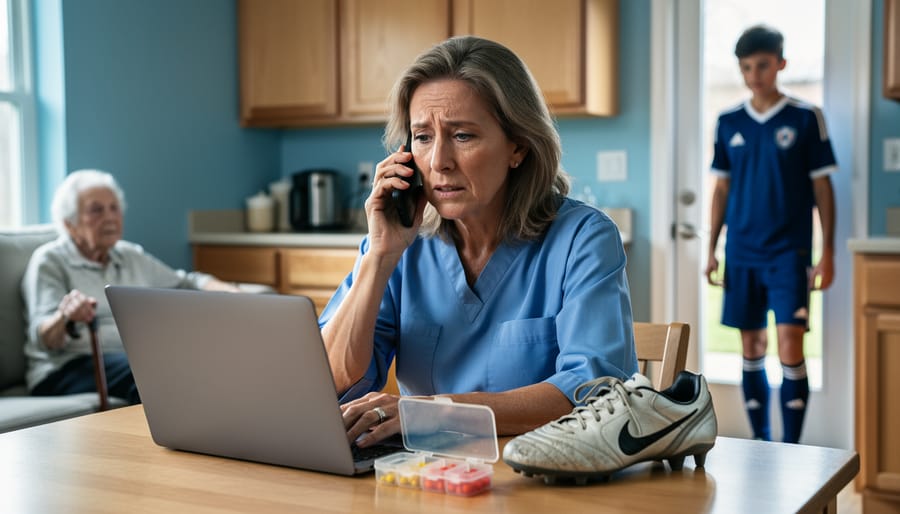
You’re managing your aging parents’ medical appointments while driving your teenager to soccer practice, answering work emails at the dinner table, and lying awake at night worrying about everyone except yourself. This is the reality of the sandwich generation—the estimated 1 in 5 Canadians simultaneously caring for children and elderly parents while maintaining careers and households.
The toll this dual caregiving takes isn’t just emotional exhaustion you can push through. Research shows sandwich generation caregivers face 20-30% higher rates of depression and anxiety, increased risk of cardiovascular disease, weakened immune function, and chronic sleep deprivation that affects every aspect of health. You’re not imagining the physical weight on your shoulders—your body is responding to prolonged stress with measurable health consequences.
Acknowledge this truth: You cannot pour from an empty cup, and pretending you’re fine serves no one. The guilt you feel about taking time for yourself isn’t protecting your family—it’s undermining your capacity to care for them long-term.
This guide provides evidence-based strategies specifically designed for your situation. You’ll discover practical mental health techniques that fit into fragmented schedules, nutrition approaches that fuel your body during chaos, and realistic fitness solutions that don’t require gym memberships or extra hours you don’t have. These aren’t theoretical wellness concepts—they’re actionable tools validated by healthcare professionals who understand the unique pressures you face.
What Makes Sandwich Generation Stress Different
The sandwich generation faces a distinctive set of pressures that set it apart from other life challenges. Unlike typical stress from a single source, these Canadians juggle the simultaneous demands of supporting both aging parents and dependent children, creating a complex web of responsibilities that intensifies over time.
According to Statistics Canada, approximately 28% of Canadians aged 45 to 64 provide care to both children and elderly family members. This dual caregiving role creates unique time constraints that compress personal wellness into increasingly narrow windows. Many sandwich generation caregivers report spending 20 to 30 hours weekly on caregiving tasks alone, often while maintaining full-time employment.
The emotional labor differs significantly from single-focus stress. You’re not just managing your own life transitions, but navigating the distinct developmental needs of two generations. While supporting child development requires patience and forward-looking planning, caring for aging parents often involves grief, role reversal, and difficult medical decisions. These competing emotional demands can leave you feeling pulled in opposite directions.
Financial strain compounds the pressure. Many sandwich generation Canadians face costs for children’s education, activities, and childcare while simultaneously managing expenses for parental care, medications, and potential home modifications. Research from the Canadian Institute for Health Information shows that 42% of family caregivers experience financial difficulties related to their caregiving responsibilities.
What truly distinguishes sandwich generation stress is the absence of clear boundaries between roles. Unlike workplace stress that ends when you leave the office, caregiving responsibilities blend into every aspect of daily life. The constant mental load of tracking appointments, medications, school schedules, and emergencies creates chronic cognitive burden that persists even during moments of physical rest.


The Hidden Health Toll on Sandwich Caregivers
Mental Health Consequences
Caring for both aging parents and children takes a significant toll on mental wellbeing. Research shows that sandwich generation caregivers experience depression rates 40-50% higher than their non-caregiving peers, with anxiety disorders equally prevalent. The constant juggling of responsibilities creates chronic stress that floods your body with cortisol, affecting mood regulation and cognitive function.
Caregiver burnout represents a critical concern, characterized by emotional exhaustion, detachment from loved ones, and a sense of reduced accomplishment. Watch for these expert-validated warning signs: persistent fatigue despite rest, irritability or angry outbursts, withdrawing from friends and activities, changes in appetite, difficulty concentrating, or frequent crying spells. Sleep disruption compounds these challenges, with many caregivers reporting fewer than six hours nightly due to worry or nighttime care duties.
The good news is that recognizing these symptoms early allows for intervention. If you’re experiencing several warning signs, reaching out for support is essential, not optional. The Canadian Mental Health Association offers province-specific resources at cmha.ca, while Wellness Together Canada provides free confidential counseling at wellnesstogether.ca or 1-866-585-0445. Family Services Canada connects you with local support programs tailored to caregiving challenges. Remember, protecting your mental health isn’t selfish—it’s necessary for sustaining the care you provide to others.
Physical Health Impacts
The constant pressure of caring for both aging parents and growing children takes a real toll on your body. Understanding these physical impacts can help you recognize warning signs and take protective action.
Your cardiovascular system responds strongly to chronic stress. When you’re constantly juggling responsibilities, your body releases stress hormones like cortisol and adrenaline. These hormones increase your heart rate and blood pressure. Over time, this persistent elevation can damage blood vessels and increase your risk of heart disease and stroke. Research shows that caregivers face significantly higher cardiovascular risks compared to non-caregivers.
Your immune system also suffers under prolonged stress. Those stress hormones suppress immune function, making you more vulnerable to infections, colds, and flu. You might notice you’re getting sick more often or taking longer to recover from illnesses. This happens because stress diverts your body’s resources away from immune defense.
Chronic pain becomes increasingly common among sandwich generation caregivers. Tension headaches, back pain, and muscle aches often result from both physical strain (lifting, transferring elderly parents) and stress-induced muscle tension. These midlife health challenges can compound existing concerns.
Sleep disturbances frequently accompany caregiving stress, creating a harmful cycle. Poor sleep impairs your body’s ability to repair itself and regulate stress hormones. Combined with natural aging body changes, this can accelerate health decline.
The encouraging news? Recognizing these physical impacts is your first step toward protecting your health through targeted wellness strategies.
Nutrition and Fitness Challenges
When you’re caring for both children and aging parents, your own health often becomes the last priority. Many sandwich generation caregivers find themselves grabbing fast food between appointments, skipping meals entirely, or relying on convenience foods that are high in sodium and processed ingredients. This isn’t about making poor choices—it’s about survival mode when time is your scarcest resource.
Regular exercise routines typically disappear first. The gym membership goes unused, morning walks get cancelled for emergency doctor visits, and that yoga class becomes impossible to attend. Research shows that caregivers are 20% less likely to engage in regular physical activity compared to non-caregivers, creating a significant gap in preventive health behaviours.
This pattern creates a troubling domino effect. Without adequate nutrition and physical activity, your risk for chronic diseases like type 2 diabetes, cardiovascular disease, and obesity increases substantially. Poor eating habits and sedentary behaviour also worsen stress responses, creating a cycle where stress prevents healthy behaviours, and unhealthy behaviours amplify stress.
The impact extends beyond physical health. Skipping self-care activities like preparing nutritious meals or moving your body reduces your capacity to manage the emotional demands of caregiving. Your energy levels drop, sleep quality deteriorates, and resilience weakens.
Recognizing this pattern is the first step. Even small modifications—like keeping healthy snacks accessible, taking ten-minute movement breaks, or batch-cooking simple meals—can interrupt this cycle and protect your long-term health while you care for others.
Practical Wellness Strategies for Sandwich Caregivers
Building Your Support Network
You don’t have to navigate sandwich generation challenges alone. Building a strong support network is essential for protecting your wellbeing while caring for others.
Start by exploring Canadian government resources. The Canada Caregiver Credit offers tax relief, while provincial programs vary by location. Contact your local Community Care Access Centre or health authority to learn about respite care services, which provide temporary relief so you can recharge. Many provinces offer subsidized home care support and adult day programs.
Caregiver support groups create invaluable connections with others who truly understand your situation. The Canadian Cancer Society, Alzheimer Society, and Family Caregivers of British Columbia offer both in-person and virtual support groups at no cost. These spaces provide emotional validation and practical advice from those walking a similar path.
Open family communication prevents resentment and distributes responsibilities more fairly. Schedule a family meeting to discuss caregiving tasks, financial contributions, and decision-making processes. Be specific about your needs rather than waiting for others to notice you’re overwhelmed.
Consider hiring a geriatric care manager to coordinate services and navigate complex healthcare systems. Employee assistance programs through your workplace may also provide counseling and resource referrals. Remember, accepting help isn’t weakness—it’s a strategic approach to sustainable caregiving that protects your health for the long term.

Time-Efficient Nutrition Tips
When time is limited, smart nutrition strategies become essential. Start with batch cooking on weekends—prepare double portions of healthy meals like soups, casseroles, or whole grain dishes that freeze well. This investment of a few hours provides nutritious options throughout the week when you’re pressed for time.
Keep your pantry stocked with healthy convenience foods: canned beans, frozen vegetables, pre-washed greens, rotisserie chicken, and whole grain crackers. These items allow you to assemble balanced meals in minutes without compromising nutrition. Consider grocery delivery services available across Canada to save shopping time.
Embrace simple meal formulas: protein plus vegetable plus whole grain. A piece of grilled salmon, steamed broccoli, and quinoa takes minimal effort but delivers complete nutrition. Keep grab-and-go snacks visible and accessible—cut vegetables, hard-boiled eggs, nuts, and fresh fruit help prevent unhealthy choices when hunger strikes.
Don’t hesitate to accept meal support from friends or community programs. Some caregivers find success with meal-sharing groups where families cook extra portions and swap dishes. Remember, feeding yourself nutritious food isn’t selfish—it’s necessary fuel for managing your demanding responsibilities. Even simple, repeated meals that meet your nutritional needs are perfectly acceptable during this challenging life stage.
Fitting Fitness Into Caregiving
Finding time for fitness when caring for multiple generations feels impossible, but even small bursts of movement make a meaningful difference. Research shows that micro-workouts—short 5-10 minute sessions throughout the day—provide similar cardiovascular and mental health benefits as longer exercise sessions.
Start by incorporating movement into your existing routine. Do squats while preparing meals, take walking meetings when discussing care plans with siblings, or try wall push-ups during TV commercial breaks. These activities fit seamlessly into your day without requiring extra time.
Consider exercises that naturally include those you’re caring for. Gentle chair yoga or stretching can involve elderly parents while providing stress relief for everyone. Take children to the park where you can walk laps while they play, or create dance parties that get the whole family moving together.
Set realistic expectations—you don’t need hour-long gym sessions to benefit from physical activity. Even 10 minutes of deep breathing exercises or a brief walk around the block helps reduce cortisol levels and improves mood. The goal isn’t perfection; it’s maintaining consistency with whatever movement feels manageable today. Remember that some activity is always better than none, and caring for your physical health strengthens your capacity to care for others.
Mental Health Maintenance
Protecting your mental health requires intentional strategies and consistent practice. Start by setting clear boundaries with both aging parents and adult children. It’s okay to say no to requests that exceed your capacity, and establishing specific times when you’re available for caregiving can help prevent burnout.
Daily stress management tools make a significant difference. Try the 4-7-8 breathing technique: inhale for four counts, hold for seven, exhale for eight. This activates your parasympathetic nervous system, reducing cortisol levels within minutes. Even five-minute mindfulness breaks throughout your day can lower anxiety and improve focus.
Sleep hygiene is non-negotiable for sandwich generation caregivers. Aim for seven to nine hours nightly by maintaining a consistent bedtime, limiting screen time an hour before sleep, and keeping your bedroom cool and dark. Quality sleep strengthens emotional resilience and decision-making abilities.
Recognize warning signs that professional help is needed: persistent sadness lasting more than two weeks, difficulty completing daily tasks, withdrawing from relationships, or thoughts of self-harm. Many Canadian employers offer Employee Assistance Programs providing free confidential counseling. Your family doctor can also connect you with mental health resources covered under provincial health plans.
Remember, seeking support isn’t weakness—it’s essential self-preservation that enables you to continue caring for others effectively.
Financial and Logistical Planning
Smart financial planning can significantly reduce sandwich generation stress. Canadian caregivers should explore the Canada Caregiver Credit, which provides tax relief for those supporting dependent relatives, and the Disability Tax Credit if applicable. Many employers offer flexible work arrangements or compassionate care leave—don’t hesitate to discuss your needs with human resources. Consider creating a family care coordination plan that clearly outlines responsibilities, schedules, and backup support among siblings or relatives. Long-term planning is essential: research community resources like subsidized home care programs and day programs for seniors, explore respite care options to prevent burnout, and consult a financial planner about costs for future care needs. Setting up automatic bill payments and meal delivery services can free up mental energy for what truly matters.
When to Seek Professional Help
Recognizing when you need additional support isn’t a sign of weakness—it’s a practical step toward protecting your health and providing better care for your loved ones. Consider seeking professional help if you’re experiencing persistent feelings of sadness or hopelessness, difficulty sleeping or eating, increasing reliance on alcohol or other substances, frequent thoughts of harming yourself, or complete withdrawal from activities you once enjoyed.
Several types of professional support are available across Canada. Family physicians can assess your physical and mental health, provide referrals to specialists, and recommend appropriate interventions. Registered therapists and counselors offer strategies for managing stress, grief, and relationship challenges. Care coordinators, available through provincial health programs and Community Care Access Centres, help navigate healthcare systems and connect families with local resources like respite care and home support services.
To access these services, start by contacting your family doctor or calling 811 to speak with a registered nurse who can guide you to appropriate resources. Many employers offer Employee Assistance Programs providing free, confidential counseling sessions. Provincial health insurance covers physician visits and some mental health services, while sliding-scale fees make private counseling more accessible.
Remember, asking for help allows you to sustain your caregiving role long-term while maintaining your own wellbeing. Thousands of Canadian caregivers benefit from professional support each year—you deserve the same care you provide to others.
Caring for both aging parents and children is one of life’s most demanding experiences, but you don’t have to sacrifice your own wellbeing in the process. Remember that self-care isn’t selfish—it’s the foundation that makes sustainable caregiving possible. When you prioritize your health, you’re better equipped to support the people who depend on you.
Start small today. Choose just one wellness strategy from this article and commit to it this week. Whether it’s a ten-minute walk, meal prepping on Sunday, or scheduling that overdue doctor’s appointment, taking even a small step forward matters. Progress doesn’t require perfection.
You’re navigating an incredibly challenging life stage, and it’s okay to ask for help. Connect with community resources, speak with your healthcare provider about stress management, or join a support group where others understand your unique pressures. The strategies and evidence-based approaches shared here can guide you toward better balance, but they work best when you’re compassionate with yourself throughout the journey.
Your dedication to your family is admirable, but your health deserves equal attention. With the right support and practical tools, you can care for your loved ones while honoring your own needs. You’ve got this.