

Your mental health information is scattered across multiple systems that can’t talk to each other. When your therapist can’t access medication updates from your psychiatrist, or your digital mental health tools don’t share progress data with your doctor, you’re left retelling your story repeatedly while critical care gaps emerge.
Healthcare interoperability standards solve this by creating a common language that allows different systems to exchange your health information securely and accurately. Think of it as translation rules that let your pharmacy app, clinic records, and mental health platform communicate seamlessly, ensuring every provider sees the complete picture of your care.
In Canada, these standards are becoming essential as virtual care expands and mental health services increasingly rely on digital platforms. The Health Council of Canada recognizes that without proper data sharing, even the best interventions fall short because providers lack crucial context about your medications, previous treatments, or current symptoms.
This matters directly to you: interoperability means fewer repeated questionnaires, safer medication management when seeing multiple specialists, and the ability to switch providers without losing your health history. Understanding how these standards work empowers you to ask the right questions about your care coordination and choose mental health services that truly integrate with your broader healthcare journey.
What Healthcare Interoperability Actually Means for Your Mental Health Care
Healthcare interoperability is simply the ability of different healthcare systems, applications, and providers to communicate with each other and share your health information securely. Think of it as ensuring all the different parts of your healthcare team can speak the same language and access the information they need to support you effectively.
In mental health care, this means your various providers and tools can work together seamlessly. For example, when you use a mental health app to track your mood or complete therapy exercises, interoperability allows that information to be shared with your therapist or family doctor with your permission. Instead of you having to remember and explain your symptoms or progress at each appointment, your healthcare team can see the complete picture of your mental health journey.
Here’s how this plays out in real-world scenarios. Imagine you’re using one of many teletherapy platforms for counseling sessions. With proper interoperability, your therapist’s progress notes can be securely shared with your family doctor, who might be prescribing medication for anxiety. This coordination helps both providers make informed decisions about your care without you having to repeat your story multiple times.
Interoperability also enhances safety during crisis situations. When you contact a mental health crisis line, interoperable systems can alert your designated emergency contacts or ensure that if emergency services become involved, responders have access to critical information like your current medications or treatment plan.
The benefits extend beyond provider-to-provider communication. Interoperable systems reduce the burden on you to act as the messenger between different parts of your healthcare team. You spend less time filling out repetitive forms and more time focusing on your wellness. This connected approach means fewer gaps in your care, better-informed treatment decisions, and ultimately, more effective mental health support tailored to your unique needs.

The Real-World Problems When Mental Health Tools Don’t Connect
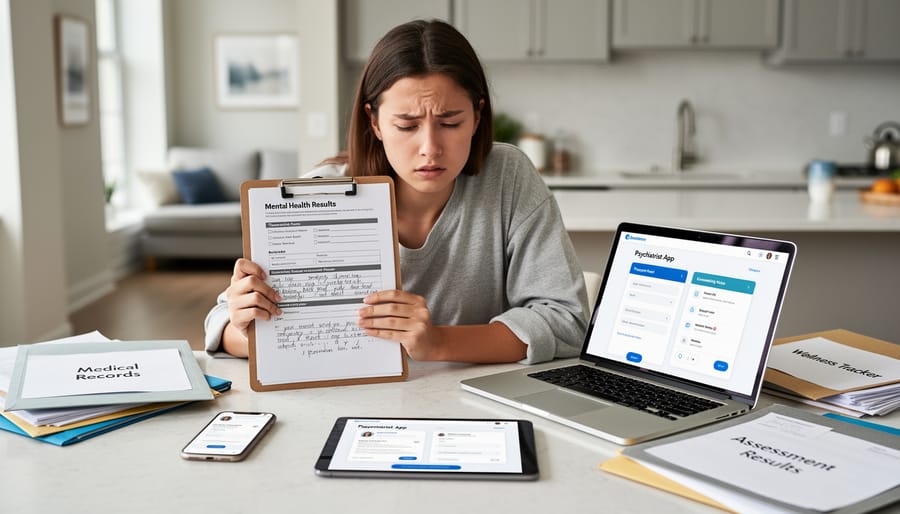
Repeating Your Story Over and Over
When healthcare systems don’t communicate with each other, you often find yourself sharing your health story repeatedly with different providers. This can be particularly challenging when discussing sensitive mental health concerns or traumatic experiences. Each new appointment may require you to relive difficult moments as you explain your symptoms, previous treatments, and ongoing struggles to yet another unfamiliar face.
This repetition isn’t just frustrating—it can be emotionally exhausting and may even discourage you from seeking the care you need. Research shows that repeatedly recounting traumatic events without therapeutic purpose can intensify distress and undermine your healing process. You might feel like your previous providers’ work is being dismissed or that you’re not being heard.
Without interoperability, your family doctor may not have access to your psychiatrist’s notes, your emergency room visit records might not reach your therapist, and specialists often work without a complete picture of your health journey. This fragmentation means valuable time in appointments gets spent on history-taking rather than moving forward with treatment. When your health information flows seamlessly between authorized providers, you can focus your energy on recovery rather than retelling your story, allowing clinicians to build on existing knowledge and provide more coordinated, compassionate care.
Critical Information Gaps During Emergencies
When someone experiences a mental health crisis, every minute matters. Yet emergency responders and crisis teams often arrive without crucial information that could save lives. Imagine paramedics responding to a suicide attempt without knowing the person has been using a mental health app to track worsening depression symptoms. Or consider emergency room doctors treating someone in severe distress, unaware that three different therapists have prescribed conflicting medications because none of their systems share information.
These information gaps happen regularly across Canada. Without interoperability standards, the mental health history stored in apps, counseling clinics, and family doctor offices remains locked away when it’s needed most. Emergency personnel can’t see that someone stopped taking their medication last week, or that they’ve had three previous crisis episodes with similar warning signs.
Research shows that access to complete mental health history significantly improves emergency response outcomes. When crisis teams can quickly review treatment plans, medication lists, and known triggers, they provide safer, more effective care. This becomes especially critical for crisis hotline data systems, which could instantly connect callers’ previous mental health information to responders.
The consequences extend beyond immediate emergencies. Without connected systems, patients must retell traumatic histories repeatedly, potentially delaying treatment during their most vulnerable moments. Standardized data sharing could transform crisis response from guesswork into informed, compassionate care.
Key Interoperability Standards Shaping Mental Health Technology
FHIR: The New Language of Healthcare Data
Fast Healthcare Interoperability Resources, or FHIR (pronounced “fire”), represents the most modern and flexible approach to sharing healthcare information across different systems and platforms. Developed by the international healthcare standards organization HL7, FHIR has become the preferred language for digital health tools, including the mental health apps and electronic medical records used across Canada.
Think of FHIR as a universal translator for healthcare data. Just as your smartphone apps can easily share information with each other, FHIR enables your doctor’s electronic health record system to communicate seamlessly with specialist clinics, hospitals, and even health apps on your phone. This standard uses modern web technologies, making it faster and more cost-effective to implement than older systems.
For mental health care, FHIR is particularly valuable. It allows mental health assessments completed in one setting to be shared with other providers involved in your care, ensuring everyone has access to the same up-to-date information. Treatment plans, therapy notes, and progress tracking can move with you as you transition between different levels of care or providers.
FHIR also supports patient access to their own health information through secure patient portals and apps. This empowers you to take a more active role in managing your mental health, track your progress over time, and share relevant information with new providers as needed. The standard continues to evolve with input from healthcare providers, technology developers, and patients to ensure it meets real-world needs.
Privacy and Security Standards That Protect Your Mental Health Information
When you share mental health concerns with your healthcare provider, you’re entrusting them with deeply personal information. Healthcare interoperability standards include robust privacy protections to ensure your sensitive mental health data remains confidential while still being accessible to authorized care providers when you need it most.
In Canada, the Personal Information Protection and Electronic Documents Act (PIPEDA) sets the foundation for how healthcare organizations handle your private health information. This federal legislation requires that your mental health records can only be shared with your explicit consent, except in rare circumstances where there’s a risk of serious harm. Interoperability standards work within this legal framework, using technical safeguards to protect your privacy every step of the way.
These standards employ several layers of security. Encryption ensures that your data is unreadable if intercepted during transmission between healthcare systems. Access controls verify that only authorized healthcare providers involved in your care can view your information. Audit trails track every access to your records, creating accountability and allowing you to see who has viewed your mental health information and when.
Role-based permissions are particularly important for mental health data. Your family doctor might have access to basic mental health diagnoses and medications, while your therapist sees detailed session notes. These granular controls mean you’re not forced to choose between complete secrecy and total disclosure.
Modern interoperability standards also support “break-glass” protocols for emergencies. If you arrive at a hospital in crisis, authorized staff can access critical mental health information that might save your life, even without your immediate consent, with every access carefully logged and justified.
These protections give you confidence that seeking mental health support won’t compromise your privacy, removing a significant barrier to getting the care you deserve.
How Interoperability Is Improving Mental Health Care in Canada
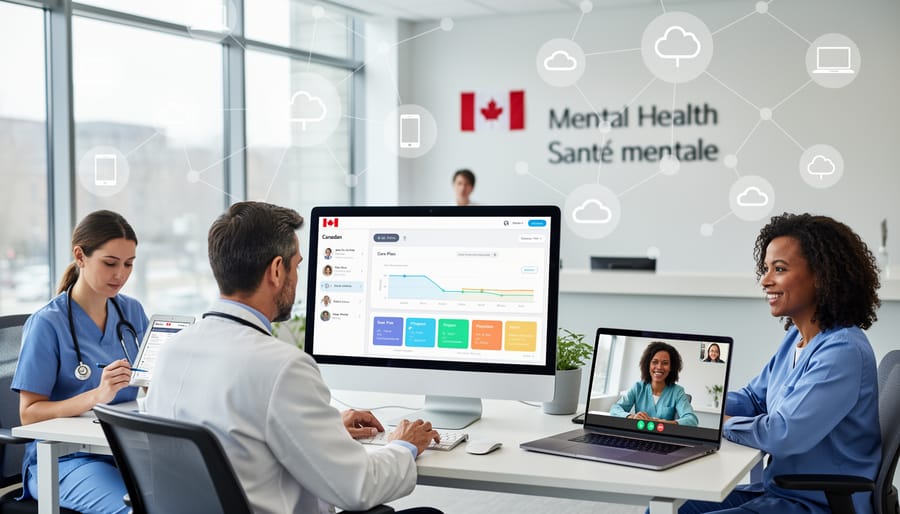
Provincial Initiatives Leading the Way
Across Canada, several provinces are breaking down digital barriers in mental health care through innovative interoperability initiatives, creating meaningful improvements in how patients receive support.
Ontario’s ConnexOntario service demonstrates how connected systems can streamline access to mental health resources. By integrating data from various addiction and mental health service providers, the platform helps individuals find appropriate care faster. Patients report reduced wait times and fewer repetitive intake assessments, which can be emotionally exhausting when you’re already struggling.
British Columbia’s Shared Care Committee has developed guidelines enabling family doctors and psychiatrists to access shared patient records securely. This means your family physician can see notes from your therapist or psychiatrist, allowing for coordinated treatment plans. Patients experiencing this connected care report feeling less like they’re managing their own information flow and more supported by a collaborative team.
In Quebec, the Dossier Santé Québec initiative allows authorized healthcare providers to view your health information across different settings. For someone managing both physical health conditions and mental health concerns, this prevents dangerous medication interactions and ensures all providers understand the complete picture.
These provincial efforts show tangible benefits: fewer repeated questions during appointments, reduced medication errors, smoother transitions between services, and faster crisis interventions. When your counselor, doctor, and crisis support team can communicate effectively, you experience care that feels genuinely coordinated rather than fragmented. While challenges remain in expanding these systems, early results confirm that interoperability directly translates to better patient experiences and outcomes.
Mental Health Apps That Already Connect to Your Healthcare Team
Several mental health apps available in Canada now offer varying levels of connection with your broader healthcare team. Maple, a Canadian telehealth platform, allows you to consult with licensed mental health professionals who can share information with your family doctor when you provide consent. Similarly, AbilitiCBT, developed by the Centre for Addiction and Mental Health, offers cognitive behavioural therapy tools that some Canadian clinics integrate into their treatment programs.
When selecting mental health technology, look for apps that clearly state their data-sharing capabilities. Priority features include the ability to generate reports for your healthcare provider, consent-based sharing options, and compatibility with electronic health records used in your province. Apps certified by organizations like Health Canada’s Medical Device Program or those meeting privacy standards under the Personal Information Protection and Electronic Documents Act offer added assurance.
Ask potential providers specific questions: Can session notes be shared with my doctor? Does the app use standardized data formats like FHIR? What happens to my information if I switch providers? Remember that interoperability works best when you actively participate by discussing digital tools with your healthcare team and ensuring everyone has access to the information needed to support your mental wellness journey. Your consent remains central to any data sharing, giving you control over who sees what.
What This Means for You and Your Mental Health Journey
Understanding how healthcare interoperability works empowers you to take an active role in managing your mental health journey. Here are practical steps you can take right now to benefit from connected care.
Start by having a conversation with your mental health provider about data sharing. Ask whether they use electronic medical records and if they can share information with other healthcare professionals involved in your care. Inquire about which mental health apps or digital tools they recommend that can connect with their systems. This demonstrates that you’re engaged in your care and helps you understand what’s currently possible.
When selecting mental health apps or digital tools, prioritize those designed to integrate with Canadian healthcare systems. Look for apps that allow you to export your data or share it with your healthcare team. Tools that sync with provincial health records or can generate reports for your doctor provide the most value. Check whether the app follows Canadian privacy standards and clearly explains how your information will be used and protected.
Understanding your consent rights is essential. In Canada, you control who accesses your health information. Your healthcare providers should explain what data they’re sharing, with whom, and why. You have the right to ask questions, request copies of your records, and withdraw consent for data sharing at any time. Don’t hesitate to ask for clarification if anything feels unclear.
As interoperability improves across Canada, expect more seamless experiences. You’ll likely see better coordination between your family doctor, psychiatrist, therapist, and any specialists involved in your care. Digital tools will become more sophisticated at tracking your progress and alerting your care team to concerning changes.
Keep advocating for yourself by staying informed about new technologies and asking your providers how they’re working to connect your care. The future of mental health treatment in Canada depends on these connections, and your engagement helps drive positive change in the healthcare system.
Healthcare interoperability standards might sound technical, but they’re really about something simple: making your mental health care work better for you. When your healthcare providers can securely share information, you spend less time repeating your story and more time getting the support you need. Across Canada, mental health services are becoming increasingly connected, meaning fewer gaps in your care and better coordination between your therapist, doctor, and other providers.
The future of Canadian mental health care is encouraging. As systems become more integrated, you’ll experience smoother transitions between services, whether you’re moving from crisis support to ongoing counseling or coordinating physical and mental health treatments. These improvements are built on a foundation of strong privacy protections and your right to control your health information.
Remember, you’re always in charge of your health data. Interoperability empowers you with easier access to your records and clearer communication with your care team. As these standards continue to improve, Canadian mental health services will become more responsive, personalized, and effective—keeping you at the centre of your care journey.