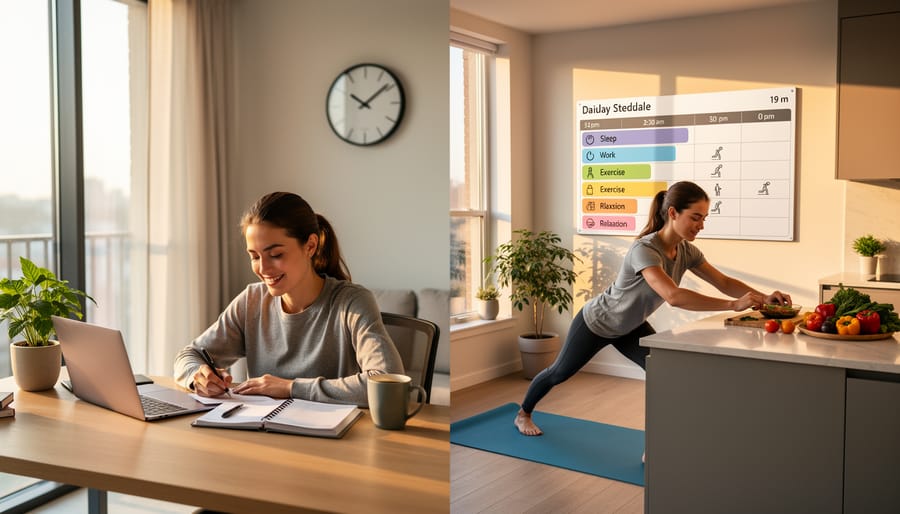
Identify your natural sleep-wake pattern by observing when you feel most alert without an alarm clock over several days—this reveals your chronotype, the biological blueprint that determines your peak energy hours and optimal meal timing. Your chronotype explains why you might struggle with traditional breakfast schedules or feel exhausted by early meetings, and understanding it transforms how you approach eating and sleeping.
Match your meal timing to your body’s internal clock by eating your largest meal when your metabolism peaks—typically mid-morning for early risers and early afternoon for night owls. This alignment supports better digestion, stable blood sugar, and improved sleep quality. When daylight saving time disrupts your rhythm twice yearly, gradually shift your meal times by 15 minutes every two days in the week leading up to the change, allowing your body to adjust without the jarring effects of sudden schedule shifts.
The four chronotypes—Lions (early risers), Bears (moderate sleepers), Wolves (night owls), and Dolphins (light sleepers)—each require different nutritional strategies to maintain energy throughout the day. Lions thrive with protein-rich breakfasts within 30 minutes of waking, while Wolves perform better delaying their first meal until late morning when their metabolism activates. Bears benefit from consistent three-meal schedules aligned with traditional timing, and Dolphins need lighter evening meals to support their fragile sleep patterns.
Understanding your chronotype empowers you to work with your biology rather than against it, creating sustainable habits that enhance both your energy levels and overall health.
What Are Chronotypes and Why Do They Matter?
Have you ever noticed that you feel most energized at different times than your partner, family members, or friends? Some people bound out of bed at sunrise ready to tackle the day, while others hit their stride well after sunset. These patterns aren’t just habits or preferences—they’re rooted in your chronotype, your body’s natural biological tendency that determines when you feel most alert, focused, and ready to rest.
Your chronotype is largely determined by your genetics and governed by your body’s internal 24-hour clock, known as circadian rhythms. These rhythms regulate everything from hormone production and body temperature to energy levels and metabolism throughout the day. While everyone has the same basic circadian system, the timing of these biological processes varies significantly from person to person based on their chronotype.
Research shows that about 40 to 70 percent of your chronotype is inherited, though environmental factors like light exposure, work schedules, and lifestyle choices also play a role. Understanding your chronotype isn’t just interesting trivia—it can be a game-changer for your health and wellbeing.
When you align your daily activities with your natural biological rhythms, you can optimize everything from sleep quality and energy levels to mental clarity and physical performance. This includes timing your meals, exercise, and important tasks for when your body is naturally primed for them. For Canadians navigating challenging seasonal light changes and biannual daylight saving time transitions, recognizing your chronotype becomes even more valuable.
Ignoring your chronotype and forcing yourself into incompatible schedules can lead to chronic sleep deprivation, increased stress, weight gain, and heightened risk for conditions like diabetes and heart disease. By identifying and honoring your chronotype, you’re taking an evidence-based step toward better health and daily functioning.

The Four Chronotypes Explained
The Bear: Following the Sun’s Schedule
If you’re a Bear chronotype, you’re in good company. This is the most common sleep pattern, representing about 55% of the population. Bears naturally follow the sun’s rhythm, feeling most alert and energized during traditional daytime hours.
Your energy typically rises mid-morning, peaks between late morning and early afternoon, and gradually declines as evening approaches. This solar alignment means you function best when following conventional schedules, making it easier to adapt to typical work hours and social commitments.
For optimal health, Bears should aim to wake around 7:00 AM and wind down by 10:30 PM. Your ideal breakfast window is between 7:30 and 8:00 AM, lunch around noon to 1:00 PM, and dinner by 6:00 PM. These meal times support your natural metabolic rhythms and help maintain steady energy throughout the day.
Bears often struggle with the mid-afternoon slump around 2:00 to 4:00 PM. Combat this by eating a balanced lunch with adequate protein and complex carbohydrates, staying hydrated, and taking a brief walk outdoors. During daylight saving time transitions, Bears typically adjust within three to four days, especially when maintaining consistent meal times and morning light exposure.
The Lion: The Early Morning Warrior
If you’re naturally awake and alert at 5:30 or 6:00 a.m. without an alarm, you’re likely a Lion chronotype. Representing approximately 15-20% of the population, Lions are the early morning warriors who feel most energized and productive during the first hours of the day.
Your body’s cortisol levels peak earlier than other chronotypes, giving you a natural advantage for tackling challenging tasks between 8:00 a.m. and noon. This is when your cognitive function, decision-making abilities, and focus are at their sharpest. Lions tend to feel hungry soon after waking and benefit from eating breakfast within an hour of rising to fuel their active morning hours.
However, this early start comes with an equally early wind-down. Most Lions experience an energy dip in the mid-afternoon and feel ready for sleep by 9:00 or 10:00 p.m. Fighting this natural rhythm by staying up late can disrupt your sleep quality and leave you feeling depleted the next day.
To optimize your health as a Lion, align your most important work and exercise sessions with your morning peak. Plan your largest, most nutritious meals earlier in the day, and keep evening meals lighter to support your body’s natural preparation for rest.
The Wolf: The Night Owl Who Thrives After Dark
If you’re someone who hits snooze repeatedly and feels groggy until late morning, you might be a Wolf chronotype. Representing about 15-20% of the population, Wolves are natural night owls whose internal clocks run later than most. Your energy doesn’t truly kick in until after noon, with peak creativity and productivity often arriving in the late afternoon and evening hours.
Wolves typically feel most alert between 5 PM and midnight, making them ideal for careers with flexible schedules or evening shifts. If you’re a Wolf, you’ve likely struggled with traditional 9-to-5 schedules that don’t align with your natural rhythm. The good news is that understanding your chronotype helps you work with your body instead of against it.
Research shows that Wolves benefit from eating their first substantial meal around 10 AM or noon, rather than forcing an early breakfast when their digestive system isn’t ready. Your largest meal works best in early evening when your metabolism is most active. This evening preference isn’t laziness—it’s biology. Many Wolves report feeling most creative and focused when others are winding down, making late-night work sessions particularly productive for this chronotype.
The Dolphin: The Light Sleeper with an Irregular Pattern
The Dolphin chronotype represents the rarest sleep pattern, affecting approximately 10% of the population. If you’re a Dolphin, you likely struggle with light, fragmented sleep and often wake feeling unrefreshed. This chronotype is characterized by insomnia tendencies and irregular sleep-wake cycles that don’t follow predictable patterns.
Dolphins tend to be highly intelligent, detail-oriented, and cautious by nature. However, these traits often come with anxiety and difficulty “switching off” at night. Your nervous system stays on high alert, making it challenging to achieve deep, restorative sleep. You may find yourself waking frequently throughout the night or lying awake with racing thoughts.
For meal timing, Dolphins benefit from a lighter evening routine. Avoid heavy dinners after 7 PM and consider a small protein-rich snack in the early evening to stabilize blood sugar without overwhelming your digestive system before bed. Keep breakfast moderate rather than skipping it entirely, as consistent morning nutrition can help regulate your unpredictable sleep patterns.
Managing time changes requires extra preparation for Dolphins. Start adjusting your schedule gradually, at least one week before daylight saving time shifts, moving in 15-minute increments to minimize sleep disruption.
Chrononutrition: Eating in Sync with Your Body Clock
Your body operates on an internal 24-hour clock that influences far more than just your sleep-wake cycle. This circadian rhythm also controls when your digestive system works most efficiently, when your metabolism peaks, and when certain hormones are released. Chrononutrition is the science of aligning your eating patterns with these natural biological rhythms to optimize your health.
Research shows that when you eat can be just as important as what you eat. Your body’s ability to process food changes throughout the day. For example, insulin sensitivity tends to be higher in the morning, meaning your body handles carbohydrates more effectively earlier in the day. Digestive enzymes and gut motility also follow predictable patterns, with digestion typically strongest during daylight hours.
When meal timing conflicts with your circadian rhythm, it can lead to various health challenges. Eating late at night, when your digestive system naturally slows down, may contribute to poor sleep quality, weight gain, and increased inflammation. Studies have found that irregular meal timing can disrupt your body clock, leading to decreased energy levels and metabolic issues over time.
The connection between meal timing and sleep is particularly significant. Eating large meals close to bedtime can interfere with your body’s natural temperature drop needed for quality sleep. Additionally, certain foods and eating patterns can either support or hinder melatonin production, the hormone responsible for regulating your sleep-wake cycle.
Understanding chrononutrition becomes especially relevant when considering individual differences in body clocks. Not everyone’s circadian rhythm operates on the same schedule, which is where chronotypes come into play. By matching your meal timing to your unique chronotype, you can work with your body’s natural preferences rather than against them.
Optimal Meal Timing for Each Chronotype

Bear Chronotype Meal Schedule
Bear chronotypes represent approximately 55% of the population and naturally sync with the sun’s cycle. If you’re a Bear, your ideal meal schedule supports your moderate morning energy buildup and gradual evening wind-down. Start your day with breakfast between 7-8am, when your metabolism naturally awakens. This timing helps stabilize blood sugar levels and provides sustained energy throughout your productive mid-morning hours. Schedule lunch between noon and 1pm to fuel your peak performance period and maintain focus during afternoon tasks. Plan dinner by 7pm, allowing at least three hours before bedtime for proper digestion. This earlier dinner timing aligns with your body’s natural cortisol decline and melatonin rise, promoting better sleep quality. Bears benefit from consistent meal spacing of 4-5 hours, which prevents energy crashes and supports stable appetite regulation. This traditional eating pattern works because it matches your body’s circadian rhythm, making it easier to maintain compared to trendy eating schedules that fight against your natural biological clock.
Lion Chronotype Meal Schedule
Lions thrive with an early meal schedule that aligns with their natural wake time around 5:30-6:00am. Your ideal breakfast window is 6:00-6:30am, when your metabolism and digestive system are already active and ready to process nutrients efficiently. This early fueling supports your peak productivity hours in the morning.
Plan lunch by 11:30am to maintain steady energy through your afternoon. Since your alertness naturally declines in the late afternoon, eating dinner between 5:00-6:00pm allows adequate digestion time before your optimal bedtime around 9:00-10:00pm. This early dinner timing prevents digestive processes from interfering with sleep quality.
Avoid late-day caffeine and heavy evening snacks, as your body prepares for rest earlier than other chronotypes. If you need an afternoon snack, choose light options around 3:00pm. This meal pattern supports your natural circadian rhythm, helping you maintain the early-to-bed schedule that keeps you energized and healthy.
Wolf Chronotype Meal Schedule
Wolf chronotypes thrive with a later meal schedule that honors their naturally delayed circadian rhythm. If you’re a Wolf, aim for breakfast between 9-10am or even later, when your body is truly ready to digest food. Forcing an early breakfast can leave you feeling sluggish and nauseous.
Your ideal lunch timing falls between 1-2pm, allowing your metabolism to reach its peak performance. This midday meal should be substantial enough to fuel your most productive afternoon hours. Dinner works best around 8-9pm, which aligns perfectly with your evening energy surge.
Since Wolves often feel hungry later at night, planning for a satisfying dinner during this window helps prevent excessive late-night snacking. Consider keeping nutritious options available for those times when hunger strikes after 9pm, such as protein-rich snacks or a small portion of complex carbohydrates.
This eating pattern supports your natural sleep-wake cycle, helping you maintain steady energy throughout your active evening hours while still allowing adequate digestion time before bed.
Dolphin Chronotype Meal Schedule
Dolphins typically experience lighter, more fragmented sleep and often struggle with traditional meal schedules. If you’re a Dolphin chronotype, aim for breakfast between 7:30-8am, even if you don’t feel particularly hungry. This helps establish a consistent rhythm that supports better sleep patterns later. Choose easily digestible options like Greek yogurt with berries or oatmeal with nuts to gently fuel your morning without overwhelming your sensitive system.
Lunch works best around 12:30pm when your energy naturally peaks. Include balanced portions of lean protein, complex carbohydrates, and vegetables to maintain steady afternoon focus. Your dinner should be lighter and earlier than other chronotypes, ideally around 6:30pm. This timing allows adequate digestion before bed, reducing the sleep disruptions Dolphins commonly face. Focus on easily digestible proteins like fish or chicken with steamed vegetables. Avoid heavy, rich foods in the evening that might interfere with your already delicate sleep quality. Maintaining this structured yet flexible schedule helps regulate your inconsistent energy patterns and promotes the restorative sleep your body needs.
Managing Time Changes and Sleep Disruptions by Chronotype
Preparing for Daylight Saving Time Transitions
Daylight saving time transitions can be challenging, but adjusting your approach based on your chronotype makes the shift smoother. Start preparing three to five days before the time change to help your body clock adapt gradually.
For Lions, begin shifting your wake time by 15 minutes earlier (spring) or later (fall) each day in the week leading up to the change. Move breakfast 15 minutes in the same direction daily. Since you naturally wake early, spring forward may feel easier, while fall back requires extra attention to avoid waking too early.
Bears should start adjusting their schedule two to three days before the change. Shift meal times and bedtime by 20 minutes each day. Expose yourself to bright light in the morning during spring forward to help reset your clock. During fall back, dim lights earlier in the evening to promote sleepiness at your new bedtime.
Wolves face the biggest challenge with spring forward. Begin your adjustment four to five days ahead, shifting dinner and bedtime 15 minutes earlier daily. Use light exposure strategically: bright light in the morning helps you wake, while avoiding screens two hours before bed supports earlier sleep. Fall back is typically easier for your chronotype.
Dolphins benefit from maintaining consistent meal times throughout the transition period. Focus on eating protein-rich breakfasts to support alertness and avoid caffeine after 2 PM. Create a calming bedtime routine starting one week before the change to improve your naturally light sleep during this disruption.
Recovery Strategies After Poor Sleep
Even with the best intentions, poor sleep happens to everyone. The good news is that understanding your chronotype can help you recover more effectively from sleep disruptions.
Bears typically bounce back quickly from occasional poor sleep. To recover, aim for a 20-minute power nap between 2:00 and 3:00 PM if needed, but avoid napping later as it may interfere with your regular bedtime. Get bright light exposure within 30 minutes of waking to reset your internal clock, and stick to your regular meal schedule even if you feel off. A protein-rich breakfast will help stabilize energy levels throughout the day.
Lions should resist the urge to sleep in after a poor night, as this can shift your natural early rhythm. Instead, wake at your usual time and get immediate sunlight exposure. If you need a nap, keep it brief (15-20 minutes) and complete it before noon. Have a substantial breakfast as planned, and consider a lighter dinner with complex carbohydrates to promote better sleep the following night.
Wolves need patience with recovery, as your delayed rhythm makes bouncing back trickier. After poor sleep, prioritize bright light exposure in the late morning rather than early morning. A short nap between 3:00 and 4:00 PM can help, but set an alarm to avoid oversleeping. Don’t skip your first meal, even if appetite is low – a balanced brunch will help regulate your energy. Avoid heavy meals after 9:00 PM to support the next night’s sleep.
Dolphins should focus on reducing sleep pressure anxiety. If you slept poorly, avoid excessive caffeine, which can worsen your already sensitive sleep system. Light exercise and outdoor time during midday can help regulate your rhythm without overstimulation. Keep meals light and regular, and consider a small protein-based snack in the evening if needed.
Practical Tips to Optimize Your Chronotype
Understanding your chronotype is just the first step—optimizing your daily habits around it can significantly improve your energy, sleep quality, and overall wellbeing. Here are practical, evidence-based strategies tailored to each chronotype.
For Lions (early risers), maximize your natural morning advantage by getting bright light exposure within 30 minutes of waking. Open curtains or step outside for 10-15 minutes to reinforce your early wake time. Schedule high-intensity workouts between 6-10 a.m. when your physical performance peaks. Limit caffeine after 2 p.m., as your body processes it quickly but evening consumption can still interfere with your early bedtime. Establish calming sleep hygiene practices by 9 p.m., dimming lights and avoiding screens to support your 10 p.m. bedtime.
Bears (mid-range sleepers) should align with natural daylight patterns. Get morning sunlight between 7-8 a.m. to maintain your circadian rhythm, especially during darker Canadian winters. Exercise between 12-6 p.m. when your energy naturally peaks. You can enjoy caffeine until 3 p.m. without significant sleep disruption. Begin winding down around 10 p.m., keeping your bedroom cool and dark for an 11 p.m. bedtime.
Wolves (evening types) face unique challenges in our early-bird society. Delay bright light exposure until mid-morning, around 9-10 a.m., to avoid shifting your rhythm even earlier. Fit in workouts after 5 p.m. when your body temperature and strength peak. You can tolerate caffeine later—until 4 p.m.—but monitor how it affects your sleep. Since falling asleep before midnight is difficult, create a gradual wind-down routine starting at 11 p.m. Use blackout curtains to sleep past sunrise, especially during summer months.
Dolphins (light sleepers) benefit most from consistency. Expose yourself to bright light for 20 minutes around 7-8 a.m. to regulate your irregular sleep-wake cycle. Moderate-intensity exercise between 7:30 a.m. and 4 p.m. helps without overstimulating you. Limit caffeine to morning hours only, cutting off by noon, as your sensitivity is heightened. Focus on stress-reduction techniques throughout the day—meditation, deep breathing, or gentle yoga—to calm your overactive mind before bed.
Regardless of your chronotype, avoid blue light from devices 1-2 hours before bedtime, maintain a consistent sleep schedule even on weekends, and keep your bedroom temperature between 15-19°C for optimal sleep quality.
Understanding your chronotype is a powerful step toward taking control of your health and wellbeing. Rather than fighting against your natural biological rhythms, working with them can lead to better sleep quality, more consistent energy levels, and improved overall health. Whether you’re a Bear thriving on a traditional schedule, a Lion naturally waking with the sunrise, a Wolf coming alive in the evening, or a Dolphin navigating sensitive sleep patterns, there’s no right or wrong chronotype—only what works best for your unique biology.
As you begin implementing changes based on your chronotype, remember that adjustment takes time. Your body has been following certain patterns, and shifting meal times, sleep schedules, or exercise routines won’t produce overnight results. Start with small modifications, perhaps adjusting your dinner time by thirty minutes or moving your workout to a more aligned time of day. Pay attention to how these changes affect your energy, sleep quality, and mood.
Be especially patient during transitions like daylight saving time, which affect all Canadians twice yearly. These disruptions can temporarily throw even the most established routines off balance, but understanding your chronotype gives you the tools to navigate them more smoothly.
The journey to optimal health isn’t about forcing yourself into someone else’s schedule—it’s about discovering and honoring your body’s natural preferences. By becoming aware of your chronotype and making evidence-based adjustments, you’re empowering yourself to feel more energized, sleep better, and support your long-term health goals.