
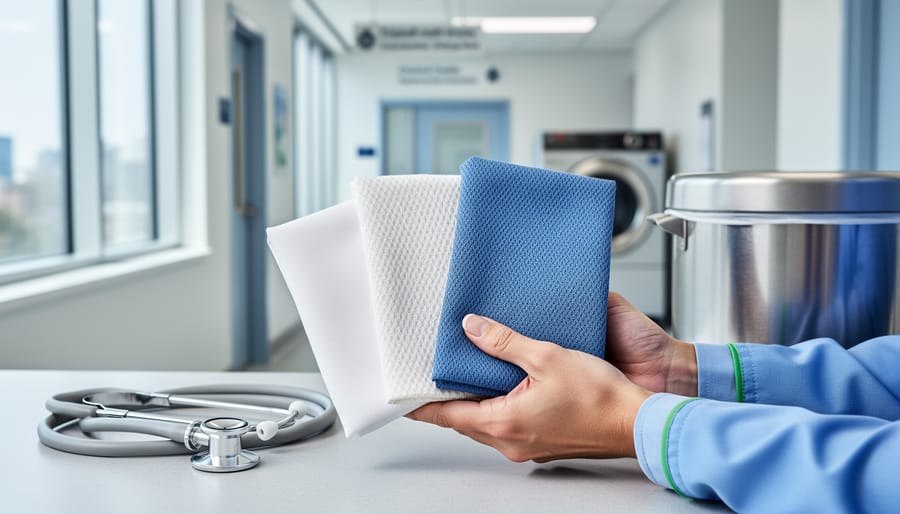
Scrubs materials refer to the fabrics and textile blends used to manufacture medical uniforms, chosen specifically for their performance characteristics including antimicrobial properties, durability, breathability, and comfort during extended wear. While scrubs may look like simple work clothing, the material composition directly impacts infection control, skin health, and physical comfort throughout 12-hour shifts.
For healthcare professionals and students in Canada, understanding fabric performance goes beyond personal preference. The wrong material can trap heat and moisture, creating an environment where bacteria thrive against your skin. Poor breathability leads to discomfort that compounds the physical demands of clinical work, while low-quality fabrics break down quickly under the repeated industrial laundering required in healthcare settings.
This guide explains how different scrubs materials function at the fiber level, compares the performance of cotton, polyester, spandex, and antimicrobial blends, and connects fabric choice to measurable outcomes in infection prevention and occupational wellness. You’ll find practical evaluation criteria for assessing quality before purchase, a comparison table of common materials, and evidence-based guidance on matching fabric types to specific healthcare roles and work environments. Whether you’re entering clinical practice or reevaluating your current workwear, the material you choose affects your health, safety, and ability to perform effectively throughout your shift.
What Scrubs Material Means for Healthcare Professionals

Scrubs material refers to the specialized fabrics and fabric blends specifically engineered to meet the demanding requirements of medical uniforms. Unlike everyday clothing textiles, these materials are designed to withstand the harsh realities of clinical environments while protecting both healthcare workers and patients.
At its core, medical-grade fabric must balance several critical properties that regular clothing simply doesn’t need to address. These fabrics undergo industrial laundering cycles at high temperatures with strong detergents, face exposure to bodily fluids and chemical disinfectants, and must maintain their integrity through hundreds of wash cycles. The fabric needs to breathe well enough to keep workers comfortable during physically demanding 12-hour shifts, yet be dense enough to provide a protective barrier. Quality scrubs materials incorporate these properties through careful fiber selection and specialized treatments. Options like 100% Organic Cotton Scrubs prioritize natural breathability and skin comfort, while synthetic blends emphasize stain resistance and quick-drying performance.
Antimicrobial fabric
Textiles treated with agents that inhibit bacterial and fungal growth on the fabric surface, reducing odor and cross-contamination risks between patients.
Breathability rating
A measure of how well air and moisture vapor pass through the fabric, essential for temperature regulation and comfort during long, active shifts.
Colorfastness
The fabric’s ability to retain its original color without fading, bleeding, or staining when exposed to repeated washing, bleach, and sunlight.
Fluid resistance
The degree to which fabric repels liquids, preventing blood, bodily fluids, and other contaminants from penetrating through to the skin.
Industrial laundering compatibility
The fabric’s capacity to endure commercial-grade washing at temperatures exceeding 160°F with harsh detergents and bleach without degrading or shrinking.
The right material choice directly affects how well your uniform performs its protective function while supporting your physical comfort throughout demanding workdays.
How Scrubs Material Works to Protect and Perform
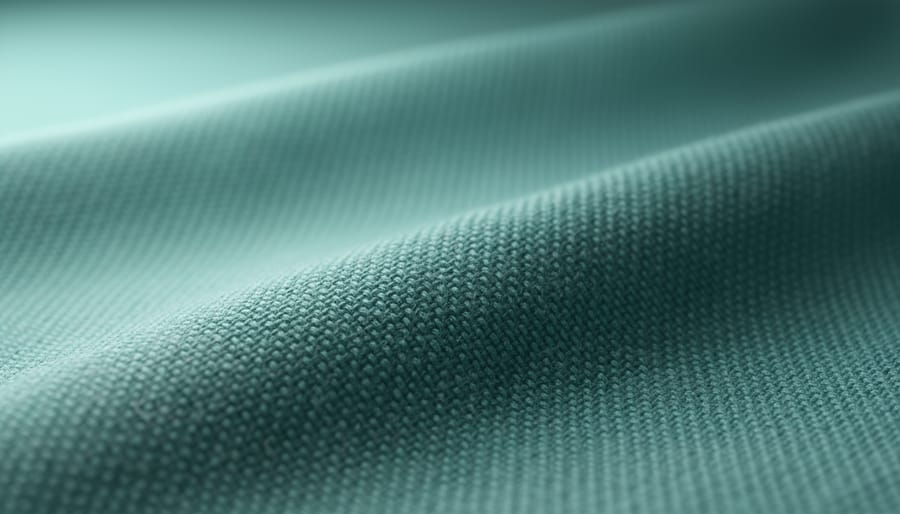
Scrubs fabrics function as engineered barriers between healthcare workers and the biological hazards they encounter daily. The protective capacity starts at the microscopic level, where fiber weave density determines how effectively a fabric blocks fluid penetration and pathogen transmission. Tightly woven fabrics create smaller gaps between fibers, preventing blood, bodily fluids, and infectious droplets from reaching the skin underneath. This structural barrier is essential for infection control in clinical environments where exposure to contaminants is routine.
Moisture-wicking technology works through capillary action, where synthetic fibers are designed with channels that pull perspiration away from the skin surface toward the fabric’s outer layer. As sweat moves outward, it evaporates more quickly, keeping the wearer cooler and preventing the damp conditions where bacteria thrive. This system is particularly valuable during physically demanding shifts when healthcare workers move constantly between patient rooms and procedures.
Antimicrobial treatments add another protective layer by incorporating silver ions, zinc compounds, or other agents directly into the fabric fibers. These treatments disrupt bacterial cell walls and inhibit microbial reproduction on the fabric surface, reducing odor and contamination between laundering cycles. The effectiveness persists through dozens of washes when properly applied during manufacturing.
Fabric weight, measured in grams per square meter, balances durability against comfort. Heavier fabrics withstand the mechanical stress and high temperatures of industrial washing better, maintaining their shape and protective qualities longer. Lighter weights offer better breathability but may thin or tear more quickly under harsh cleaning protocols required in healthcare settings.
Common Types of Scrubs Fabrics and Their Characteristics
Natural Fiber Options
Cotton scrubs deliver exceptional breathability that keeps healthcare workers comfortable during physically demanding shifts. The natural fibers allow air to circulate freely against your skin, preventing the clammy feeling that builds up under synthetic fabrics during long hours on your feet. This moisture absorption helps regulate body temperature naturally, reducing heat stress in warm clinical environments.
Cotton-rich blends, typically 65% cotton mixed with 35% polyester, preserve most of cotton’s comfort advantages while adding practical durability. The polyester component resists wrinkling and helps the fabric hold its shape through hundreds of industrial wash cycles. Pure cotton scrubs feel softer against sensitive skin and work well for healthcare workers with fabric sensitivities or those who prioritize natural materials.
The trade-offs matter for daily wear. Cotton shrinks predictably during the first few washes, so sizing up initially prevents fit problems later. Wrinkles develop easily in 100% cotton, requiring ironing for a crisp appearance, an extra step many busy professionals skip. Cotton also takes longer to dry than synthetic blends, which can complicate laundry routines when you need clean scrubs quickly between shifts.
Synthetic and Performance Blends
Polyester-based scrubs have become the workhorse of high-intensity clinical settings, valued for their exceptional durability through hundreds of industrial wash cycles. Pure polyester fabrics resist wrinkles, hold color remarkably well, and shrug off most stains, coffee spills and medication marks rarely penetrate the synthetic fibers. These materials dry quickly after laundering, making them practical for healthcare workers who need fresh scrubs on short notice.
Adding spandex or elastane creates four-way stretch blends that move with you during physically demanding shifts. A typical 95% polyester, 5% spandex combination maintains its shape while allowing you to bend, lift, and reach without fabric restriction. This flexibility matters when you’re constantly moving between patients or performing emergency procedures.
Moisture-wicking technical fabrics represent the performance tier of synthetic scrubs. These engineered materials pull perspiration away from your skin toward the fabric surface where it evaporates, keeping you dry during long surgeries or busy emergency department shifts. The breathability prevents the clammy discomfort that cotton retains when wet, reducing skin irritation and heat stress in environments where air conditioning struggles to compensate for physical exertion.
Specialty Medical-Grade Fabrics
Advanced medical-grade fabrics incorporate specialized treatments designed for high-risk clinical environments where standard materials fall short. These fabrics feature antimicrobial finishes that actively inhibit bacterial growth on the fabric surface, reducing cross-contamination risks between patient interactions. Silver ion treatments and quaternary ammonium compounds are commonly embedded during manufacturing, maintaining effectiveness through hundreds of wash cycles.
Fluid-resistant coatings create a protective barrier against blood, bodily fluids, and chemical splashes without sacrificing breathability. These hydrophobic treatments cause liquids to bead and roll off rather than soak through, critical in operating rooms, emergency departments, and intensive care units where exposure risks run highest.
Some specialty fabrics combine fluid resistance with enhanced tensile strength to prevent tears during high-intensity procedures. These materials cost 30-50% more than standard blends but offer measurably superior protection in environments where healthcare workers face repeated exposure to infectious materials and hazardous substances.
How Scrubs Material Is Used in Healthcare Settings
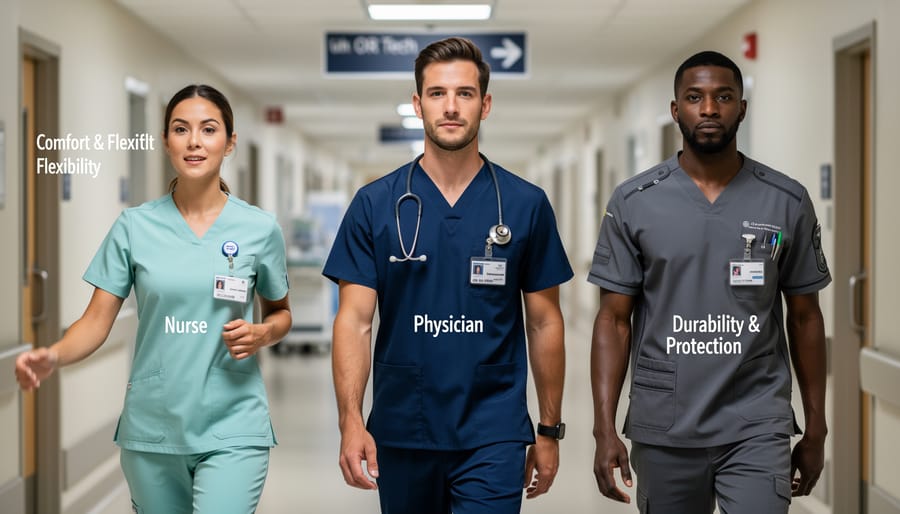
Healthcare facilities match scrubs materials to clinical demands, staff roles, and shift conditions rather than choosing one fabric for everyone. The selection process considers exposure risk, physical activity level, patient interaction type, and work environment specifics to optimize both safety and comfort.
Emergency departments prioritize fluid-resistant polyester blends that repel blood and bodily fluids while withstanding frequent decontamination. The fast-paced environment requires fabrics with mechanical stretch that move with the wearer during rapid patient transfers and resuscitation efforts. Quick-dry properties become essential when staff change scrubs multiple times during a single shift after exposure incidents.
Surgical teams need breathable, lint-free materials that maintain sterile field integrity. Tightly woven cotton-polyester blends around 55/45 ratio offer the best balance, providing comfort under operating room lights while generating minimal particulate matter that could contaminate open surgical sites. These fabrics must tolerate repeated high-temperature steam sterilization without degrading or shrinking.
Different specialties within healthcare demand distinct material properties matched to their unique working conditions:
- Emergency medicine: fluid-resistant polyester blends with antimicrobial treatments for high-contamination risk
- Surgery: low-lint cotton-polyester tightly woven fabrics compatible with autoclaving and sterile protocols
- Pediatrics: soft cotton-rich blends in bright colors that reduce anxiety and withstand frequent washing
- Long-term care: durable stretch fabrics prioritizing all-day comfort for staff assisting with patient mobility
- Dental: stain-resistant synthetics that repel saliva and maintain professional appearance between patients
- Veterinary: heavy-duty blends resistant to hair, scratches, and animal-related fluids with reinforced seams
Long-term care facilities emphasize comfort and durability since staff spend extended periods assisting with patient transfers and personal care. Cotton-spandex blends with four-way stretch reduce physical fatigue during repetitive bending and lifting, while higher GSM fabrics (around 180-200) provide opacity and longevity through hundreds of wash cycles.
Administrative healthcare roles in clinics and medical offices select wrinkle-resistant polyester blends that maintain crisp appearance throughout the workday without requiring ironing, supporting professional presentation during patient-facing interactions.
Why Scrubs Material Matters for Your Health and Wellbeing
The fabric against your skin for 12-hour stretches affects more than just comfort, it directly shapes your physical health. Non-breathable materials trap moisture and heat, creating a breeding ground for bacterial and fungal skin infections. Dense synthetics that don’t wick sweat away can cause folliculitis, contact dermatitis, and persistent rashes that worsen with each shift. Heat stress from poor fabric ventilation raises core body temperature, triggering headaches, dizziness, and accelerated fatigue that compromises decision-making in critical moments.
Ill-fitting or restrictive fabrics limit your range of motion, forcing compensatory movements that strain muscles and joints. Over weeks and months, this adds up: chronic lower back pain, shoulder tension, and knee stress from awkward bending when your scrubs don’t flex with you. Heavy, stiff materials increase perceived physical load, making an already demanding job feel heavier.
The mental toll runs parallel. Uncomfortable uniforms distract you from patient care, erode focus, and contribute to burnout. Research on workplace wellbeing shows that physical discomfort at work directly undermines job satisfaction and psychological resilience. When combined with irregular schedules that disrupt shift-worker sleep poor scrubs choices compound stress rather than support recovery.
Choosing breathable, moisture-managing, flexible fabrics isn’t cosmetic, it’s a foundational health decision that reduces infection risk, prevents musculoskeletal strain, and protects your mental stamina through demanding shifts.
What to Look for When Choosing Scrubs Material
When you’re evaluating scrubs fabric, start with the garment’s fabric weight, measured in grams per square meter (GSM). Quality medical scrubs typically range from 180 to 220 GSM, lighter fabrics (under 180) may feel flimsy and become see-through after washing, while heavier options (above 220) can trap heat and restrict movement during long shifts. Check the manufacturer’s specifications; reputable brands list GSM clearly on product descriptions or care labels.
Thread count and weave tightness directly affect durability and barrier protection. A tight weave with higher thread count resists fluid penetration better than loose weaves, which matters when you’re working in environments where exposure to bodily fluids is routine. Run your hand across the fabric, you should feel a smooth, dense surface without visible gaps between threads when you hold it up to light.
Colorfastness ratings tell you whether scrubs will maintain their appearance through repeated industrial washing. Look for garments that specify colorfastness to washing and chlorine bleach, especially if your facility requires bleach-based laundering protocols. Faded, discolored scrubs don’t just look unprofessional; they signal fabric breakdown that can compromise protective qualities.
Before purchasing, verify these quality indicators:
- GSM rating between 180-220 for optimal weight and coverage
- Care label instructions specifying maximum wash temperature and bleach compatibility
- Antimicrobial certification from recognized testing standards (ISO 20743 or AATCC 100)
- Stretch recovery if fabric contains spandex, it should snap back immediately after pulling
- Opacity rating or squat test confirmation, fabric shouldn’t become sheer when stretched
- Seam construction quality with reinforced stitching at stress points
Shrinkage specifications matter more than most healthcare workers realize. Quality scrubs should pre-shrink during manufacturing and list maximum shrinkage (ideally under 3 percent) on labels. If this information isn’t available, size up or wash new scrubs in cold water initially to test how they respond before wearing them to work.
Frequently Asked Questions About Scrubs Materials
How often should I replace my scrubs based on material wear?
Most healthcare workers need to replace scrubs every six to twelve months, depending on fabric quality and laundering frequency. Signs you need new scrubs include thinning fabric, persistent stains that won’t lift, loss of stretch in blended materials, and fading that compromises professional appearance.
Can scrubs materials cause allergic reactions or skin irritation?
Some people experience contact dermatitis from fabric dyes, formaldehyde finishes used for wrinkle resistance, or antimicrobial chemical treatments. If you notice rashes or itching, switch to hypoallergenic fabrics labeled as chemical-free or choose pre-washed, untreated cotton options.
What’s the difference between hospital-issued and retail scrubs fabric quality?
Hospital-issued scrubs typically use heavier-weight, industrial-grade fabrics designed to withstand high-temperature commercial laundering and harsh disinfectants. Retail scrubs often prioritize comfort and fit with lighter, softer materials that may not hold up as well under rigorous decontamination protocols required for workplace safety.
Are eco-friendly scrubs materials as protective as traditional synthetic options?
Modern sustainable scrubs made from organic cotton, bamboo blends, or recycled polyester offer comparable durability and protection when engineered to medical-grade standards. Look for eco-friendly options that meet antimicrobial and fluid-resistance specifications if your role involves high contamination risk.
These questions reflect the real concerns healthcare professionals face when selecting appropriate work attire. Material durability directly affects your budget and comfort, wearing worn-out scrubs with compromised barrier protection puts you at unnecessary risk during patient care. Sensitivity to chemical treatments is more common than many realize, particularly among workers with eczema or sensitive skin who spend twelve-hour shifts in close contact with treated fabrics.
The quality gap between institutional and retail scrubs matters for long-term performance. While retail options may feel softer initially, they often pill, fade, and lose shape faster than commercial-grade alternatives designed for daily industrial laundering. Choosing the right balance between immediate comfort and lasting durability depends on your specific role, facility requirements, and personal health needs.
Choosing the right scrubs material isn’t about fashion, it’s a practical health decision that affects your daily wellbeing at work. The fabric you wear for 12-hour shifts directly impacts your physical comfort, your ability to maintain proper hygiene standards, and ultimately your capacity to deliver quality patient care without compromising your own health.
Quality scrubs materials support infection control through appropriate barrier protection and easy decontamination. They regulate your body temperature during physically demanding shifts, reduce skin irritation that can develop into chronic conditions, and maintain their protective properties through hundreds of industrial wash cycles. When your uniform works with your body instead of against it, you experience less physical fatigue, fewer distractions from discomfort, and greater confidence in your professional appearance.
Investing in appropriate scrubs fabric is investing in your occupational health. Take time to evaluate fabric composition, weight, and treatment features before purchasing. Your material choice matters, for your safety, your comfort, and your ability to perform at your best every single shift.