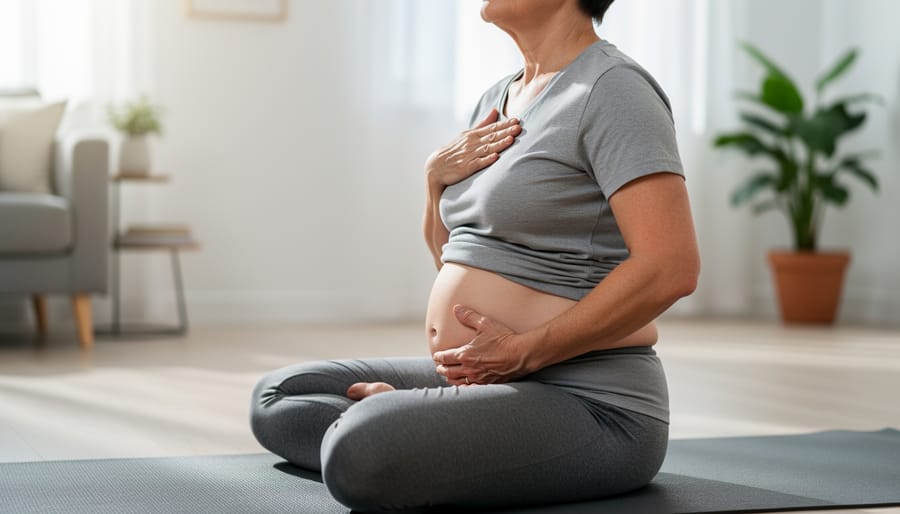
Practice diaphragmatic breathing for 10-15 minutes before bed by lying on your back, placing one hand on your chest and the other on your belly, then breathing deeply so only your belly rises. This strengthens your respiratory muscles and can reduce mild sleep apnea episodes by up to 50% according to recent studies.
Perform tongue and throat exercises daily to tone the muscles that collapse during sleep apnea. Press your tongue flat against the roof of your mouth and slide it backward 20 times, then repeat this exercise with your tongue positioned on the floor of your mouth. Research shows these oropharyngeal exercises can decrease apnea severity by 39% when practiced consistently for three months.
Exhale slowly through pursed lips to create gentle resistance, which keeps your airways open longer and improves oxygen exchange. This technique, borrowed from COPD management, helps maintain positive airway pressure naturally and can complement your CPAP therapy or serve as a temporary measure when traveling without equipment.
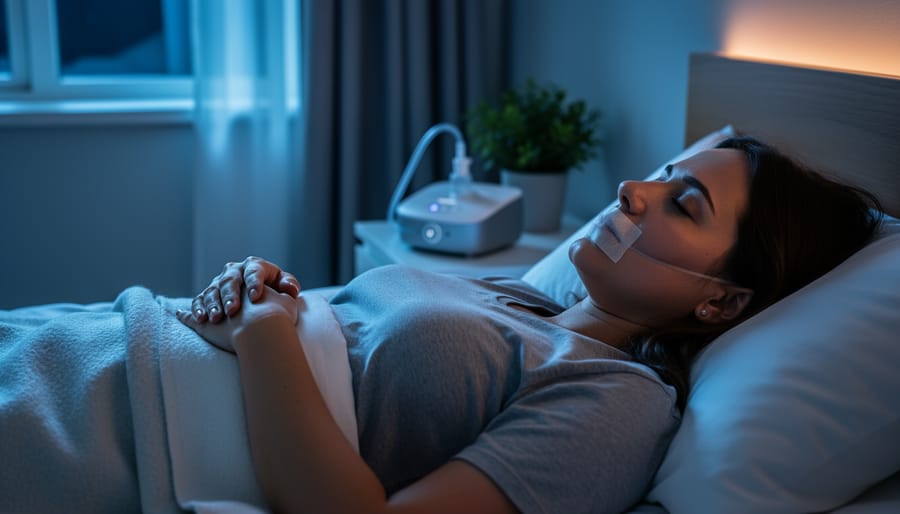
Position yourself for nasal breathing during sleep by using mouth tape or a chin strap, as nasal breathing naturally creates better airway pressure and filters air more effectively. Studies confirm that mouth breathing worsens sleep apnea symptoms, while nasal breathing reduces episodes and improves sleep quality.
These breathing techniques work best alongside medical treatment, not as replacements. While they strengthen your respiratory system and may reduce mild to moderate symptoms, sleep apnea requires proper diagnosis and ongoing monitoring by healthcare professionals. Think of breathing exercises as powerful complementary tools that give you active control over your condition between doctor visits.
Why Breathing Techniques Matter for Sleep Apnea
How Sleep Apnea Disrupts Your Natural Breathing
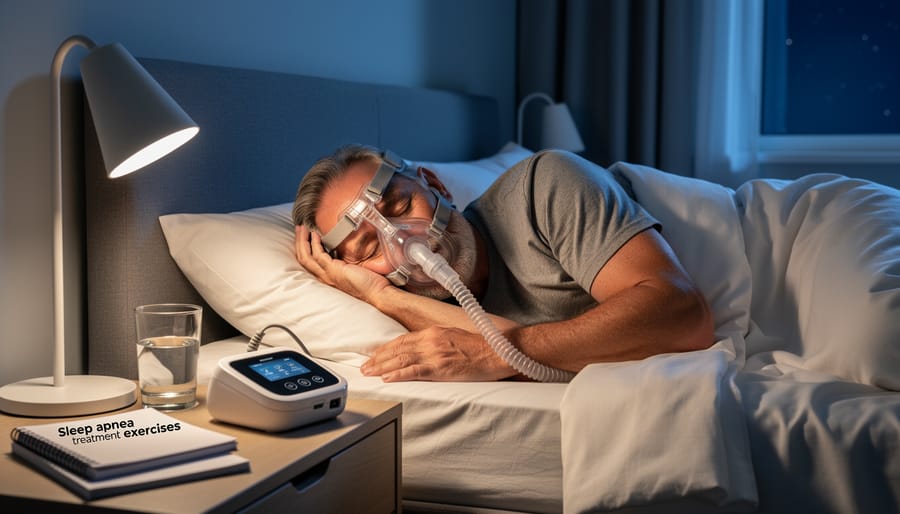
During sleep apnea, your airway becomes partially or completely blocked, causing your breathing to pause repeatedly throughout the night. These interruptions can happen dozens or even hundreds of times, preventing oxygen from reaching your body properly. When your brain detects low oxygen levels, it briefly wakes you up just enough to restart breathing—often without you realizing it.
Over time, this cycle creates problematic breathing patterns. Your respiratory muscles may weaken, and your body becomes accustomed to shallow, irregular breathing even when you’re awake. Your nervous system also stays in a heightened state of stress, making restful sleep nearly impossible.
Breathing retraining techniques help address these issues by strengthening the muscles involved in respiration, improving oxygen efficiency, and teaching your body to breathe more effectively. While these exercises cannot cure sleep apnea or replace medical treatments like CPAP therapy, they serve as valuable complementary tools. Regular practice can reduce symptom severity, enhance your overall respiratory function, and improve your quality of sleep. Think of breathing exercises as physical therapy for your respiratory system—they help retrain your body to breathe the way it should naturally.
The Science Behind Breathing Exercises
Targeted breathing exercises work by strengthening the muscles in your upper airway, which can help reduce sleep apnea episodes. Research shows that regular practice of specific breathing techniques tones the soft palate, tongue, and throat muscles that often collapse during sleep in people with obstructive sleep apnea.
When you perform these exercises, you’re essentially training your airway muscles to maintain better stability throughout the night. Studies published in sleep medicine journals have found that consistent practice over several months can reduce the severity of mild to moderate sleep apnea by up to 39 percent in some cases.
These techniques also improve how your body uses oxygen. Controlled breathing patterns help regulate your respiratory rhythm, increase lung capacity, and enhance oxygen absorption in your bloodstream. This means better oxygen delivery to your brain and tissues during sleep, which can reduce daytime fatigue and improve overall health.
Additionally, breathing exercises activate your parasympathetic nervous system, promoting relaxation and reducing stress hormones that can worsen sleep quality. While they shouldn’t replace CPAP therapy or other treatments prescribed by your doctor, breathing exercises offer a complementary approach that you control, with no equipment needed and no side effects.
Buteyko Breathing Method: Reducing Over-Breathing
How to Practice Buteyko Breathing
Buteyko breathing focuses on reducing overbreathing and can help improve breathing patterns during sleep. Here’s how to practice this technique safely and effectively:
Start by finding a comfortable seated position in a quiet space. Sit upright with your shoulders relaxed and hands resting gently on your lap. Begin by breathing normally through your nose for a few minutes to establish your baseline breathing pattern.
Once settled, take a small, gentle breath in through your nose, followed by a small breath out. After exhaling, pinch your nose closed with your fingers and hold your breath for as long as you comfortably can. When you feel the first urge to breathe, release your nose and resume normal nasal breathing. The goal isn’t to push yourself to maximum capacity but to feel a moderate air hunger.
Rest for 30 to 60 seconds between breath holds, breathing naturally and calmly. Repeat this cycle 5 to 6 times during each practice session.
For beginners, practice twice daily—once in the morning and once in the evening—for about 10 to 15 minutes per session. As you become more comfortable with the technique, you can gradually extend your breath-hold duration, but always listen to your body and never force discomfort.
Between practice sessions, focus on maintaining nasal breathing throughout your day and keeping your breathing light and quiet. Many people notice improvements in their breathing patterns within 2 to 4 weeks of consistent practice. Always consult with your healthcare provider before starting any new breathing technique, especially if you have underlying respiratory conditions.
What to Expect When Starting
When you begin practicing breathing techniques for sleep apnea, patience is essential. Most Canadians notice initial improvements within two to four weeks of consistent daily practice, though significant changes typically emerge after eight to twelve weeks. During the first week, you might feel awkward or struggle to maintain the exercises, which is completely normal as your body adapts to new breathing patterns.
In the early stages, expect to spend 10-15 minutes daily on your chosen techniques. You may notice subtle changes first, such as reduced daytime fatigue or fewer morning headaches. As you continue, breathing becomes more natural during sleep, and some people experience decreased snoring intensity. Research shows that dedicated practice over three months can lead to measurable improvements in mild to moderate sleep apnea symptoms.
Remember that breathing exercises complement, rather than replace, prescribed treatments like CPAP therapy. Keep a simple journal tracking your energy levels and sleep quality to monitor progress. If you don’t notice any improvements after six weeks, consult your healthcare provider to reassess your approach. Consistency matters more than perfection—even five minutes daily provides benefits. Stay committed to the process, and celebrate small victories along your journey to better sleep health.
Diaphragmatic Breathing: Strengthening Your Core Breath
Step-by-Step Diaphragmatic Breathing Exercise
Diaphragmatic breathing, also known as belly breathing, helps strengthen your breathing muscles and encourages fuller oxygen exchange. This technique is particularly beneficial for people with sleep apnea as it promotes relaxed, efficient breathing patterns.
To practice during the day, find a comfortable seated or lying position. Place one hand on your chest and the other on your belly, just below your ribcage. Breathe in slowly through your nose for a count of four, focusing on expanding your belly rather than your chest. The hand on your belly should rise while the hand on your chest remains relatively still. Hold this breath for a count of two, then exhale slowly through pursed lips for a count of six, feeling your belly fall. Repeat this cycle for 5 to 10 minutes.
For bedtime practice, lie on your back with a pillow under your knees for comfort. Follow the same breathing pattern, but allow your pace to become even slower and more relaxed. This pre-sleep routine signals your body to enter a calmer state, potentially reducing breathing disruptions during sleep.
Start with just five minutes once or twice daily, gradually increasing as the technique becomes more natural. Many Canadians find morning practice energizing and evening practice calming. Consistency matters more than duration, so aim to make this a regular part of your daily routine. With practice, diaphragmatic breathing becomes automatic, supporting better breathing patterns throughout the day and night.
Best Times to Practice
Consistency matters more than duration when practicing breathing techniques for sleep apnea. Aim to practice your chosen exercises twice daily—once in the morning and once in the evening before bed. Each session needs only 5-10 minutes to be effective.
Evening practice is particularly beneficial, as it helps relax your airway muscles and calm your nervous system before sleep. Try practicing 30-60 minutes before bedtime while sitting comfortably in a quiet space. Morning sessions help strengthen respiratory muscles when you’re alert and can focus on proper technique.
Start with three times per week if daily practice feels overwhelming, then gradually increase frequency. Many Canadians find success incorporating these exercises into existing routines, such as after brushing teeth or during a lunch break.
Track your progress in a simple journal, noting sleep quality and daytime energy levels. Most people notice improvements within 2-4 weeks of consistent practice. Remember, these techniques work best alongside your prescribed treatment plan, so continue using your CPAP or other medical devices as directed by your healthcare provider.
Tongue and Throat Exercises: Strengthening Your Airway
The Tongue Slide Exercise
The tongue slide exercise helps strengthen the muscles at the base of your tongue, which can reduce airway collapse during sleep. This simple technique takes just a few minutes daily and has been shown in studies to improve tongue muscle tone when practiced consistently.
To perform this exercise, place the tip of your tongue against the back of your top front teeth. Slowly slide your tongue backward along the roof of your mouth, moving it as far back as you comfortably can. Hold this position for five seconds, feeling the stretch at the base of your tongue. Return your tongue to the starting position and repeat.
Complete 10 repetitions of this exercise twice daily—once in the morning and once before bed. You can do this while brushing your teeth or during your commute. Many people notice improved tongue control within three to four weeks of regular practice.
Start gently and gradually increase the intensity as your tongue muscles strengthen. If you experience discomfort, reduce the number of repetitions until you build more strength.
The Soft Palate Lift
Strengthening your soft palate—the flexible tissue at the back of your mouth—can help reduce airway collapse during sleep. Research suggests regular exercises may decrease snoring and mild sleep apnea symptoms by toning these muscles.
Try this simple exercise: Press your tongue flat against the roof of your mouth, then slide it backward as far as comfortable. Hold for five seconds, then release. Repeat 10-15 times, twice daily. You can also practice saying vowel sounds (a-e-i-o-u) with exaggerated mouth movements, holding each sound for three seconds.
Another effective technique involves gargling water for 30 seconds several times daily. This action naturally engages and strengthens soft palate muscles. Singing has also shown promise in studies—consider joining a choir or singing along to your favourite music for 20 minutes daily.
Consistency matters most. While results typically appear after three months of regular practice, many Canadians report noticeable improvements within weeks. These exercises work best alongside other treatments recommended by your healthcare provider.
Daily Practice Routine
Start with 5 minutes of diaphragmatic breathing each morning to strengthen your breathing muscles. Follow this with 3 sets of the Buteyko method exercises, holding your breath for comfortable intervals. Before bed, practice 10 minutes of alternate nostril breathing to promote relaxation. Include tongue and throat exercises 3 times daily to reduce airway obstruction. Consistency is key—aim to complete this routine daily for at least 4-6 weeks to notice improvements. Track your progress and discuss results with your healthcare provider to optimize your sleep apnea management plan.
4-7-8 Breathing: Calming Your Nervous System for Better Sleep
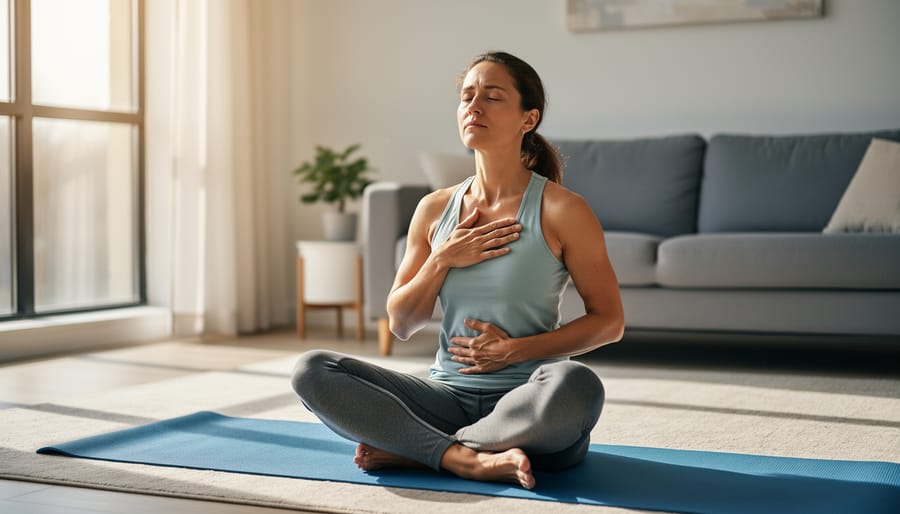
How to Perform 4-7-8 Breathing
The 4-7-8 breathing technique is a simple yet powerful method developed by Dr. Andrew Weil that can help calm your nervous system and prepare your body for sleep. This technique is particularly helpful for people with sleep apnea as it promotes deeper, more controlled breathing patterns before bed.
Here’s how to practice it:
Start by sitting or lying comfortably in bed with your back straight. Place the tip of your tongue against the ridge of tissue behind your upper front teeth and keep it there throughout the exercise.
Exhale completely through your mouth, making a gentle whooshing sound. Close your mouth and inhale quietly through your nose for a count of 4. Hold your breath for a count of 7. Exhale completely through your mouth for a count of 8, making the same whooshing sound.
This completes one cycle. Repeat the sequence three more times for a total of four breath cycles.
Practice this technique twice daily, gradually increasing to eight cycles as you become more comfortable. For best results, perform it just before turning off the lights for sleep.
Why It Helps Sleep Apnea Sufferers
Sleep apnea breathing techniques work by addressing the physical and psychological factors that worsen breathing disruptions during sleep. When you practice controlled breathing exercises regularly, you activate your parasympathetic nervous system, which reduces overall anxiety and stress levels. This calming effect helps prevent the shallow, rapid breathing patterns that can aggravate sleep apnea symptoms.
These relaxation techniques also strengthen the muscles in your throat and airways, reducing the likelihood of airway collapse during sleep. Stronger airway muscles mean your breathing passages stay more open throughout the night, allowing for better oxygen flow. Additionally, breathing exercises improve lung capacity and breathing efficiency, helping your body maintain steadier oxygen levels even if brief disruptions occur. Together, these benefits create a foundation for more restful, uninterrupted sleep and reduced daytime fatigue.
Creating Your Personalized Breathing Practice
Building Your Daily Routine
Integrating breathing techniques into your daily routine doesn’t have to feel overwhelming. Start small by choosing just one exercise to practice each morning, such as diaphragmatic breathing for five minutes while still in bed. This gentle beginning helps establish a habit without adding stress to your schedule.
Once your morning practice feels natural, add a brief session during your lunch break or before dinner. Many Canadians find that practicing buteyko breathing exercises for three to five minutes during work breaks helps reduce stress while supporting better breathing patterns throughout the day.
Evening sessions are particularly valuable for sleep apnea management. Dedicate ten minutes before bed to combining tongue and throat exercises with slow breathing techniques. This targeted timing helps prepare your airways for sleep and can improve breathing during the night.
Remember that consistency matters more than duration. Even two or three minutes of daily practice provides benefits, and you can gradually increase time as the routine becomes comfortable. Keep a simple journal noting which techniques you’ve completed each day to stay motivated and track your progress. Most people notice improvements in their breathing and sleep quality within two to three weeks of regular practice.
Tracking Your Progress
Monitoring your progress helps you stay motivated and notice positive changes as you incorporate breathing techniques into your routine. Start by keeping a simple sleep journal where you record your bedtime, wake time, and how rested you feel each morning using a scale of 1 to 10. Note any nighttime awakenings you remember and your overall energy levels throughout the day.
Pay attention to daytime symptoms that often improve with consistent practice. Do you feel less foggy-headed in the morning? Are you experiencing fewer afternoon energy crashes? These subtle shifts indicate your breathing exercises are making a difference.
Consider asking your sleep partner to observe changes in your snoring patterns or breathing pauses during sleep. Their feedback can provide valuable insights you might not notice yourself.
Track your exercise adherence by marking off completed breathing sessions on a calendar. Consistency matters more than perfection, so aim for at least five days per week to see meaningful improvements.
If you’re working with a healthcare provider, share your observations at follow-up appointments. They may recommend a follow-up sleep study after several months to objectively measure improvements. Remember, breathing techniques work best alongside other treatments your doctor has prescribed, creating a comprehensive approach to managing sleep apnea.
When to Combine Breathing Techniques with Medical Treatment
Breathing techniques can be valuable tools for managing sleep apnea, but they work best when combined with medical treatments rather than replacing them. If you’ve been diagnosed with moderate to severe sleep apnea, your healthcare provider has likely recommended treatments like CPAP therapy, dental appliances, or possibly surgery. These remain essential for your health and safety.
Think of breathing exercises as a complementary approach that enhances your primary treatment. For example, practicing breathing techniques during the day can strengthen your respiratory muscles and improve your overall breathing patterns, which may help you tolerate CPAP therapy more comfortably at night. Many people find that regular breathing practice reduces anxiety about wearing their CPAP mask and helps them adapt more quickly to treatment.
Breathing exercises are particularly helpful for people with mild sleep apnea or upper airway resistance syndrome. In these cases, your doctor might recommend trying breathing techniques alongside lifestyle changes like weight loss and positional therapy before moving to device-based treatments. However, this decision should always be made with medical guidance, preferably after a professional sleep study confirms your diagnosis and severity level.
Never stop using prescribed medical treatments without consulting your healthcare provider first. Sleep apnea can lead to serious health complications including heart disease, stroke, and diabetes when left untreated. While breathing exercises offer genuine benefits, they cannot provide the immediate airway support that CPAP or other devices deliver during sleep.
Talk to your doctor about incorporating breathing techniques into your treatment plan. They can help you understand which exercises are most appropriate for your specific situation and monitor your progress to ensure your sleep apnea remains well-controlled.
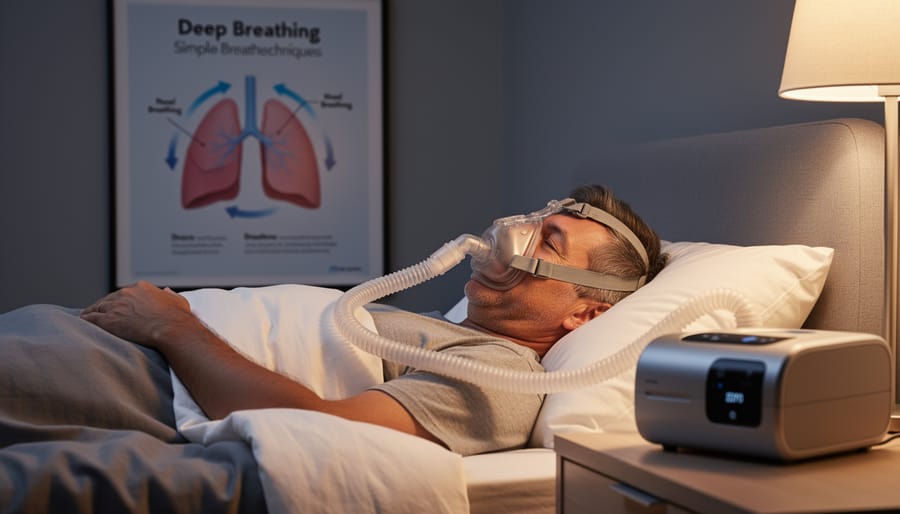
Additional Lifestyle Strategies to Support Your Breathing Practice
While breathing techniques form a powerful foundation for managing sleep apnea, combining them with supportive lifestyle changes can significantly enhance your results. These complementary strategies work together to optimize your airway function and improve sleep quality.
Your sleep position plays a crucial role in breathing during sleep. Sleeping on your side rather than your back helps prevent your tongue and soft tissues from collapsing into your airway. If you’re a back sleeper, try using a body pillow or positional therapy device to encourage side sleeping. Elevating your head by 30 to 60 degrees can also reduce airway obstruction.
Weight management deserves special attention, as excess weight, particularly around the neck and throat, can contribute to airway narrowing. Even modest weight loss of 10 to 15 percent of body weight has been shown to improve sleep apnea symptoms in many individuals. Combining healthy eating habits with regular physical activity supports both weight management and overall respiratory health.
Avoiding alcohol for at least three hours before bedtime is essential. Alcohol relaxes the muscles in your throat, increasing the likelihood of airway collapse during sleep. Similarly, certain sedative medications can have the same effect, so discuss alternatives with your healthcare provider if needed.
Staying properly hydrated throughout the day supports healthy mucous membranes in your airways, making breathing easier. Aim for adequate water intake, but reduce fluid consumption in the evening to minimize nighttime bathroom trips that disrupt sleep.
Finally, establishing consistent sleep hygiene practices creates an environment conducive to quality rest. Maintain a regular sleep schedule, keep your bedroom cool and dark, and create a calming pre-sleep routine. When combined with your breathing exercises, these strategies create a comprehensive approach to managing sleep apnea and improving your overall well-being.
Managing sleep apnea can feel overwhelming, but the breathing techniques outlined in this article offer you powerful, accessible tools you can start using today. These evidence-based exercises require nothing more than a few minutes of your time and the commitment to practice regularly. Whether you’re incorporating diaphragmatic breathing into your morning routine, trying throat exercises while watching television, or practicing the Buteyko method before bed, you’re taking meaningful steps toward better sleep and improved health.
Consistency is key to seeing results. Just as building muscle takes time and regular exercise, strengthening your airway muscles and retraining your breathing patterns requires patience and daily practice. Most people notice improvements within several weeks, though individual results vary. Don’t get discouraged if progress seems slow at first—every practice session contributes to positive change.
It’s important to remember that breathing techniques work best as part of a comprehensive approach to sleep apnea management. They should complement, not replace, treatments recommended by your healthcare provider, such as CPAP therapy or lifestyle modifications. Before starting any new breathing program, especially if you have severe sleep apnea or other health conditions, consult with your doctor or a respiratory therapist who can provide personalized guidance.
You have more control over your sleep apnea symptoms than you might think. By dedicating just a few minutes each day to these breathing exercises, you’re actively investing in better sleep quality, increased energy, and improved overall health. Start small, stay consistent, and celebrate your progress along the way.