
CBD isolate offers several research-supported health benefits, but the strength of evidence varies considerably depending on the condition. The most robust scientific validation exists for reducing certain types of seizures in epilepsy and alleviating inflammation-related pain, while other commonly marketed benefits rest on preliminary or inconclusive research.
If you’re considering CBD isolate, understanding this distinction matters. Unlike full-spectrum products, CBD isolate contains 99% pure cannabidiol with all other cannabis compounds removed. This purity makes it easier for researchers to study CBD’s specific effects, but it also means you won’t benefit from the entourage effect that occurs when multiple cannabinoids work together.
Current peer-reviewed evidence demonstrates that CBD shows genuine promise for managing anxiety, reducing chronic pain, and improving sleep quality in specific contexts. However, many studies to date have used animal models, small sample sizes, or lacked rigorous controls. The difference between “shows potential” and “proven effective” isn’t just semantics when you’re making health decisions.
This article examines each claimed benefit through the lens of available clinical research, clearly distinguishing between strong evidence, emerging findings, and areas where marketing has outpaced science. You’ll find transparency about study limitations, practical guidance on realistic expectations, and evidence-based insights to help determine whether Mellow’s CBD Isolate might address your specific health goals.
Understanding CBD Isolate: The Science Behind the Product

CBD isolate begins with industrial hemp plants rich in cannabidiol. Manufacturers use CO2 or ethanol extraction to pull cannabinoids, terpenes, and other compounds from the plant material. This initial extract contains CBD alongside THC, other cannabinoids, plant waxes, and chlorophyll.
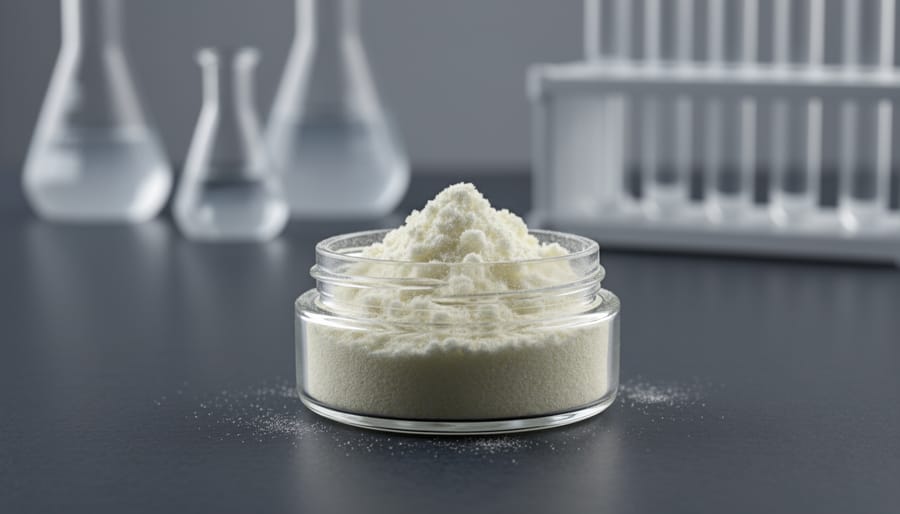
The purification process removes everything except CBD. Through winterization (cold temperatures that separate fats and waxes), filtration, and repeated distillation, processors isolate a single molecule. The final product reaches 99% purity, appearing as a white crystalline powder with no taste or smell. Unlike full-spectrum CBD that retains all plant compounds, or broad-spectrum CBD that keeps everything except THC, isolate contains only cannabidiol.
CBD interacts with your body through the endocannabinoid system, a network of receptors that helps regulate functions like mood, pain sensation, and immune response. While CBD doesn’t bind strongly to CB1 and CB2 receptors like THC does, it influences phytocannabinoid receptor activity through indirect mechanisms. It may prevent the breakdown of your body’s natural endocannabinoids, allowing them to have greater effect. Research also suggests CBD affects serotonin receptors and other systems beyond the endocannabinoid network, which helps explain its range of potential effects on CBD and the brain.
The purity of isolate offers specific advantages. You get precisely measurable doses of a single compound, making it easier to track your intake and adjust as needed. There’s zero THC, eliminating concerns about psychoactive effects or failed drug tests. For people sensitive to other cannabis compounds or who need to avoid THC entirely, isolate provides a straightforward option.
Evidence-Based Health Benefits: What Research Actually Shows
Anxiety and Stress Management
Clinical research on CBD isolate for anxiety shows genuine promise, though the evidence base remains moderate rather than definitive. A 2019 study published in The Permanente Journal examined 72 adults with anxiety and sleep concerns, finding that 79% experienced reduced anxiety scores within the first month using 25-75mg daily doses of CBD. Similar results emerged from Brazilian research testing CBD isolate before public speaking tasks, where participants receiving 300mg showed significantly reduced anxiety compared to placebo groups.
The mechanism appears to involve serotonin receptors in the brain. CBD isolate doesn’t increase serotonin levels directly but may influence how your brain’s chemical receptors respond to existing serotonin, similar to how some antidepressants work. It also interacts with GABA receptors, which help regulate the nervous system’s excitability.
Current evidence supports CBD isolate as a potentially helpful adjunct for general anxiety, but we need larger, longer-term studies before positioning it as a standalone treatment for diagnosed anxiety disorders.
Research gaps matter here. Most studies used single doses before anxiety-inducing situations rather than examining long-term daily use. We lack robust data on specific anxiety disorders like panic disorder or obsessive-compulsive disorder. The dosages showing benefits in research, typically 300-600mg for acute anxiety, far exceed what many commercial products suggest, and we don’t yet understand optimal timing or whether tolerance develops over weeks.
Social anxiety disorder has the strongest research backing, with multiple controlled trials showing benefit. Generalized anxiety disorder shows promise but needs more investigation. For post-traumatic stress disorder, preliminary findings look encouraging, particularly for sleep disturbances and recurring nightmares, but the research remains too limited for confident conclusions.
The takeaway: CBD isolate isn’t unfounded hype for anxiety, but it’s not a proven pharmaceutical-grade treatment either. It occupies a middle ground worth exploring with realistic expectations.
Pain and Inflammation Relief
CBD isolate’s potential for pain relief has attracted significant research attention, though the quality and applicability of findings vary considerably across study types.
Laboratory and animal studies have demonstrated CBD’s anti-inflammatory properties through multiple pathways. In controlled settings, CBD appears to reduce inflammatory markers like cytokines and can inhibit pain signaling in nerve cells. Rodent studies have shown promise for conditions involving neuropathic pain, with CBD reducing pain behaviors when administered at specific doses. However, these findings don’t automatically translate to human outcomes at comparable doses.
Human clinical trials present a more nuanced picture. A 2020 systematic review of CBD studies for chronic pain found that while some participants reported pain reduction, the evidence quality was generally low due to small sample sizes and methodological limitations. Most robust human trials have actually tested full-spectrum CBD products rather than isolate, making it difficult to attribute benefits specifically to pure CBD.
For neuropathic pain specifically, preliminary human data suggests CBD isolate may offer modest relief for some individuals, particularly those with peripheral neuropathy. One small 2020 study found topical CBD reduced sharp pain and cold sensations in patients with peripheral neuropathy, though the sample size was limited to 29 participants.
The challenge with inflammatory conditions is that most compelling anti-inflammatory data comes from animal models. While CBD isolate does show anti-inflammatory activity in human cell studies, translating this to clinical benefit for conditions like arthritis remains under investigation. Current evidence suggests CBD isolate may help manage pain for some people, but it’s unlikely to replace conventional treatments for moderate to severe chronic pain conditions.
Realistic expectations matter: CBD isolate appears most promising as a complementary approach rather than a primary pain management strategy.
Sleep Quality and Insomnia

CBD isolate’s relationship with sleep is more complex than many manufacturers suggest. The research shows mixed results, with outcomes varying significantly based on dosage, timing, and individual factors.
A 2019 retrospective case series involving 72 adults found that anxiety scores decreased within the first month for most patients taking CBD, but sleep scores fluctuated over time. Some participants experienced improved sleep initially, while others saw no sustained benefit. This variability appears throughout the literature and suggests CBD isolate doesn’t work uniformly for sleep issues.
The dosage relationship is particularly nuanced. Lower doses of CBD (around 25-75 mg) sometimes produce alertness rather than sedation, while higher doses (160-600 mg in research settings) show greater potential for promoting sleep. A 2014 review noted this biphasic effect, where CBD can either stimulate or sedate depending on the amount consumed. This contradicts the “more is always better” assumption and explains why some users feel more awake after taking CBD isolate.
Timing matters substantially. Research suggests taking CBD isolate 1-2 hours before bedtime allows for proper absorption and interaction with endocannabinoid receptors involved in sleep-wake cycles. Taking it too close to bedtime or inconsistently appears to reduce effectiveness.
Studies specifically on CBD isolate for insomnia remain limited. Much of the positive sleep research involves full-spectrum products or CBD combined with other cannabinoids, making it difficult to attribute benefits solely to isolated cannabidiol. The absence of terpenes like myrcene and linalool, which have sedative properties in full-spectrum products, may explain why isolate shows less consistent sleep benefits.
For Canadians considering CBD isolate specifically for sleep, the evidence suggests it may help some individuals, particularly those whose insomnia stems from anxiety. However, it shouldn’t be viewed as a reliable sleep aid for everyone, and finding an effective dose requires experimentation within a higher range than typically marketed.
Neuroprotective Properties
Research into CBD isolate’s neuroprotective properties shows promise, though most findings come from laboratory and animal studies rather than human trials. Understanding both the potential and the limitations of current evidence helps set appropriate expectations.
CBD isolate demonstrates antioxidant activity in multiple laboratory studies, potentially protecting neurons from oxidative stress. This mechanism may help reduce cellular damage associated with aging and various neurological conditions. Research published in peer-reviewed journals suggests CBD’s antioxidant capacity exceeds that of vitamins C and E in certain experimental models, though translating these laboratory findings to human health benefits remains uncertain.
Preliminary animal studies indicate CBD isolate may protect against neurodegeneration in models of Alzheimer’s disease, Parkinson’s disease, and multiple sclerosis. These studies show reduced inflammation in brain tissue and improved cellular function. However, animal models don’t perfectly replicate human neurological conditions, and positive results in mice don’t guarantee similar effects in people.
The relationship between CBD brain health research currently sits in an early stage. While laboratory evidence demonstrates CBD isolate can reduce neuroinflammation and promote neuronal survival in controlled settings, clinical trials in humans remain limited. Small-scale studies suggest potential benefits for conditions like epilepsy (where CBD derivatives are now FDA-approved), but evidence for other neurological conditions needs more robust human research.
The neuroprotective properties observed in controlled laboratory environments may not translate directly to therapeutic benefits when consumed orally. Bioavailability, optimal dosing, and long-term effects require further investigation. Current evidence supports continued research rather than definitive therapeutic recommendations. Anyone considering CBD isolate for neurological concerns should consult healthcare providers, as existing treatments remain the evidence-based standard of care while research continues.
The Entourage Effect Debate: Does Isolate Fall Short?
The entourage effect, the theory that cannabinoids, terpenes, and other hemp compounds work synergistically to enhance therapeutic benefits, has sparked significant debate in the scientific community. This hypothesis suggests that CBD isolate, lacking these additional compounds, may be less effective than full-spectrum products.
Research examining this claim has produced mixed results. A 2015 study from the Lautenberg Center for Immunology and Cancer Research found that full-spectrum CBD extract showed superior effectiveness at higher doses compared to isolate in animal models, suggesting potential synergistic activity. However, other studies have demonstrated that CBD isolate can be highly effective on its own, particularly for anxiety and seizure disorders.
The current evidence reveals that the entourage effect may matter more for certain conditions than others. Pain and inflammation studies tend to show greater benefits from full-spectrum products, while anxiety research has found comparable results with isolate. Additionally, individual responses vary considerably, meaning some people may respond better to isolate while others benefit from the entourage effect.
Pros
- CBD isolate contains zero THC, eliminating any risk of psychoactive effects or drug test failures.
- The purified form allows for precise dosing without variables from other compounds.
- Isolate typically has no taste or smell, making it easier to incorporate into various applications.
- Allergy concerns are minimized since terpenes and other plant compounds are removed.
Cons
- Some research suggests isolate may have a narrower therapeutic window than full-spectrum products.
- The potential synergistic benefits of cannabinoids and terpenes working together are lost.
- Higher doses may be needed to achieve similar effects compared to full-spectrum options.
- Isolate may be less effective for pain and inflammation according to preliminary studies.
The practical reality is that neither form is universally superior. CBD isolate remains an excellent choice for those who need guaranteed THC-free products, prefer precise dosing, or have sensitivities to other hemp compounds. The scientific debate continues, but current evidence suggests both forms have legitimate applications depending on individual needs and health goals.
What the Evidence Doesn’t Support (Yet)
Despite CBD isolate’s legitimate benefits, several popular claims remain unsubstantiated by rigorous scientific research. Understanding these gaps helps you navigate marketing hype and set realistic expectations.
Cancer Treatment and Prevention
While laboratory studies show CBD can inhibit cancer cell growth in petri dishes, we lack human clinical trial data demonstrating that CBD isolate treats or prevents cancer in actual patients. The biological mechanisms observed in isolated cells don’t necessarily translate to complex human systems. Any cancer-related health decisions should involve your oncology team, not CBD products marketed with vague “may support” language.
Weight Loss and Metabolism
Claims that CBD isolate promotes weight loss appear frequently in wellness marketing, yet peer-reviewed evidence doesn’t support this application. Some animal studies suggest CBD might affect metabolism and fat browning, but these findings haven’t been replicated in controlled human trials with measurable outcomes.
Addiction Treatment
Early research hints at CBD’s potential role in reducing drug cravings, particularly for opioids and tobacco. However, the studies remain small and preliminary. CBD isolate shouldn’t replace evidence-based addiction treatment programs or medications proven effective through extensive clinical testing.
Skin Conditions
Despite abundant topical CBD products claiming to treat eczema, psoriasis, or acne, research specifically examining CBD isolate for dermatological conditions remains sparse and inconclusive. The existing studies often use full-spectrum formulations or focus on CBD’s anti-inflammatory properties without establishing clinical efficacy for specific skin disorders.
Practical Considerations for Canadian Users
Navigating CBD isolate in Canada requires understanding both the regulatory landscape and practical safety considerations. Health Canada regulates CBD products differently depending on whether they’re sold as natural health products, cannabis products, or cosmetics, which affects where you can legally purchase them and what quality standards apply.
Dosing: Start Low and Go Slow
Research studies have used CBD isolate doses ranging from 10mg to 600mg daily, but most therapeutic effects in clinical trials appear at 300-600mg for anxiety and 150-300mg for sleep. However, individual responses vary significantly. Begin with 10-20mg daily and gradually increase every few days while monitoring effects. Keep a simple log noting dose, timing, and any changes you observe.
Quality Markers That Matter
Look for products that provide third-party lab certificates of analysis (COAs) confirming cannabinoid content and testing for contaminants like heavy metals, pesticides, and residual solvents. Licensed producers under Health Canada’s oversight undergo stricter testing requirements than hemp-derived products sold as natural health products. The product label should clearly state CBD content per serving and include a natural product number (NPN) or drug identification number (DIN) when applicable.
When to Seek Professional Guidance
Consult a healthcare provider before using CBD isolate if you’re pregnant, breastfeeding, taking prescription medications, or managing serious health conditions. While CBD isolate is generally well-tolerated, professional guidance helps ensure safe integration with your existing treatment plan and realistic expectations based on your specific situation.

CBD isolate shows legitimate promise for specific health applications, particularly anxiety management, certain types of pain, and sleep difficulties. The research base, while growing, remains limited compared to the enthusiasm surrounding these products. Clinical studies demonstrate real potential, but they also reveal modest effect sizes and significant individual variation in response.
The evidence tells us that CBD isolate works for some people, in some situations, at specific doses. It doesn’t work equally well for everyone, and it certainly isn’t the miracle supplement that marketing campaigns suggest. The strongest research supports its use for anxiety-related conditions, with moderate evidence for pain and inflammation relief.
Before starting CBD isolate, consider CBD safety in the context of your personal health situation. This matters especially if you take medications, since interactions can occur. Questions about CBD and liver health deserve attention if you have existing liver conditions or take medications metabolized by the liver. Minor effects like CBD dry mouth affect many users but rarely cause significant problems.
Work with your healthcare provider to determine whether CBD isolate makes sense for your specific concerns. Start with the lowest effective dose, give it adequate time to work, and track your response honestly. Base your decision on science and your individual experience, not on testimonials or exaggerated marketing claims.