

Weighted blankets can significantly improve sleep quality for many people, with research showing they reduce anxiety and increase serotonin production to help you fall asleep faster and stay asleep longer. These therapeutic blankets, typically weighing between 15 to 25 pounds, use deep pressure stimulation to create a calming effect similar to a gentle hug, which triggers your body’s relaxation response.
The science is compelling: a 2020 study found that 78% of participants preferred weighted blankets for achieving more restful sleep, while other research demonstrates measurable decreases in cortisol levels and increases in melatonin when using them regularly. The gentle, distributed pressure activates your parasympathetic nervous system, reducing heart rate and promoting the calm state necessary for quality rest.
However, weighted blankets aren’t a universal solution. They work best for people experiencing stress-related sleep issues, anxiety, or restlessness rather than sleep problems caused by sleep apnea or other medical conditions. Success depends on choosing the right weight (generally 10% of your body weight), using proper materials for temperature regulation, and giving your body two to four weeks to adjust to the sensation before evaluating results.
What Are Weighted Blankets and How Do They Work?
Weighted blankets are therapeutic blankets filled with materials like glass beads or plastic pellets that make them heavier than standard bedding. They typically weigh between 5 and 30 pounds, with experts recommending you choose one that’s approximately 10% of your body weight, plus or minus a pound or two. For example, if you weigh 150 pounds, a 15-pound blanket would be ideal.
The science behind weighted blankets centers on a concept called deep pressure stimulation, sometimes referred to as deep touch pressure. This gentle, distributed pressure across your body mimics the sensation of being hugged or held, which can have profound calming effects on your nervous system.
When you use a weighted blanket, the pressure activates your body’s parasympathetic nervous system, which is responsible for rest and relaxation. This activation triggers several beneficial responses. Your body increases production of serotonin, a neurotransmitter that promotes feelings of calm and well-being. It also boosts melatonin, the hormone that regulates your sleep-wake cycle. At the same time, the pressure helps reduce cortisol, your body’s primary stress hormone.
Think of it as similar to swaddling a baby. The even, gentle pressure provides a sense of security and groundedness that many people find naturally soothing. The weight is distributed evenly across the blanket through small pockets that contain the filling material, ensuring consistent pressure from head to toe.
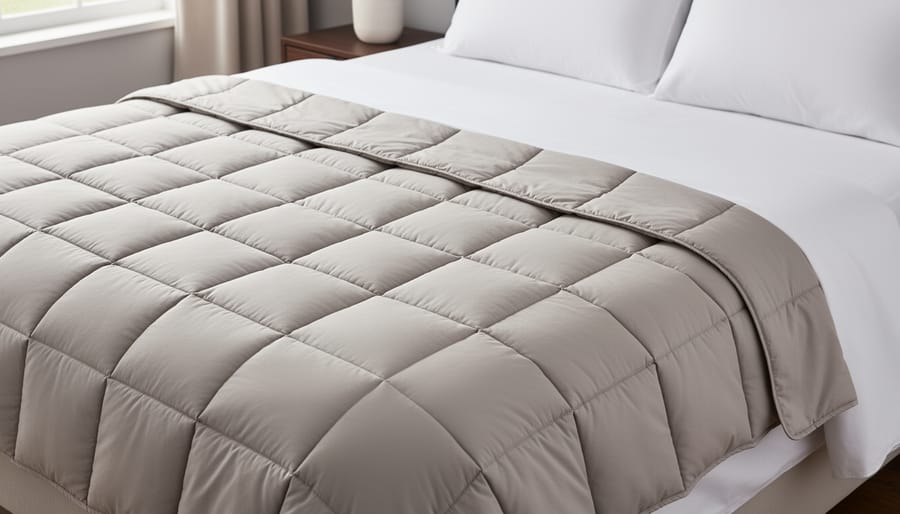
Modern weighted blankets come in various materials and constructions. Glass beads are popular because they’re smaller and create a thinner, more flexible blanket, while plastic pellets are a more budget-friendly option. The outer covering is usually removable and washable, making maintenance straightforward for everyday use.
The Science Behind Weighted Blankets and Sleep
Deep Pressure Stimulation and Your Nervous System
Weighted blankets work through a therapeutic technique called deep pressure stimulation (DPS), which mimics the calming effect of a firm hug or gentle massage. When evenly distributed weight presses against your body, it activates pressure receptors in your skin that send signals to your brain, triggering a shift in your nervous system’s activity.
This gentle, consistent pressure helps activate your parasympathetic nervous system, often called the “rest and digest” system. At the same time, it reduces activity in your sympathetic nervous system, which controls your fight-or-flight response. This shift creates a cascade of positive effects: your heart rate slows, your breathing becomes deeper and more rhythmic, and your muscles begin to relax.
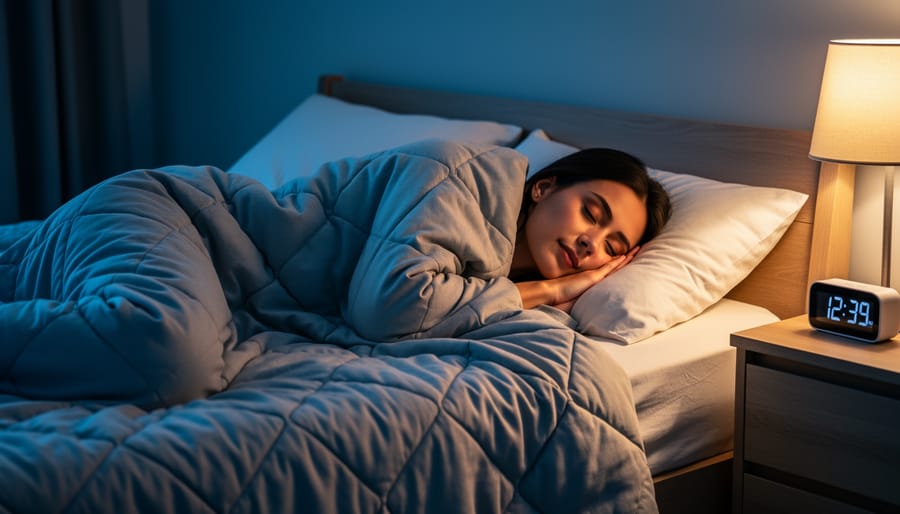
Research shows that this process can also increase serotonin and melatonin production while decreasing cortisol, the stress hormone. These chemical changes help explain why many people report feeling calmer and more relaxed under a weighted blanket. The effect is similar to swaddling an infant, providing a sense of security and comfort that naturally prepares your body for rest. This natural relaxation response makes weighted blankets particularly helpful for those whose racing thoughts or heightened anxiety prevent them from winding down at bedtime.
What the Research Shows
Research on weighted blankets and sleep has produced encouraging results. A 2020 study published in the Journal of Clinical Sleep Medicine found that participants using weighted blankets experienced better sleep quality and felt more refreshed in the morning. The study showed reduced movement during sleep and increased feelings of calmness.
A Swedish study involving adults with insomnia discovered that 59% of participants reported improved sleep quality when using weighted blankets, compared to control groups. Additionally, many participants fell asleep faster and experienced fewer nighttime awakenings.
Research from 2015 examining adults with chronic insomnia found that weighted blankets helped participants feel more settled at bedtime and improved their overall sleep experience. The gentle pressure appeared to reduce anxiety levels before sleep, creating better conditions for rest.
However, it’s important to note that individual results vary considerably. While many studies show positive outcomes, weighted blankets don’t work for everyone. The research suggests they’re most effective for people dealing with anxiety-related sleep difficulties or those who respond well to deep pressure stimulation. More large-scale studies are needed to fully understand which individuals benefit most from this sleep aid.
Who Benefits Most from Weighted Blankets?
Anxiety and Stress-Related Sleep Issues
If you struggle with racing thoughts or anxiety at bedtime, a weighted blanket may offer relief. Research shows that the gentle, even pressure from weighted blankets can reduce cortisol (your stress hormone) while increasing serotonin and melatonin, the hormones that promote relaxation and sleep.
Clinical studies have found that individuals with anxiety who used weighted blankets reported calmer nights and improved sleep quality. The deep pressure stimulation mimics a therapeutic technique called “grounding,” which helps your nervous system shift from an alert state to a more restful one.
For many Canadians dealing with work stress or general anxiety, this means fewer hours spent worrying and more time actually sleeping. The blanket’s weight provides a sense of security that can quiet your mind and ease the physical tension that often accompanies anxious thoughts. While weighted blankets aren’t a cure for anxiety disorders, they can be a practical, drug-free tool in your sleep wellness routine, particularly when combined with other healthy sleep habits.
Insomnia and Restless Sleep
Research shows weighted blankets can effectively reduce the time it takes to fall asleep and improve overall sleep duration. A 2020 study published in the Journal of Clinical Sleep Medicine found that participants using weighted blankets experienced significantly reduced movement during the night and reported feeling more refreshed in the morning. The gentle pressure helps calm the nervous system, making it easier to transition into sleep and maintain deeper sleep cycles throughout the night.
For those struggling with sleep quality issues, weighted blankets may offer a drug-free solution. Evidence suggests they’re particularly helpful for people who toss and turn frequently or wake multiple times during the night. The consistent pressure creates a secure feeling that can prevent restless movements and promote uninterrupted rest, allowing your body to complete essential sleep cycles needed for physical and mental recovery.
ADHD and Sensory Processing Concerns
For individuals with ADHD or sensory processing differences, falling asleep can be particularly challenging due to heightened sensitivity to sensory input or difficulty calming an overactive mind. Weighted blankets provide deep pressure stimulation, which can help regulate the nervous system and create a sense of security and calm.
Research suggests that deep pressure touch can increase serotonin and melatonin production while reducing cortisol levels, helping those with sensory needs transition more smoothly into sleep. Many people with ADHD report that the gentle, consistent pressure helps quiet racing thoughts and reduces nighttime restlessness.
The key is finding the right weight, typically 10% of body weight, to provide enough pressure without feeling restrictive. Start by using the blanket for short periods during relaxation time to gauge comfort levels before committing to overnight use. If your child has sensory concerns, consult with an occupational therapist to ensure weighted blankets are appropriate for their specific needs and to get personalized guidance on implementation.
General Sleep Quality Improvement
Even without specific sleep disorders, many Canadians experience restless nights or difficulty falling asleep. Research shows weighted blankets can benefit general sleep quality by promoting relaxation and reducing nighttime movement. The gentle pressure helps calm your nervous system, making it easier to transition into deeper sleep stages. Studies indicate users often report feeling more rested upon waking and experience fewer sleep disruptions throughout the night. For everyday sleepers looking to enhance their rest naturally, weighted blankets offer a practical, non-medication approach worth considering alongside other healthy sleep habits like maintaining consistent bedtimes and creating a comfortable sleep environment.
Choosing the Right Weighted Blanket for Better Sleep
Getting the Weight Right
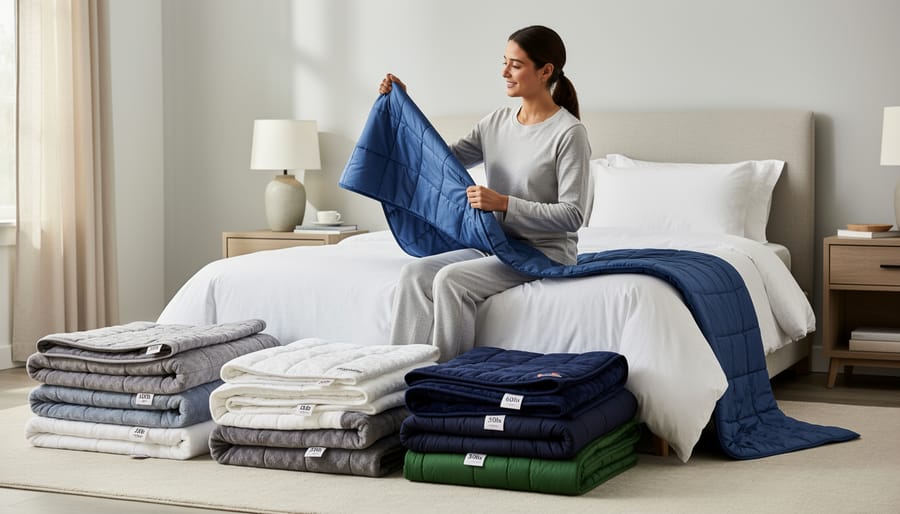
Choosing the right weight is essential for comfort and effectiveness. Sleep experts generally recommend selecting a blanket that weighs approximately 10% of your body weight. For example, if you weigh 150 pounds, a 15-pound blanket would be appropriate. If you’re between sizes, consider starting with the lighter option, especially if you’re new to weighted blankets.
However, this isn’t a strict rule. Personal preference plays an important role. Some people find slightly lighter blankets more comfortable, while others prefer a bit more pressure. Many manufacturers offer weight ranges to help you decide.
Safety considerations are important. Children under two should never use weighted blankets due to suffocation risks. For older children, consult with a healthcare provider and choose a blanket they can remove independently. Adults with respiratory conditions, circulatory issues, or certain physical limitations should also seek medical advice before use. The blanket should feel comforting, not restrictive or difficult to move under.
Material and Temperature Considerations
Selecting the right weighted blanket material matters significantly for Canadian sleepers, especially given our distinct seasonal temperature swings. Since weighted blankets naturally generate warmth through compression and body temperature and sleep are closely connected, choosing breathable fabrics becomes essential for year-round comfort.
For warmer months or hot sleepers, look for cooling materials like cotton, bamboo, or moisture-wicking fabrics that promote airflow and prevent overheating. These options help regulate temperature while still providing the calming pressure benefits. Winter users or those who tend to feel cold may prefer minky, fleece, or flannel covers that add extra warmth alongside the weighted comfort.
Many Canadian retailers now offer dual-sided blankets with cooling fabric on one side and warming material on the other, providing flexibility across seasons. Consider starting with a breathable cotton option and adding seasonal covers as needed. Glass bead filling typically distributes more evenly and stays cooler than plastic pellets, making it another practical consideration for temperature management.
Size and Coverage
Choosing the right size weighted blanket significantly impacts your sleep quality. Most experts recommend selecting a blanket based on your body weight rather than your bed size. The blanket should cover your body from chin to toes without hanging over the mattress edges, as excess fabric can pull the blanket off during sleep.
For optimal results, look for a blanket that’s slightly smaller than your mattress size. A queen-sized bed works well with a blanket measuring approximately 48 by 72 inches, which covers one person comfortably. If you’re sharing a bed, consider individual blankets rather than one large one, since weight preferences vary between partners.
This targeted coverage ensures the weight distributes evenly across your body, maximizing the deep pressure stimulation that promotes relaxation. A properly sized blanket stays in place throughout the night, maintaining consistent contact with your body for better sleep quality.
What to Expect When You Start Using a Weighted Blanket
Starting with a weighted blanket requires patience and realistic expectations. Most people don’t experience dramatic sleep improvements on the first night, and that’s completely normal. Your body needs time to adjust to the new sensation and weight distribution.
During the first few nights, you might notice the blanket feels heavier than expected or slightly restrictive. This adjustment period typically lasts three to seven days as your nervous system adapts to the deep pressure stimulation. Some people feel more relaxed immediately, while others need up to two weeks to notice meaningful sleep improvements.
To ease the transition, start by using your weighted blanket for short periods during the day while reading or watching television. This helps your body become familiar with the sensation before committing to a full night’s sleep. You can also begin by draping it over your legs or midsection rather than your entire body.
If the blanket feels too warm initially, consider using lighter bedding underneath or choosing a breathable cover material. Many Canadians find seasonal adjustments helpful, switching to cooling fabrics during summer months.
Track your sleep quality over several weeks rather than judging effectiveness after just a few nights. Notice changes in how quickly you fall asleep, whether you wake during the night, and how refreshed you feel in the morning. Remember that weighted blankets work alongside other healthy sleep habits like maintaining consistent bedtime routines and creating a comfortable sleep environment.
Be patient with yourself during this adjustment period. Individual responses vary, and finding the right approach may take some experimentation.
Safety Considerations and When to Avoid Weighted Blankets
While weighted blankets are generally safe for most adults, certain groups should exercise caution or avoid them entirely. Young children under age 2 should never use weighted blankets due to suffocation risk. For children aged 2-10, consult your pediatrician first and ensure the blanket weighs no more than 10% of their body weight.
If you have respiratory conditions like asthma, COPD, or sleep apnea, speak with your healthcare provider before use, as the added weight may affect breathing comfort. Similarly, individuals with circulatory issues, diabetes-related nerve damage, or mobility limitations should seek medical advice, since restricted movement under weight could pose concerns.
People with claustrophobia or sensory processing disorders may find weighted blankets uncomfortable rather than calming. Those recovering from surgery or managing chronic pain should also consult their doctor to ensure a weighted blanket won’t interfere with healing or movement.
Pregnant individuals should discuss use with their healthcare provider, particularly during later trimesters when positioning and comfort become more challenging.
If you can easily remove the blanket yourself and don’t have any of these conditions, weighted blankets are likely safe to try. However, discontinue use if you experience discomfort, difficulty breathing, or increased anxiety.
Beyond the Blanket: Other Sleep Hygiene Tips
While weighted blankets can be a valuable sleep aid, they work best as part of a comprehensive approach to better rest. Think of your weighted blanket as one piece of a larger sleep wellness puzzle.
Creating an optimal sleep environment goes beyond your bedding choice. Sleep environment optimization includes maintaining a cool room temperature between 15-19°C, which research shows promotes deeper sleep. Darkness matters too—even small amounts of light can disrupt your natural sleep-wake cycle.
Establishing a consistent sleep schedule strengthens your body’s internal clock. Try going to bed and waking up at the same time daily, even on weekends. This regularity can significantly improve sleep quality when combined with your weighted blanket.
Consider other sleep hygiene factors that complement weighted blanket use. Limit screen time at least one hour before bed, as blue light interferes with melatonin production. Avoid caffeine after 2 PM and heavy meals close to bedtime.
Regular physical activity during the day can enhance the calming effects of your weighted blanket at night. Just avoid vigorous exercise within three hours of bedtime.
Remember, improving sleep often requires patience and experimentation. If you’ve addressed these fundamental sleep hygiene practices and still struggle with rest, consider consulting a healthcare provider to rule out underlying sleep disorders.
The evidence shows that weighted blankets can be an effective tool for improving sleep quality, particularly for people experiencing anxiety, insomnia, or stress-related sleep difficulties. Research indicates they promote relaxation through deep pressure stimulation, which may increase calming neurotransmitters and help you fall asleep faster and stay asleep longer.
That said, weighted blankets aren’t a miracle cure. They work best as part of a broader approach to sleep health that includes consistent sleep schedules, a comfortable sleep environment, and healthy daytime habits. Results vary from person to person, and some individuals may not notice significant changes.
If you’re struggling with sleep, a weighted blanket is worth trying with realistic expectations. Choose one that’s roughly 10 percent of your body weight, give yourself at least two weeks to adjust, and pay attention to how your body responds.
Taking steps to improve your sleep is an investment in your overall health and wellbeing. Whether a weighted blanket becomes your go-to sleep aid or simply one part of your sleep routine, you’re actively prioritizing rest and recovery. That proactive approach to your sleep health matters, and small changes can lead to meaningful improvements over time.