
Align your training intensity with your menstrual cycle by scheduling high-intensity workouts and strength training during days 1-14 when estrogen levels rise and energy peaks. Track your cycle for three months using a simple calendar or app, noting energy levels, recovery time, and workout performance to identify your personal patterns. Shift to moderate cardio, yoga, and technique-focused sessions during days 15-28 when progesterone dominates and your body naturally requires more recovery time.
Periodization based on your menstrual cycle works because hormonal fluctuations directly affect muscle recovery, energy availability, and injury risk throughout the month. Research shows that estrogen, which rises in the follicular phase, enhances muscle protein synthesis and increases pain tolerance, making this your optimal window for pushing physical limits. Conversely, the luteal phase brings elevated progesterone and body temperature, slowing recovery and increasing ligament laxity, which means your body needs gentler movement and longer rest periods.
This evidence-based approach moves beyond generic monthly training plans by respecting your body’s natural rhythms rather than fighting against them. You’ll reduce injury risk, minimize burnout, and actually see better strength and endurance gains by working with your hormones instead of ignoring them. Whether you’re training for competition or simply want consistent fitness progress, cycle-based periodization offers a sustainable, scientifically-supported framework that honors what your body can realistically achieve at different times of the month.
Understanding Your Menstrual Cycle’s Impact on Performance
The Four Phases: What’s Happening in Your Body
Your menstrual cycle is more than just your period. It’s a monthly rhythm involving powerful hormonal shifts that affect everything from your energy levels to your muscle recovery. Understanding these changes can help you work with your body rather than against it.
The cycle typically lasts 28 days, though anywhere from 21 to 35 days is normal. It’s divided into four distinct phases, each with its own hormonal profile.
The menstrual phase (days 1-5) begins on the first day of your period. Estrogen, progesterone, and testosterone are all at their lowest levels right now. You might feel tired and less motivated, but these low hormone levels actually create a neutral training environment. Many women find they can handle workouts better than expected during this time, especially once the initial cramping subsides.
The follicular phase (days 1-14) overlaps with menstruation and extends until ovulation. As your period ends, estrogen begins to rise steadily. This hormone boost increases your pain tolerance, improves your mood, and enhances your body’s ability to build muscle. You’ll likely notice growing energy and motivation as this phase progresses. Testosterone also rises slightly, contributing to strength gains.
The ovulation phase (around day 14) is brief but powerful. Estrogen peaks just before you release an egg, and testosterone surges. This is often when you feel strongest and most energetic. Your body is primed for high-intensity efforts and personal records.
The luteal phase (days 15-28) follows ovulation. Progesterone takes center stage and rises significantly while estrogen increases modestly then drops. This combination can increase your core body temperature, elevate your resting heart rate, and make intense exercise feel harder. You may experience fatigue, mood changes, and increased hunger as your period approaches.
How Hormones Influence Your Training Response
Your hormonal landscape shifts throughout your menstrual cycle, creating unique windows of opportunity for different types of training. Understanding these patterns can help you work with your body rather than against it.
During the follicular phase, rising estrogen levels enhance your body’s ability to build lean muscle mass and improve exercise performance. Estrogen supports the muscle building process by promoting protein synthesis and helping your muscles recover more efficiently. You’ll likely notice better coordination, higher pain tolerance, and increased energy availability during this time, making it ideal for strength training and skill development.
As ovulation approaches, testosterone peaks alongside estrogen, creating optimal conditions for power and strength gains. Your body is primed for high-intensity work, and your muscles respond particularly well to challenging loads.
The luteal phase brings elevated progesterone, which can increase your body temperature and metabolic rate while making carbohydrates less efficient as fuel. This shift means your body burns more fat for energy but may also experience reduced insulin sensitivity and slower recovery times. Progesterone’s calming effects can decrease your pain tolerance and power output, suggesting a natural time to reduce training intensity and prioritize recovery activities.
Matching Your Training to Your Cycle Phases
Menstrual Phase (Days 1-5): Recovery and Gentle Movement
The menstrual phase marks the beginning of your cycle and often coincides with lower energy levels as hormone levels drop. During these first few days, your body is working through a natural process that requires additional energy and resources, so it’s important to adjust your training expectations accordingly.
This is an ideal time to prioritize recovery strategies and gentler forms of movement. Consider focusing on walking, easy cycling, swimming at a comfortable pace, or restorative yoga. These activities support blood flow and can help reduce cramping while keeping you active without overtaxing your system.
Flexibility and mobility work are particularly beneficial during this phase. Gentle stretching, foam rolling, and light Pilates can help ease tension and maintain your range of motion. If you experience significant cramping or fatigue, reducing workout intensity or even taking a rest day is completely appropriate and won’t derail your fitness progress.
Listen to your body closely during these days. Some women feel capable of maintaining regular workouts, while others benefit from scaling back significantly. Both responses are normal and valid. If you choose to strength train, consider reducing weights by 20-30 percent and focusing on technique rather than pushing for personal records.
The key is maintaining movement in a way that feels supportive rather than depleting. This approach helps you stay consistent with your fitness routine while respecting your body’s natural rhythms, setting a positive foundation for the higher-intensity training phases ahead.
Follicular Phase (Days 6-14): Your Power Window
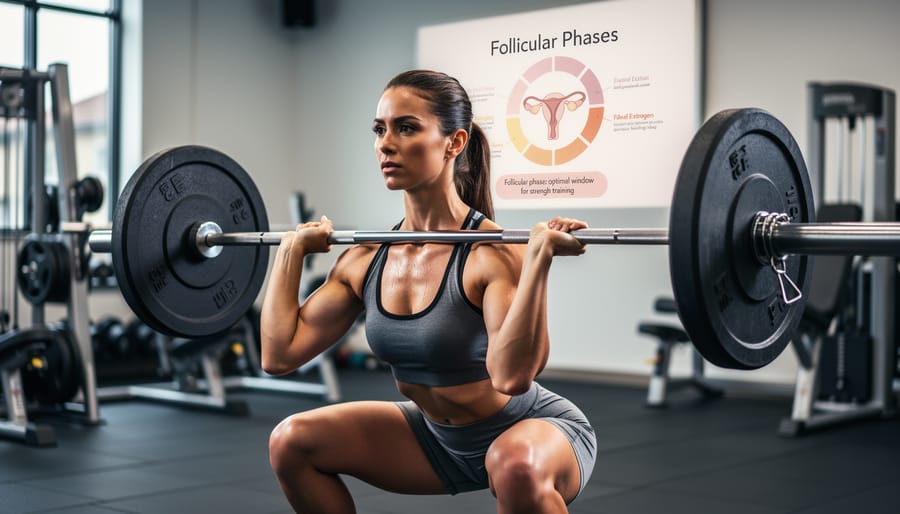
The follicular phase is your body’s natural performance peak. As estrogen levels steadily rise from day 6 through day 14, you’ll likely notice increased energy, faster recovery, and better pain tolerance. This is the ideal time to push your limits and see real gains.
During this phase, your body responds exceptionally well to challenging workouts. Focus on strength training fundamentals with progressive overload, meaning gradually increasing the weight, reps, or intensity of your exercises. Research shows that muscle protein synthesis peaks during this window, making it perfect for building strength and power.
Your workout priorities should include heavy compound movements like squats, deadlifts, and bench presses. Aim for 3-5 sets of 4-8 reps with heavier weights. This is also an excellent time for high-intensity interval training, plyometrics, and learning new skills or complex movement patterns, as cognitive function and coordination are enhanced.
Consider scheduling your most demanding training sessions during days 10-14 when estrogen peaks. If you’re training for a competition or attempting personal records, this is your strategic advantage. Your body can handle higher training volumes, so don’t be afraid to add an extra set or increase your workout frequency.
Recovery is typically faster during this phase, but don’t skip rest days entirely. Focus on adequate protein intake (1.6-2.2 grams per kilogram of body weight) to support muscle growth. Stay well-hydrated and ensure you’re getting 7-9 hours of quality sleep to maximize your body’s adaptive response to training.
Ovulation (Days 14-16): Peak Performance Time
This brief 2-3 day window represents your physiological peak. Estrogen reaches its highest levels just before ovulation, creating optimal conditions for strength, power, and coordination. Research shows that during this phase, pain tolerance increases, reaction times improve, and muscle recovery accelerates. Many female athletes report feeling strongest and most energized during these days, making it the ideal time to push your limits.
Consider scheduling your most challenging workouts during ovulation. This is an excellent opportunity to attempt personal records in weightlifting, tackle high-intensity interval training, or complete that difficult workout you’ve been postponing. Your body’s enhanced neuromuscular coordination means complex movements and technical skills often feel more natural. If you’re training for competition, planning peak training sessions during this window can yield impressive results.
However, this phase requires thoughtful precautions. The same hormones that boost performance also increase joint laxity, particularly in the knees and ankles. This temporarily elevates your risk of ligament injuries, especially ACL tears. Prioritize thorough warm-ups lasting at least 15 minutes, incorporate dynamic stretching, and pay extra attention to proper form during explosive movements like jumping or cutting.
Stay well-hydrated and ensure adequate recovery between intense sessions. While you might feel invincible, your body still needs appropriate rest. Listen to fatigue signals and avoid overtraining, even when energy levels feel unlimited.
If you’re tracking ovulation through basal body temperature or ovulation predictor kits, you can precisely time your hardest workouts. Otherwise, noting patterns in your training journal over several cycles helps identify your personal peak performance window for future planning.
Luteal Phase (Days 17-28): Endurance and Adaptation
As progesterone levels rise during the luteal phase, many women notice changes in how their bodies respond to exercise. This is completely normal and understanding these shifts can help you adjust your training expectations rather than pushing through unnecessarily.
During this phase, your body temperature increases slightly, which can make workouts feel harder than usual even at the same intensity. You may also experience increased fatigue, fluid retention, and mood fluctuations. Research shows that women often have a higher resting heart rate during this time, meaning your cardiovascular system is already working a bit harder at rest.
Focus on steady-state cardio activities like brisk walking, cycling, or swimming at a moderate pace. These lower-intensity sessions can help maintain your fitness without overtaxing your system when energy naturally dips. If you enjoy running, stick to comfortable paces rather than attempting speed work.
For strength training, shift toward maintenance rather than progression. You can keep your regular routine but consider reducing the weight slightly or cutting back on total volume. Listen to your body and don’t feel discouraged if you need lighter loads. This isn’t a setback; it’s smart adaptation to your physiology.
Practical tips for managing this phase include prioritizing quality sleep, staying well-hydrated to counter fluid retention, and incorporating gentle stretching or yoga for stress relief. If premenstrual symptoms significantly impact your training, consider tracking patterns over several cycles to identify your personal trends. Some women feel perfectly fine during this phase, while others need more recovery time. Both experiences are valid, and adjusting your approach based on how you feel demonstrates training wisdom, not weakness.
Creating Your Personalized Cycle-Based Training Plan
Tracking Your Cycle and Symptoms
Understanding your unique cycle patterns is essential for effective training periodization. The key is consistent tracking that helps you identify when you feel strongest and when you might need to adjust your workouts.
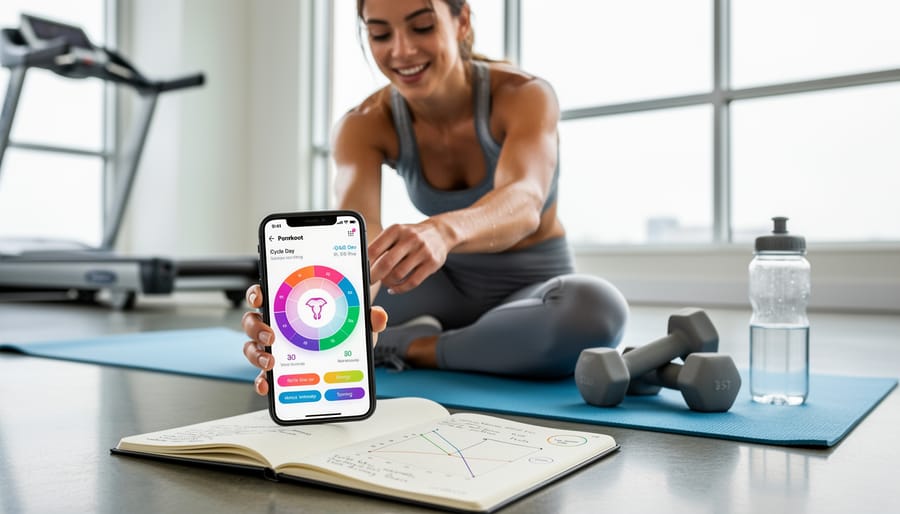
Start by tracking the first day of your period each month, then monitor how you feel throughout the cycle. Pay attention to energy levels, mood, sleep quality, strength, and endurance during workouts. Note any symptoms like cramping, bloating, or headaches. Over three to four months, patterns typically emerge that can guide your training decisions.
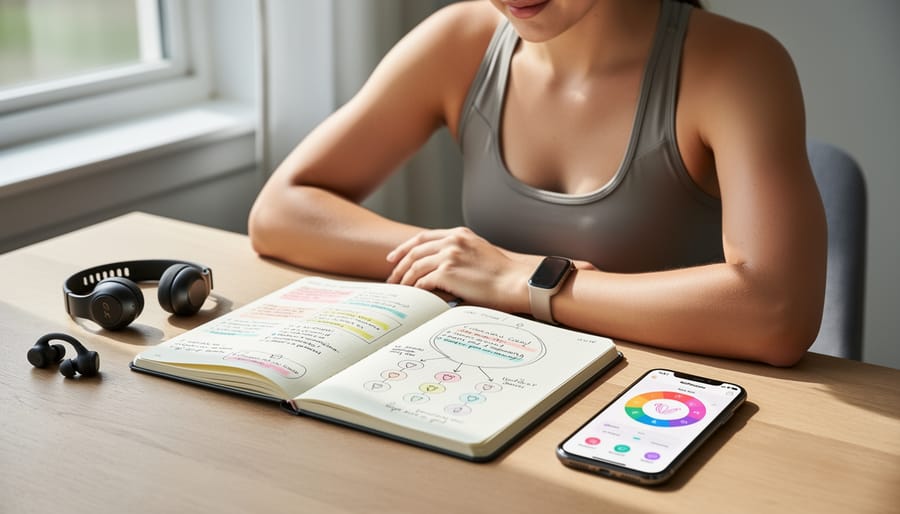
Several excellent apps make cycle tracking simple. Flo, Clue, and MyFitnessPal allow you to log both menstrual data and workout performance in one place. For athletes, apps like Wild.AI specifically sync cycle phases with training recommendations. If you prefer low-tech options, a simple calendar or journal works just as well. Create a basic chart with four columns representing your cycle phases and note daily energy ratings and workout quality.
Record specific performance metrics too. Track weights lifted, running pace, recovery time, and how challenging workouts feel on a scale of one to ten. Compare these numbers across different cycle phases to discover your personal performance patterns. Remember that everyone’s cycle is different, so your optimal training schedule may look different from general recommendations. The goal is understanding your body’s unique rhythm and working with it rather than against it.
Adapting Different Training Styles to Your Cycle
Cycle periodization can be adapted to virtually any training style, making it a versatile approach regardless of your fitness goals. The key is understanding how to modify intensity and volume across your menstrual phases while respecting the unique demands of your chosen activity.
For strength training, take advantage of your follicular phase’s higher strength potential by scheduling heavy compound lifts like squats, deadlifts, and bench presses during this time. You might perform 4-5 sets of 3-5 repetitions at 80-90% of your maximum. As you enter the luteal phase, shift toward moderate weights with higher repetitions (3-4 sets of 8-12 reps) and incorporate more accessory work targeting stabilizing muscles.
Endurance athletes can similarly align their training cycles. Schedule your longest runs, bike rides, or swims during the follicular phase when your body efficiently utilizes carbohydrates for fuel. During menstruation, reduce volume by 20-30% but maintain some intensity with shorter interval sessions. The luteal phase suits steady-state cardio and tempo workouts rather than peak performance attempts.
CrossFit enthusiasts can modify WODs (workouts of the day) by choosing skill-focused sessions during menstruation, tackling benchmark workouts during the follicular phase, and emphasizing technique refinement during the luteal phase. Listen to your body’s signals about when to scale weights or reduce rounds.
For yoga practitioners, align your practice style with your cycle. Flow through dynamic vinyasa sequences during your follicular phase, then transition to restorative or yin yoga during menstruation and the luteal phase when relaxation supports hormonal balance.
Recreational fitness participants might simply alternate between more challenging group fitness classes during the follicular phase and gentler activities like walking or swimming during other phases.
When to Adjust or Override the Plan
While cycle-based training provides structure, flexibility is essential for optimal results. Listen to your body’s signals rather than rigidly following a predetermined plan. If you’re experiencing unusual fatigue, persistent pain, or irregular cycles, it’s appropriate to adjust your training intensity regardless of where you are in your cycle.
Competition schedules often require you to override typical periodization patterns. When preparing for important events, prioritize your specific training goals and performance timeline. Your body’s preparation for competition takes precedence over matching workouts to menstrual phases.
Individual variation matters significantly. Some women experience minimal cycle-related symptoms, while others face considerable challenges during certain phases. Track your personal patterns over several months to identify reliable trends before making major training adjustments. If planned high-intensity sessions consistently feel unsustainable during specific cycle phases, modify your approach rather than pushing through discomfort that could lead to injury or burnout.
Consider adjusting your plan when life stressors increase, sleep quality decreases, or nutrition is compromised. These factors impact performance independently of your menstrual cycle. The goal is sustainable progress, so if your current approach isn’t helping you overcome training plateaus or maintain consistent energy, reassess and modify accordingly. Working with qualified coaches or healthcare providers can help you make informed decisions about when flexibility serves your long-term fitness goals.
Special Considerations and Common Situations
Training With Irregular Cycles or Hormonal Birth Control
Not everyone experiences a regular 28-day cycle, and that’s perfectly normal. If you have PCOS, irregular periods, or use hormonal birth control, you can still benefit from periodization principles with some adjustments.
For those with irregular cycles or PCOS, tracking becomes even more important. Focus on symptoms rather than calendar dates. Monitor your energy levels, mood, sleep quality, and physical performance daily. Look for patterns over several months. You might notice you have certain weeks where you feel stronger or more energetic, even if they don’t follow a predictable schedule. Structure your harder training sessions during these high-energy windows and plan recovery-focused workouts when you feel more fatigued.
If you’re using hormonal birth control, your hormone levels remain relatively stable throughout the month, which means you won’t experience the same fluctuations as someone with a natural cycle. This can actually simplify your training approach. You can focus on traditional periodization methods that cycle training intensity over weeks or months rather than aligning with a menstrual cycle. Many athletes on hormonal contraception find they can maintain consistent performance throughout the month.
The key is personalization. Work with a healthcare provider or qualified fitness professional who understands your specific situation. They can help you develop a training plan that respects your body’s individual rhythms while still incorporating proven periodization strategies to help you reach your fitness goals safely and effectively.
Perimenopause and Menopause Training Adjustments
As you move through perimenopause and into menopause, the cycle-based training approach naturally evolves. During perimenopause, your cycles may become irregular, making it harder to predict hormonal phases. Rather than rigidly following a 28-day plan, shift your focus to listening to your body’s daily signals. Track your energy levels, sleep quality, and how you feel during workouts to guide your training intensity.
During this transition, prioritize strength training to protect bone density and muscle mass, which naturally decline with decreasing estrogen levels. Aim for at least two to three resistance sessions weekly, focusing on compound movements that challenge multiple muscle groups. This becomes even more important post-menopause when bone health requires extra attention.
Recovery takes on heightened importance during these years. Your body may need more rest between intense sessions, so build in adequate recovery days and consider lower-impact options like swimming, cycling, or yoga. Managing stress through mindfulness practices can also help, as cortisol sensitivity often increases during this phase.
Post-menopause, you can still train effectively, but consistency matters more than intensity peaks. Focus on sustainable routines that maintain strength, cardiovascular health, and flexibility rather than dramatic training cycles. Many women find success with steady, moderate-intensity training combined with periodic challenges rather than extreme variations. Remember, these adjustments aren’t limitations but smart adaptations that honour your body’s changing needs while keeping you strong and active.
Listening to Your Body: Beyond the Calendar
While tracking your menstrual cycle provides valuable guidance, remember that it’s just one piece of the puzzle. Your body’s signals are equally important. Pay attention to energy levels, sleep quality, appetite, and stress—these factors significantly impact how you respond to training. Some days, you might feel stronger than your cycle predicts, while other days may require rest regardless of phase.
Prioritize adequate sleep (7-9 hours), manage stress through mindful movement practices or meditation, and fuel your body with balanced nutrition. These foundations support hormonal health and recovery. If you’re experiencing irregular cycles, unusual fatigue, or concerning symptoms, consult a healthcare provider. Your cycle-based plan should complement, not override, your body’s daily feedback. Flexibility and self-compassion are essential—some months will differ from others, and that’s perfectly normal.
Cycle-based training periodization offers a promising approach for women who want to work with their bodies rather than against them. By aligning your workout intensity and focus with your natural hormonal fluctuations, you can potentially enhance performance, reduce injury risk, and improve how you feel during training. While research in this area continues to evolve, many female athletes report better results and greater satisfaction when they adapt their training to their menstrual cycle phases.
The beauty of this approach lies in its flexibility. Every woman’s cycle is unique, with varying symptoms, energy levels, and responses to exercise. What works perfectly for one person may need adjustment for another. Start by tracking your cycle alongside your training sessions and energy levels for at least two months. Notice patterns in how you feel during different phases and which types of workouts seem most effective at various times. This personal data is invaluable for creating a training plan that truly fits your body.
Remember, cycle-based periodization is not about limiting yourself or viewing certain phases as weaknesses. Rather, it’s about strategic planning that maximizes your strengths throughout the month. Some days call for pushing hard, while others benefit from recovery-focused activities. Both are equally important for long-term progress.
If you’re ready to start, begin simply. Track your cycle, note how you feel during workouts, and make small adjustments based on your observations. Give yourself permission to experiment and learn what works best for you. Your body has its own wisdom worth listening to.