
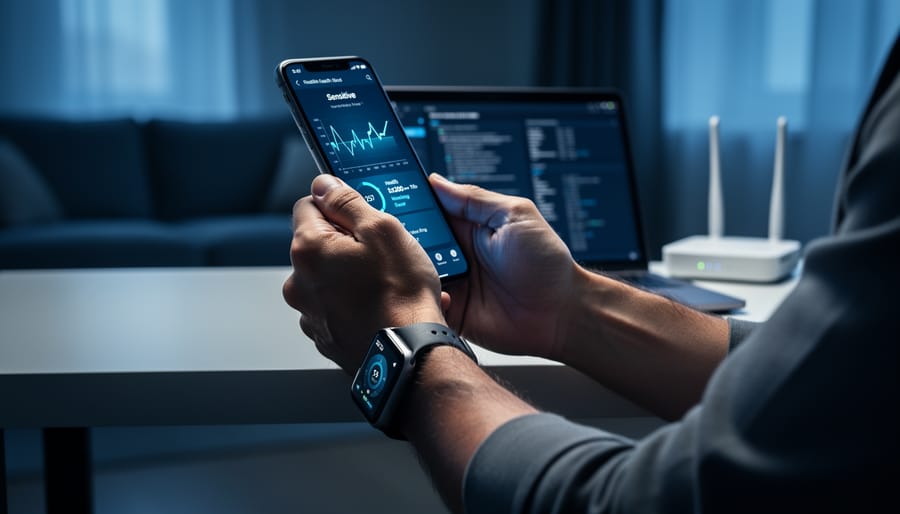
Every time you open a fitness app, check your smartwatch, or book a medical appointment online, you’re sharing intimate details about your body, habits, and health conditions. Your heart rate patterns, sleep cycles, mental health searches, prescription histories, and even your genetic information flow through digital systems that most Canadians don’t fully understand or control.
The stakes are higher than you might think. Health data breaches in Canada have exposed millions of patient records, leading to identity theft, insurance discrimination, and profound violations of personal privacy. Unlike your credit card number, which you can change after a breach, you cannot change your DNA, your medical history, or your chronic health conditions. Once this information is compromised or sold, the consequences can follow you for life.
Yet the technology collecting this data isn’t slowing down. Telemedicine platforms, mental health apps, period trackers, and wearable devices gather increasingly detailed health information, often sharing it with third parties in ways that surprise their users. A recent study found that 79 percent of health apps share user data with external companies, yet few Canadians read the privacy policies that authorize this sharing.
You have more control than you realize. Canadian privacy laws provide specific protections for your health information, and practical steps exist to secure your data without abandoning the digital health tools that improve your wellbeing. Understanding what’s being collected, recognizing the real risks you face, knowing your legal rights under Canadian law, and implementing concrete protection strategies will help you navigate the digital health landscape safely. This guide provides the knowledge and actionable steps you need to protect your most personal information while still benefiting from modern health technology.
What Health Data Are We Actually Talking About?
Data From Your Fitness Tracker and Health Apps
Your fitness trackers and health apps collect far more information than you might realize. These devices continuously monitor physical metrics including heart rate, blood oxygen levels, sleep duration and quality, steps taken, calories burned, and exercise intensity. Many apps also track your location during workouts, creating detailed maps of your running routes and cycling paths.
Nutrition apps record every meal you log, building a comprehensive profile of your dietary habits, food preferences, and caloric intake. Mental wellness platforms may collect information about your mood patterns, stress levels, and meditation practices. Some apps even request access to your phone’s microphone or camera for features like food scanning or guided workouts.
This data is considered highly sensitive for several important reasons. Your health patterns can reveal underlying medical conditions, lifestyle choices, and personal vulnerabilities. Insurance companies or employers could potentially use this information to make decisions about coverage or employment. Combined with other data, your fitness information creates a detailed picture of your daily routines, relationships, and personal habits. Understanding what these platforms collect is your first step toward protecting your privacy while still enjoying the benefits of health technology.
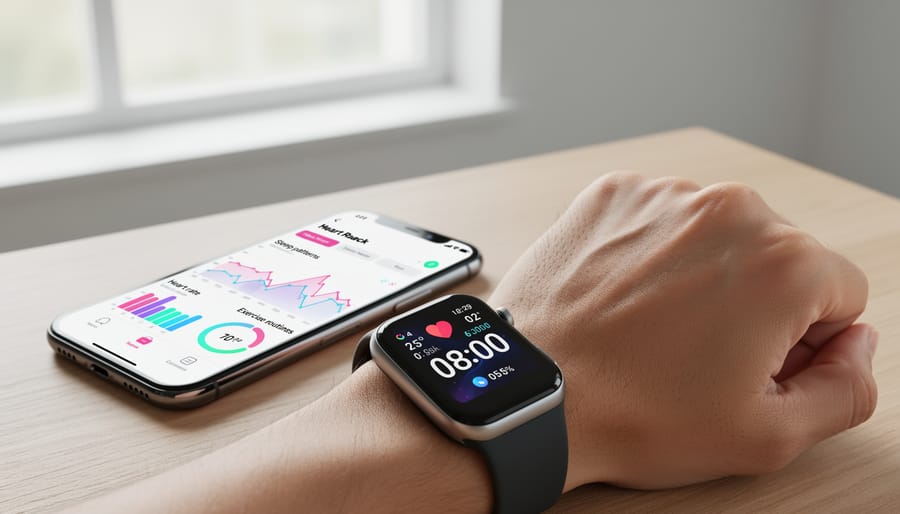
Mental Health and Therapy App Information
Mental health apps collect some of the most intimate information about your life. These platforms, including therapy apps, mood trackers, and meditation tools, often gather details about your emotional state, therapy sessions, medication use, diagnoses, trauma history, and daily thoughts. This information is exceptionally sensitive because it reveals vulnerabilities and personal struggles that many people keep private even from close friends and family.
The challenge with mental health data is that it can be used to discriminate against you if it falls into the wrong hands. Employers, insurance companies, or even data brokers could potentially use this information to make decisions about your employment, coverage eligibility, or target you with exploitative advertising. Unlike physical health conditions, mental health challenges still carry significant stigma in many contexts, making unauthorized disclosure particularly harmful.
Many therapy and wellness apps are not bound by the same privacy regulations as traditional healthcare providers, meaning your data may receive less protection than information shared with your doctor. Some apps sell anonymized user data to third parties, though true anonymization is difficult to guarantee. Before using any mental health platform, carefully review their privacy policy to understand how your data is stored, who can access it, and whether it’s shared with advertisers or researchers.
The Real Threats to Your Health Data in Canada
Data Breaches and Hacking Incidents
A data breach occurs when unauthorized individuals gain access to personal health information stored by healthcare providers, apps, or digital health companies. This can happen through cyberattacks, where hackers deliberately target systems to steal data, or through accidental exposures like misconfigured databases or lost devices containing patient information.
In Canada, healthcare data breaches are an ongoing concern. The federal privacy commissioner’s office reports that health-related organizations consistently rank among the sectors experiencing significant privacy incidents. For example, in recent years, several Canadian provinces have experienced breaches affecting millions of patients, including incidents where personal health information was accessed without authorization or exposed online.
When your health data is compromised, the consequences can be serious and far-reaching. Identity thieves may use your information to fraudulently bill insurance companies, obtain prescription medications, or even create fake medical records. This can affect your credit score, lead to incorrect information in your medical files, and potentially impact future insurance coverage. Beyond financial risks, exposed health data can reveal sensitive details about mental health conditions, reproductive health, or chronic diseases that you may have wanted to keep private.
If you’re notified of a breach involving your data, you should immediately monitor your medical and financial statements for suspicious activity, consider placing fraud alerts on your accounts, and request a copy of your medical records to check for inaccuracies. Canadian privacy laws require organizations to notify affected individuals and report significant breaches to privacy commissioners, ensuring you have the information needed to protect yourself.
Third-Party Sharing and Data Selling
Many Canadians assume their health app data remains private, but the reality is often quite different. Unlike health information held by your doctor or hospital, data collected by fitness trackers, mental health apps, and wellness platforms may not have the same legal protections. These companies can share or even sell your information to third parties, creating risks you might not expect.
Research shows that many popular health apps share user data with advertisers, data brokers, and analytics companies. This information can include your exercise patterns, sleep habits, menstrual cycles, mental health concerns, and weight fluctuations. While some apps disclose this in their privacy policies, the language is often complex and difficult to understand. Data brokers then compile this information with other details about you, creating detailed profiles that are bought and sold.
In Canada, this practice has significant implications. Insurance companies may use purchased health data to adjust premiums or deny coverage, though this varies by province. Employers could potentially access aggregated health trends, and targeted advertising might exploit your health vulnerabilities. For example, someone using a smoking cessation app might suddenly see ads for related products across multiple platforms.
The key concern is consent. Many apps request broad permissions during setup, and users often agree without fully understanding what they’re authorizing. Under Canadian privacy law, consent should be meaningful and informed, but the reality often falls short. To protect yourself, carefully review app permissions, choose companies with transparent privacy practices, and regularly audit which apps have access to your health information. Remember, once your data is shared, controlling its use becomes extremely difficult.
Inadequate Security Measures
Many health apps and platforms lack strong security measures to protect your personal information. Weak encryption is a common problem – this means your health data might be transmitted or stored without proper scrambling that keeps it unreadable to unauthorized people. Think of it like sending a postcard instead of a sealed letter; anyone handling it along the way can read your private information.
Another frequent issue is poor password requirements. Some health apps allow simple passwords like “123456” or don’t require passwords at all, making it easy for others to access your account. Additionally, many platforms fail to offer two-factor authentication, which adds an extra layer of security by requiring a second form of verification beyond your password.
Some apps also store data on unsecured servers or share information with third parties without adequate safeguards. According to cybersecurity experts, these vulnerabilities can expose sensitive details like your medical conditions, fitness routines, and personal identifiers to data breaches or unauthorized access. Before using any health app, check if it uses end-to-end encryption, requires strong passwords, and clearly explains how it protects your information.
Your Rights Under Canadian Privacy Laws
What PIPEDA Means for Your Health Apps
If you’re using health or wellness apps in Canada, the Personal Information Protection and Electronic Documents Act (PIPEDA) sets important ground rules for how companies handle your personal information. This federal privacy law applies to most private-sector organizations operating across Canada, including many health app providers.
Under PIPEDA, organizations must obtain your meaningful consent before collecting, using, or sharing your personal health information. This means companies need to clearly explain what data they’re gathering and why. You have the right to know what information is being collected about you, who has access to it, and how it’s being used. Companies must also protect your data with appropriate security measures and only keep it as long as necessary for the purposes you agreed to.
PIPEDA gives you several important rights regarding your health data. You can access your personal information held by an organization and request corrections if it’s inaccurate. You also have the right to withdraw consent for data collection at any time, though this may affect app functionality. If you believe an app provider has violated PIPEDA, you can file a complaint with the Office of the Privacy Commissioner of Canada.
However, PIPEDA has limitations. It doesn’t cover all health apps, especially those operated by healthcare providers or within provincial health systems, which fall under provincial privacy legislation. Additionally, enforcement can be challenging with apps based outside Canada, making it essential to carefully review privacy policies before downloading any health application.
Provincial Health Privacy Protections
While federal privacy laws provide baseline protection for health data in Canada, each province and territory has enacted specific health information legislation that often offers stronger safeguards. These provincial health information acts apply to healthcare providers, hospitals, pharmacies, and increasingly, telehealth services operating within their jurisdiction.
Provincial laws typically require explicit consent before your health information can be collected, used, or disclosed. They also grant you important rights, including the ability to access your medical records, request corrections to inaccurate information, and know who has accessed your data. For example, if you use a virtual care platform to consult with a physician in your province, that service must comply with both federal and provincial privacy requirements.
These laws are particularly relevant as digital health services expand. Many provinces have updated their legislation to address telehealth consultations, electronic health records, and remote patient monitoring. Healthcare providers offering virtual services must ensure the same privacy standards apply as in-person visits, including secure communication channels and proper data storage practices.
Understanding your provincial health privacy law empowers you to ask informed questions about how your information is handled. You can contact your provincial privacy commissioner if you have concerns about how a healthcare provider manages your data, providing an accessible avenue for addressing privacy issues.
Practical Steps to Protect Your Health Data
Choosing Health Apps Wisely
Before downloading a health app, taking a few minutes to evaluate its privacy practices can make a significant difference in protecting your personal information. Here’s a practical checklist to help you make informed decisions.
Start by reviewing the app’s privacy policy before installation. While these documents can be lengthy, focus on key sections that explain what data is collected, how it’s used, and whether it’s shared with third parties. Look for clear statements about data ownership—you should retain rights to your health information. Canadian apps should explicitly mention compliance with PIPEDA or provincial health privacy laws.
Check the app’s permission requests carefully. Does a fitness tracker really need access to your contacts or microphone? Be wary of apps requesting permissions that seem unrelated to their primary function. You can always adjust permissions in your device settings after installation, limiting access to only what’s necessary.
Verify that the app uses encryption to protect your data. Look for mentions of “end-to-end encryption” or “data encryption at rest and in transit” in the privacy policy or app description. Apps handling sensitive health information should encrypt data both when it’s stored on your device and when transmitted to servers.
Research the app developer’s reputation. Check reviews from other Canadian users, looking for comments about privacy practices or data breaches. Established healthcare organizations and verified developers typically have more robust privacy protections than unknown companies.
Consider whether the app requires you to create an account. Apps that function without requiring personal information generally pose lower privacy risks. When accounts are necessary, use strong, unique passwords and enable two-factor authentication if available.
Finally, look for third-party certifications or seals of approval from recognized privacy organizations, which indicate the app has undergone independent privacy audits.
Strengthening Your Digital Security Habits
Protecting your health information starts with developing smart tech habits that become second nature. These straightforward security practices can significantly reduce your risk of data breaches.
Begin with password strength. Create unique passwords for each health app and portal, combining at least 12 characters with uppercase and lowercase letters, numbers, and symbols. Consider using a reputable password manager to track multiple passwords securely. Avoid using easily guessable information like birthdays or pet names.
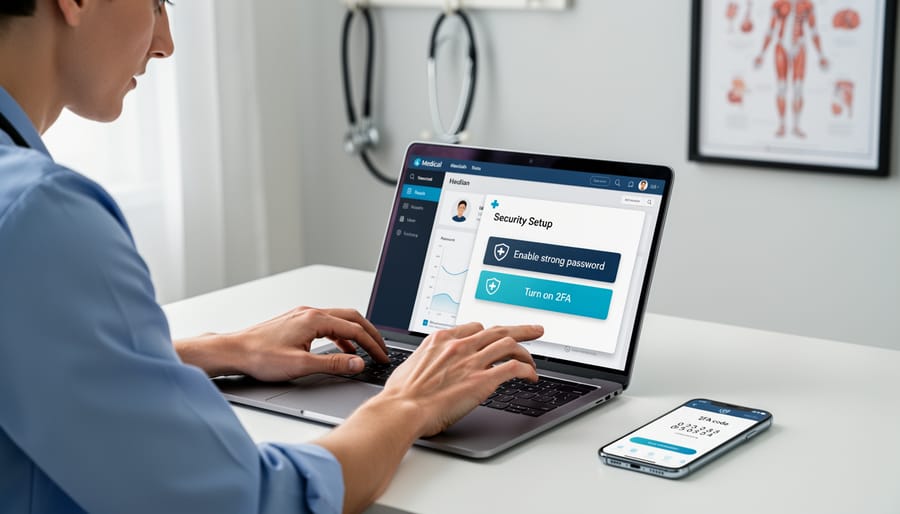
Enable two-factor authentication (2FA) whenever available. This adds an extra verification step, usually a code sent to your phone, making it much harder for unauthorized users to access your accounts even if they obtain your password.
Keep all health apps and device software updated. Developers regularly release security patches that fix vulnerabilities hackers could exploit. Enable automatic updates where possible to ensure you’re always protected with the latest security features.
Be cautious with Wi-Fi connections when accessing sensitive health information. Public networks at coffee shops or airports are convenient but often unsecured. When checking medical results or updating health records away from home, use your mobile data connection or a virtual private network (VPN) for encryption. At home, secure your Wi-Fi with a strong password and current encryption standards.

Managing Your Data Sharing Settings
Taking control of your health data starts with understanding the settings available in your apps and devices. Most Canadians don’t realize that privacy controls exist within their health apps, often buried several menus deep. Here’s how to find and adjust them effectively.
Begin by conducting a privacy audit of all health-related apps on your phone. Open each app and navigate to the settings menu, typically found under an icon with three lines or dots. Look for sections labeled Privacy, Data Sharing, or Permissions. Many popular fitness trackers and health apps default to maximum data sharing, so you’ll want to review each option carefully.
Within these settings, you’ll often find toggles for sharing data with third parties, allowing marketing communications, or participating in research programs. Turn off any options that aren’t essential to the app’s core function. For example, if you’re using a step-counting app, it doesn’t need permission to share your information with advertising partners.
Pay special attention to connected services. Many health apps integrate with social media platforms or other third-party services. Disconnect any integrations you don’t actively use. Check if your app participates in data brokerage or sells anonymized information to researchers or companies. Under Canadian privacy laws, companies must disclose these practices, though the opt-out process varies by app.
For device-level control, visit your phone’s main settings. On iPhone, go to Privacy and then Health to see which apps access your health data. On Android, navigate to Settings, then Privacy, and App Permissions. Remove access for apps that don’t require it.
What to Do If Your Data Is Compromised
If you suspect your health data has been compromised, taking quick action can limit potential harm. First, contact the organization that experienced the breach immediately and request specific details about what information was affected and what steps they’re taking to address the situation. Under Canadian privacy law, organizations must notify affected individuals when a breach poses a real risk of significant harm.
Next, reach out to the Office of the Privacy Commissioner of Canada to file a formal complaint. You can do this online at their website or by calling 1-800-282-1376. In Quebec, contact the Commission d’accès à l’information du Québec instead. These agencies can investigate the breach and help enforce your privacy rights.
Protect yourself from identity theft by monitoring your credit reports through Equifax and TransUnion for any unusual activity. If financial information was compromised, notify your bank and credit card companies immediately. Consider placing a fraud alert on your credit file as an added precaution.
Change passwords for any affected accounts and enable two-factor authentication wherever possible. Be alert for phishing attempts, as criminals may use stolen health information to create convincing scams targeting you specifically.
Document everything related to the breach, including when you discovered it, who you contacted, and any responses received. This documentation may prove valuable if you need to take further action. Finally, stay informed about the investigation and any additional protective measures the organization implements to prevent future breaches.
The Future of Health Data Privacy in Canada
The landscape of health data privacy in Canada is evolving rapidly, bringing both promising protections and new challenges that require your attention. Several positive developments are on the horizon that will strengthen how your personal health information is safeguarded.
Canada is moving toward modernizing federal privacy legislation, with proposed reforms to PIPEDA that specifically address the unique sensitivities of health data. These changes aim to give Canadians greater control over their information, including the right to request deletion of certain data and improved transparency about how organizations use artificial intelligence to process health information. Provincial governments are also updating their health information acts to better reflect the realities of digital health tools and connected devices.
Emerging technologies like blockchain and advanced encryption methods are being explored to create more secure health data systems. These innovations could allow you to share specific health information with providers while maintaining greater control over your overall medical records. Artificial intelligence is also being developed to detect privacy breaches more quickly, potentially stopping unauthorized access before significant harm occurs.
However, these advancements come with responsibilities. As wearable devices, genetic testing kits, and health apps become more sophisticated, they’ll collect increasingly detailed information about your body and lifestyle. The key to protecting yourself lies in staying informed about your rights and remaining cautious about which companies you trust with your data.
The good news is that privacy awareness is growing among both regulators and healthcare providers. More organizations are adopting privacy-by-design principles, building data protection into their systems from the start rather than adding it as an afterthought. By staying engaged with these developments and continuing to ask questions about how your health data is used, you’re helping create a healthcare system that respects both innovation and privacy.
Your health information is personal, valuable, and worth protecting. As digital health tools become increasingly integrated into our daily lives, understanding how to safeguard your health data isn’t about becoming fearful of technology. Rather, it’s about making informed choices that allow you to benefit from these innovations while maintaining control over your most sensitive information.
Throughout this article, we’ve explored what health data is being collected, the potential risks involved, your legal protections under Canadian law, and practical strategies to secure your information. The good news is that protecting your digital health privacy doesn’t require technical expertise or giving up the tools you find helpful. Simple actions like reviewing privacy policies before downloading apps, adjusting your device settings, using strong passwords, and being selective about what information you share can significantly reduce your risk.
Remember that PIPEDA and provincial health privacy laws provide you with important rights, including knowing what data is collected about you and how it’s used. Don’t hesitate to exercise these rights by asking questions, requesting access to your data, or filing complaints when necessary. Healthcare providers and app developers have legal obligations to protect your information, and holding them accountable benefits everyone.
Taking control of your digital health information is an ongoing process, not a one-time task. Technology evolves, new apps emerge, and privacy policies change. By staying informed and regularly reviewing your digital health tools, you’re building habits that will serve you well into the future.
You have the knowledge and the tools to protect your health data privacy. Start with one or two protective actions today, whether that’s updating your app permissions or enabling two-factor authentication. Each small step strengthens your digital health security and gives you greater confidence in using technology to support your wellness journey. Your health data belongs to you, and you deserve to feel empowered in managing it.