

Your body runs on a 24-hour internal clock that tells you when to sleep, wake, eat, and even when your immune system works best. When this circadian rhythm falls out of sync with your daily schedule—whether from shift work, late-night screen time, irregular sleep patterns, or jet lag—the consequences extend far beyond feeling tired.
Circadian misalignment occurs when your biological clock conflicts with your actual behavior. You might find yourself wide awake at 2 AM despite an early morning meeting, or experiencing crushing fatigue at noon despite sleeping eight hours. This isn’t laziness or poor willpower—it’s a genuine physiological mismatch that affects millions of Canadians.
The health implications are significant and scientifically documented. Chronic circadian disruption increases your risk of obesity, type 2 diabetes, cardiovascular disease, depression, and weakened immunity. Your body expects certain hormones like melatonin and cortisol to rise and fall at specific times. When they don’t, every system from digestion to mood regulation suffers.
The encouraging news: your circadian rhythm responds to specific environmental and behavioral cues. Light exposure, meal timing, physical activity, and sleep schedule consistency all serve as powerful reset buttons. Even if you’ve struggled with sleep problems for years, targeted strategies can realign your internal clock within days to weeks. Understanding whether circadian misalignment is your issue—and learning the evidence-based methods to fix it—can transform both your sleep quality and overall health.
What Is a Misaligned Circadian Rhythm?
Your body operates on an internal timing system called the circadian rhythm, often referred to as your biological sleep clock. This natural 24-hour cycle acts like a sophisticated timer, coordinating essential functions throughout your day and night. Think of it as your body’s conductor, orchestrating when you feel alert, when you become sleepy, and when various biological processes should occur.
Your circadian rhythm influences far more than just sleep. It regulates the release of hormones like melatonin for sleep and cortisol for waking, controls your body temperature fluctuations, manages your appetite, affects your digestion, and even influences your immune system function. When working properly, this internal clock keeps you energized during daylight hours and naturally tired when darkness falls.
A misaligned circadian rhythm occurs when your internal clock falls out of sync with your external environment, particularly the natural light-dark cycle. This misalignment means your body is receiving conflicting signals about what time it actually is. For example, your internal clock might signal that it’s time to sleep while your environment and activities tell you it’s the middle of the day.
This disconnect creates significant problems because your body tries to follow both sets of instructions simultaneously. You might find yourself exhausted during working hours but wide awake at bedtime. Your hormone production becomes erratic, releasing sleep hormones when you need to be alert or stress hormones when you should be resting.
Several factors can cause this misalignment. Shift work forces you to stay awake during natural sleep hours. Frequent travel across time zones disrupts your rhythm. Even everyday habits like late-night screen time, irregular sleep schedules, or insufficient exposure to natural daylight can gradually push your internal clock off track. Understanding this misalignment is the first step toward restoring your natural rhythm and reclaiming your energy and wellbeing.

Signs Your Internal Clock Is Out of Sync

Physical Symptoms
When your internal clock falls out of sync with your daily schedule, your body sends clear distress signals. The most noticeable symptom is persistent fatigue that doesn’t improve with sleep. You may struggle to wake up in the morning, hitting snooze repeatedly and feeling groggy for hours afterward. Many people experience this fog-like state well into their day, regardless of how much coffee they consume.
Energy crashes in the afternoon are another telltale sign. You might feel alert at inappropriate times, like late at night when you should be winding down, then experience overwhelming drowsiness during the mid-afternoon slump. This energy rollercoaster makes it challenging to maintain productivity and can affect your work performance.
Your digestive system also suffers when your circadian rhythm is misaligned. You may notice changes in appetite, experiencing hunger at unusual times or having no appetite when meals are scheduled. Constipation, bloating, and general digestive discomfort often accompany circadian disruption because your gut has its own biological clock that coordinates digestion.
Perhaps most concerning is the impact on your immune system. Research shows that circadian misalignment weakens your body’s ability to fight off infections, leaving you more susceptible to colds, flu, and other illnesses. You might notice you’re getting sick more frequently than usual.
Mental and Emotional Symptoms
When your internal clock falls out of sync with your daily schedule, your mental and emotional well-being often suffers first. Many Canadians with circadian misalignment report persistent brain fog, making it difficult to think clearly or process information effectively. You might find yourself reading the same paragraph multiple times or struggling to recall simple details that would normally come easily.
Concentration becomes a daily challenge. Tasks that require sustained attention feel exhausting, and your productivity may drop significantly. Decision-making often feels more difficult, and you might notice increased forgetfulness throughout your day.
Mood changes are particularly common with circadian disruption. You may experience unexplained irritability, mood swings, or a general sense of emotional flatness. Research shows that circadian misalignment can worsen symptoms of anxiety and depression, creating a cycle that affects both sleep and mental health. Your stress tolerance typically decreases as well, meaning everyday challenges feel more overwhelming than usual.
These emotional symptoms occur because your circadian rhythm regulates important brain chemicals like serotonin and cortisol. When this internal timing system is disrupted, the delicate balance of these mood-regulating hormones becomes unstable, directly impacting how you feel and function mentally throughout the day.
Sleep-Related Symptoms
When your circadian rhythm is out of sync, falling asleep at your desired bedtime becomes frustratingly difficult. You might lie awake for hours, your mind alert even though your body feels tired. This struggle often leads to a pattern where you finally drift off much later than intended, only to face the next challenge: disrupted sleep throughout the night.
Frequent nighttime awakenings are common with circadian misalignment. Your body’s internal clock signals wakefulness at inappropriate times, pulling you from sleep repeatedly. Even when you manage to stay asleep for what seems like adequate hours, the quality remains poor. You wake feeling unrefreshed, as if you barely slept at all.
Morning becomes another battle. One alarm isn’t enough—you find yourself setting multiple alarms, hitting snooze repeatedly, struggling against your body’s strong urge to remain asleep. This reliance on alarm strategies reflects your circadian rhythm trying to maintain sleep during hours when it should naturally be promoting wakefulness. These sleep-related symptoms signal that your internal clock needs realignment to match your daily schedule.
Common Causes of Circadian Rhythm Disruption
Shift Work and Irregular Schedules
Shift workers, rotating shift employees, and those working overnight face a particularly challenging form of circadian misalignment. When your job requires you to be alert during hours when your body is programmed to sleep, you’re essentially asking your internal clock to run backward. This affects approximately 20% of Canadian workers.
The problem is that your circadian rhythm doesn’t simply flip on command. Even after weeks of night shifts, your body may still produce melatonin at night and cortisol in the morning, fighting against your work schedule. This constant biological conflict leads to chronic sleep deprivation, difficulty concentrating during work hours, and increased risk of accidents.
Research shows shift workers face higher rates of cardiovascular disease, metabolic disorders, and mood disturbances. The irregular eating patterns and light exposure at inappropriate times further compound the problem. While some adjustment is possible with consistent schedules, frequent rotation between day and night shifts prevents any meaningful adaptation. Implementing evidence-based shift work sleep strategies can help minimize these health impacts and improve quality of life.
Screen Time and Artificial Light Exposure
Modern screens and indoor lighting significantly disrupt your body’s natural sleep-wake cycle, particularly during Canadian winters when natural daylight is already scarce. Blue light emitted from smartphones, tablets, computers, and LED bulbs suppresses melatonin production—the hormone that signals your body it’s time to sleep. This effect is especially problematic in the evening hours when your circadian rhythm should be preparing for rest.
Canadian winters compound this challenge. With seasonal light changes bringing darkness as early as 4:30 PM in some regions, many Canadians spend most daylight hours indoors under artificial lighting. This creates a double disruption: insufficient bright light exposure during the day weakens your circadian signals, while excessive screen time at night confuses your internal clock.
Research shows that just two hours of evening screen exposure can delay melatonin release by up to 90 minutes. To protect your circadian rhythm, dim screens after sunset, enable blue light filters on devices, and consider wearing blue-light-blocking glasses in the evening. Creating a technology curfew one to two hours before bedtime gives your body the darkness it needs to naturally prepare for restorative sleep.
Jet Lag and Travel
Crossing time zones disrupts your internal clock because it suddenly doesn’t match the light-dark cycle of your new location. When you travel east or west, your body still operates on your home time zone while the environment signals a completely different time of day. This mismatch causes the familiar symptoms of jet lag: poor sleep, daytime fatigue, difficulty concentrating, and digestive issues.
Jet lag recovery typically takes about one day per time zone crossed, though this varies by individual. Your circadian system can only shift by roughly one to two hours per day, which explains why adjustment doesn’t happen overnight. Traveling eastward is generally harder than westward because it requires you to fall asleep earlier than your body is ready for, working against your natural rhythm. Frequent travelers who cross multiple time zones regularly may experience chronic circadian misalignment, increasing their risk for longer-term health consequences.
Irregular Sleep Schedules
Your body thrives on consistency, but irregular sleep schedules create confusion for your internal clock. Going to bed and waking up at dramatically different times disrupts your circadian rhythm’s ability to anticipate and prepare for daily activities.
One of the most common culprits is what researchers call “social jet lag”—the mismatch between your weekday and weekend sleep schedules. If you typically wake at 6:30 a.m. on weekdays but sleep until 10:00 a.m. on weekends, you’re essentially giving your body jet lag without leaving your time zone. This three-to-four-hour shift forces your circadian system to constantly readjust, never allowing it to fully stabilize.
The effects accumulate over time. Your body struggles to regulate hormone production, body temperature, and digestive processes when it can’t predict when you’ll be awake or asleep. Even a one-to-two-hour variation in your sleep schedule can affect your energy levels, mood, and overall health. Establishing consistent sleep and wake times—even on weekends—helps maintain circadian alignment and improves sleep quality.
The Health Consequences You Can’t Ignore
Impact on Mental Health
When your internal clock falls out of sync, your mental health often pays the price. Research shows that circadian misalignment significantly increases your risk of developing depression, anxiety, and other mood disorders. This connection makes sense when you consider that your circadian rhythm regulates the production of serotonin and other mood-regulating brain chemicals.
People with disrupted sleep-wake cycles are up to three times more likely to experience depression compared to those with well-aligned rhythms. Shift workers, for instance, report higher rates of depressive symptoms and anxiety. The relationship works both ways too—mental health conditions can further disrupt your circadian rhythm, creating a challenging cycle.
You might notice mood swings, increased irritability, or difficulty managing stress when your body clock is off. Your brain’s ability to process emotions and cope with daily challenges becomes compromised. The good news is that realigning your circadian rhythm through consistent sleep schedules and light exposure can improve mental health symptoms. Many Canadians find that addressing their sleep-wake cycle becomes a powerful tool in managing their emotional wellbeing alongside other mental health strategies.
Physical Health Risks
When your internal clock falls out of sync with the natural day-night cycle, your body pays a price that extends far beyond feeling tired. Research shows that chronic circadian misalignment significantly increases your risk for several serious health conditions.
Your metabolism takes one of the biggest hits. Studies have found that people with disrupted circadian rhythms are at higher risk for weight gain and obesity, as the timing of your internal clock influences when your body best processes food and regulates hunger hormones. This metabolic disruption also elevates your risk for type 2 diabetes, as your body’s ability to manage blood sugar becomes less efficient when eating and sleeping patterns don’t align with your natural rhythms.
Your heart health suffers too. People with irregular sleep-wake patterns face increased risks of high blood pressure, heart disease, and stroke. The cardiovascular system relies on predictable daily rhythms to function optimally, and disruption can trigger inflammation and other harmful changes.
Your immune system also weakens when your circadian rhythm is off-balance. Your body produces and releases immune cells according to daily cycles, so misalignment can leave you more vulnerable to infections and slower to recover from illness. These aren’t minor concerns—protecting your circadian rhythm is protecting your long-term health.
Cognitive and Performance Effects
When your internal clock doesn’t match your schedule, your brain pays the price. Circadian misalignment significantly impairs cognitive function, affecting both mental sharpness and daily performance.
Memory consolidation suffers when you’re out of sync, making it harder to learn new information and recall details. Your decision-making abilities decline, leading to poor judgment and increased risk-taking behavior. Reaction times slow considerably, which can be particularly dangerous when driving or operating machinery.
At work, misalignment translates to reduced productivity, more errors, and difficulty concentrating. Studies show that shift workers and people with chronic jet lag experience cognitive performance equivalent to sleep deprivation, even when getting adequate sleep hours.
The good news is that these effects are reversible. By realigning your circadian rhythm with consistent sleep-wake times and appropriate light exposure, you can restore mental clarity and performance within several weeks.
Evidence-Based Strategies to Realign Your Internal Clock

Master Your Light Exposure
Light is your most powerful tool for resetting your circadian rhythm. Your body’s internal clock responds strongly to light signals, so strategic light exposure can help realign your sleep-wake cycle with your desired schedule.
Start your day with bright light exposure within the first hour of waking. Aim for at least 15-30 minutes of natural outdoor light, even on cloudy days. Morning sunlight is significantly brighter than indoor lighting and signals your brain that it’s time to be alert. If you can, take your morning coffee or tea outside, or go for a brief walk.
During Canadian winters when sunrise comes late, a light therapy lamp becomes invaluable. Look for a lamp that provides 10,000 lux and position it about 16-24 inches from your face. Use it for 20-30 minutes while eating breakfast or reading. Avoid looking directly at the light, but keep it in your field of vision.
Throughout the day, maximize your exposure to natural light. Open blinds and curtains, position your workspace near windows, and take short outdoor breaks whenever possible. Even brief exposure to daylight helps maintain your circadian rhythm.
As evening approaches, begin reducing your light exposure. Dim overhead lights two to three hours before bedtime and switch to warm-toned lamps. Consider using amber-tinted glasses to block blue light from screens if you must use devices. Install blackout curtains or use an eye mask to ensure complete darkness while sleeping, as even small amounts of light can disrupt your rest.
Create a Consistent Sleep Schedule
Consistency is your circadian rhythm’s best friend. Research shows that maintaining regular sleep and wake times matters more than hitting a specific number of hours. Your body thrives on predictability, and even one hour of variation can disrupt your internal clock.
If you need to shift your schedule, make gradual changes. Adjust your bedtime and wake time by just 15 minutes every few days until you reach your target. Sudden shifts of several hours rarely stick and can worsen circadian misalignment. Set a gentle alarm to remind yourself when to start winding down for bed, not just when to wake up.
Weekend consistency is crucial, though challenging. Try to keep your wake time within one hour of your weekday schedule, even on Saturdays and Sundays. This prevents “social jet lag,” which can undo your week’s progress and leave you feeling groggy on Monday mornings.
For shift workers, maintaining circadian health requires extra effort. If you work rotating shifts, request a forward rotation schedule (moving from day to evening to night shifts) rather than backward, as this aligns better with your natural rhythm. Use blackout curtains and consider strategic light exposure during your waking hours to help reset your clock to your work schedule.
Time Your Meals Strategically
When you eat matters just as much as what you eat when it comes to circadian health. Your digestive system follows its own circadian rhythm, with metabolism naturally slowing down in the evening hours. Eating at consistent times each day helps strengthen your body’s internal clock and improves overall sleep quality.
Try to schedule your meals within a consistent 10-12 hour window each day. For example, if you eat breakfast at 7 AM, aim to finish your last meal or snack by 7 PM. This pattern, often called time-restricted eating, supports natural circadian rhythms and has been shown to improve sleep onset and quality.
Late-night eating can significantly disrupt your circadian alignment. Consuming large meals or snacks close to bedtime raises your core body temperature and triggers digestive processes when your body should be winding down for sleep. This confusion can delay melatonin release and make falling asleep more difficult.
Make breakfast your largest meal when possible, as your body is primed for fuel and metabolism is highest in the morning. If evening hunger strikes, opt for light, easily digestible options at least two to three hours before bed.
Use Exercise as a Reset Tool
Physical activity is a powerful tool for resetting your internal clock. Exercise increases your body’s core temperature and triggers hormonal responses that signal alertness to your circadian system. The key is timing it right.
Morning exercise is particularly effective for circadian alignment. Working out between 7 AM and 10 AM helps reinforce your body’s natural wake signal, making it easier to feel alert during the day and sleepy at night. Even a brisk 20-minute walk outdoors combines the benefits of physical activity with light exposure for a double reset effect.
Evening exercise can also work, but finish at least three hours before bedtime. Late workouts raise your core temperature and stimulate alertness, which may interfere with sleep if done too close to bedtime.
For intensity, moderate aerobic exercise like cycling, swimming, or jogging shows the strongest circadian benefits. Aim for 30 minutes most days. If you’re just starting, begin with gentle activities and gradually increase intensity. Consistency matters more than perfection—regular movement at the same time daily helps establish the predictable patterns your circadian rhythm craves.
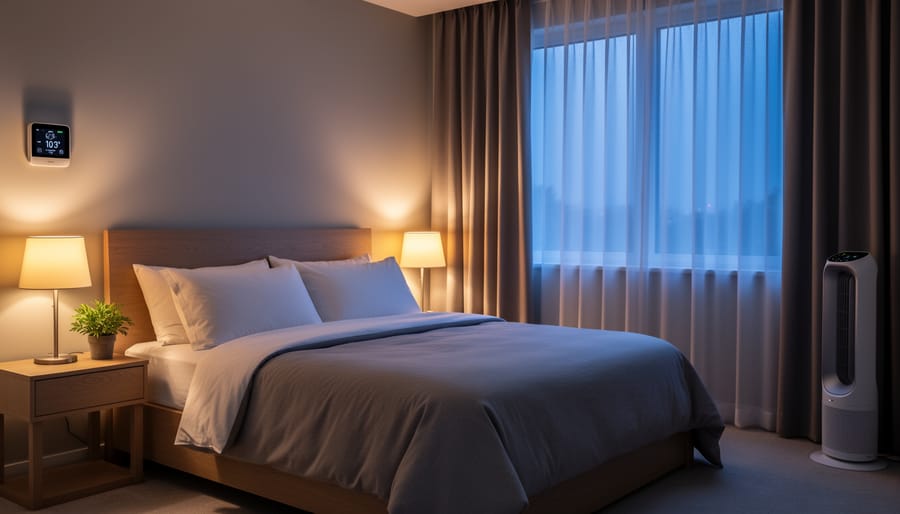
Optimize Your Sleep Environment
Your bedroom environment plays a crucial role in supporting healthy circadian rhythms. Start by optimizing temperature—keep your bedroom cool, ideally between 15-19°C, as core body temperature naturally drops during sleep. In Canadian winters, resist the urge to overheat your bedroom, while in summer, use fans or air conditioning to maintain comfortable conditions.
Darkness is essential for melatonin production. Install blackout curtains or blinds to block streetlights and early sunrise, particularly important during long Canadian summer days. Even small amounts of light can disrupt your circadian clock, so cover electronic displays and consider removing devices from your bedroom entirely.
Address noise pollution with white noise machines, earpans, or soundproofing solutions if you live in busy areas. Consistent background sound can mask disruptive noises without interfering with sleep quality.
Remember that effective sleep hygiene practices extend beyond your bedroom setup. Consider seasonal adjustments—during winter months with limited daylight, maximize natural light exposure during waking hours to reinforce your circadian rhythm despite shorter days.
Manage Technology and Screen Time
Electronic devices emit blue light that suppresses melainin production, making it harder to fall asleep. Start reducing screen exposure at least two hours before bedtime. Enable night mode or blue light filters on all devices after sunset, which shifts the display to warmer tones. Consider wearing blue light blocking glasses in the evening if you must use screens. Create a screen-free bedroom policy to strengthen the mental association between your sleeping space and rest. Replace evening scrolling with calming activities like reading physical books, gentle stretching, or listening to music. Set device alarms to remind yourself when it’s time to power down. These simple adjustments help your body recognize when it’s time to prepare for sleep, supporting your natural circadian rhythm and improving overall sleep quality.
Special Considerations for Shift Workers
If you work rotating shifts, nights, or irregular hours, you face unique circadian challenges that make perfect alignment difficult. While complete synchronization may not always be possible, these harm-reduction strategies can help protect your health.
When working night shifts, strategic light exposure becomes essential. During your work hours, expose yourself to bright light (ideally 2,500 to 10,000 lux) to signal “daytime” to your body. As you head home, wear wraparound sunglasses to block morning light, which would otherwise reset your rhythm at the wrong time. Create a dark, cool sleeping environment using blackout curtains and consider a white noise machine to minimize daytime disturbances.
Timing your meals carefully can support your shifted schedule. Try to eat your main meals during your waking hours, even if that means eating dinner at midnight. Avoid heavy meals close to your sleep time, and limit caffeine intake to the first half of your shift to prevent it from interfering with daytime sleep.
For rotating shift workers, consistency within each rotation period helps. Maintain the same sleep-wake schedule on days off during that rotation when possible, rather than reverting to a “normal” schedule. If you must rotate, forward rotation (day to evening to night shifts) tends to be easier for most people than backward rotation.
Consider supplementing with vitamin D, as reduced sunlight exposure can lead to deficiency. Consult with your healthcare provider about timing and dosage. Some shift workers also benefit from short-term melatonin use, taken before daytime sleep periods, though this should be discussed with a doctor.
Prioritize recovery sleep between shift rotations, and communicate your schedule needs clearly with family members to protect your sleep time. Remember, these strategies minimize harm rather than eliminate it, so regular health monitoring remains important.
When to Seek Professional Help
While many circadian rhythm issues improve with consistent lifestyle changes, sometimes professional help is necessary. If you’ve tried self-help strategies for several weeks without improvement, or if your sleep problems significantly impact your daily functioning, it’s time to consult a healthcare provider.
Consider seeking professional help if you experience persistent difficulty falling asleep or waking up at desired times, chronic daytime sleepiness affecting work or safety, or if you’re relying on sleep aids regularly. Shift workers struggling to adapt, or anyone experiencing depression or anxiety alongside sleep issues, should also reach out for support.
Your family doctor is an excellent starting point. They can rule out underlying medical conditions and refer you to a sleep specialist if needed. In Canada’s healthcare system, sleep clinics are available through provincial health plans, though wait times vary by region. Sleep specialists can diagnose circadian rhythm sleep disorders such as delayed sleep-wake phase disorder or advanced sleep-wake phase disorder through detailed assessments and sometimes sleep studies.
Available treatments include bright light therapy administered at specific times, melatonin supplementation with proper timing, and chronotherapy, which gradually shifts your sleep schedule. Cognitive behavioral therapy for insomnia has also proven effective for many circadian issues.
Remember, seeking help isn’t a sign of failure. Circadian rhythm disorders are legitimate medical conditions, and healthcare professionals have evidence-based tools to support your recovery. Early intervention often leads to better outcomes and prevents long-term health complications.
Realigning your circadian rhythm may feel challenging, especially if you’ve been struggling with disrupted sleep for weeks or months, but the encouraging news is that change is absolutely possible. Your body has a remarkable ability to adapt when given the right signals consistently. While you might not see dramatic improvements overnight, small, intentional adjustments to your daily routine can create meaningful shifts in your sleep quality and overall health within just a few weeks.
The connection between circadian alignment and your wellbeing extends far beyond simply feeling rested. When your internal clock functions properly, you’re supporting your immune system, mental health, metabolism, and long-term disease prevention. This makes the effort to restore balance genuinely worthwhile, not just for better sleep tonight, but for your health years down the road.
Start with one or two changes that feel manageable for your lifestyle. Perhaps it’s stepping outside for morning sunlight, setting a consistent wake time even on weekends, or dimming lights an hour before bed. These aren’t drastic overhauls—they’re sustainable habits that compound over time. Consistency matters more than perfection, so if you miss a day or slip up, simply return to your routine the next day without judgment.
Remember that seeking support is a sign of strength, not weakness. If you’ve tried multiple strategies without improvement, consulting a healthcare provider or sleep specialist can provide personalized guidance and rule out underlying conditions. You deserve restful sleep, and with patience and persistence, you can reclaim the natural rhythm that supports your best health.