

Imagine visiting your family doctor, then a specialist, and later a walk-in clinic, only to repeat your medical history each time because none of these providers can access your complete health information. This frustrating reality affects millions of Canadians daily, but a solution is reshaping how technology transforming Canadian healthcare works behind the scenes.
FHIR (Fast Healthcare Interoperability Resources) standards are changing how your health information moves between doctors, hospitals, pharmacies, and even your fitness apps. Think of FHIR as a universal translator that allows different healthcare systems to speak the same language, ensuring your medical records, prescriptions, lab results, and treatment plans flow seamlessly wherever you receive care.
For you, this means your mental health counselor can coordinate more effectively with your family doctor, your diabetes management app can share glucose readings directly with your endocrinologist, and your emergency room physician can instantly access your medication allergies during a crisis. FHIR standards eliminate dangerous information gaps that lead to duplicate tests, medication errors, and delayed treatments.
This technology particularly benefits Canadians managing chronic conditions, juggling multiple healthcare providers, or using digital health tools to monitor wellness goals. Understanding FHIR helps you advocate for connected care, choose compatible health apps, and appreciate why your healthcare providers are upgrading their systems. As Canadian healthcare becomes increasingly digital, FHIR standards ensure your health information works for you, not against you.
The Real Cost of Health Systems That Don’t Communicate
Imagine arriving at the emergency room with chest pain, only to discover that the ER doctors can’t access your medical history from your family physician. They don’t know about your heart condition, your current medications, or the stress test you completed just weeks ago. This scenario plays out in Canadian hospitals every day, creating risks that extend far beyond inconvenience.
When health systems can’t communicate effectively, patients face real consequences. You might undergo the same blood work multiple times because your specialist can’t see what your family doctor already ordered. These duplicate tests aren’t just frustrating—they waste healthcare resources, delay your diagnosis, and sometimes expose you to unnecessary procedures. One Canadian patient reported having the same X-ray taken three times in six months because different facilities couldn’t share images.
Medication errors become more likely when your pharmacist, family doctor, and specialist each maintain separate records. If your cardiologist prescribes a new medication without knowing what your mental health provider already prescribed, dangerous drug interactions can occur. According to health experts, preventable medication errors harm thousands of Canadians annually, with poor information sharing being a significant contributing factor.
The burden often falls on you to carry paper records, remember complex medication names, and relay your complete health history at every appointment. This system is particularly challenging if you’re managing a chronic condition like diabetes or navigating mental health treatment, where coordinated care between multiple providers is essential.
These communication gaps create delays in diagnosis and treatment, sometimes with serious health implications. When critical information doesn’t follow you through the healthcare system, the quality and safety of your care suffers.

What Is FHIR and Why Should You Care?
How FHIR Works in Simple Terms
Think of FHIR like a universal translator for healthcare systems. Just as your smartphone apps can share information with each other—your fitness tracker syncs with your health app, which connects to your nutrition tracker—FHIR allows different healthcare systems to communicate seamlessly.
Without FHIR, healthcare systems are like people speaking different languages. Your family doctor’s office might use one software system, the hospital another, and your pharmacy yet another. Even though they all store similar information about you, they often can’t easily share it. It’s like having photos on your phone that you can’t send to friends because they use a different device.
FHIR changes this by creating a common format for health information. When your mental health counselor needs to see medications prescribed by your family doctor, FHIR enables that exchange without lengthy phone calls or faxed documents. When you visit a walk-in clinic while traveling in another province, the doctor can access your allergy information and recent lab results.
The system works using standardized “resources”—think of these as digital containers that hold specific types of health information like medications, appointments, or test results. These containers follow the same format everywhere, making it simple for different healthcare providers to read and understand your information. This seamless sharing means better coordinated care, fewer repeated tests, and safer treatment decisions—all while keeping your information secure and private.
Real Benefits of FHIR for Canadian Patients
Faster, More Coordinated Care
When you arrive at the emergency room with chest pain or visit a new specialist for your diabetes management, the speed at which healthcare providers access your complete medical history can significantly impact your treatment outcomes. FHIR standards enable this instant information sharing, allowing doctors to see your medications, allergies, recent test results, and previous diagnoses within seconds rather than waiting hours or days for faxed records.
This rapid access proves especially valuable for Canadians managing chronic conditions like heart disease, diabetes, or arthritis. Your family doctor, cardiologist, and pharmacist can all view the same up-to-date information, reducing the risk of conflicting treatments or duplicate tests. During emergencies, paramedics and emergency room physicians can immediately identify critical details like blood type, current medications, or serious allergies that might otherwise be missed.
Healthcare experts confirm that coordinated care through standardized data sharing leads to fewer medical errors and better health outcomes. You spend less time repeating your medical history at every appointment, and your healthcare team can focus on providing personalized treatment based on a complete picture of your health. This seamless coordination means fewer gaps in care and more confident decision-making by the professionals supporting your wellness journey.
Your Health Data in Your Pocket
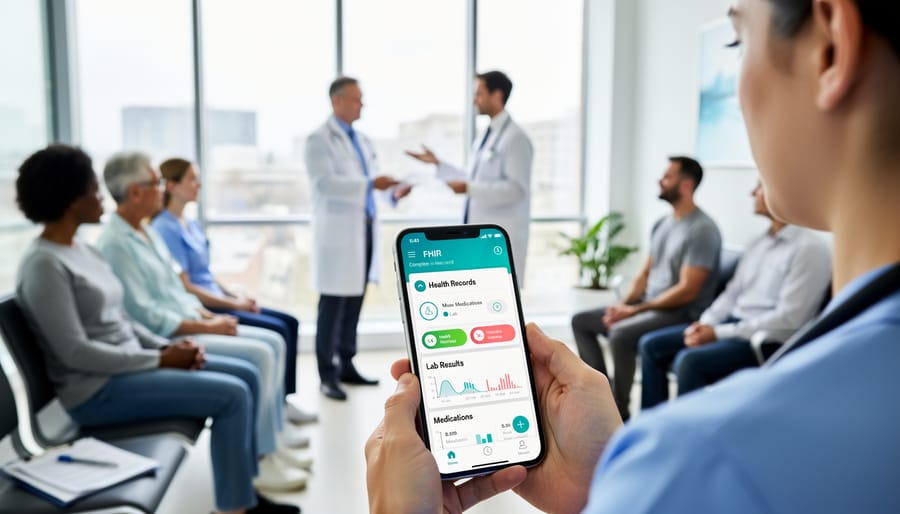
FHIR technology is transforming how you interact with your personal health information through patient portals and mobile applications. Instead of waiting days for test results or calling your doctor’s office for medication lists, you can now access this information instantly from your smartphone. FHIR-enabled apps securely connect to your healthcare provider’s system, pulling your lab results, immunization records, prescription history, and appointment details into one convenient location.
This standardized approach means your health apps and wearables can communicate with multiple healthcare providers across Canada, giving you a complete picture of your health journey. For example, if you’re managing diabetes, you can view your recent glucose levels alongside your medication schedule and upcoming specialist appointments all in one place. Many Canadians are already using these patient-facing apps to track their wellness goals, share information with family members who help with care, and make more informed decisions about their health. According to health informatics experts, this direct access to your own data empowers you to take an active role in managing both chronic conditions and preventive care, making healthcare truly patient-centered.
Better Mental Health Support Through Connected Care
FHIR standards enable different healthcare providers to access and share your complete health information, creating a more connected approach to mental health care. When you visit a mental health counsellor, they can securely view relevant information from your family doctor, including medical history, current medications, and recent lab results. This prevents you from repeatedly explaining your situation and ensures all providers understand your complete health picture.
This integration particularly benefits mental health treatment because physical and mental health are deeply connected. Your psychiatrist can coordinate with your family doctor about medications that might affect both conditions, while your therapist stays informed about health changes that could impact your wellbeing. This seamless information flow supports digital wellness by reducing administrative barriers and improving treatment coordination.
For Canadians managing both mental health concerns and physical conditions like diabetes or heart disease, FHIR-enabled systems help specialists work together more effectively. Rather than operating in isolation, your care team can make informed decisions based on complete, up-to-date information, leading to safer, more personalized treatment plans that address your whole health.

Where Canada Stands with FHIR Adoption
Canada is making steady progress in adopting FHIR standards, though the journey looks different across provinces and territories. Understanding where your region stands can help you know what to expect when accessing digital health services.
Several provinces have taken significant steps forward. Ontario’s digital health agency has been working to implement FHIR-based solutions that connect hospitals, clinics, and pharmacies. This means your test results from a hospital visit can be more easily shared with your family doctor. British Columbia has integrated FHIR into its provincial health systems, particularly for laboratory results and medication records, making it easier for healthcare providers to access your complete health picture when treating you.
Alberta has focused on using FHIR to improve chronic disease management, allowing people with conditions like diabetes or heart disease to share data from home monitoring devices directly with their care teams. Quebec has been developing FHIR-based patient portals that give residents better access to their own health information, empowering them to take a more active role in their healthcare decisions.
However, adoption remains uneven across the country. Some rural and remote areas face challenges due to limited technological infrastructure and resources. Smaller healthcare facilities may lack the funding or technical expertise needed to implement these new systems quickly. The territories, while interested in FHIR adoption, are working through unique challenges related to geography and connectivity.
National coordination efforts through organizations like Canada Health Infoway are helping to standardize FHIR implementation across jurisdictions. These initiatives aim to ensure that whether you receive care in Halifax or Vancouver, your health information can follow you seamlessly. While full nationwide adoption will take time, the foundation is being built to create a more connected healthcare system that serves all Canadians better.
What This Means for Your Healthcare Today
Questions to Ask Your Healthcare Provider
Taking an active role in understanding your digital health information can help you make the most of modern healthcare technology. Here are important questions to ask during your next appointment:
Does your clinic or hospital use electronic health records that follow FHIR standards? This helps you understand if your provider uses systems designed to share information more easily with other healthcare facilities.
Can I access my health records through a patient portal or mobile app? Many FHIR-enabled systems allow you to view test results, medication lists, and visit summaries from your smartphone or computer.
How can I share my health information with other healthcare providers I see? Understanding the process helps you coordinate care between your family doctor, specialists, and mental health professionals.
What health data can I download or transfer to personal health apps? FHIR standards may allow you to export information to fitness trackers or wellness apps that help you monitor chronic conditions.
Are there plans to improve digital access to my health records? This shows your interest in modern healthcare solutions and may encourage your provider to adopt better technology.
If my records aren’t accessible digitally yet, what’s the current process for sharing information between providers? Knowing your options helps you plan ahead for referrals and specialist visits.
Protecting Your Privacy in a Connected Health System
When your health information flows between providers through FHIR systems, it’s protected by multiple layers of security designed specifically for Canadian healthcare standards. FHIR uses encryption, secure authentication, and consent management protocols that comply with federal and provincial privacy legislation, including PIPEDA and local health privacy acts.
You maintain control over your health data through consent frameworks built into FHIR systems. This means healthcare providers must obtain your permission before accessing your records, and you can view audit logs showing who accessed your information and when. Many provincial health portals now offer transparency tools that let you track this activity directly.
Canadian healthcare organizations using FHIR must follow strict security requirements, including regular audits, data minimization practices, and anonymization when sharing information for research purposes. Your data stays within Canadian borders unless you explicitly authorize cross-border transfers.
Understanding your rights is essential for protecting your health data. You can request copies of your records, correct inaccuracies, and withdraw consent for data sharing at any time. If you have concerns about privacy practices, provincial privacy commissioners provide oversight and complaint resolution services to ensure healthcare organizations respect your rights within connected health systems.
FHIR standards represent a significant leap forward in transforming Canadian healthcare into a more connected, efficient system that puts you at the center of your care. By enabling different healthcare technologies to communicate seamlessly, FHIR helps ensure your medical information follows you wherever you need care, whether you’re managing a chronic condition, seeking mental health support, or working with a fitness professional to improve your wellness.
The benefits are tangible and growing. With FHIR-enabled systems, you spend less time repeating your medical history, experience fewer gaps in care coordination, and gain better access to your own health information through patient portals and apps. This means more personalized treatment plans, faster responses to health concerns, and greater ability to actively participate in your healthcare decisions.
As a healthcare consumer, you have a voice in driving this change forward. When discussing your care, ask your healthcare providers about their plans to adopt interoperable systems. Inquire whether their electronic health records can share information with other providers you see. Support healthcare organizations and technologies that prioritize data sharing and patient access. By advocating for connected care, you’re helping build a healthcare system that works better for all Canadians, making quality care more accessible and responsive to your individual needs.