
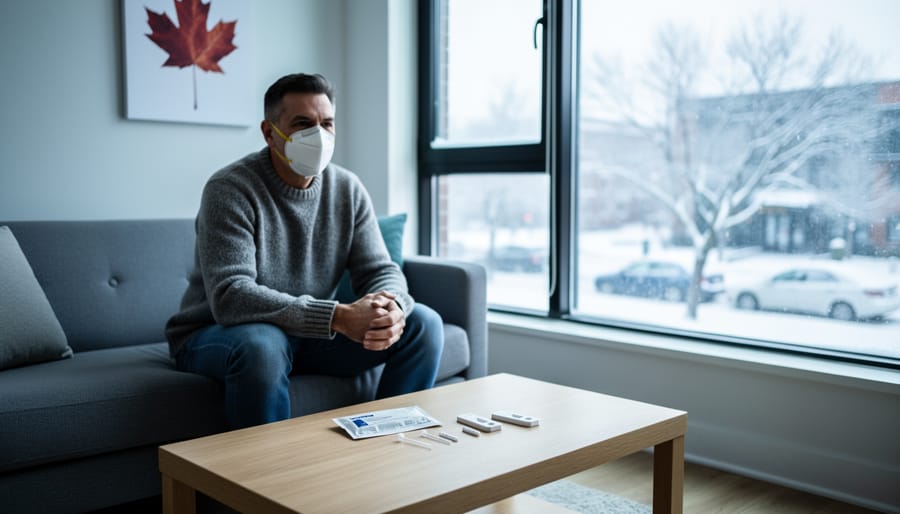
If you’re searching for FDA COVID isolation guidelines, you need to know that the FDA doesn’t set isolation rules—they regulate COVID tests. The CDC in the United States and Health Canada with the Public Health Agency of Canada (PHAC) provide the actual isolation recommendations that matter for your health and community safety.
Isolate immediately when you test positive for COVID-19, staying home and away from others for at least 5 days from symptom onset or your positive test date, whichever came first. Most Canadians can end isolation after 5 days if fever has resolved without medication for 24 hours and other symptoms are improving, though some provinces recommend 10 days for certain populations.
Wear a high-quality mask around others through day 10 if you must leave isolation early, as you may still be contagious even when feeling better. Avoid high-risk individuals, crowded indoor spaces, and healthcare settings during this extended precaution period.
Test yourself using a rapid antigen test on day 5 or later to help determine if you’re still infectious, though a positive result doesn’t necessarily mean you must continue isolating beyond your jurisdiction’s minimum requirement. The FDA ensures these tests meet safety and effectiveness standards, giving you confidence in the results guiding your decisions.
Understand that guidelines evolve based on emerging evidence about new variants, transmission patterns, and community immunity levels. Check your provincial health authority’s current recommendations, as isolation rules vary across Canada and may differ from American CDC guidance that often appears first in search results.
Understanding the FDA’s Role in COVID-19 Testing
FDA-Approved COVID-19 Tests and Their Accuracy
The FDA has authorized several types of COVID-19 tests, each serving different needs. Molecular tests (PCR tests) are considered the gold standard, offering accuracy rates above 95% when administered properly. These tests detect the virus’s genetic material and are ideal when you need definitive results, though they typically require lab processing and take longer to receive results.
Rapid antigen tests are widely available for home use and provide results in 15-30 minutes. While convenient, their accuracy varies between 80-90% depending on when you test. They work best when viral loads are highest, typically during the first five days of symptoms. For the most reliable results, consider taking two tests 24-48 hours apart if your first test is negative but you still have symptoms.
At-home molecular tests combine convenience with higher accuracy, though they’re generally more expensive than rapid antigen tests. The FDA maintains an updated list of authorized tests on their website, which can help you choose the right option for your situation.
Remember that no test is 100% accurate. If you have COVID-19 symptoms or known exposure, isolate and consult with a healthcare provider regardless of test results. Testing at the right time matters just as much as choosing the right test type for reliable outcomes.
How Test Results Guide Isolation Decisions
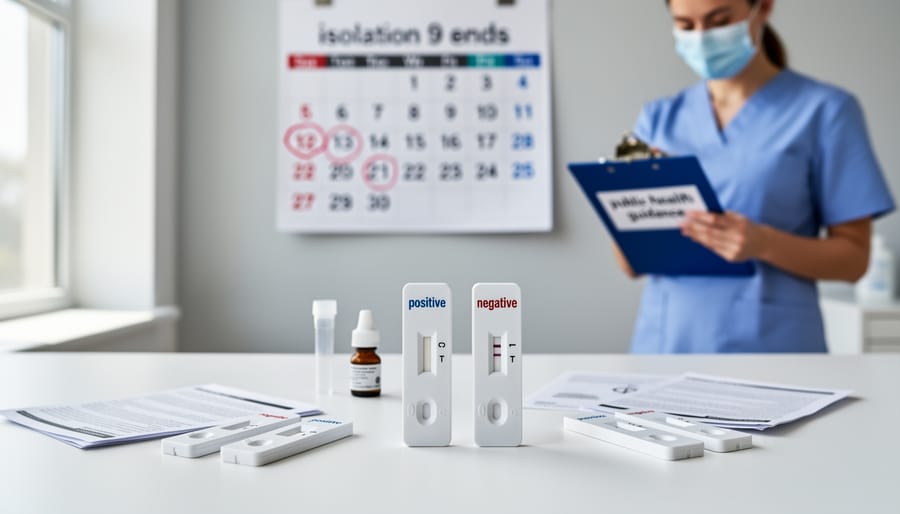
Test results play a key role in determining when to isolate and when you can safely return to your regular activities. If you test positive for COVID-19 using an FDA-authorized or Health Canada-approved test, public health authorities recommend starting isolation immediately to prevent spreading the virus to others. This applies whether you have symptoms or not.
A positive result means the virus is currently present in your system, and you’re most contagious in the days immediately following. During this time, staying home protects vulnerable people in your community, including older adults and those with weakened immune systems.
Negative test results can help you make informed decisions too. If you’ve completed your isolation period and test negative, particularly with a rapid antigen test, this suggests you’re less likely to spread the virus. However, timing matters—testing too early might give a false negative result.
For Canadians, it’s important to follow guidance from your provincial or territorial health authority alongside national recommendations. They may have specific requirements based on your vaccination status, symptoms, and local transmission rates. When in doubt, consulting with your healthcare provider can help you understand how test results apply to your specific situation and ensure you’re making the safest choice for yourself and others.
Current CDC Isolation Guidelines (U.S. Context)
When to Isolate After Testing Positive
Understanding when to isolate helps protect those around you while you recover. Current Canadian public health guidance recommends staying home when you test positive for COVID-19, though specific timelines have evolved as the virus and immunity levels have changed.
Generally, isolation should begin as soon as you receive a positive test result or develop symptoms. The standard recommendation is to isolate for at least 5 days from when symptoms started or from your test date if you have no symptoms. Day zero is the day symptoms began or your test date.
You can typically end isolation after 5 days if your symptoms are improving and you’ve been fever-free for at least 24 hours without medication. However, some people may need to isolate longer, especially if symptoms persist or worsen. Those with weakened immune systems should consult their healthcare provider, as they may require extended isolation periods.
After ending isolation, continue taking precautions for several more days. Wear a well-fitting mask around others, avoid high-risk settings like hospitals or long-term care facilities, and maintain good hand hygiene. Remember that you may still be contagious even after symptoms improve, so these extra precautions help protect vulnerable people in your community while you complete your recovery.
Returning to Normal Activities Safely
Once your isolation period ends, you can gradually return to your regular routine. According to current Canadian health guidelines, most people can safely resume work, school, and social activities after completing their recommended isolation period, typically when symptoms have significantly improved and fever has resolved without medication for at least 24 hours.
However, it’s important to take extra precautions for several days after ending isolation. Continue wearing a well-fitting mask in public indoor spaces, especially around people who may be at higher risk for severe illness. Avoid close contact with vulnerable individuals, such as older adults or those with weakened immune systems, for at least 10 days from when your symptoms first appeared.
Before returning to work or school, check if your employer or educational institution has specific return-to-work policies. Some workplaces may require documentation or a negative test result, though testing negative is not always necessary to end isolation under current guidelines.
When resuming social activities, consider starting with outdoor gatherings where transmission risk is lower. Maintain good hand hygiene, ensure proper ventilation in indoor spaces, and stay home if you develop any new symptoms.
Remember that everyone’s recovery timeline differs. Listen to your body and don’t rush back to high-intensity activities if you’re still experiencing fatigue or other lingering symptoms. Gradually increasing your activity level helps prevent setbacks and supports complete recovery. If you have concerns about returning to specific activities, consult your healthcare provider for personalized guidance.
Health Canada and PHAC Guidelines for Canadian Residents
Canada’s Official Isolation Recommendations
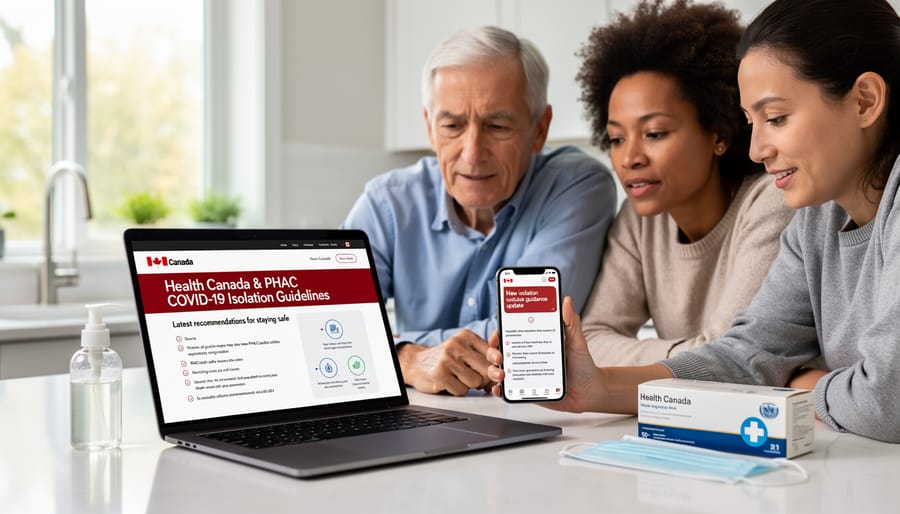
If you’re in Canada, it’s important to know that Health Canada and the Public Health Agency of Canada (PHAC) set the isolation guidelines you should follow, not the FDA. Understanding these recommendations helps protect both your health and the wellbeing of those around you.
Currently, PHAC recommends staying home if you test positive for COVID-19, regardless of vaccination status. You should isolate for at least 5 days from when your symptoms started, or from your positive test date if you never developed symptoms. You can typically end isolation after 5 days if your symptoms are improving and you’ve been fever-free for 24 hours without using fever-reducing medication. However, you should continue taking precautions like wearing a well-fitted mask around others for an additional 5 days.
For testing requirements, PHAC doesn’t require a negative test to end isolation. The focus is on your symptom improvement and the timeframe. Some provinces may have additional testing recommendations, so check with your local public health authority for specific guidance.
You should seek medical attention if you experience severe symptoms such as difficulty breathing, persistent chest pain or pressure, confusion, inability to wake or stay awake, or bluish lips or face. These signs require immediate care. Contact your healthcare provider or call 811 for non-emergency health advice.
Remember, these guidelines may evolve as we learn more about COVID-19 variants and transmission patterns. Always check PHAC’s website or consult with your healthcare provider for the most current recommendations tailored to your situation.
Provincial Variations Across Canada
While this article has focused on U.S. FDA and CDC guidance, it’s important to know that COVID-19 isolation guidelines can differ across Canadian provinces and territories. Each region has the authority to implement its own public health measures based on local circumstances, healthcare capacity, and transmission rates.
Most provinces follow the general recommendations from the Public Health Agency of Canada (PHAC), but specific details—such as isolation duration, testing requirements, and return-to-work protocols—may vary. Some provinces have shorter isolation periods for fully vaccinated individuals, while others maintain consistent timelines regardless of vaccination status. Guidelines may also differ for specific populations, including COVID-19 in children, healthcare workers, and immunocompromised individuals.
To find the most current and accurate information for your area, visit your provincial or territorial health department’s website. These resources provide region-specific guidance tailored to local conditions. You can also contact your local public health unit for personalized advice based on your situation.
Healthcare providers remain your best source for individual recommendations, especially if you have underlying health conditions or concerns about managing isolation. They can help you understand how provincial guidelines apply to your specific circumstances and provide evidence-based advice to protect both your health and your community’s wellbeing.
Practical Isolation Management at Home
Protecting Your Household Members
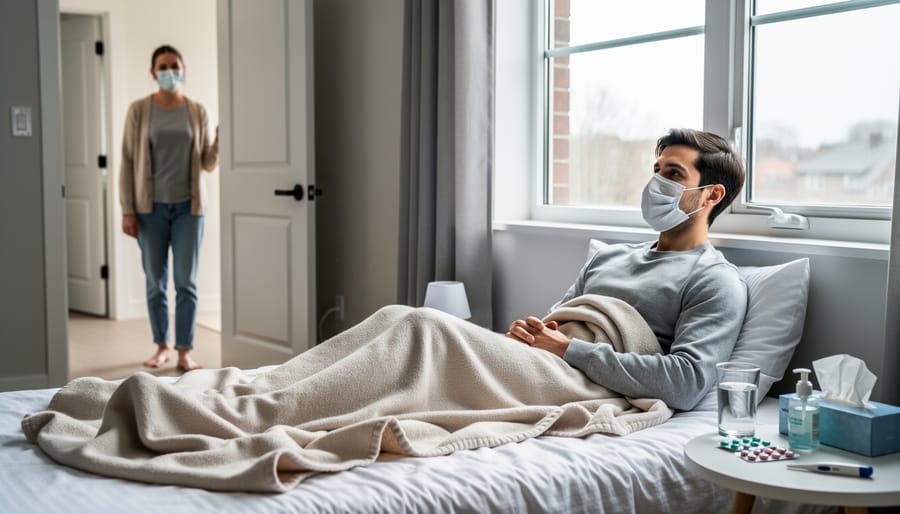
When someone in your household tests positive for COVID-19, taking swift action can significantly reduce the risk of spreading the virus to others in your home. Start by designating a separate room where the infected person can isolate, ideally with their own bathroom if possible. This separation is one of the most effective ways to protect vulnerable household members.
Improve air circulation throughout your home by opening windows and using fans to create airflow away from common areas. If you have portable air purifiers with HEPA filters, place them in shared spaces to help reduce airborne viral particles. Fresh air dilutes potential virus concentration and makes shared spaces safer for everyone.
Both the infected person and other household members should wear well-fitting masks when sharing spaces becomes necessary, such as using the same bathroom or kitchen. High-quality masks like N95s or KN95s offer better protection than cloth masks. Keep these interactions brief and ensure good ventilation during these times.
Designate separate dishes, utensils, towels, and bedding for the person isolating. Clean and disinfect high-touch surfaces like doorknobs, light switches, and countertops at least once daily using household disinfectants. Regular handwashing for all household members remains essential.
These practical steps, combined with proper isolation duration, help keep everyone safer while supporting your loved one’s recovery.
Maintaining Your Health During Isolation
Isolation doesn’t mean putting your health on hold. Focusing on your well-being during this time can support your recovery and help you feel better both physically and emotionally.
Start with nutrition basics. Stay well-hydrated by drinking plenty of water, herbal teas, or broth-based soups. Choose nutrient-dense foods like fruits, vegetables, whole grains, and lean proteins when your appetite allows. If you’re experiencing reduced appetite or taste changes, try smaller, more frequent meals. Keep easy-to-prepare options on hand, and don’t hesitate to ask household members or friends to help with grocery delivery if needed.
Movement matters, even in limited spaces. Gentle activities like stretching, yoga, or walking around your home can boost circulation and mood. Listen to your body and rest when needed, but try to maintain some activity as you’re able. Short movement breaks throughout the day can prevent stiffness and support your recovery.
Your mental health during isolation deserves equal attention. Stay connected with loved ones through phone calls or video chats. Maintain a routine with regular sleep and wake times. Limit news consumption if it increases anxiety, and focus on activities you find calming like reading, meditation, or listening to music.
If symptoms worsen or you develop difficulty breathing, seek medical attention promptly. Your healthcare provider can discuss the latest COVID-19 treatments if appropriate for your situation. Remember, taking care of yourself during isolation supports both your recovery and your household’s health.
When to Test and When to End Isolation
The Right Time to Take a COVID-19 Test
Timing your COVID-19 test correctly helps ensure you get the most accurate results. If you’ve been exposed to someone with COVID-19, it’s best to wait at least five days before testing, as the virus needs time to replicate to detectable levels in your system. Testing too early can lead to false negative results, even if you’re infected.
If you develop symptoms like fever, cough, or loss of taste or smell, test as soon as possible. Early testing when symptoms appear typically provides reliable results because viral levels are usually high enough to detect during this period.
For the most dependable outcomes, use rapid antigen tests in the morning when viral loads in your nasal passages tend to be higher. If your first test is negative but symptoms persist or you had a known exposure, test again 24 to 48 hours later. The virus may not have reached detectable levels during your initial test.
Consider testing before gathering with vulnerable individuals, even without symptoms or known exposure. This proactive approach helps protect those at higher risk of severe illness. Remember that while no test is perfect, following these timing recommendations significantly improves accuracy and helps you make informed decisions about isolation and protecting others around you.
Using Test Results to Guide Your Isolation Timeline
Understanding your test results can help you make informed decisions about ending isolation safely. If you test positive for COVID-19, Health Canada recommends isolating for at least 5 days from symptom onset or your positive test date if you have no symptoms.
Consider retesting before ending isolation, particularly if you work with vulnerable populations or live with high-risk individuals. Rapid antigen tests are practical for this purpose. If you test negative on day 5 or later and your symptoms have improved for at least 24 hours without fever-reducing medication, you can generally end isolation while continuing to wear a high-quality mask around others for an additional 5 days.
However, if you still test positive after 5 days, continue isolating. Many people remain contagious beyond the initial period. Retest every 1-2 days until you receive a negative result or until day 10, when most people are no longer infectious even with a positive test.
If symptoms worsen or persist beyond 10 days, consult your healthcare provider. This is especially important if you’re experiencing long COVID symptoms such as ongoing fatigue, breathlessness, or cognitive difficulties. Your doctor can provide personalized guidance based on your health status and test results.
Understanding COVID-19 testing and isolation guidelines helps you make informed decisions that protect both your health and your community. While your search may have brought you here looking for FDA information, it’s important to remember that as a Canadian, your guidance comes from Health Canada and the Public Health Agency of Canada, not the FDA.
The key takeaways are straightforward: if you test positive for COVID-19, isolate to prevent spreading the virus to others. Current recommendations suggest staying home until your symptoms improve and you’ve been fever-free for at least 24 hours without medication. Testing timing matters too—wait until symptoms appear rather than testing immediately after exposure, as tests are most accurate when viral loads are higher.
COVID-19 guidelines continue to evolve as we learn more about the virus and as community transmission levels change. This means staying informed through reliable Canadian sources is essential. Check Health Canada and your provincial health authority websites regularly for the most current recommendations in your area.
Remember that following isolation guidelines isn’t just about following rules—it’s about caring for yourself while protecting vulnerable people in your community, including those with weakened immune systems or chronic health conditions. By testing appropriately, isolating when positive, and staying updated on current guidance, you’re taking an active role in your health and contributing to community wellness. When in doubt about your specific situation, don’t hesitate to contact your healthcare provider for personalized advice.