
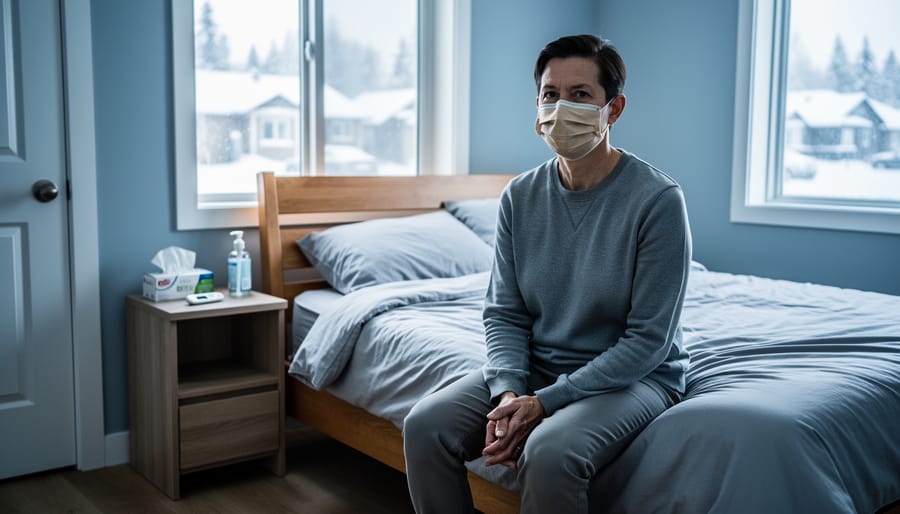
Isolate immediately for at least 5 days if you test positive for COVID-19 or develop symptoms like fever, cough, or difficulty breathing. Day 0 counts as the day symptoms begin or your positive test date if you have no symptoms. Stay in a separate room away from household members, use a dedicated bathroom when possible, and wear a well-fitting mask when you must share spaces.
Monitor your symptoms daily and seek medical attention if you experience severe shortness of breath, chest pain, confusion, or inability to stay awake. Most people with mild to moderate symptoms can recover safely at home with rest, fluids, and over-the-counter medications for fever and pain relief.
You can end isolation after 5 days if your symptoms are improving and you’ve been fever-free for 24 hours without medication. Continue wearing a mask around others through day 10, as you may still be contagious. People with weakened immune systems or severe illness should consult their healthcare provider, as they may need to isolate longer.
Rapid antigen tests can help determine if you’re still infectious, though a positive test after 5 days doesn’t automatically require extended isolation if symptoms have resolved. Follow current public health guidance, as recommendations evolve based on circulating variants and new evidence.
Understanding COVID-19 Isolation: What It Means and Why It Matters
Isolation vs. Quarantine: Knowing the Difference
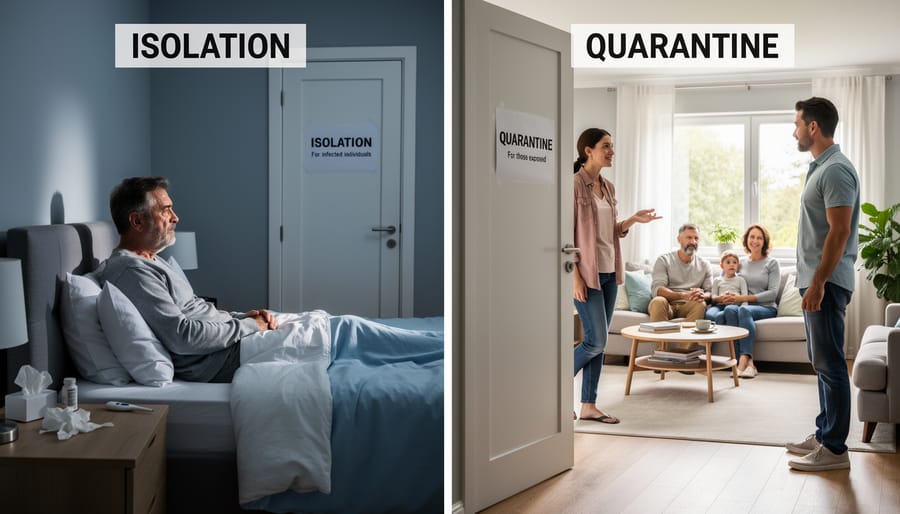
Understanding the difference between isolation and quarantine helps you protect yourself and others effectively. Isolation is for people who have tested positive for COVID-19 or are showing symptoms of the infection. During isolation, you stay home and away from others, including household members when possible, to prevent spreading the virus while you’re contagious.
Quarantine, on the other hand, is for people who have been exposed to COVID-19 but aren’t yet showing symptoms and haven’t tested positive. Quarantine allows time to monitor for symptom development and helps prevent potential spread if you become infected.
The key distinction is your infection status. If you’re sick or tested positive, you isolate. If you’ve been exposed but feel well, you may need to quarantine depending on current public health guidance.
Both measures are temporary precautions designed to break the chain of transmission. Canadian public health authorities provide specific timeframes for each based on the latest evidence. Following the appropriate protocol for your situation protects vulnerable community members, including older adults and those with underlying health conditions, while helping reduce overall community transmission.
Why Isolation Still Matters
Isolation remains one of the most effective tools we have to control COVID-19 spread in our communities. When you stay home during your infectious period, you significantly reduce the chance of passing the virus to others. Research shows that most transmission occurs in the days immediately before and after symptoms appear, making early isolation crucial.
This protective measure is especially important for safeguarding vulnerable individuals around us. People with weakened immune systems, older adults, and those with underlying health conditions face higher risks of severe illness from COVID-19. By isolating when infected, you create a protective barrier that helps keep these community members safe.
Isolation also plays a vital role in preventing healthcare system overwhelm. When many people become sick simultaneously, hospitals and clinics face strain on their resources, staffing, and capacity to provide care. By breaking transmission chains through isolation, we help ensure that healthcare facilities can continue serving everyone who needs medical attention, whether for COVID-19 or other health concerns.
Following isolation guidelines demonstrates care for your community while giving your body the rest it needs to recover effectively.
Current Canadian Guidelines for COVID-19 Isolation
How Long Should You Isolate?
The length of your COVID-19 isolation depends on your symptoms and overall health status. Current Canadian public health guidelines recommend a minimum isolation period to help prevent spreading the virus to others.
If you test positive for COVID-19, you should isolate for at least 5 days from when your symptoms began, or from your positive test date if you have no symptoms. Day 0 is the day your symptoms started or your test date.
After the initial 5-day period, you can end isolation if your symptoms have been improving for at least 24 hours and you no longer have a fever without using fever-reducing medication. Many people feel significantly better by day 5 or 6, but recovery timelines vary from person to person.
Even after ending isolation, you should continue taking precautions for an additional 5 days (until day 10). During this time, wear a well-fitting mask when around others, avoid high-risk settings like hospitals or long-term care facilities, and maintain physical distancing when possible.
Some individuals may need to isolate longer. If you have a severely weakened immune system or experienced severe illness requiring hospitalization, consult your healthcare provider about extending your isolation period. Similarly, if you still have a fever after 5 days, continue isolating until you’ve been fever-free for 24 hours.
Your vaccination status doesn’t change these isolation requirements, though vaccinated individuals often experience milder symptoms and may recover more quickly. Always follow the specific guidance provided by your local public health authority, as recommendations may vary slightly between provinces and territories.
Provincial Differences You Should Know
While Canada’s federal health authority provides baseline COVID-19 isolation guidance, it’s important to recognize that individual provinces and territories may have specific requirements that differ slightly from national recommendations. Each region tailors its approach based on local case numbers, healthcare capacity, and other public health considerations.
Some provinces may have different isolation periods for specific settings like schools, healthcare facilities, or long-term care homes. Others might have unique testing recommendations or requirements for certain high-risk environments. For example, healthcare workers or those working with vulnerable populations may face stricter isolation protocols than the general public.
To ensure you’re following the most accurate and relevant guidance for your situation, check your provincial or territorial health authority’s website directly. These resources provide the most up-to-date information specific to your region and may include additional supports available to residents during isolation.
Your local public health unit can also answer questions about isolation requirements in your area and provide guidance tailored to your circumstances. They can clarify whether you need documentation for work or school absences and direct you to resources like food delivery programs or financial supports if you’re unable to work during isolation.
Staying informed about your region’s specific guidelines helps you protect yourself and your community effectively while ensuring you’re meeting any local requirements.
When to Test and How Testing Affects Your Isolation
When Should You Get Tested?
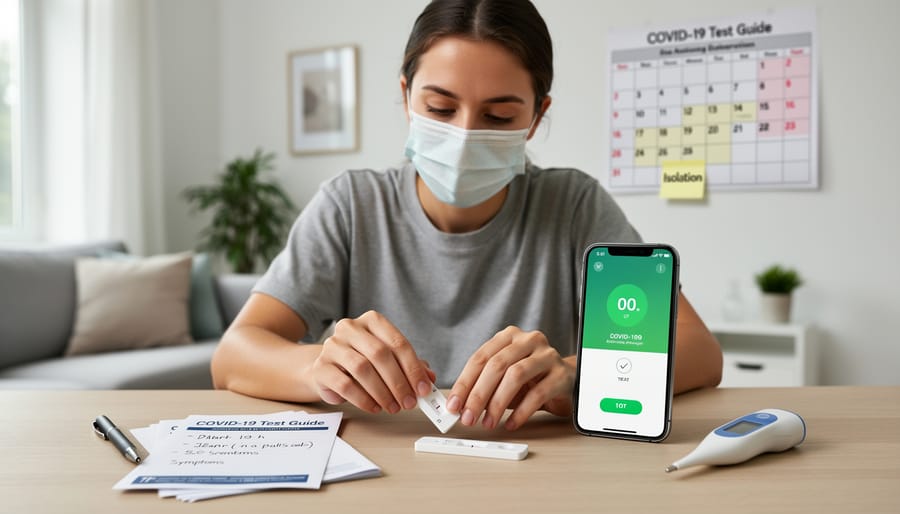
Getting tested at the right time helps you make informed decisions about isolation and protects those around you. You should consider testing if you develop COVID-19 symptoms such as fever, cough, sore throat, fatigue, or difficulty breathing. Testing as soon as symptoms appear provides the most accurate results and helps you start isolation promptly if positive.
If you’ve been exposed to someone with COVID-19, wait at least 24 hours after exposure before testing, as testing too early may produce false negative results. Testing 3-5 days after exposure typically yields the most reliable outcomes.
Many Canadians also choose to test before attending gatherings with vulnerable individuals, travelling, or returning to work after illness. This pre-event testing adds an extra layer of protection for others.
Rapid antigen tests are widely available at pharmacies and provide results within 15-20 minutes at home. PCR tests, available through healthcare providers or testing centres, are more sensitive but take longer to process. If your rapid test is negative but symptoms persist, consider retesting after 24-48 hours or seeking a PCR test for confirmation.
Testing empowers you to take appropriate action and helps prevent further spread in your community.
Understanding Your Test Results
Understanding your COVID-19 test results helps you make informed decisions about isolation. Rapid antigen tests detect viral proteins and work best when you have symptoms or high viral loads. A positive result means you likely have COVID-19 and should isolate immediately. PCR tests are more sensitive and detect the virus’s genetic material, making them reliable even with lower viral loads.
If you test positive on either test, begin isolation right away and follow current Canadian public health guidelines. A negative rapid test doesn’t always mean you’re COVID-free, especially early in infection. If you have symptoms but test negative, consider retesting in 24 to 48 hours or getting a PCR test for confirmation.
False negatives can occur if you test too early in your infection or don’t follow test instructions properly. False positives are rare but can happen. If your result doesn’t match your symptoms or exposure history, consult a healthcare provider for guidance.
When you receive any test result, document the date and type of test. This information helps you track your isolation timeline and supports conversations with healthcare providers about your next steps.
Testing Negative: Can You End Isolation Early?
While a negative rapid antigen test can be encouraging, current Canadian public health guidance does not recommend ending isolation early based solely on test results. The standard isolation period remains important because viral load can fluctuate, and tests may not always capture infectiousness accurately.
If you choose to test, rapid antigen tests are most reliable from day 5 onwards of your isolation period. Testing earlier may produce false negatives because viral loads might not yet be high enough to detect. Two consecutive negative tests, taken 24 hours apart, can provide greater confidence that you’re no longer contagious, though this doesn’t override the recommended isolation timeframe.
When you do end isolation after meeting the criteria, continue taking precautions for an additional 5 days. Wear a well-fitting mask in public spaces, avoid high-risk settings like hospitals or long-term care facilities, and postpone visits with vulnerable individuals. Some people may continue testing positive for weeks after infection, even when no longer contagious. This occurs because tests can detect viral fragments rather than active virus.
Remember that your symptoms are also important indicators. If you still have a fever or feel unwell, extend your isolation regardless of test results. Your health and the safety of those around you remain the priority.
Practical Tips for Managing Isolation at Home
Protecting Others in Your Household
When someone in your household tests positive for COVID-19, taking proactive steps can significantly reduce transmission risk to others. Here are evidence-based strategies to protect your family members.
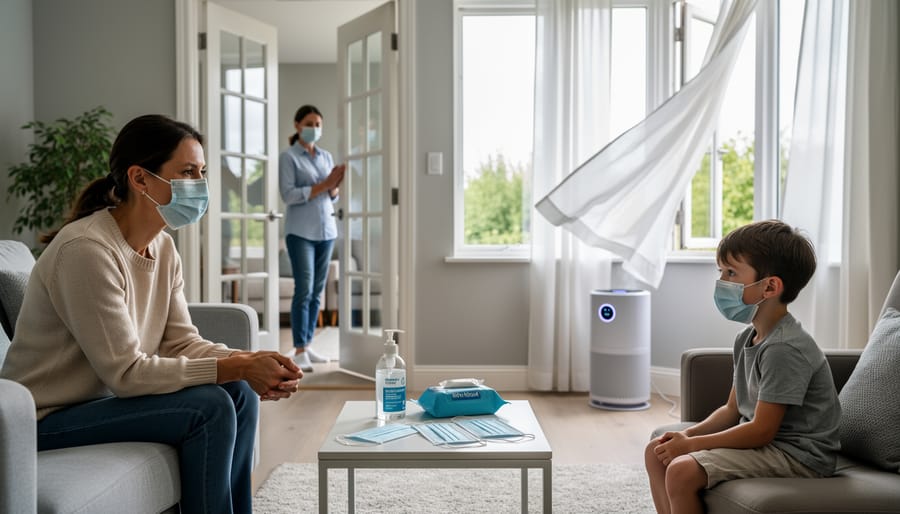
Ideally, the person with COVID-19 should stay in a separate room and use a designated bathroom if possible. If sharing a bathroom is unavoidable, the infected person should clean and disinfect surfaces after each use, focusing on high-touch areas like faucets, toilet handles, and door knobs. Wait at least 30 minutes before others use the space, allowing viral particles to settle.
Improving indoor air quality is crucial. Open windows whenever possible to increase fresh air circulation, even for just 15 minutes several times daily. If you have HEPA air purifiers, place them in shared spaces and the isolation room.
Both the isolated person and household members should wear well-fitting masks during any necessary interactions. This is especially important when caring for vulnerable individuals or children and COVID-19 exposed household members who cannot isolate separately.
Avoid sharing personal items like towels, dishes, and utensils. Wash dishes in hot, soapy water or use a dishwasher. Handle the sick person’s laundry carefully—wear gloves if possible and wash items in the warmest appropriate water setting.
Disinfect frequently touched surfaces at least once daily, including doorknobs, light switches, countertops, and phone screens. These simple measures, combined with good hand hygiene, create protective layers that reduce transmission risk throughout your home.
Taking Care of Your Physical Health During Isolation
Taking good care of yourself physically during COVID-19 isolation supports your recovery and helps prevent complications. Start by staying well-hydrated throughout the day. Drink water, herbal teas, or warm broths regularly, especially if you have a fever. Proper hydration helps your body fight infection and eases symptoms like congestion and fatigue.
Focus on nourishing your body with balanced meals when you have an appetite. Choose easy-to-digest foods rich in vitamins and minerals, such as soups, fruits, vegetables, and whole grains. Don’t worry if you’re eating less than usual—this is normal during illness. Small, frequent meals may be easier to manage.
Rest is crucial for recovery, but gentle movement can help when you’re feeling up to it. Light stretching or short walks around your home can prevent stiffness and support circulation, but listen to your body and avoid overexertion.
Monitor your symptoms daily and watch for warning signs that require medical attention: difficulty breathing, persistent chest pain, confusion, inability to stay awake, or bluish lips or face. Contact your healthcare provider if symptoms worsen or if you have concerns about your recovery. Most people recover at home with supportive care, but knowing when to seek help is essential for your safety.
Supporting Your Mental Health While Isolated
Isolation can feel overwhelming, but there are effective ways to protect your mental wellbeing during this challenging time. Start by establishing a daily routine that includes regular sleep schedules, mealtimes, and activities you enjoy. This structure provides stability and a sense of normalcy.
Stay connected with friends and family through video calls, phone conversations, or messaging apps. Virtual coffee dates or online game nights can help reduce feelings of loneliness. Consider joining online support groups where others share similar experiences.
Physical activity significantly benefits mental health. Try at-home workouts, yoga, or simple stretching exercises. Even movement breaks throughout the day can boost your mood and energy levels.
Limit your news consumption if it increases anxiety, and focus on reliable sources like your provincial health authority. Practice relaxation techniques such as deep breathing, meditation, or mindfulness apps.
It’s important to recognize when you need additional help. If you experience persistent sadness, anxiety, sleep problems, or difficulty coping, reach out for professional mental health support. Many services offer virtual counseling options, and crisis lines are available 24/7 across Canada. Remember, seeking help demonstrates strength, not weakness.
When You Can Safely End Isolation
Signs You’re Ready to End Isolation
Knowing when it’s safe to end isolation helps protect others while allowing you to return to normal activities. Canadian public health guidance recommends staying home for at least 5 days after symptoms begin or after a positive test if you have no symptoms.
You’re ready to end isolation when you meet all of these criteria: at least 5 days have passed since your symptoms started, your symptoms are improving for at least 24 hours, and you’ve been fever-free for at least 24 hours without using fever-reducing medications like acetaminophen or ibuprofen. Pay attention to your energy levels too—while you don’t need to feel completely back to normal, you should notice steady improvement.
Some people, particularly those with weakened immune systems or severe illness, may need to isolate longer. If you’re unsure about your specific situation, contact your healthcare provider for personalized advice.
Even after ending isolation, consider wearing a well-fitting mask in public spaces for an additional 5 days, especially around people at higher risk of severe illness. Continue monitoring your symptoms and practice good hand hygiene. If your symptoms worsen after ending isolation, stay home and consult with a healthcare professional to ensure you’re taking the right steps for your recovery.
Precautions After Isolation Ends
Even after your isolation period ends, taking some precautions helps protect others and supports your recovery. Consider wearing a well-fitting mask in public indoor spaces for an additional five days, especially around vulnerable individuals like seniors or those with weakened immune systems. Avoid high-risk settings such as crowded events, healthcare facilities, or long-term care homes during this time. Continue monitoring yourself for any returning symptoms, as some people experience symptom recurrence. If symptoms return or worsen, consult your healthcare provider and consider additional isolation. Gradually ease back into your regular activities, listening to your body’s signals. Some people experience lingering fatigue or other long COVID symptoms that may require ongoing management. Stay hydrated, get adequate rest, and maintain good hand hygiene as you resume normal routines.
Special Considerations for High-Risk Individuals
If you have certain health conditions or are at higher risk for severe COVID-19, extra precautions during isolation are important. Understanding when to seek additional medical support can help protect your health and recovery.
Immunocompromised individuals, including those receiving cancer treatment, taking immunosuppressive medications, or living with conditions that weaken the immune system, should consult their healthcare provider early in their infection. You may need to isolate for longer than the standard period, as your body may take more time to clear the virus. Your doctor can advise on appropriate COVID-19 treatment options and determine the safest timeline for ending isolation based on your specific situation.
Older adults, particularly those over 60, face increased risks for complications. Monitor your symptoms closely and don’t hesitate to contact your healthcare provider if you experience worsening shortness of breath, persistent chest pain, confusion, or difficulty staying awake. Early intervention can make a significant difference in outcomes.
People with chronic conditions such as heart disease, diabetes, lung disease, or kidney disease should maintain regular contact with their healthcare team during isolation. These conditions can be affected by COVID-19 infection, and your medications or management plan may need temporary adjustments.
Consider extended isolation if you continue testing positive after the recommended period, especially if you live with high-risk individuals. Consult your healthcare provider about retesting timelines and when it’s safe to end isolation.
Remember, seeking medical guidance isn’t a sign of overreacting. Your healthcare provider can offer personalized advice based on your health history, current symptoms, and risk factors. Many offer virtual consultations, making it easier to get support while isolating safely at home.
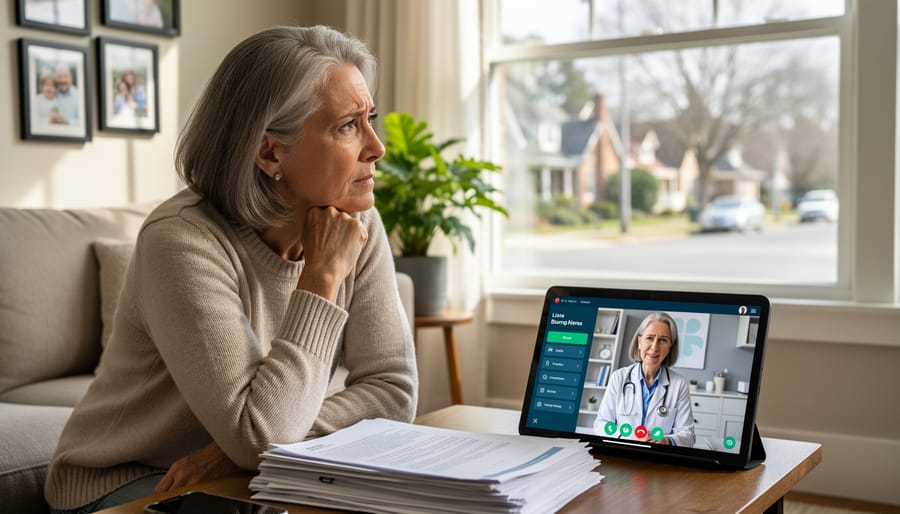
Following isolation guidelines when you have COVID-19 is one of the most effective ways to protect your community and prevent further spread of the virus. While staying home can feel challenging, remember that you’re taking an important step to safeguard vulnerable individuals, including older adults, people with compromised immune systems, and those with underlying health conditions. Your commitment to isolating properly is a meaningful act of community care that makes a real difference.
As you navigate your isolation period, focus on the practical steps that support your recovery: rest well, stay hydrated, monitor your symptoms, and reach out to healthcare providers if you have concerns. Remember that most people recover fully at home with basic self-care measures.
Public health guidelines continue to evolve based on the latest scientific evidence and emerging variants, so stay informed through trusted sources like your provincial health authority and the Public Health Agency of Canada. If you’re unsure about any aspect of isolation or when it’s safe to return to normal activities, don’t hesitate to contact your healthcare provider for personalized guidance. You will get through this successfully, and your efforts to follow these guidelines help protect everyone around you.