

No single hormone controls your appetite—it’s a sophisticated conversation between your brain and body involving multiple chemical messengers working together. If you’ve ever wondered why you feel hungry at certain times or why some meals satisfy you longer than others, understanding these hormones provides the answers you need to take control of your eating patterns.
Ghrelin and leptin are the primary appetite regulators, often called the “hunger hormone” and “fullness hormone” respectively. Ghrelin signals your brain when your stomach is empty and it’s time to eat, while leptin tells your brain you’ve had enough and should stop eating. When these hormones function properly, you experience natural hunger cues and appropriate fullness. However, chronic sleep deprivation, high stress levels, and poor dietary choices can disrupt this delicate balance, leading to increased hunger, overeating, and weight gain.
Beyond these two main players, insulin, cortisol, peptide YY, and cholecystokinin all influence when you feel hungry and how satisfied you feel after meals. Insulin helps regulate blood sugar and affects fat storage, while cortisol—your stress hormone—can trigger cravings for high-calorie comfort foods. Understanding how these hormones interact gives you practical knowledge to make better choices about meal timing, food selection, and lifestyle habits.
This article breaks down the science behind appetite regulation in straightforward terms and provides evidence-based strategies to support healthy hormone function. You’ll discover how to work with your body’s natural signals rather than fighting against them, leading to better energy, improved weight management, and a healthier relationship with food.
How Your Brain and Hormones Talk About Hunger
The Hypothalamus: Your Appetite Control Center
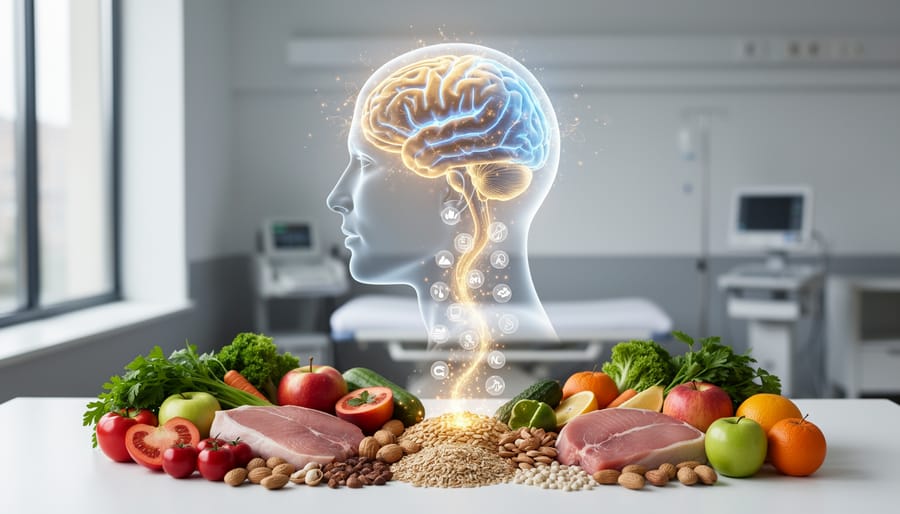
Deep within your brain lies a small but mighty region called the hypothalamus, which acts as your body’s appetite control center. Think of it as mission control for hunger and fullness signals. This almond-sized structure constantly monitors hormonal messages circulating through your bloodstream, including signals from ghrelin (your hunger hormone) and leptin (your fullness hormone).
The hypothalamus receives these chemical messengers and processes the information to determine whether you should feel hungry or satisfied. When ghrelin levels rise before meals, the hypothalamus triggers hunger sensations, prompting you to eat. Conversely, when leptin signals that you have enough energy stored, the hypothalamus helps you feel full and satisfied.
This control center doesn’t work alone. It integrates information from multiple hormones, your nervous system, and even your gut bacteria to make real-time decisions about your appetite. Understanding this process helps explain why appetite regulation is complex and why factors like stress, sleep deprivation, and irregular eating patterns can disrupt these finely tuned signals. By supporting your hypothalamus through healthy lifestyle choices, you can work with your body’s natural appetite control system rather than against it.
Why Multiple Hormones Work Together
Your body relies on multiple hormones to control appetite because eating is too critical for survival to depend on a single signal. This built-in redundancy creates a fail-safe system that protects you from both starvation and overeating.
Think of it like having multiple smoke detectors in your home rather than just one. If appetite depended on only one hormone, a single malfunction could be dangerous. Instead, your body uses an interconnected network of hormones that communicate with your brain and organs, providing constant feedback about energy levels, nutrient availability, and storage status.
This complex system also allows for nuanced responses to different situations. When you’re stressed, certain hormones increase appetite for quick energy. After a protein-rich meal, different hormones signal fullness more strongly than after eating simple carbohydrates. Your body even adjusts hormone levels based on sleep patterns and time of day.
The interplay between these hormones helps maintain energy balance over time, not just meal to meal. This sophisticated system evolved to help humans survive periods of food scarcity while preventing excessive weight gain during abundance. Understanding this complexity empowers you to work with your body’s natural signals rather than against them.
Ghrelin: The Hormone That Makes You Hungry
When and Why Ghrelin Levels Rise
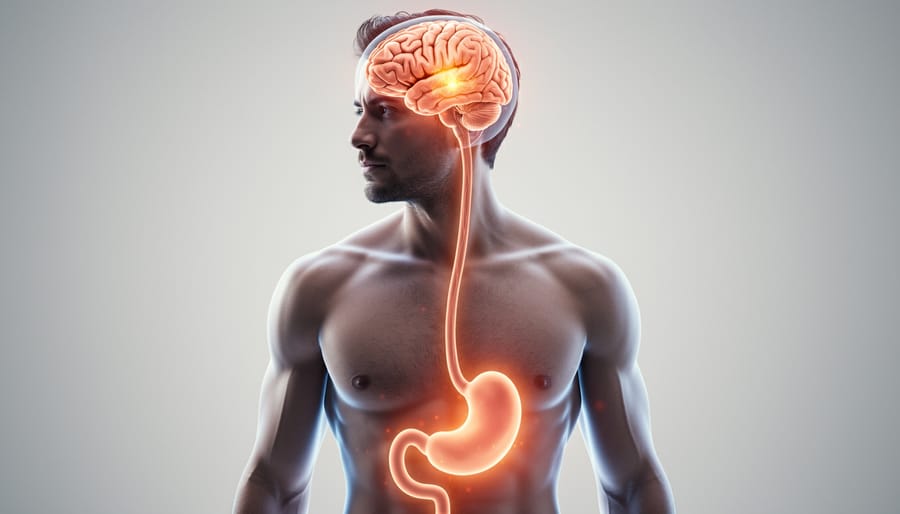
Ghrelin levels follow predictable patterns that can help you better manage your eating schedule. This hormone typically rises 1-2 hours before your usual meal times, which explains why you might feel hungry around the same time each day. Your body learns to anticipate meals based on your routine.
Several situations trigger increased ghrelin production. When you restrict calories or follow a weight-loss diet, ghrelin levels often increase as your body attempts to restore energy balance. This biological response explains why maintaining weight loss can feel challenging—your hunger signals intensify even when you’re making healthy choices.
Sleep deprivation also significantly raises ghrelin levels. Canadians who consistently get less than seven hours of sleep may experience stronger hunger signals throughout the day, particularly cravings for high-calorie foods. This connection between poor sleep and increased appetite contributes to weight gain risk over time.
For practical appetite management, try maintaining consistent meal times to work with your body’s natural rhythm rather than against it. Prioritizing seven to nine hours of quality sleep each night helps keep ghrelin levels balanced. If you’re dieting, understanding that increased hunger is a normal hormonal response—not a lack of willpower—can help you stay patient and committed to gradual, sustainable changes.
What Affects Your Ghrelin Levels
Several lifestyle factors significantly influence your ghrelin levels, giving you practical ways to manage your hunger signals naturally. Sleep quality plays a crucial role—research shows that getting less than seven hours of sleep per night can increase ghrelin production by up to 15%, making you feel hungrier throughout the day. Prioritizing consistent sleep schedules helps keep your appetite hormones balanced.
Chronic stress also elevates ghrelin levels while simultaneously triggering cortisol release, creating a perfect storm for increased appetite and cravings. Managing stress through regular physical activity, mindfulness practices, or simply taking short breaks during your day can help regulate these hormonal responses.
Meal timing matters too. Eating at irregular times or skipping meals causes ghrelin spikes that may lead to overeating later. Establishing regular eating patterns, typically three balanced meals daily, helps maintain steadier ghrelin levels throughout the day.
Your food choices directly impact ghrelin as well. Protein-rich foods and high-fiber options like vegetables, whole grains, and legumes help suppress ghrelin more effectively than refined carbohydrates or sugary snacks. Including healthy fats in your meals also promotes satiety and helps manage hunger signals between meals. These simple, evidence-based strategies empower you to work with your body’s natural appetite regulation system.
Leptin: Your Fullness Signal
Leptin Resistance: When the Signal Breaks Down
Sometimes, despite having adequate leptin levels, the brain stops responding effectively to its fullness signals. This condition, called leptin resistance, is similar to how the body can become resistant to insulin in type 2 diabetes.
When you’re leptin resistant, your brain doesn’t receive the message that you have enough stored energy, even though your fat cells are producing plenty of leptin. As a result, you continue feeling hungry and your metabolism may slow down, making weight management increasingly difficult. Research shows that leptin resistance is closely connected to obesity and can create a frustrating cycle where weight gain leads to more resistance, which leads to further weight gain.
Several factors contribute to leptin resistance. Chronic inflammation in the body, particularly in the hypothalamus region of the brain, interferes with leptin signaling. High triglyceride levels in the blood can also block leptin from crossing the blood-brain barrier. Additionally, consistently elevated leptin levels from carrying excess weight may eventually cause the receptors to become less sensitive.
The good news is that leptin sensitivity can improve with lifestyle changes. Reducing inflammation through an anti-inflammatory diet rich in fruits, vegetables, and omega-3 fatty acids helps restore proper signaling. Regular physical activity improves leptin sensitivity while also supporting overall metabolic health. Getting adequate sleep is crucial, as sleep deprivation worsens leptin resistance. Avoiding highly processed foods and managing stress levels also support better leptin function over time.
The Supporting Cast: Other Key Appetite Hormones
Peptide YY (PYY): Your Post-Meal Satisfaction Hormone
Peptide YY, or PYY, is a powerful appetite-suppressing hormone released by cells in your intestines after you eat. The amount of PYY your body produces depends largely on what you consume. Protein-rich foods and high-fiber meals trigger the greatest PYY response, which is why these foods help you feel satisfied longer after eating.
Once released, PYY travels through your bloodstream to your brain, where it signals that you’ve had enough to eat. This hormone reaches peak levels about one to two hours after a meal and continues working for several hours, helping reduce hunger between meals. Studies show that people who eat adequate protein and fiber at meals experience higher PYY levels and report feeling fuller throughout the day.
To support healthy PYY production, focus on including lean proteins like chicken, fish, beans, and Greek yogurt in your meals, along with fiber-rich vegetables, whole grains, and legumes. This combination naturally helps regulate your appetite and prevents excessive snacking between meals.
Insulin: Beyond Blood Sugar Control
While most people know insulin helps manage blood sugar levels, this hormone plays an equally important role in controlling appetite. After you eat, your pancreas releases insulin to help cells absorb glucose from your bloodstream. At the same time, insulin travels to your brain, where it signals that you’ve had enough to eat, helping to suppress hunger and reduce food intake.
Think of insulin as a messenger that tells your body when energy stores are adequate. When insulin works properly, it communicates effectively with leptin, the fullness hormone, to regulate your appetite and maintain a healthy weight.
However, insulin resistance—a condition where your cells don’t respond well to insulin—disrupts this process. When your brain doesn’t receive clear insulin signals, it can’t properly register fullness, leading to increased hunger and cravings even after eating. This creates a challenging cycle where you may feel constantly hungry despite consuming enough calories.
The good news? You can support healthy insulin function through regular physical activity, eating balanced meals with fibre and protein, managing stress levels, and getting adequate sleep. These evidence-based lifestyle choices help maintain insulin sensitivity, allowing this important hormone to effectively regulate both your blood sugar and appetite.
Cortisol: The Stress-Appetite Connection
When you’re stressed, your body releases cortisol, a hormone designed to help you respond to challenges. While cortisol serves important protective functions, chronically elevated levels can significantly impact your eating habits. High cortisol triggers cravings for high-calorie, sugary, and fatty comfort foods—your brain’s way of seeking quick energy and emotional relief during stressful times.
This creates a challenging cycle: stress increases cortisol, which drives you toward calorie-dense foods, potentially leading to weight gain and additional stress. Many Canadians experience stress-eating, where emotions rather than physical hunger dictate food choices. The cortisol-appetite connection also affects sleep quality, further disrupting hunger hormones like ghrelin and leptin.
Managing stress through evidence-based approaches can help break this cycle. Regular physical activity, adequate sleep, mindfulness practices, and connecting with supportive friends or family all help lower cortisol levels naturally. If you find stress consistently affecting your eating patterns, consider speaking with a healthcare provider who can offer personalized strategies to support both your mental and physical health.
GLP-1: The Gut-Brain Messenger
Glucagon-like peptide-1, or GLP-1, is a hormone released by your intestines when you eat, particularly in response to foods containing protein and healthy fats. This powerful messenger travels to your brain to signal that you’ve had enough to eat, helping you feel satisfied and full after meals. GLP-1 also slows down how quickly your stomach empties, which prolongs that comfortable feeling of fullness.
Beyond appetite control, GLP-1 plays an important role in blood sugar regulation by stimulating insulin release when needed. This dual action makes it particularly valuable for metabolic health. When GLP-1 levels are functioning properly, you’re less likely to overeat or experience intense food cravings between meals.
This hormone has gained attention in recent years as a target for weight-loss medications. These medications work by mimicking GLP-1’s natural effects in your body, amplifying satiety signals and helping reduce overall food intake. Understanding how GLP-1 works naturally can help you make dietary choices that support its release and optimize your body’s built-in appetite regulation system.
When Appetite Hormones Get Out of Balance

Sleep Deprivation and Hormone Chaos
Poor sleep disrupts your appetite hormones more dramatically than you might expect. When you sleep less than seven hours nightly, your body produces up to 15% more ghrelin, the hunger hormone, while simultaneously reducing leptin levels by about 15%. This double-edged effect leaves you feeling hungrier throughout the day and less satisfied after meals.
Research shows that sleep-deprived Canadians consume an average of 300 extra calories daily, often gravitating toward high-carbohydrate and sugary foods. Understanding how sleep affects hormones can help you prioritize rest as a key appetite control strategy.
For busy Canadians juggling work and family commitments, aim for consistent sleep schedules, even on weekends. Keep your bedroom cool (around 18°C), limit screen time an hour before bed, and consider a relaxing bedtime routine. These simple changes support healthy hormone balance and naturally reduce cravings, making weight management significantly easier without restrictive dieting.
Chronic Stress and Emotional Eating
When you’re under constant pressure, stress disrupts hormonal balance in ways that directly affect your appetite. Chronic stress triggers elevated cortisol levels, which increases cravings for high-calorie comfort foods while simultaneously interfering with leptin’s ability to signal fullness. This creates a challenging cycle where stress makes you hungrier and less satisfied after eating.
Many Canadians experience emotional eating as a response to ongoing stress, using food to cope with difficult feelings. Understanding this hormone-stress connection isn’t about blame—it’s about recognizing why your appetite may feel out of control during stressful periods. Simple strategies can help: regular physical activity naturally lowers cortisol, while mindfulness practices help you distinguish between true hunger and stress-driven cravings. Prioritizing seven to nine hours of quality sleep also helps regulate both stress hormones and appetite hormones, making it easier to respond to your body’s genuine nutritional needs.
Ultra-Processed Foods and Hormonal Signals
Ultra-processed foods pose a unique challenge to your body’s natural appetite regulation system. These products, which often contain high levels of refined sugars, unhealthy fats, and artificial additives, can actually override the normal satiety signals that ghrelin and leptin send to your brain. Research shows that these foods trigger excessive dopamine release in the brain’s reward centers, creating a pattern similar to addictive behaviors that makes you want to keep eating even when you’re physically full.
The combination of concentrated calories, engineered flavors, and rapid digestion in ultra-processed foods means your hormonal feedback system doesn’t have time to respond appropriately. Your leptin signals may arrive too late, while the quick blood sugar spikes and crashes can trigger inappropriate ghrelin release, leaving you feeling hungry shortly after eating. By choosing whole, minimally processed foods instead, you allow your body’s natural hormone communication to function as intended, helping you recognize true hunger and fullness cues more effectively.
Evidence-Based Ways to Support Healthy Appetite Hormones
Prioritize Quality Sleep
Getting enough quality sleep is one of the most powerful ways to keep your appetite hormones in balance. When you’re sleep-deprived, ghrelin levels rise by up to 15%, while leptin drops by about the same amount, creating a perfect storm for increased hunger and cravings. Aim for 7-9 hours of sleep each night to support healthy hormone function. Create a consistent sleep schedule by going to bed and waking up at the same time daily, even on weekends. Keep your bedroom cool, dark, and quiet, and avoid screens for at least an hour before bedtime since blue light can disrupt your natural sleep-wake cycle. If you struggle with sleep, consider relaxation techniques like deep breathing or gentle stretching before bed. Remember, prioritizing sleep isn’t just about feeling rested—it’s a foundational strategy for managing your appetite and supporting your overall health goals.
Choose Protein and Fiber-Rich Foods
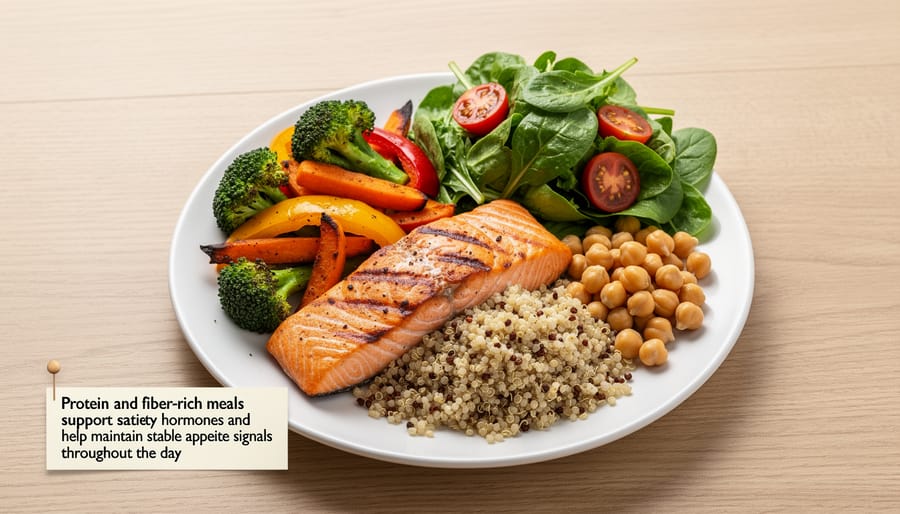
Prioritizing protein and fiber at meals is one of the most effective ways to naturally support your satiety hormones. When you eat protein-rich foods like chicken, fish, eggs, legumes, Greek yogurt, or tofu, your intestines release more peptide YY (PYY) and GLP-1—hormones that signal fullness to your brain and help reduce ghrelin levels. Research shows that meals containing at least 20-30 grams of protein significantly increase these satiety signals compared to lower-protein options.
Fiber works similarly by slowing digestion and promoting the release of appetite-suppressing hormones. Foods like oats, lentils, chickpeas, apples, berries, and vegetables provide soluble fiber that forms a gel in your digestive tract, extending feelings of fullness. Aim for 25-38 grams of fiber daily from whole food sources.
Combining both nutrients creates a powerful effect: a breakfast of scrambled eggs with whole grain toast and berries, or a lunch bowl with quinoa, black beans, and roasted vegetables keeps you satisfied longer. These simple food choices balance hormones naturally, reducing the likelihood of overeating later in the day.
Manage Stress for Better Appetite Control
Chronic stress significantly disrupts your appetite hormones, particularly by elevating cortisol levels that increase cravings for high-calorie comfort foods. When you’re stressed, your body produces more ghrelin (the hunger hormone) while reducing leptin sensitivity, making it harder to recognize fullness cues.
Start with simple daily practices to support hormonal balance. Try deep breathing exercises for five minutes each morning—inhale for four counts, hold for four, exhale for six. This activates your parasympathetic nervous system and helps regulate cortisol production.
Regular physical activity serves as a powerful stress buffer. Aim for at least 30 minutes of moderate movement most days, whether that’s walking, cycling, or dancing. Exercise naturally balances ghrelin and leptin levels while reducing stress hormones.
Prioritize quality sleep by maintaining consistent bedtimes and creating a calming evening routine. Poor sleep disrupts appetite hormones within just one night, intensifying hunger and cravings the following day.
Consider mindfulness techniques like meditation or progressive muscle relaxation. Even ten minutes daily can lower cortisol and improve your body’s natural appetite regulation. Remember, managing stress isn’t about perfection—small, consistent efforts make meaningful differences in your hormonal health and eating patterns.
Stay Active
Regular physical activity is one of the most effective ways to support healthy appetite hormone balance. When you exercise supports hormone function, it improves insulin sensitivity, helping your body respond better to satiety signals from leptin. Physical activity also helps regulate ghrelin levels, reducing excessive hunger between meals. Research shows that both aerobic exercise and strength training contribute to better appetite control.
Aim for at least 150 minutes of moderate-intensity activity weekly, such as brisk walking, cycling, or swimming. Include resistance training twice weekly to build muscle mass, which naturally improves metabolic health and hormone signaling. Even short movement breaks throughout the day can positively impact your appetite hormones. Find activities you genuinely enjoy to make exercise a sustainable part of your routine rather than a temporary fix.
Eat Mindfully and Consistently
Supporting your appetite hormones starts with how and when you eat. Regular meal timing helps stabilize ghrelin and leptin levels, preventing the extreme hunger that leads to overeating. Aim to eat every 3-4 hours, including balanced meals with protein, healthy fats, and fiber to promote satiety.
Practice mindful eating by sitting down without distractions, chewing thoroughly, and paying attention to hunger and fullness cues. It takes about 20 minutes for leptin signals to reach your brain, so eating slowly allows your body to recognize satisfaction naturally.
Avoid extreme calorie restriction, which can disrupt hormone production and slow metabolism. Very low-calorie diets often increase ghrelin while decreasing leptin sensitivity, making long-term weight management more difficult. Instead, focus on consistent, nourishing meals that support your body’s natural hormone balance and overall wellness.
Understanding appetite control isn’t about a single hormone—it’s about a sophisticated team of hormones working together to keep your body balanced. Ghrelin signals hunger, leptin indicates fullness, and supporting hormones like insulin, cortisol, and GLP-1 fine-tune your appetite throughout the day. This complex system evolved to help us survive, and recognizing how it works gives you valuable insight into your own eating patterns.
The good news? You have more influence over these hormones than you might think. Simple, sustainable lifestyle choices can support healthy hormone balance without requiring perfection. Getting enough quality sleep helps regulate ghrelin and leptin. Managing stress through activities you enjoy keeps cortisol in check. Eating balanced meals with protein, fiber, and healthy fats naturally supports GLP-1 and insulin function. Regular movement, even just a daily walk, positively impacts multiple appetite hormones.
Rather than viewing appetite as something to fight against, understanding these hormones helps you work with your body’s natural signals. Small changes add up over time. Start with one area that feels manageable—perhaps improving your sleep routine or adding more protein to breakfast—and build from there. By supporting your hormone balance, you’re investing in long-term wellness, energy, and a healthier relationship with food.