

Genetically engineered T cells represent one of the most promising breakthroughs in cancer treatment, transforming how doctors fight blood cancers and offering hope where traditional therapies have failed. This innovative approach takes your own immune cells, reprograms them in a laboratory to recognize and attack cancer, then returns them to your body as living medicines. CAR-T cell therapy, the most common form of this treatment, has achieved remarkable results in patients with certain leukemias and lymphomas who had run out of other options.
The science behind this therapy builds on personalized medicine approaches that tailor treatment specifically to each patient. Unlike chemotherapy that attacks all rapidly dividing cells, engineered T cells target only cancer cells while leaving healthy tissue largely unharmed. This precision comes from adding a specialized receptor to your T cells that acts like a guidance system, directing them toward proteins found on cancer cells.
Canadian patients can access CAR-T therapy through specialized cancer centers, though availability remains limited to specific cancer types and situations. Health Canada has approved several CAR-T treatments, with ongoing clinical trials expanding options. While not suitable for everyone and carrying potential serious side effects, this therapy has achieved complete remission in many patients who had exhausted conventional treatments. Understanding what genetically engineered T cells are, how they work, and whether they might help you or a loved one starts with grasping the fundamentals of this groundbreaking approach.
What Are T Cells and Why Do They Matter?
Think of T cells as your body’s security guards, constantly patrolling to keep you safe. These specialized white blood cells are part of your immune system, and they’re remarkably good at their job. Every day, they circulate through your bloodstream and tissues, checking for anything that shouldn’t be there—whether that’s a virus, bacteria, or cells that have become damaged or abnormal.
Here’s how they normally work: T cells have special receptors on their surface that act like molecular “fingerprint scanners.” When they encounter a cell, they check its identification markers. Healthy cells display the right credentials and get a pass. But when T cells find infected cells or those showing signs of trouble, they spring into action, destroying the threat before it can cause harm.
This system works beautifully for many infections and health challenges. The problem with cancer is that it’s sneaky. Cancer cells are your own cells that have gone rogue—they’ve learned to disguise themselves so well that T cells often can’t recognize them as dangerous. It’s like a security threat that’s learned to forge the right identification badges. The T cells patrol right past these cancer cells without detecting anything wrong.
Additionally, some cancers create an environment that suppresses T cell activity, essentially disabling the alarm system. Other times, there simply aren’t enough T cells with the right receptors to recognize a specific type of cancer.
This is where genetic engineering comes in—scientists have developed ways to reprogram T cells, giving them better tools to identify and destroy cancer cells that would otherwise go undetected.
The Science Behind Engineering Your Immune Cells
How Doctors Collect and Modify Your Cells
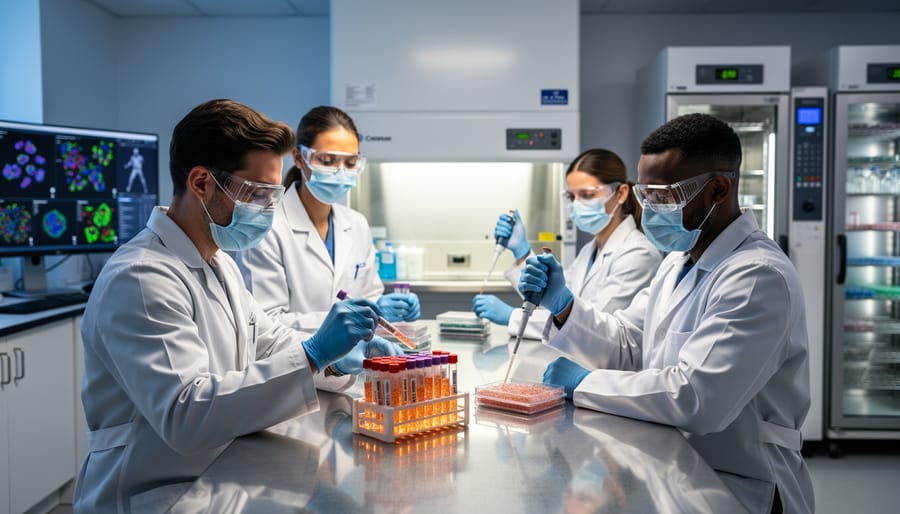
The collection process for genetically engineered T cell therapy is straightforward and similar to giving blood. Your doctor will perform a procedure called leukapheresis, where you sit comfortably in a chair for about three to four hours. A machine draws blood from one arm, separates out the T cells (a type of white blood cell), and returns the remaining blood through your other arm. Most people tolerate this well and can read, watch movies, or listen to music during the process.
Once collected, your T cells travel to a specialized laboratory. This is where the remarkable transformation happens. Scientists use using your own cells as the foundation for treatment. They modify these cells by introducing new genetic instructions, essentially giving your T cells a new ability to recognize and attack cancer. Think of it like installing a GPS system that helps your immune cells find cancer cells that were previously invisible to them.
The laboratory process typically takes several weeks. During this time, scientists also multiply your modified T cells to create millions of cancer-fighting warriors. The cells are carefully tested to ensure quality and safety before being frozen and shipped back to your treatment centre. This personalized approach means every treatment is unique to you, crafted from your own immune system and tailored to work specifically with your body.
CAR-T Therapy: The Most Common Approach
CAR-T cell therapy represents the most established and widely used approach to genetically engineered T cell treatment for cancer. CAR stands for Chimeric Antigen Receptor, which is a specialized protein added to your T cells in the laboratory. Think of it as giving your immune cells a new radar system specifically designed to detect and destroy cancer cells.
Here’s how it works: doctors collect T cells from your blood through a process similar to donating plasma. These cells are then sent to a specialized facility where scientists genetically modify them to produce CARs on their surface. These receptors act like precise tracking devices, programmed to recognize specific proteins found on cancer cells. Once reinfused into your body, these enhanced T cells multiply and begin their search-and-destroy mission against the cancer.
CAR-T therapy has shown remarkable success, particularly in treating certain blood cancers. Health Canada has approved several CAR-T treatments for conditions including specific types of leukemia and lymphoma. These gene therapy advances have provided new hope for patients who haven’t responded to traditional treatments like chemotherapy or radiation.
What makes CAR-T therapy particularly promising is its potential for lasting results. Since the modified cells can survive in your body for months or even years, they continue providing protection against cancer recurrence. Some patients have experienced complete remission after just one treatment.
While CAR-T therapy isn’t suitable for everyone and may cause side effects that require careful medical monitoring, it represents a significant breakthrough in personalized cancer treatment. Researchers continue expanding its applications, exploring ways to make it effective against solid tumors and more types of cancer.

What Cancers Can This Therapy Treat?
Genetically engineered T cell therapy has shown remarkable success with certain blood cancers, though it’s not yet available for all cancer types. Understanding which cancers respond to this treatment can help you set realistic expectations.
Currently, Health Canada has approved CAR T-cell therapy primarily for specific blood cancers. These include certain types of acute lymphoblastic leukemia (ALL), a blood cancer that affects white blood cells and is more common in children. The therapy has also proven effective for several types of non-Hodgkin lymphoma, including diffuse large B-cell lymphoma and follicular lymphoma. More recently, approvals have expanded to include multiple myeloma, a cancer that develops in plasma cells within bone marrow.
These blood cancers share an important characteristic: they have specific markers on their surface that engineered T cells can target. The most common target is called CD19, a protein found on many lymphoma and leukemia cells. This makes it easier for the modified T cells to identify and destroy cancer cells while leaving healthy tissue largely unharmed.
The picture is more challenging for solid tumors like breast, lung, or colon cancer. Researchers are actively working to develop engineered T cell therapies for these cancers, but significant obstacles remain. Solid tumors create a hostile environment that can block T cells from reaching cancer cells. They also lack consistent surface markers, making targeting more difficult.
Despite these challenges, clinical trials are exploring innovative approaches for solid tumors. Scientists are testing combination therapies and developing T cells that can overcome the tumor’s protective barriers. While progress is being made, these treatments remain experimental for most solid cancers.
If you’re considering this therapy, discuss with your oncologist whether your specific cancer type and stage make you eligible. Response rates vary, and not everyone benefits from treatment. Your medical team can provide personalized guidance based on current evidence and your individual circumstances.

The Real Experience: What to Expect
The Treatment Process and Timeline
The journey with genetically engineered T-cell therapy typically unfolds over several weeks and requires careful coordination between you and your healthcare team.
Your treatment begins with an initial consultation where your oncologist determines if you’re a suitable candidate based on your cancer type, overall health, and previous treatments. If approved, the process moves to apheresis—a procedure similar to donating blood where medical staff collect your T-cells through an IV line. This collection session usually takes 3-4 hours, and you can often return home the same day.
Your collected cells travel to a specialized laboratory where scientists genetically modify them over approximately 2-4 weeks. During this manufacturing period, you may receive bridging chemotherapy to control cancer growth.
Before receiving your engineered cells back, you’ll undergo conditioning chemotherapy over 3-5 days to prepare your body. This typically requires hospitalization. The actual cell infusion resembles a standard blood transfusion and takes about 30-60 minutes.
Following infusion, expect to stay in hospital for at least 7-14 days for intensive monitoring. Medical teams watch closely for cytokine release syndrome and neurological effects—common but manageable side effects. Your healthcare providers have protocols ready to address these reactions promptly.
Recovery continues at home with frequent clinic visits during the first month, gradually decreasing over subsequent months. Most patients need caregivers available for at least four weeks post-treatment. Complete recovery and immune system rebuilding can take several months, with ongoing monitoring extending for years to track long-term effectiveness and safety.
Possible Side Effects and Management
While genetically engineered T-cell therapy offers promising results, it’s important to understand potential side effects so you can be prepared and know when to seek help.
The most common serious side effect is cytokine release syndrome, which occurs when your modified T-cells multiply rapidly and release large amounts of immune proteins called cytokines. This can cause flu-like symptoms including high fever, fatigue, muscle aches, nausea, and in more severe cases, low blood pressure or breathing difficulties. Your medical team will monitor you closely during the first few weeks after treatment, often in hospital, and can manage these symptoms with medications that calm your immune response without stopping the therapy from working.
Some patients experience neurological effects such as confusion, difficulty speaking, headaches, or tremors. These symptoms typically appear within the first month and are usually temporary, though they require immediate medical attention. Your healthcare team will assess your neurological function regularly and can provide supportive care to manage these effects.
Other potential side effects include low blood cell counts, which may increase infection risk, and prolonged weakening of your immune system. Your care team will monitor your blood counts and may prescribe antibiotics or other preventive medications.
The good news is that medical teams experienced in these therapies have established protocols to manage side effects effectively. Most side effects are reversible with proper treatment, and your healthcare providers will prepare you and your family with clear instructions about warning signs and when to contact them immediately.
Accessing This Treatment in Canada
In Canada, genetically engineered T cell therapies, specifically CAR T-cell treatments, are available but access remains limited compared to conventional cancer treatments. Currently, these therapies are offered at specialized cancer centres in several provinces, including Ontario, Quebec, British Columbia, and Alberta. Major treatment centres include Princess Margaret Cancer Centre in Toronto, The Ottawa Hospital, Jewish General Hospital in Montreal, and BC Cancer in Vancouver.
Getting referred for this treatment requires a specific pathway. Your oncologist must first determine if you’re eligible based on your cancer type, stage, and previous treatments. CAR T-cell therapy is typically considered after other treatments haven’t worked or when cancer returns. If you’re a candidate, your doctor will refer you to one of the approved treatment centres where a specialized team will evaluate your case.
Coverage for these therapies is evolving. Most provincial health insurance plans cover approved CAR T-cell treatments when administered at designated centres, though the specific products covered may vary by province. Private insurance may cover additional costs like travel and accommodation if you need treatment away from home. It’s important to discuss coverage details with your healthcare team and insurance provider early in the process.
Wait times can vary depending on the treatment centre, your medical urgency, and product availability. Some patients may need to maintain their health with bridging therapy while waiting for their engineered cells to be manufactured.
For Canadians seeking more information, speak with your oncologist about whether this treatment might be suitable for your situation. You can also explore answers to common gene therapy questions to better understand this innovative approach. Provincial cancer agencies provide additional resources and patient support services to help navigate the process.
The Future of Engineered Immune Cell Therapies
Researchers are actively working to expand engineered T-cell therapies beyond blood cancers to treat solid tumors like breast, lung, and colon cancers. These tumors present unique challenges because they create protective barriers that make it harder for T-cells to reach and attack cancer cells. Scientists are developing strategies to help engineered T-cells penetrate these barriers and survive longer in hostile tumor environments.
Combination approaches show particular promise. Researchers are exploring how engineered T-cells might work alongside chemotherapy, radiation, or newer immunotherapy drugs to improve outcomes. The goal is to create treatment plans where different therapies support each other’s strengths while minimizing individual weaknesses.
Reducing side effects remains a top priority. Current research focuses on creating “safety switches” that let doctors control engineered T-cells more precisely, turning them off if serious side effects develop. Scientists are also designing cells that target cancer more specifically, reducing damage to healthy tissue.
Another exciting direction involves making these therapies more accessible. Researchers are developing “off-the-shelf” versions using donor cells instead of a patient’s own cells, which could reduce costs and treatment wait times. Clinical trials are also testing whether lower, safer doses can still provide benefits.
While these advances are encouraging, most remain in research stages. Canadian patients interested in emerging therapies should discuss clinical trial opportunities with their oncology team. Progress takes time, but steady improvements suggest engineered T-cell therapy will become available for more cancer types in the coming years, with better safety profiles and increased accessibility for eligible patients.
Genetically engineered T cell therapies represent genuine progress in cancer treatment, offering new hope for patients who previously had limited options. These therapies have shown remarkable results for certain blood cancers, with some patients achieving long-lasting remissions. However, it’s important to understand the current reality: these treatments aren’t available for everyone or every type of cancer yet.
In Canada, access to CAR T-cell therapy continues to expand, but it remains specialized treatment available at specific cancer centres. Researchers are actively working to develop these therapies for solid tumors and improve availability. If you or a loved one is facing a cancer diagnosis, talk openly with your oncology team about whether engineered T cell therapy might be appropriate. They can explain eligibility criteria, potential benefits, and realistic expectations based on your specific situation.
Stay informed by consulting reliable sources, including Health Canada and provincial cancer agencies, which provide updates on approved treatments and clinical trials. This content has been validated by healthcare experts to ensure accuracy. Remember, emerging treatments continue to evolve, and what isn’t available today may become an option tomorrow. Your healthcare team remains your best resource for personalized guidance and support throughout your cancer journey.