
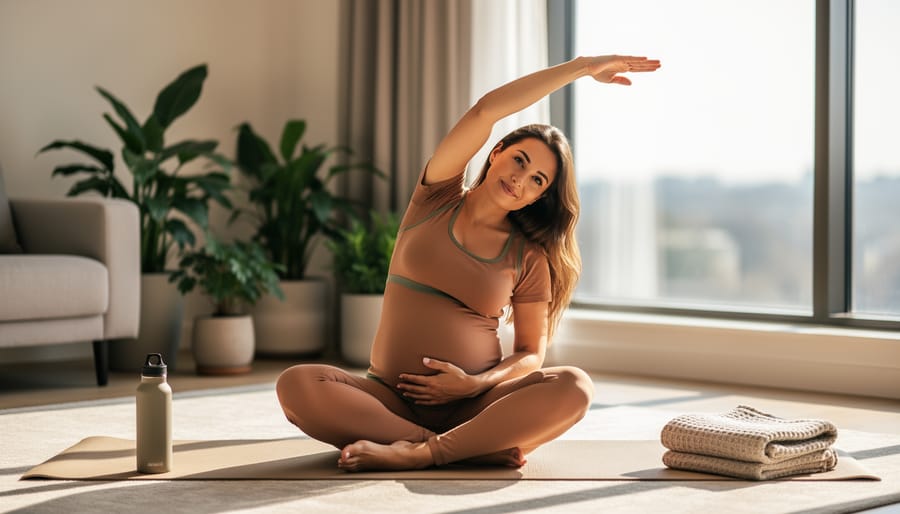
Stay active throughout your pregnancy by walking for 20-30 minutes daily, swimming to reduce joint stress while building endurance, or practicing prenatal yoga to improve flexibility and breathing control. These moderate-intensity activities strengthen your body for labour while reducing your risk of gestational diabetes by up to 30% and lowering chances of excessive weight gain.
Choose exercises that feel comfortable and allow you to hold a conversation while moving. If you’re new to fitness, start with just 10 minutes at a time and gradually increase duration as your stamina builds. Women who exercised regularly before pregnancy can typically maintain their routines with modifications, avoiding contact sports, activities with fall risks, and exercises flat on your back after the first trimester.
Exercise during pregnancy delivers powerful mental health benefits alongside physical advantages. Regular movement reduces symptoms of prenatal depression and anxiety by releasing endorphins, improves sleep quality, and helps manage stress during this transformative time. Many expectant mothers report feeling more confident and connected to their changing bodies when they maintain consistent activity.
Listen to your body and stop immediately if you experience dizziness, chest pain, vaginal bleeding, contractions, or fluid leakage. Always consult your healthcare provider before starting or continuing any exercise program during pregnancy, especially if you have conditions like preeclampsia, incompetent cervix, or placenta previa. Your doctor or midwife can help create a safe, personalized plan that supports both your physical fitness and emotional wellbeing throughout all three trimesters and prepares you for a healthier postpartum recovery.
The Mind-Body Connection: Why Movement Matters During Pregnancy
How Exercise Affects Your Brain Chemistry
When you exercise during pregnancy, your body releases powerful neurochemicals that naturally boost your mood and emotional well-being. Understanding how exercise affects brain chemistry can motivate you to stay active throughout your pregnancy journey.
Endorphins are perhaps the most well-known mood enhancers released during physical activity. These natural chemicals act as pain relievers and create feelings of happiness and relaxation, helping to counter pregnancy-related stress and anxiety. Even moderate activities like walking or prenatal yoga can trigger endorphin release.
Exercise also increases serotonin production, a neurotransmitter that regulates mood, sleep, and appetite. Higher serotonin levels are associated with reduced symptoms of depression and improved emotional stability, both crucial during pregnancy when hormonal changes can affect mental health.
Additionally, physical activity stimulates the release of dopamine and norepinephrine, which enhance focus, motivation, and energy levels. These chemicals help combat the fatigue and brain fog many pregnant women experience.
Regular prenatal exercise also reduces cortisol, the stress hormone, creating a calmer mental state. This chemical balance doesn’t just benefit you; research suggests it may positively influence your baby’s developing nervous system, making exercise a powerful tool for supporting both maternal and infant well-being.
The Stress-Busting Power of Movement
Pregnancy brings many changes, and it’s completely normal to feel anxious or overwhelmed at times. The good news is that regular physical activity offers powerful stress relief during this transformative period. When you exercise, your body naturally regulates cortisol, the primary stress hormone that can spike during pregnancy due to physical and emotional changes.
Research shows that movement reduces stress by triggering the release of endorphins, your body’s natural mood elevators. Even gentle activities like walking, prenatal yoga, or swimming for 20-30 minutes can make a noticeable difference in how you feel. Many expectant mothers report feeling calmer and more capable of handling pregnancy worries after incorporating regular movement into their routines.
Beyond hormone regulation, exercise provides valuable mental space to process emotions and connect with your changing body. It can also improve sleep quality, which further helps manage stress levels. The key is finding activities you enjoy and can sustain throughout your pregnancy. Start with what feels comfortable, and remember that consistency matters more than intensity when it comes to reaping these stress-busting benefits.
Mental Health Benefits of Prenatal Exercise: What the Research Shows
Reducing Prenatal Anxiety and Depression
Pregnancy can be an emotional journey, with up to 23% of expectant mothers experiencing symptoms of depression or anxiety. The good news? Regular physical activity offers powerful mental health benefits during this time. Research consistently shows that pregnant women who exercise regularly report fewer symptoms of both depression and anxiety compared to those who remain sedentary.
A Canadian study found that women who engaged in moderate-intensity exercise at least three times per week experienced a 67% reduction in their risk of developing prenatal depression. The benefits extend beyond mood improvement – exercise for anxiety relief works by releasing endorphins, your body’s natural mood elevators, while also reducing stress hormones like cortisol.
Even small amounts of movement make a difference. Activities like walking, swimming, or prenatal yoga for just 20-30 minutes can help regulate emotions and improve sleep quality, both crucial for mental wellbeing. If you’re experiencing persistent feelings of sadness or worry, talk to your healthcare provider about incorporating safe exercise into a comprehensive treatment plan. Remember, taking care of your mental health through movement isn’t just beneficial for you – it supports your baby’s development too.
Better Sleep, Better Mood
Quality rest becomes increasingly challenging as pregnancy progresses, with physical discomfort and hormonal changes often disrupting sleep patterns. Regular prenatal exercise can significantly improve your sleep quality, helping you fall asleep faster and enjoy deeper, more restorative rest. Physical activity naturally regulates your body’s internal clock and reduces nighttime restlessness, though it’s best to complete workouts at least three hours before bedtime.
The connection between sleep quality and mental health is particularly important during pregnancy. When you sleep better, you’re better equipped to manage stress, regulate emotions, and maintain a positive outlook. Even moderate activities like prenatal yoga or swimming can reduce leg cramps and back pain that commonly interfere with sleep.
Aim for 20-30 minutes of gentle movement most days, but listen to your body’s signals. If you’re feeling overly fatigued, rest is equally important for both your well-being and your baby’s development.
Building Confidence for Birth and Beyond
Regular prenatal exercise does more than strengthen your body—it builds the mental resilience and confidence you need for labour and motherhood. When you stay active during pregnancy, you develop trust in your body’s capabilities, which translates directly to feeling more prepared for childbirth. Research shows that pregnant women who maintain fitness routines report higher levels of self-efficacy and feel more in control during labour.
Physical strength gained through consistent movement helps you recognize what your body can accomplish, reducing anxiety about the unknowns of delivery. Each workout becomes a small victory, reminding you that you’re capable of handling challenges. This confidence extends beyond birth—mothers who exercised during pregnancy often feel more equipped to handle the physical demands of caring for a newborn.
The mental preparation aspect is equally valuable. Learning to breathe through challenging exercises mirrors the focus needed during contractions. You’re essentially practicing the mind-body connection that will serve you well in the delivery room and throughout your parenting journey.
Safe and Effective Prenatal Exercise Options

Low-Impact Activities That Lift Your Mood
When you’re expecting, low-impact activities offer an excellent way to boost your mood while protecting your changing body. These gentle exercises reduce stress on your joints while delivering powerful mental health benefits.
Walking remains one of the most accessible prenatal exercises. A daily 20-30 minute walk outdoors exposes you to natural light, which helps regulate sleep patterns and reduces symptoms of prenatal depression. You can easily adjust your pace as pregnancy progresses, and it requires no special equipment beyond supportive footwear.
Swimming and water aerobics provide unique advantages during pregnancy. The buoyancy of water relieves pressure on your back and joints while the rhythmic movement promotes relaxation. Many expecting mothers report feeling lighter and more mobile in the pool, which can significantly improve mood and body image during pregnancy.
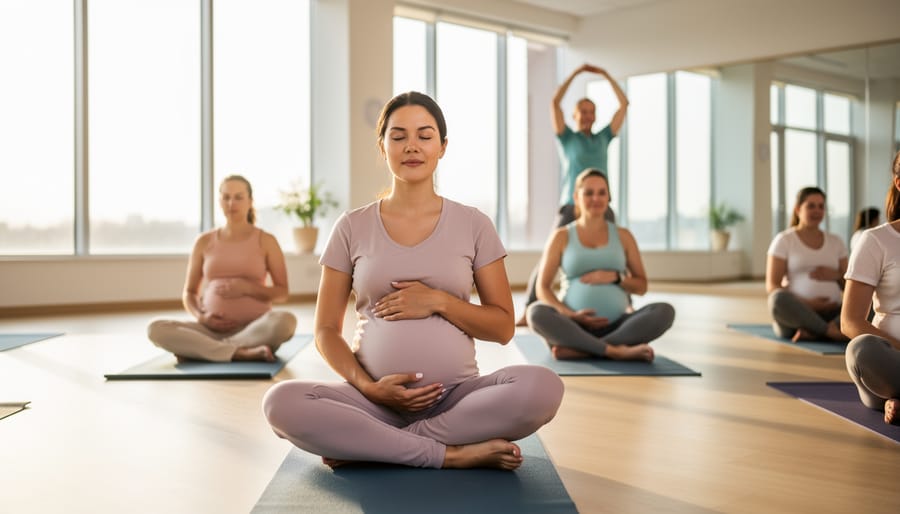
Prenatal yoga combines gentle stretching with breathing exercises and meditation, addressing both physical and emotional wellbeing. Research shows that regular prenatal yoga practice can lower cortisol levels, reduce anxiety, and improve overall emotional balance. Look for certified prenatal yoga instructors who understand pregnancy-specific modifications.
Stationary cycling offers another joint-friendly option that allows you to control intensity easily. The repetitive motion can be meditative, while the cardiovascular benefits support energy levels and mental clarity throughout your pregnancy journey.
Strength Training for Mental Resilience
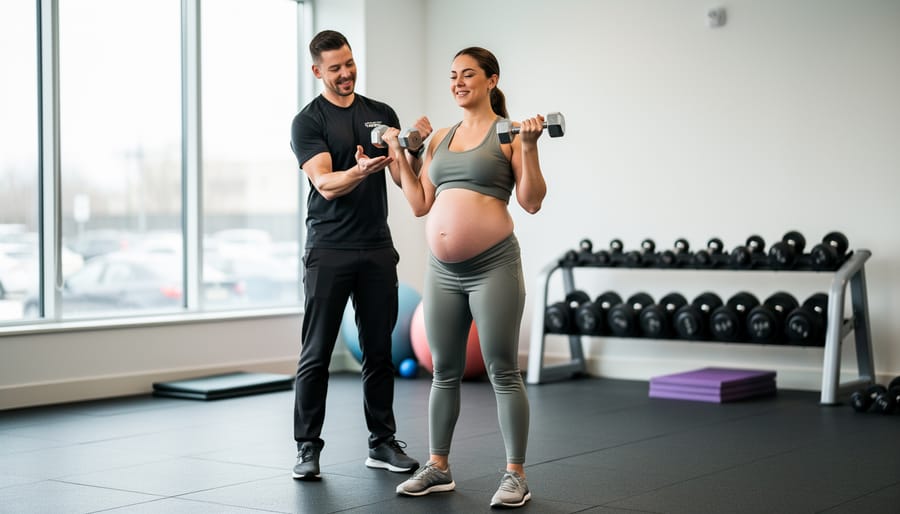
Strength training during pregnancy offers dual benefits: building physical capacity for the demands of childbirth and postpartum recovery while simultaneously strengthening your mental resilience. When done safely, resistance exercises help you feel empowered and confident in your changing body.
Focus on exercises that support functional movement patterns you’ll need during pregnancy and after baby arrives. Squats, modified lunges, wall push-ups, and exercises using light dumbbells or resistance bands are excellent choices. These movements strengthen your legs, core, and upper body while being gentle on your joints. Always prioritize proper form over heavy weights, and avoid exercises that require lying flat on your back after the first trimester.
The mental health benefits of strength training are significant. As you progressively build physical strength, you develop a sense of accomplishment and self-efficacy that transfers to other areas of your life. This psychological boost is particularly valuable when facing the uncertainties of pregnancy and preparing for parenthood.
Aim for two to three strength training sessions weekly, allowing rest days between workouts. Listen to your body and modify exercises as your pregnancy progresses. Working with a qualified prenatal fitness professional can ensure you’re using proper technique and appropriate modifications for your stage of pregnancy, maximizing both safety and mental health benefits.
Mind-Body Practices: Yoga, Pilates, and Meditation in Motion
Prenatal yoga, Pilates, and meditation in motion offer expectant mothers powerful ways to connect physical activity with emotional wellbeing. These mindful movement practices combine gentle stretching, controlled breathing, and body awareness to reduce pregnancy-related stress and anxiety while building strength and flexibility.
Prenatal yoga focuses on poses modified for each trimester, emphasizing hip openers, pelvic floor awareness, and breathing techniques useful during labour. Research shows regular practice can decrease symptoms of depression and improve birth outcomes. Prenatal Pilates strengthens core muscles safely through controlled movements that support your changing posture and prepare your body for delivery and postpartum recovery.
Meditation in motion, including gentle walking meditation or tai chi adapted for pregnancy, helps you stay present while moving your body. These practices teach you to notice physical sensations without judgment, a skill particularly valuable during labour.
Start with certified prenatal instructors who understand pregnancy modifications. Many Canadian communities offer specialized classes, and virtual options provide flexibility for those experiencing fatigue or living in remote areas. Even 10-15 minutes daily can provide meaningful benefits for both body and mind.
Creating Your Prenatal Exercise Routine: Practical Guidelines
How Much Exercise Do You Really Need?
The Canadian Society for Exercise Physiology recommends at least 150 minutes of moderate-intensity physical activity each week during pregnancy. This breaks down to about 30 minutes of activity on most days of the week. If you’re new to exercise, start with just 10 to 15 minutes at a time and gradually build up your endurance.
Moderate intensity means you’re working hard enough to break a light sweat and increase your breathing rate, but you can still carry on a conversation comfortably. This could include brisk walking, swimming, prenatal yoga, or stationary cycling.
If you exercised regularly before pregnancy, you can often maintain your routine with modifications as your pregnancy progresses. Always listen to your body and adjust as needed. Some days you’ll have more energy than others, and that’s completely normal. The key is consistency rather than intensity, aiming for regular movement throughout your week while respecting your body’s changing needs.
Starting From Scratch: Tips for Exercise Beginners
If you weren’t physically active before becoming pregnant, now is still a wonderful time to start. Begin with just 5-10 minutes of gentle activity daily, such as walking around your neighbourhood or simple stretching. Listen to your body and gradually increase your time by a few minutes each week as you feel comfortable.
Always get clearance from your healthcare provider before starting any exercise program during pregnancy. They can identify any specific precautions based on your individual health history.
Choose activities you genuinely enjoy, making it easier to stay consistent. Walking, swimming, and prenatal yoga are excellent low-impact options for beginners. Consider joining a prenatal fitness class where instructors understand pregnancy-specific modifications and you can connect with other expectant mothers.
Stay hydrated, avoid overheating, and stop immediately if you experience dizziness, chest pain, or unusual symptoms. Remember that any movement is beneficial—you don’t need to become an athlete. Even gentle, regular activity supports your physical health, reduces pregnancy discomfort, and promotes positive mental wellbeing throughout your pregnancy journey.
When to Modify or Stop: Safety Signals to Watch For
Stop exercising immediately and contact your healthcare provider if you experience vaginal bleeding, regular painful contractions, fluid leaking from the vagina, dizziness or feeling faint, chest pain, or severe headache. You should also watch for shortness of breath before exertion, muscle weakness affecting balance, or calf pain or swelling which could indicate a blood clot.
Modify or reduce intensity if you notice persistent fatigue that doesn’t improve with rest, difficulty recovering between sessions, pelvic pain or pressure, or back pain that worsens with activity. While mild discomfort is normal as your body adapts, persistent pain warrants discussion with your provider.
Trust your body’s signals. If something feels wrong, it probably is. Your healthcare team can help you adjust your routine safely. Many symptoms can be managed with modifications rather than complete cessation, ensuring you continue receiving the physical and mental health benefits of staying active.
Remember that warning signs may change throughout pregnancy, so maintain open communication with your midwife or physician and reassess your routine regularly as your body changes.
Overcoming Common Barriers to Prenatal Exercise
Managing Fatigue and Pregnancy Symptoms
Pregnancy symptoms like nausea, fatigue, and dizziness can make exercise feel overwhelming, but you can adjust your routine to work with your body’s needs. First trimester exhaustion is common as your body adapts to significant changes. Listen to these signals and scale back intensity when needed—gentle walks or prenatal yoga may be more appropriate on low-energy days than your usual workout.
If morning sickness affects you, try exercising later in the day when nausea typically subsides. Keep small, easily digestible snacks like crackers or fruit nearby, and stay well-hydrated with small sips of water throughout your session. Some women find that light activity actually helps reduce nausea, though this varies individually.
Break exercise into shorter sessions if a full workout feels too demanding. Three 10-minute walks provide similar benefits to one 30-minute session and may feel more manageable. Rest between exercises as needed, and never push through severe fatigue or discomfort.
Create a comfortable environment by exercising in well-ventilated, temperature-controlled spaces and wearing breathable clothing. Most importantly, communicate openly with your healthcare provider about your symptoms. They can help determine whether your fatigue is normal pregnancy-related tiredness or something requiring medical attention, and offer personalized strategies to keep you safely active throughout your pregnancy journey.
Finding Time and Motivation
Finding time for exercise during pregnancy can feel challenging, especially when dealing with fatigue, work commitments, and medical appointments. Start by viewing physical activity as an essential part of prenatal care rather than an optional extra. Even 10-minute movement sessions throughout the day count toward your weekly activity goals and can be easier to manage than longer workouts.
Schedule exercise like any other important appointment, choosing times when your energy levels are typically highest. Many expectant mothers find mornings work best before fatigue sets in, while others prefer lunchtime walks or gentle evening yoga. Consider combining exercise with existing routines, such as walking during work breaks, doing prenatal stretches while watching television, or joining a prenatal fitness class to build community support.
Stay motivated by tracking how exercise makes you feel rather than focusing solely on physical achievements. Many women notice improved mood, better sleep, and reduced pregnancy discomfort as immediate rewards. Find an accountability partner, whether a friend, partner, or prenatal exercise group. Remember that some movement is always better than none, and modifying your routine as pregnancy progresses is both normal and necessary.
Integrating Mental Health Support with Your Exercise Routine
When to Seek Professional Mental Health Support
While prenatal exercise offers significant mental health benefits, it’s important to recognize when additional support is needed. Exercise is a valuable complement to professional care, but not a substitute for treatment when experiencing persistent mood changes, anxiety, or depression.
If you’re experiencing overwhelming sadness, difficulty bonding with your pregnancy, persistent worry, changes in sleep or appetite unrelated to pregnancy, or thoughts of harming yourself, reach out to your healthcare provider immediately.
Canadian resources include the Reproductive Mental Health Program available in many provinces, the Canada Prenatal Nutrition Program, and crisis support through Talk Suicide Canada at 1-833-456-4566. Many provinces also offer dedicated perinatal mental health services through local health authorities.
Your family doctor, midwife, or obstetrician can connect you with appropriate mental health professionals, including therapists specializing in perinatal care. Remember, seeking help demonstrates strength and commitment to your wellbeing and your baby’s healthy development. Early intervention leads to better outcomes for both you and your growing family.
Building Your Support Network
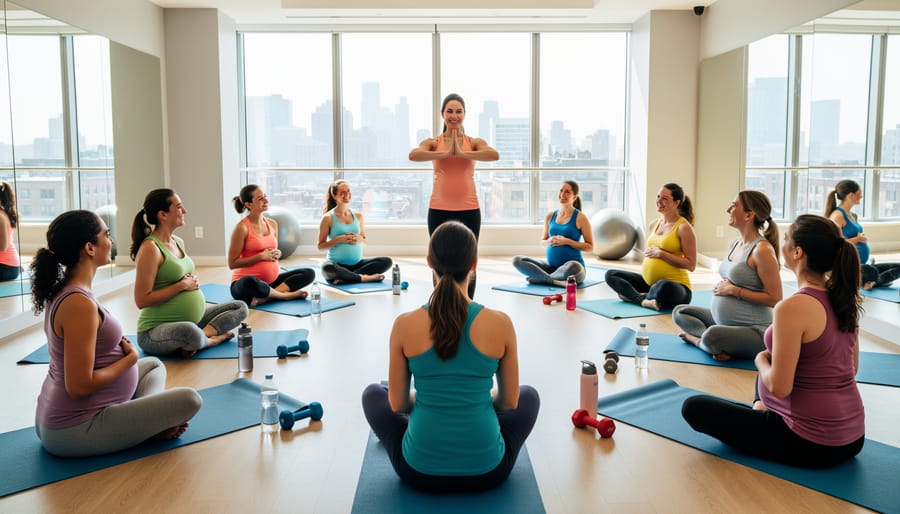
Staying active during pregnancy becomes easier and more enjoyable when you have the right support around you. Consider joining prenatal fitness classes, where certified instructors understand the unique needs of expectant mothers and can guide you through safe, effective exercises. These classes also provide opportunities to connect with other pregnant individuals who share similar experiences and questions.
Your healthcare provider is an essential part of your support network. Regular discussions with your doctor or midwife ensure your exercise routine aligns with your specific health needs and pregnancy progression. Many Canadian communities offer prenatal support groups that address both physical activity and emotional well-being, recognizing that mental health and physical fitness go hand in hand during pregnancy.
Online communities and local recreation centres often provide resources tailored to pregnant Canadians, including modified exercise programs and wellness workshops. Don’t hesitate to reach out to registered dietitians, physiotherapists, or mental health professionals who specialize in maternal health. Building a comprehensive support network helps you stay motivated, addresses concerns as they arise, and ensures you receive evidence-based guidance throughout your pregnancy journey.
Embracing prenatal exercise is one of the most meaningful gifts you can give yourself and your baby during pregnancy. The connection between physical activity and mental health during this transformative time is undeniable, with research consistently showing that even modest movement can reduce anxiety, improve mood, and build resilience for the journey ahead. Remember, you don’t need to commit to intense workouts or perfect routines. Small, consistent efforts like a daily walk, gentle stretching, or prenatal yoga can create powerful shifts in both your physical and emotional well-being.
Every pregnancy is unique, and so is every exercise journey. Listen to your body, consult with your healthcare provider, and give yourself permission to modify activities as needed. Whether you’re managing morning sickness, fatigue, or simply adjusting to your changing body, know that taking care of yourself is never selfish—it’s essential. By prioritizing movement and mental health now, you’re building strength, confidence, and self-care habits that will serve you well through pregnancy, birth, and beyond. You deserve support, compassion, and celebration for every step you take toward wellness.