
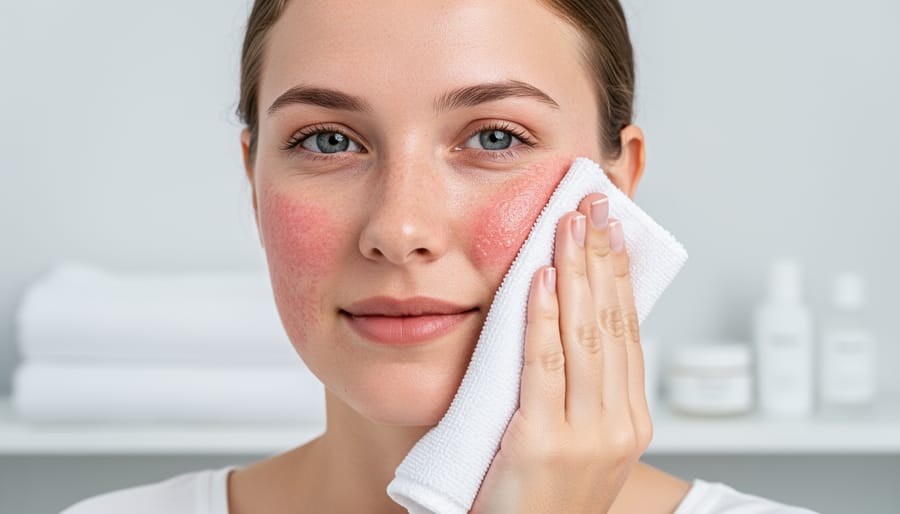
Living with rosacea doesn’t mean abandoning exfoliation entirely—it means choosing gentler methods that won’t trigger inflammation or worsen your symptoms. If you have rosacea, your skin barrier is already compromised, making traditional scrubs and harsh chemical exfoliants potential triggers for redness, burning, and flare-ups.
The key is understanding which exfoliation techniques work with your sensitive skin rather than against it. Gentle enzymatic exfoliants, low-concentration polyhydroxy acids (PHAs), and soft microfiber cloths can effectively remove dead skin cells without the irritation caused by abrasive scrubs or strong alpha hydroxy acids. Dermatologists recommend starting with once-weekly exfoliation using the mildest option, then gradually adjusting based on your skin’s response.
Safe exfoliation can actually benefit rosacea-prone skin by preventing the buildup of dead cells that trap bacteria and oil, potentially reducing papules and pustules. However, timing, product selection, and technique matter enormously. Understanding which ingredients to embrace and which to avoid, along with recognizing your personal triggers, empowers you to maintain healthy skin turnover without compromising your skin’s protective barrier or inviting painful flare-ups.
Understanding Rosacea and Why Exfoliation Matters
Rosacea is a chronic inflammatory skin condition that affects approximately 2 million Canadians, causing facial redness, visible blood vessels, and sometimes small, red, pus-filled bumps that can be mistaken for acne. This condition typically appears on the cheeks, nose, chin, and forehead, and while it can affect anyone, it’s most common in fair-skinned individuals between ages 30 and 50.
The hallmark symptoms of rosacea include persistent facial flushing, sensitive skin that stings or burns easily, dry and rough texture, and in some cases, thickening of the skin. Common triggers vary from person to person but often include spicy foods, hot beverages, alcohol, temperature extremes, stress, and certain skincare products. Understanding your personal triggers is essential for managing this condition effectively.
When it comes to skincare, people with rosacea face unique challenges, particularly with exfoliation. Traditional exfoliation methods can be highly problematic for rosacea-prone skin because they often involve harsh physical scrubs or strong chemical formulas that damage the already compromised skin barrier. Physical exfoliants with rough particles like crushed walnut shells or sugar granules can create microscopic tears in sensitive skin, triggering inflammation and worsening redness. Similarly, aggressive chemical exfoliants used at high concentrations can strip away protective oils and irritate the delicate blood vessels near the skin’s surface.
The dilemma is that while vigorous exfoliation can trigger flare-ups, gentle exfoliation done correctly may actually benefit rosacea sufferers by removing dead skin cells that can trap bacteria and contribute to bumps and rough texture. The key lies in understanding which methods are safe, how frequently to exfoliate, and which ingredients to seek out or avoid entirely.
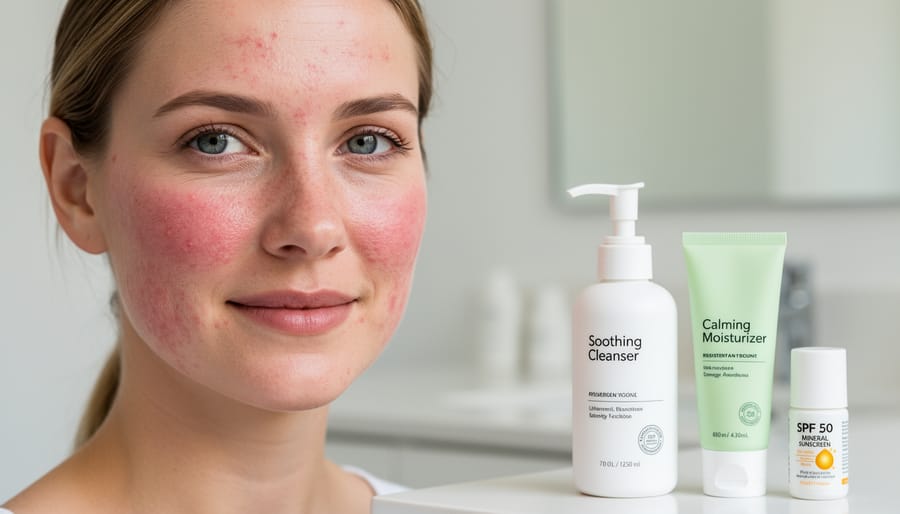
The Risks of Exfoliating with Rosacea
For people living with rosacea, exfoliation requires extra caution. While it can offer benefits when done correctly, aggressive or inappropriate exfoliation poses significant risks that can worsen your condition and trigger uncomfortable symptoms.
When you exfoliate too harshly or too frequently, you can damage your skin’s protective barrier—the outermost layer that shields against irritants, bacteria, and environmental stressors. For rosacea-prone skin, this barrier is already compromised and more vulnerable than typical skin. Disrupting it further through aggressive scrubbing or harsh chemical exfoliants can lead to increased redness, burning sensations, and persistent inflammation.
Physical exfoliants with rough particles or stiff brushes can create micro-tears in delicate rosacea skin, opening pathways for irritants and bacteria. This trauma often triggers immediate flare-ups characterized by intense flushing, visible broken blood vessels, and increased sensitivity to products that previously caused no issues.
Over-exfoliation also strips away natural oils your skin needs for protection and hydration. Without these oils, your skin becomes increasingly dry and reactive, making you more susceptible to common rosacea triggers like temperature changes and skincare products. Watch for signs of over-exfoliation including persistent tightness, stinging when applying moisturizer, and worsening redness.
The key is understanding that rosacea skin requires a gentler approach. What works for others may be too aggressive for your sensitive complexion, making it essential to choose appropriate methods and products designed specifically for reactive skin.
When Exfoliation Can Help Rosacea-Prone Skin
While rosacea-prone skin is sensitive, gentle exfoliation can offer real benefits when done correctly. The key is understanding how it can help without causing harm.
Dead skin cells naturally accumulate on the skin’s surface, and for people with rosacea, this buildup can create additional texture issues and a dull appearance. Gentle exfoliation helps remove these cells, revealing fresher skin underneath. This process can be particularly helpful if you experience both rosacea and concurrent skin concerns like rough patches or uneven texture.
Another significant advantage is improved product absorption. When dead skin cells clog the surface, your moisturizers, serums, and prescribed rosacea treatments can’t penetrate as effectively. By carefully removing this barrier, your skincare products can work more efficiently, potentially enhancing their calming and protective benefits.
For some individuals with rosacea, gentle exfoliation may also help prevent the clogged pores that can accompany certain rosacea subtypes. This is especially relevant for those dealing with papulopustular rosacea, which involves bumps and pimple-like breakouts.
The critical factor is choosing the right method and frequency. Harsh scrubs, aggressive techniques, or over-exfoliation will trigger inflammation and worsen rosacea symptoms. However, using mild chemical exfoliants like lactic acid or polyhydroxy acids (PHAs) at low concentrations, or extremely soft physical methods, can provide benefits without irritation.
Success depends on listening to your skin, starting slowly, and choosing products specifically formulated for sensitive skin. When approached thoughtfully, exfoliation can be a helpful component of rosacea management rather than a trigger.
Safe Exfoliation Methods for Rosacea
Chemical Exfoliants vs. Physical Exfoliants
Understanding the difference between chemical and physical exfoliation is essential for managing rosacea-prone skin effectively. Physical exfoliation uses granular substances or tools to manually scrub away dead skin cells. This category includes scrubs with beads or sugar, brushes, and specialized tools. While physical exfoliation methods can work well for resilient skin, they pose significant risks for rosacea sufferers. The friction and pressure can irritate sensitive skin, trigger inflammation, and worsen redness.
Chemical exfoliation, on the other hand, uses gentle acids or enzymes to dissolve the bonds between dead skin cells without scrubbing. This method is generally safer and more effective for rosacea-prone skin because it provides controlled, even exfoliation without mechanical irritation. Alpha hydroxy acids like lactic acid and mandelic acid, along with polyhydroxy acids, work gently on the skin’s surface with minimal inflammatory response.
For those with rosacea, it’s best to completely avoid harsh physical exfoliants such as walnut shell scrubs, stiff brushes, exfoliating gloves, and rough washcloths. Even soft facial brushes can be too stimulating for reactive skin. If you prefer some physical element, consider very gentle options like soft konjac sponges used with minimal pressure. However, dermatologists typically recommend sticking with properly diluted chemical exfoliants as your primary method, as they offer the best balance of effectiveness and safety for sensitive, rosacea-affected skin.
Best Ingredients for Rosacea-Prone Skin
When you have rosacea-prone skin, choosing the right exfoliating ingredients makes all the difference between improvement and irritation. The following gentle options have been studied for their compatibility with sensitive, reactive skin.
Polyhydroxy acids (PHAs) are considered the gentlest chemical exfoliants available. These include gluconolactone and lactobionic acid, which have larger molecular structures than traditional acids, meaning they penetrate skin more slowly and cause less irritation. PHAs work at concentrations between 4-10% and provide mild exfoliation while also attracting moisture to the skin. Research shows they’re well-tolerated even by those with very sensitive skin conditions.
Lactic acid, an alpha hydroxy acid (AHA), can work for rosacea when used carefully. Unlike glycolic acid, which has a smaller molecular size and penetrates more aggressively, lactic acid offers gentler exfoliation. Start with low concentrations of 5% or less, used once or twice weekly. Lactic acid also has humectant properties, helping skin retain moisture during the exfoliation process.
Azelaic acid stands out as particularly beneficial for rosacea-prone skin. While technically not a traditional exfoliant, it offers multiple benefits: it gently removes dead skin cells, reduces redness and inflammation, and helps with bumps associated with papulopustular rosacea. Dermatologists often recommend concentrations between 10-20%, though prescription-strength options go higher. Studies have demonstrated its effectiveness specifically for rosacea symptoms.
Mandelic acid, another AHA option, has the largest molecular structure among common AHAs, making it exceptionally gentle. Concentrations of 5-10% provide effective yet mild exfoliation.
Regardless of which ingredient you choose, always introduce one product at a time, starting with the lowest available concentration and applying it just once weekly initially to monitor your skin’s response.
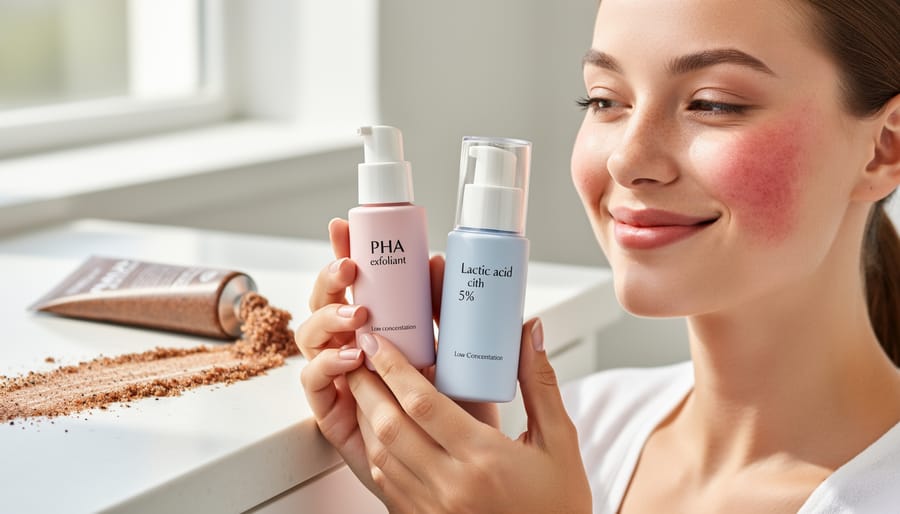
Ingredients and Methods to Avoid
When you have rosacea, certain exfoliation methods can irritate your skin and trigger uncomfortable flare-ups. It’s important to know which ingredients and techniques to steer clear of.
Avoid physical scrubs containing rough particles like crushed walnut shells, apricot kernels, or sugar crystals. These abrasive materials can create micro-tears in your already sensitive skin and worsen inflammation. Similarly, cleansing brushes, facial buffers, and exfoliating gloves often apply too much friction for rosacea-prone skin.
Strong chemical exfoliants also pose risks. High-concentration alpha hydroxy acids (AHAs) above 5%, particularly glycolic acid, can be too harsh. Beta hydroxy acids (BHAs) like salicylic acid in concentrations exceeding 2% may cause irritation. Retinoids, while beneficial for some skin conditions, can trigger redness and sensitivity in many people with rosacea.
Over-exfoliation is a common mistake. Exfoliating more than once or twice weekly, even with gentle products, can compromise your skin barrier and lead to increased sensitivity. Products containing alcohol, fragrance, menthol, or eucalyptus should also be avoided as these ingredients frequently trigger rosacea symptoms.
If you’re unsure whether a product is suitable, start with a patch test on a small area and consult with a dermatologist who can provide personalized recommendations for your skin.
Creating Your Rosacea-Friendly Exfoliation Routine
When building an exfoliation routine for rosacea-prone skin, a cautious, gradual approach is essential to protect your skin barrier while gaining benefits.
Start with patch testing. Apply a small amount of your chosen exfoliant to a discrete area, such as behind your ear or on your jawline, and wait 48 hours. If no redness, burning, or irritation occurs, you can proceed with caution.
Begin with minimal frequency. Use your gentle exfoliant once weekly for the first two to three weeks. This allows your skin to adjust without overwhelming your already sensitive complexion. Many people with rosacea find that once or twice weekly is their optimal frequency, though some may need even less.
Timing matters when to exfoliate in your routine. Apply chemical exfoliants to clean, completely dry skin in the evening. Avoid layering multiple active ingredients on the same night, and always follow with a gentle, fragrance-free moisturizer to support your skin barrier.
Use proper application techniques. With chemical exfoliants, apply a thin, even layer and avoid the eye area. Never rub vigorously or apply pressure. Let the product do the work without physical manipulation.
Monitor your skin’s response closely. Keep a simple journal noting when you exfoliate and any reactions you observe. Warning signs to watch for include increased redness that persists beyond a few hours, burning sensations, new breakouts, or heightened sensitivity to other products. If these occur, reduce frequency or discontinue use and consult your dermatologist.
Remember, less is often more with rosacea. Your goal is gentle maintenance, not aggressive transformation. Patience and consistency with minimal intervention typically yield the best results for sensitive, rosacea-prone skin.
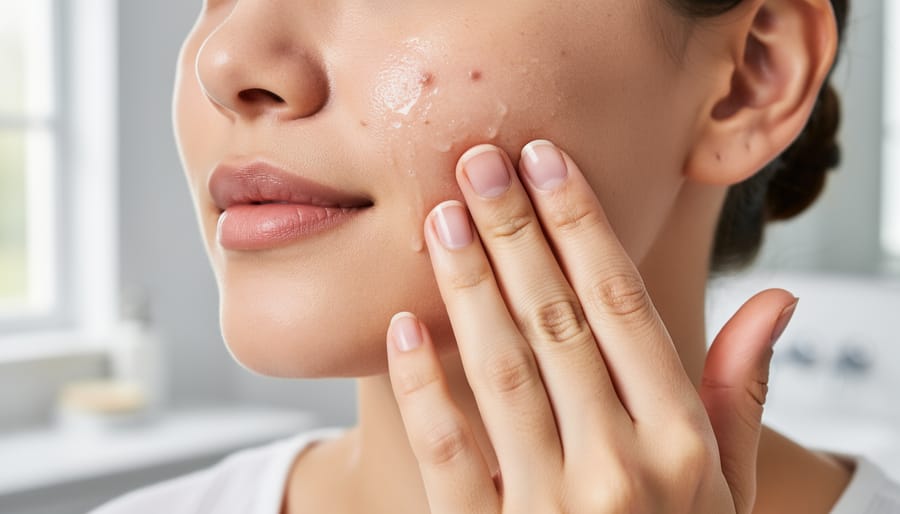
Signs You Should Stop Exfoliating
Your skin will tell you when exfoliation isn’t working. If you notice increased redness that lasts more than a few hours after exfoliating, this is a clear signal to stop. Other warning signs include burning or stinging sensations during or after application, new or worsening breakouts, persistent dryness or flaking, visible irritation, or a tight, uncomfortable feeling.
Pay attention to changes in your usual rosacea symptoms. If you experience more frequent flare-ups, increased sensitivity to your regular skincare products, or notice tiny broken blood vessels appearing on your skin, your exfoliation routine may be too harsh.
It’s important to consult a dermatologist if you experience any of these symptoms, especially if they don’t improve within a few days of stopping exfoliation. A healthcare provider can help assess whether your symptoms are related to over-exfoliation or another underlying issue. They can also recommend appropriate treatments and help you develop a safer skincare routine tailored to your specific skin needs.
Remember, when it comes to rosacea-prone skin, less is often more. If something doesn’t feel right, trust your instincts and give your skin a break.
Managing rosacea doesn’t mean you have to skip exfoliation entirely, but it does require a thoughtful, gentle approach. The key takeaway is that chemical exfoliants like PHAs and low-concentration lactic acid are typically safer than physical scrubs for sensitive rosacea-prone skin. Always start slowly, patch test new products, and pay close attention to how your skin responds. If you notice increased redness, burning, or irritation, scale back immediately. Remember that less is often more when it comes to exfoliating with rosacea—once or twice weekly may be sufficient. Everyone’s skin is unique, so what works for others might not work for you. Don’t hesitate to consult a dermatologist who can provide personalized recommendations based on your specific rosacea subtype and triggers. With patience and the right approach, you can safely incorporate gentle exfoliation into your routine while keeping flare-ups at bay.