
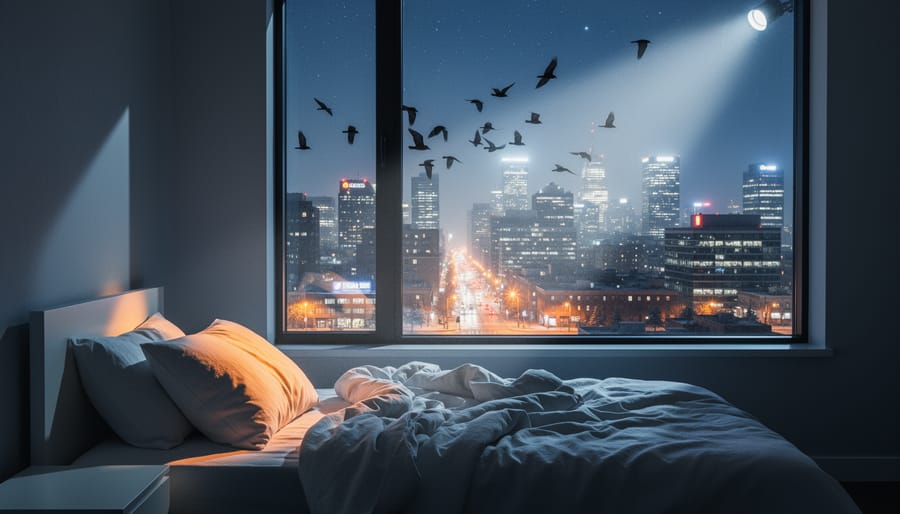
Every night, artificial light transforms darkness into day across Canadian cities, disrupting natural rhythms that life on Earth has followed for millions of years. From Vancouver’s glowing skyline to Toronto’s illuminated streets, this excess brightness seeps into ecosystems and our bodies, creating consequences most of us never see.
Light pollution affects more than stargazing. It interferes with wildlife migration patterns, disrupts plant flowering cycles, and throws off the delicate hormonal balance that regulates human sleep and immunity. When streetlights shine through bedroom windows or commercial buildings stay lit around the clock, they suppress melatonin production, the hormone that signals our bodies when to rest and repair. This disruption links to increased risks of sleep disorders, weakened immune function, and even certain chronic diseases.
The environmental toll extends beyond human health. Sea turtle hatchlings in coastal areas become disoriented by artificial lights, wandering away from ocean safety. Migrating birds collide with illuminated buildings, killing hundreds of millions annually across North America. Nocturnal pollinators like moths struggle to navigate, reducing plant reproduction. Even trees near streetlights retain their leaves longer in fall, making them vulnerable to early frost damage.
Understanding these connections empowers us to make meaningful changes. Simple actions like using motion-sensor lights, choosing warmer-colored bulbs, and supporting dark-sky friendly municipal policies protect both ecological systems and personal wellness. The solution begins with recognizing that darkness is not merely the absence of light but a vital environmental resource worth preserving.
What Light Pollution Actually Does to Your Body
Your Sleep Cycle Under Attack
Your body’s internal clock, known as your circadian rhythm, relies on natural light-dark cycles to function properly. When artificial light floods our evenings and nights, it confuses this delicate system, leading to significant sleep disruptions that affect millions of Canadians.
The primary culprit is melatonin suppression. Your brain’s pineal gland naturally produces this sleep hormone as darkness falls, signaling it’s time to rest. However, exposure to artificial light, especially the blue wavelengths emitted by LED streetlights, screens, and indoor lighting, can reduce melatonin production by up to 85%, according to research from Harvard Medical School. This disruption doesn’t just make falling asleep harder; it affects the quality of your sleep throughout the night.
Dr. Charles Czeisler, a circadian rhythm expert at Harvard, explains that even dim light exposure before bed can shift your sleep schedule later, making it difficult to wake up feeling refreshed. For shift workers and urban Canadians exposed to bright streetlights through bedroom windows, this becomes a chronic problem.
The practical impacts extend beyond feeling tired. Poor sleep linked to light pollution increases your risk of mood disorders, weakens immune function, and has been associated with higher rates of obesity and diabetes. Simple solutions like using blackout curtains, reducing evening screen time, and choosing warm-colored bulbs (under 3000K) can help restore your natural sleep-wake cycle and improve your overall health.
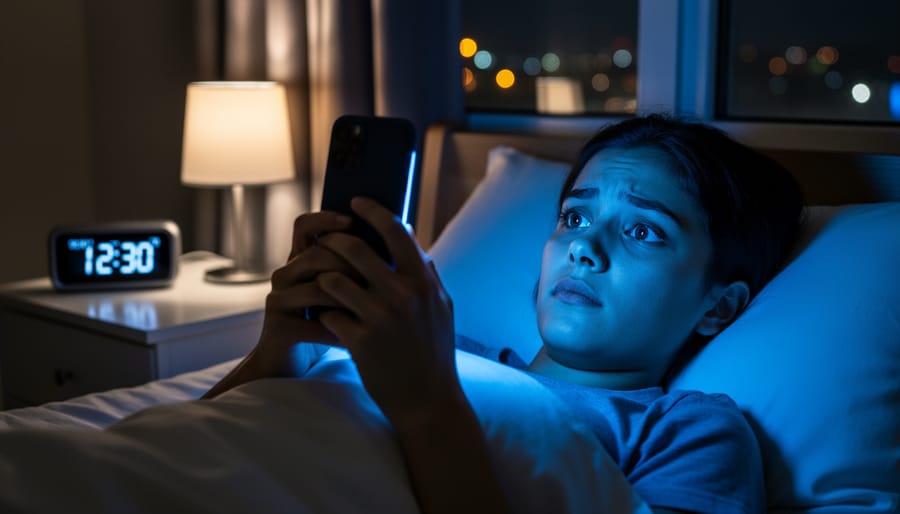
The Mental Health Connection
Your brain’s internal clock relies on natural patterns of light and darkness to regulate mood-stabilizing hormones like serotonin and melatonin. When artificial light disrupts these rhythms, the consequences extend beyond poor sleep.
Research shows that excessive nighttime light exposure increases risk of depression and anxiety disorders. The biological mechanism is straightforward: light exposure at night suppresses melatonin production, which doesn’t just affect sleep—it also influences your emotional regulation and stress response systems. Lower melatonin levels have been linked to mood instability and increased anxiety symptoms.
Studies from urban Canadian centres demonstrate that residents exposed to higher levels of nighttime light pollution report more depressive symptoms compared to those in darker environments. This connection mirrors patterns seen with other environmental stressors like noise pollution.
The disruption of your circadian rhythm affects cortisol production—your body’s primary stress hormone—creating a cascade of effects on mental wellness. When your sleep-wake cycle is consistently thrown off, your brain struggles to properly process emotions and maintain stable moods.
Understanding these connections between mental health and environment empowers you to make protective changes. Simple adjustments to your evening light exposure can support both better sleep and improved emotional well-being.
Long-Term Health Risks You Should Know About
Growing research reveals concerning connections between chronic exposure to artificial light at night and several serious health conditions. Studies published in major medical journals have found that prolonged nighttime light exposure disrupts your body’s natural rhythms, which can contribute to metabolic disorders.
Research indicates that people living in areas with high light pollution face increased risks of obesity and type 2 diabetes. When artificial light interferes with your circadian rhythm, it affects how your body processes glucose and regulates appetite hormones, potentially leading to weight gain and insulin resistance over time.
Cardiovascular health may also be impacted by excessive nighttime light exposure. Multiple studies have linked chronic light pollution to elevated blood pressure and increased risk of heart disease. This connection appears related to disrupted melatonin production, which plays a protective role in heart health.
Perhaps most significantly, research has associated nighttime light exposure with higher rates of certain cancers, particularly breast and prostate cancers. The International Agency for Research on Cancer has classified shift work involving circadian disruption as a probable carcinogen. While living near bright streetlights isn’t equivalent to shift work, the mechanisms of hormonal disruption are similar.
These findings don’t mean you should panic about every light source. Instead, understanding these risks empowers you to make informed choices about your light environment, especially in your bedroom where you spend significant nighttime hours.
How Canadian Wildlife Is Struggling in the Glow
Migratory Birds Losing Their Way
Every spring and fall, millions of migratory birds travel through Canada, navigating by natural light from the moon and stars. However, artificial light from cities creates a dangerous obstacle course along their ancient routes. Birds become disoriented by bright urban lights, mistaking illuminated buildings for safe passage or confusing city glow with dawn.
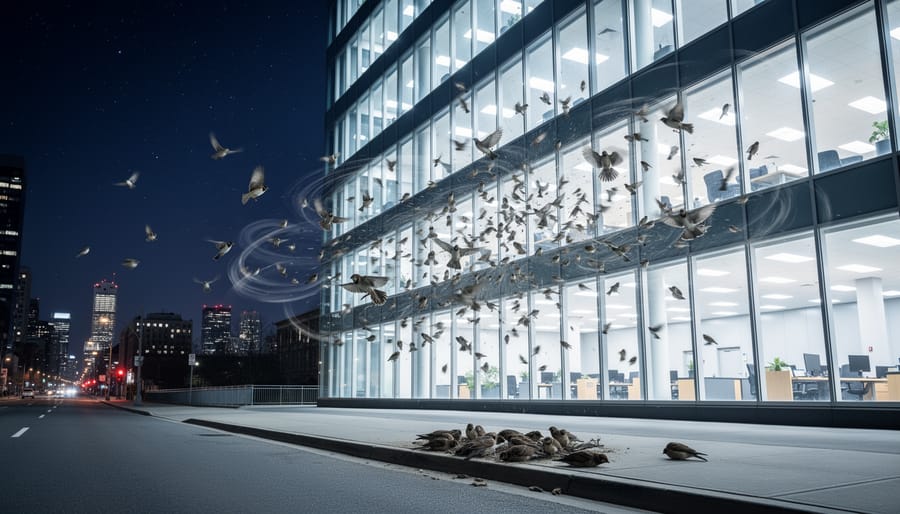
The consequences are devastating. Research shows that up to one billion birds die annually in North America from building collisions, with light pollution playing a major role in these deaths. Toronto alone sees approximately 25 million birds pass through during migration, and experts estimate that 1 to 9 million collide with buildings in the Greater Toronto Area each year.
Artificial light disrupts birds’ internal navigation systems, causing them to circle illuminated buildings until exhausted. Many fly directly into lit windows, unable to distinguish glass from open sky. Even birds that don’t collide immediately may exhaust their energy reserves circling in confusion, leaving them vulnerable to predators or unable to complete their journey.
This disruption affects more than individual birds. These species play essential roles in controlling insect populations, pollinating plants, and dispersing seeds across ecosystems. When migration patterns fail, the environmental balance suffers, impacting the natural spaces many Canadians enjoy for outdoor recreation and wellbeing.
Insects and the Ripple Effect Through Ecosystems
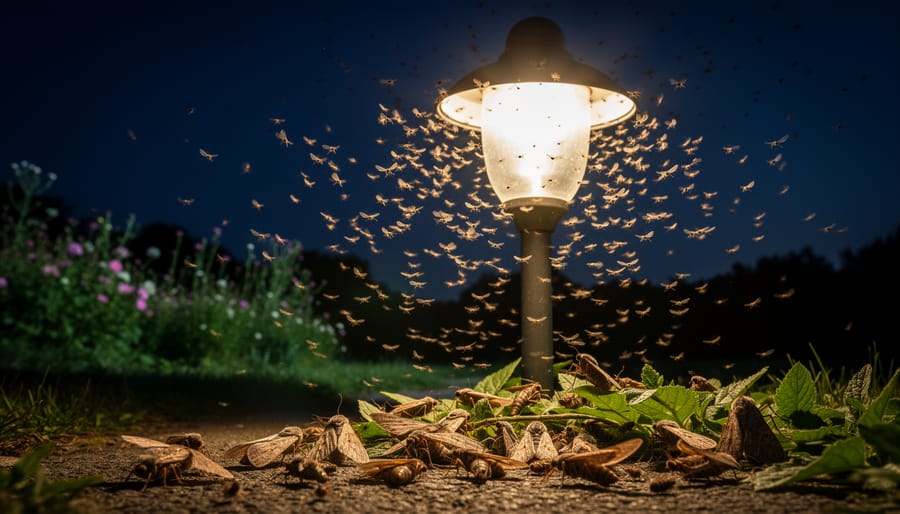
Artificial light disrupts the natural behaviors of insects in profound ways, creating a ripple effect that touches many aspects of ecosystem health. Moths, beetles, and other nocturnal insects are instinctively drawn to artificial lights, where they become exhausted, vulnerable to predators, or die from heat exposure. Research shows that a single streetlight can attract thousands of insects each night, removing them from their essential ecological roles.
This disruption has serious consequences for pollination. Many plants, including food crops grown across Canada, depend on nighttime pollinators like moths. When these insects spend their nights circling lights instead of visiting flowers, plant reproduction suffers, affecting both wild ecosystems and agricultural yields.
The impacts extend throughout food chains. Birds, bats, and small mammals that rely on insects for food face declining populations when their prey diminishes. This affects predator species higher up the chain, creating widespread ecological imbalance.
Light pollution also interferes with insect reproduction cycles, which are often triggered by natural light patterns. Disrupted breeding means fewer insects for pollination and as food sources, perpetuating the cycle of decline. Protecting insect populations through responsible outdoor lighting helps maintain the biodiversity that supports healthy ecosystems and, ultimately, human wellbeing.
Marine Life and Coastal Disruption
Canada’s coastal waters face significant challenges from artificial lighting along shorelines, affecting diverse marine species and their natural behaviors. Light pollution disrupts the life cycles of sea turtles, particularly in Atlantic Canada, where artificial lights disorient hatchlings that naturally navigate toward the ocean using moonlight reflections. Instead of heading to safety, they may crawl toward coastal developments, reducing survival rates.
Fish populations experience disrupted spawning patterns when exposed to artificial lighting. Many marine species rely on natural light-dark cycles to trigger reproduction and migration. Bright waterfront lights interfere with these biological rhythms, potentially affecting population numbers and ecosystem balance.
Smaller marine organisms, including plankton and krill, alter their vertical migration patterns in response to artificial light. These creatures typically rise to surface waters at night to feed, but coastal lighting keeps them at depth, disrupting the marine food chain that larger fish and marine mammals depend on for survival.
Coastal communities can help by using shielded, downward-facing lights near shorelines, choosing amber or red lighting that minimizes blue wavelengths, and reducing unnecessary nighttime illumination during critical breeding seasons. These practical steps protect marine ecosystems while maintaining safe coastal environments for residents and visitors.
Mammals and Nocturnal Behavior Changes
Light pollution significantly disrupts the natural behaviors of Canadian mammals, creating ripple effects throughout local ecosystems. Nocturnal animals like deer, raccoons, and bats have evolved over thousands of years to be most active during dark hours, but artificial lighting is forcing them to adapt in ways that can harm their survival.
Research shows that deer exposed to artificial light at night shift their feeding patterns, becoming more active during daylight when they’re more visible to predators and human activity. This change increases their stress levels and energy expenditure, potentially affecting their overall health and reproduction rates.
Raccoons and other opportunistic feeders often become bolder around lit urban areas, leading to increased human-wildlife conflicts. Meanwhile, bat populations face particularly serious challenges, as insects they rely on for food are drawn to artificial lights, disrupting natural feeding zones and forcing bats to expend more energy hunting.
These behavioral changes don’t just affect individual animals. When predator-prey relationships shift due to altered activity patterns, entire food chains can become unbalanced. This ecological disruption can eventually impact ecosystem services that benefit human health, including natural pest control and pollination. Understanding these connections helps us recognize that protecting wildlife from light pollution ultimately supports our own wellness and the health of our communities.
The Science Behind Why This Matters So Much
Circadian Rhythms: Your Body’s Internal Clock
Your body operates on a natural 24-hour cycle called a circadian rhythm, which regulates when you feel alert, sleepy, hungry, and even when your body repairs itself. This internal clock is primarily controlled by light exposure, with natural sunlight signaling daytime and darkness triggering the production of melatonin, your sleep hormone.
When artificial light intrudes after sunset, it confuses this finely-tuned system. Your brain interprets nighttime light as daytime, suppressing melatonin production and disrupting sleep patterns. Research shows this can lead to sleep disorders, increased stress levels, and higher risks of chronic conditions including obesity, diabetes, and certain cancers.
Animals face similar challenges. Nocturnal species that rely on darkness for hunting or avoiding predators become disoriented by artificial lighting. Meanwhile, birds that migrate using star navigation can lose their way, and sea turtle hatchlings mistakenly crawl toward bright coastal developments instead of the ocean, often with fatal consequences.
Even plants are affected, as artificial light can alter flowering times and growth patterns. Understanding these connections helps us recognize why reducing unnecessary nighttime lighting benefits both human wellness and ecosystem health across Canada.
Ecosystems Evolved for Darkness
For millions of years, life on Earth has evolved around predictable patterns of day and night. Many species have developed biological processes that depend entirely on these natural light-dark cycles. Nocturnal pollinators like moths, for example, navigate and feed during darkness, while certain flowers bloom specifically at night to attract them. When artificial light disrupts these rhythms, entire food webs can break down.
In Canadian ecosystems, this disruption affects everything from fireflies that use bioluminescence to find mates, to migrating birds that rely on star patterns for navigation. Research shows that even low levels of artificial light can confuse these natural behaviours, reducing breeding success and species survival rates.
Aquatic ecosystems face similar challenges. Light pollution penetrates water surfaces, affecting zooplankton that migrate vertically based on light levels. This disruption ripples through the food chain, impacting fish populations that many Canadian communities depend on for food and recreation.
The good news is that addressing light pollution is relatively straightforward compared to other environmental issues. Simple changes like using properly shielded outdoor lighting and turning off unnecessary lights can immediately benefit local ecosystems while supporting the natural darkness that all life, including humans, needs to thrive.
Practical Steps Every Canadian Can Take
Protecting Your Sleep and Health at Home
You can take meaningful steps at home to protect your sleep quality and overall health from artificial light exposure. Research consistently shows that reducing light pollution in your living space supports better rest and wellbeing.
Start with your bedroom by installing blackout curtains or room-darkening blinds. These create the darkness your body needs to produce melatonin, the hormone that regulates your sleep-wake cycle. Even small amounts of light during sleep can disrupt this natural process, so aim for complete darkness whenever possible.
Limit screen time at least two hours before bed. The blue light emitted by phones, tablets, and computers suppresses melatonin production more effectively than other light wavelengths. If you must use devices in the evening, enable night mode settings or wear blue-light filtering glasses to minimize the impact.
Replace bright white bulbs with warm-colored LED lights throughout your home, especially in spaces you use during evening hours. Bulbs with a color temperature below 3000K create a gentler lighting environment that’s less likely to interfere with your natural circadian rhythm.
For outdoor spaces, choose motion-activated fixtures rather than lights that stay on all night. Shield outdoor bulbs so they point downward, reducing unnecessary light that enters your home or contributes to neighborhood light pollution. Consider lower-wattage options that provide adequate visibility without excessive brightness.
These practical adjustments work together to create a healthier light environment that supports quality sleep and long-term wellness.
Making Your Outdoor Lighting Wildlife-Friendly
Making your outdoor lighting more wildlife-friendly doesn’t require dramatic changes—small adjustments can significantly benefit both local ecosystems and your own wellbeing. Start by installing motion sensors on exterior lights so they only activate when needed, reducing unnecessary illumination throughout the night. This simple change helps protect nocturnal wildlife while lowering your energy costs.
Choose downward-facing fixtures with full cut-off shields that direct light precisely where you need it, preventing light from spilling upward into the night sky or sideways into natural areas. This targeted approach minimizes disruption to wildlife corridors and urban green spaces while improving visibility on pathways and entry points.
When selecting bulbs, opt for warm-colored amber or red lights instead of bright white or blue-toned options. Research shows that warmer wavelengths are less disruptive to wildlife behaviour and circadian rhythms—including your own. These gentler tones reduce melatonin suppression, supporting better sleep quality for everyone in your household.
Most importantly, turn off outdoor lights when they’re not serving a clear purpose. Decorative lighting, while attractive, can remain off during late evening hours without compromising safety. Many Canadians find that reducing outdoor lighting actually improves their sleep by eliminating light leakage into bedrooms.
These evidence-based practices create darker, quieter nights that benefit migrating birds, pollinating insects, and nocturnal mammals while simultaneously supporting your natural sleep-wake cycle and reducing your environmental footprint.
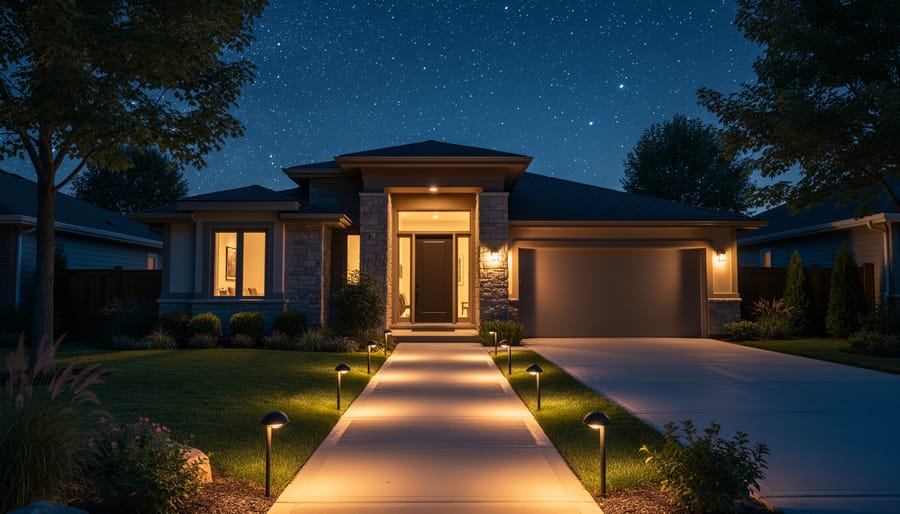
The connection between human health and environmental health has never been clearer. Just as environmental pollution affects our bodies, light pollution impacts both our wellbeing and the ecosystems we depend on. The encouraging news is that simple actions create meaningful change. Dimming outdoor lights, choosing warmer bulbs, and supporting dark-sky initiatives in your community protect wildlife habitats while improving your sleep quality and reducing health risks. Every small step matters. By addressing light pollution, you’re not just enhancing your personal wellness—you’re helping preserve Canada’s natural environments for future generations. Together, these individual choices build healthier communities and a more balanced relationship with the night sky we all share.